


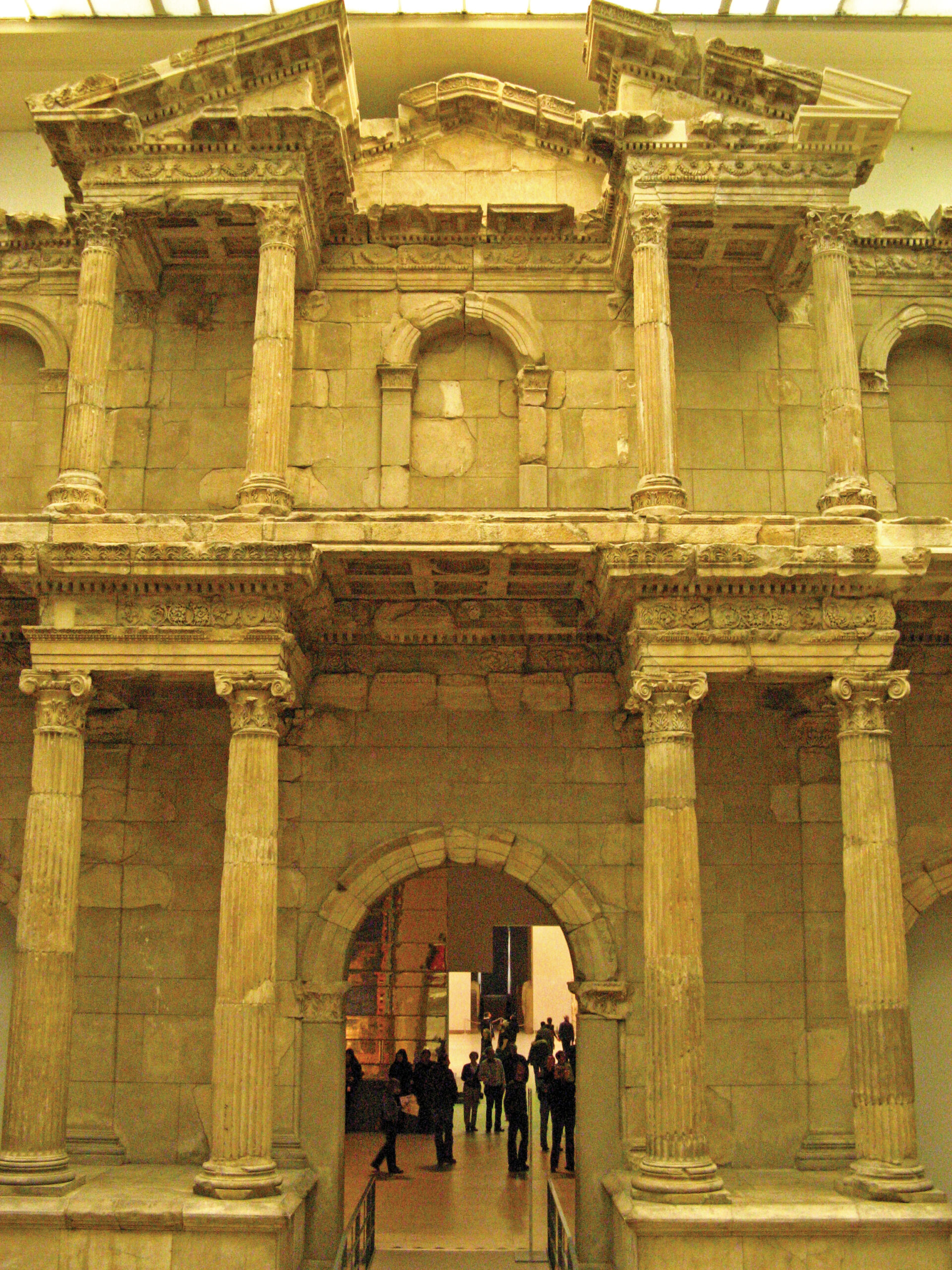
An architecture that positively influences the human soul and contributes to its wholeness, thereby contributing to the creation of something non temporal and able to transcend this transient existence
By Ar. Zain Mankani
Buildings are complex systems that take months, if not years to design, and require collaboration between several disciplines and their effective integration. It’s a task that requires skill, persistence, forbearance, and innovative & creative thinking. Architects who lead the design process need to be not only creative designers, but also good managers. They must have a good working knowledge of structures and building systems, as well as good people-skills to manage the team and coordinate with the client or investor.
Successful architects therefore rightly have high self-esteem as a result of their proven ability to manage such complex tasks. However, this heightened self-esteem must be tempered by the realization that whatever we create has a limited lifespan and must eventually be turned to dust and returned to the earth, from whence it arose.
One is humbled by the closing words of Shelly’s poem, Ozymandias:
And on the pedestal these words appear:
“My name is Ozymandias, king of kings:
Look on my works, ye Mighty, and despair!”
Nothing beside remains. Round the decay
Of that colossal wreck, boundless and bare
The lone and level sands stretch far away.
Although there are buildings that survive and continue to house functions for over a thousand years, they are essentially transient in nature. The question remains: can architects, with their skill sets, create or contribute towards the creation of something transcendent?
Because, if not, then that magical set of skills that we take pride in means very little in the greater scheme of things. It produces something that emerges out of the chaos for a brief span of time (in cosmic terms) and returns to it, leaving behind no trace of its existence. What is that worth?
As the Quran says,
Say: Shall We inform you of the greatest losers in (their) deeds?
(These are) they whose labor is lost in this world’s life and they think that they are well versed in skill of the work of hands.
These are they who disbelieve in the communications of their Lord and His meeting, so their deeds become null, and therefore We will not set up a balance for them on the day of resurrection.1
Disbelief does not necessarily mean outright denial, but because actions validate beliefs, the absence of action is sufficient to establish disbelief. A man who works only for the world and does not give any attention to the afterlife cannot claim belief in the afterlife.
If architects create buildings that have only a brief existence in this world and thereafter disappear from existence, leaving behind nothing, what is that thing that can be placed in their scale of deeds in the afterlife? Since there is nothing to weigh, no balance shall be set up.
But this is the case for all professions. There is nothing on earth that shall transcend to the afterlife. Except human consciousness, of course. Depth psychology has established that human consciousness transcends temporal existence.2
Therefore, the only way for any professional to ensure that his skill contributes to the creation of something transcendent is for him to ensure that it contributes towards the development and evolution of human consciousness.
A good way to understand this idea is to take the example of a writer. A writer produces a manuscript, which has physical existence in this temporal world. People read the manuscript and thereafter it can turn to dust and disappear from existence forever. But does this mean that what the writer produced has gone out of existence? People who read the book were influenced by the ideas, by the narrative, by the rhetoric. They carried it with them. It influenced their actions. Those actions influenced others so that those ideas extended over generations, influencing and contributing to the development of everlasting human consciousness in every era.
The same can be said of art and artists. When a work of art is destroyed, it does not cease to exist, if it has made an impact on our consciousness prior to its destruction. Of course, it is equally important whether that impact is positive or negative.
Can architects do the same? Can architects create buildings that work like manuscripts of moral philosophy, or novels like Crime and Punishment that communicate moral ideas? Or like art that softens the heart or induces pietas (such as the work of the Iranian artist Mahmoud Farshchian)? Because if they do this not, then they are not creating anything that survives the world and can be placed on a set of scales in the afterlife.
Architects need to think about the intransient value of their work. And this value can only come through its artistic and philosophical aspects. It does not come from engineering, though that necessarily contributes to bringing that work into the physical world, without which it cannot be experienced.
It is therefore increasingly important in today’s world, which lays so much emphasis on producing work quickly, or producing engineering marvels, to give due attention to ideology and meaning. We regularly hear examples of buildings in China that are erected in a matter of days, but we do not hear anything about what that building contributes to human consciousness. We have line managers and clients asking if the design stage can be completed in 3 weeks instead of 6, but not asking if the impact of that design can be extended from the temporal to the everlasting.
This is the kind of thinking that architects need to inculcate, because it is precisely this thinking that will leave a lasting positive impact on our and future generations. Without this, we are merely producing a kind of “paper-plate architecture” that is used briefly and then relegated to the dustbin of time.
1The Holy Quran, Chapter 18, Verses 103-105
2Carl Jung on Death and the Psyche,


