


By Zain Mankani
Photos by the Author
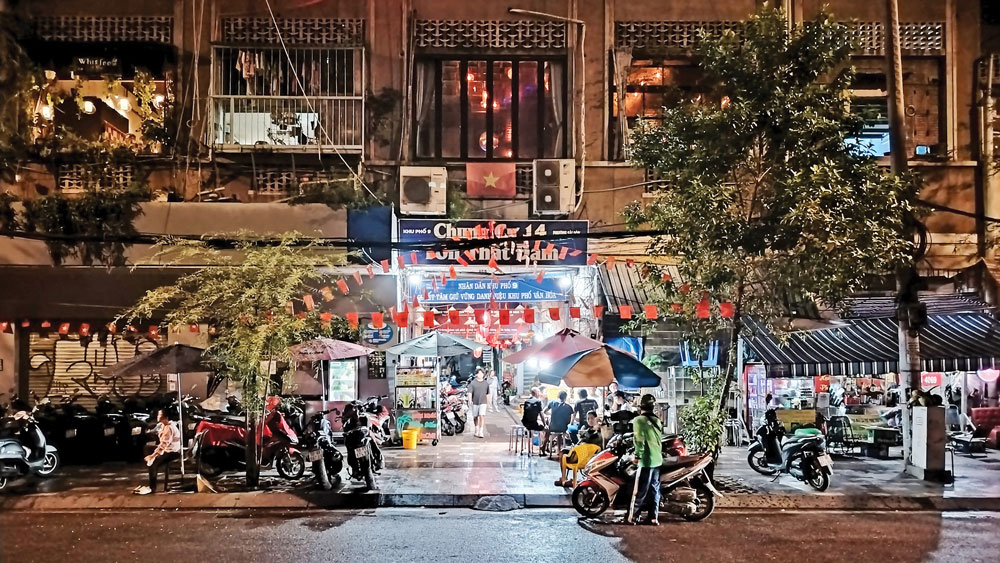
Ho Chi Minh City’s alleys and old, repurposed buildings have a certain charm that is not found in most contemporary cities. It is not found even in the city’s own new developments. And yet, it is precisely what gives it its unique quality.
Today, major cities have adopted a neo-liberal approach to urban development, powered by direct foreign investments. Architects design to meet the requirements of the investor, which are driven by commercial interests. Therefore, concerns like retaining the unique character of the city, architectural tradition, preservation, and even user experience become subordinate to salability and commercial viability. Contemporary cities are built on the ideals of privacy, segregation, independence & territorial integrity. Dwellings are either segregated as detached villas in horizontal developments, or vertically in high-rise towers with minimal footprint to ensure fewer neighbors, who have little or no opportunity to socialize. This is marketed as the utopian dream to potential buyers.
As opposed to this, there are neighborhoods that do not meet the benchmark of utopia, and may therefore be referred to as “dystopian” to contrast them with the aspirations of the neo-liberal potential home-owner. They are characterized by small houses that usually about each other. There is overcrowding, unavoidable mingling and codependency. Humility, tolerance, community are an unavoidable consequence of dystopia. And it is this inevitable consequence of dystopian architecture that draws the soul of the utopian towards it.
Much of Ho Chi Minh City can be described as dystopian in this positive sense. Compared to the sanitized and functional city state of Singapore, for example, it may come across as dysfunctional, overcrowded and dirty. Its charm lies in the narrow back alleys concealed behind the street facades. It is here that the close-knit highly codependent nature of the city is clearly visible. Together with that comes the laid back, unpretentious attitude towards architectural space that becomes inviting because it doesn’t impose a particular code of conduct, allowing the user to be at ease with the environment and with their own being.
It is therefore the architecture that becomes the intoxicant that relaxes the human spirit and allows a more sincere expression of one’s true self.
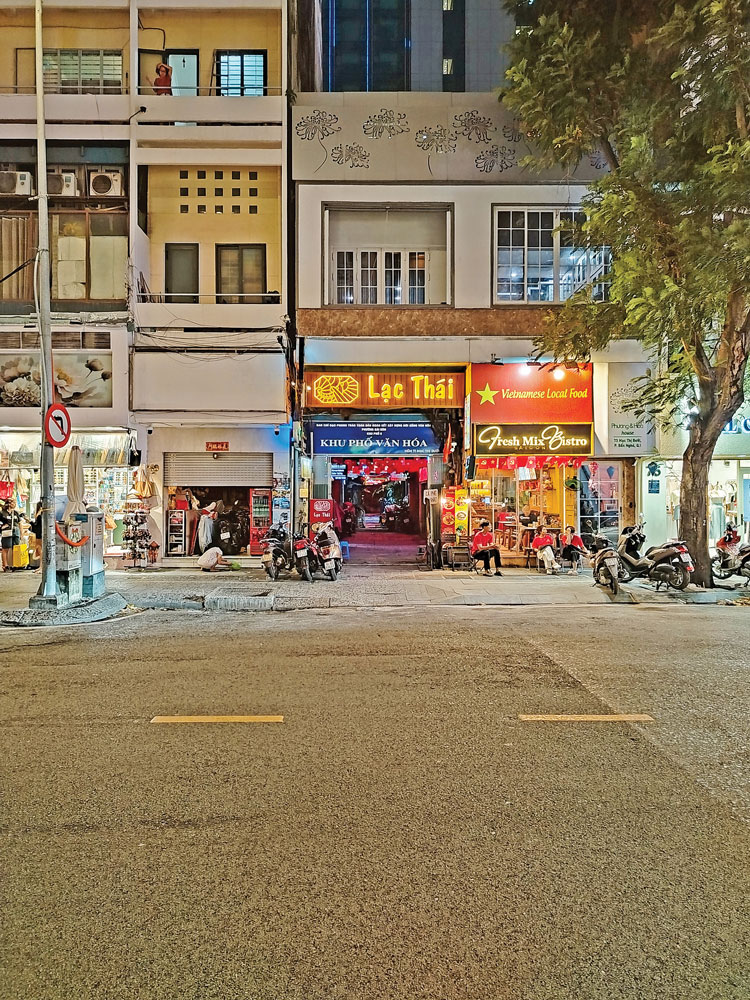

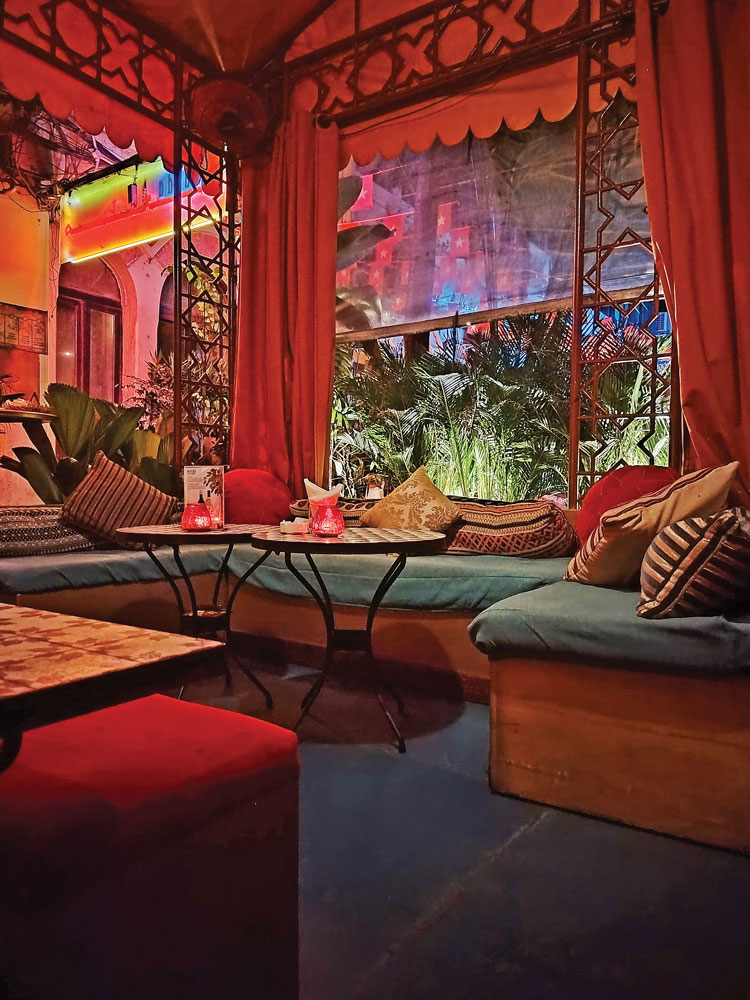
Street View, Mạc Thị Bưởi; the alley; and the café within
What visitors find enticing about HCMC is hidden behind regular everyday facades and even old run-down buildings. You don’t find it in the flashy new developments of D2 or District 7. But when you walk down a busy street in District 1 or 3 or 4, you might gaze into an alley that you have previously walked past without noticing. And this time you feel the urge to walk in and explore what’s inside. That’s where the city lays out its precious treasures.

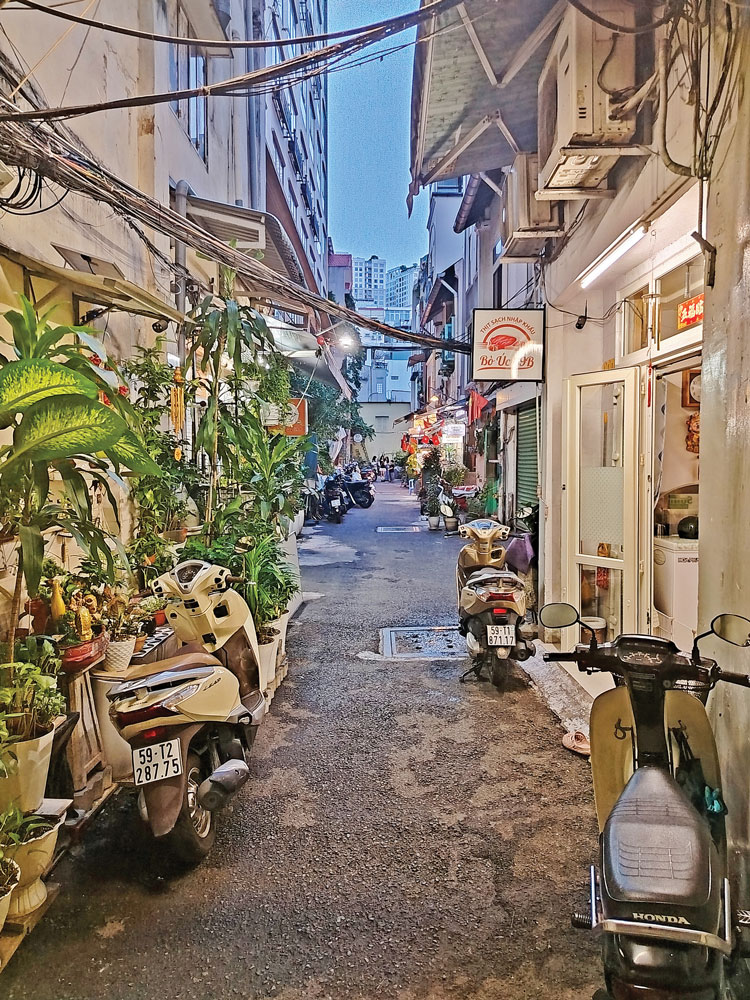

Bon’s Vegan Bistro tucked away inside an alley off Hàm Nghi
This resonates with the common man because so many of us are like this – easy to overlook and walk past without a second glance, but also possessing something valuable deep inside that is worth the effort for those who get to know us.
The dystopian environment is more in tune with the frail human condition and that is why it appeals to us in spite of all its dysfunctionality. Many cult movies are set in dystopian environments because of this strange appeal and connection that they are able to build with the viewer.
Perfection is alien to the human condition. Moreover, there is no mystery in utopia – no treasure waiting to be discovered, and no potential waiting to be actualized. Dystopia and utopia are polar opposites, but each must carry something of the other within it, like the Yin and the Yang, in order to achieve wholeness and balance. Without the assimilation of the “other” there is only conflict and disharmony.
The question is: how can architects benefit from an understanding of these dystopian utopias, and how can they assimilate the valuable aspects of dystopian architecture? I believe we need to learn to not aim for perfection all the time, and leave certain things to unravel and actualize over time. Dystopia cannot be planned. It is the result of human imperfections gradually breaking through. But what else breaks through in that process is our own unique expression, and our personal way of doing things. Where everything is planned, there is no personal expression and no uniqueness.
Actualization is the process of discovering your unique self and recognizing who you are, as distinct from the mass of humanity, while continuing to be a part of that mass or community.
The reason that dystopian architecture appeals to us is because we recognize it as a space where we can become our own unique selves, unlike the planned utopias that stifle growth and personal expression. Utopian environments are characterized by control, standardization and sanitization, which makes people anxious, and erodes their creativity, personal expression as well as tolerance and sense of community.
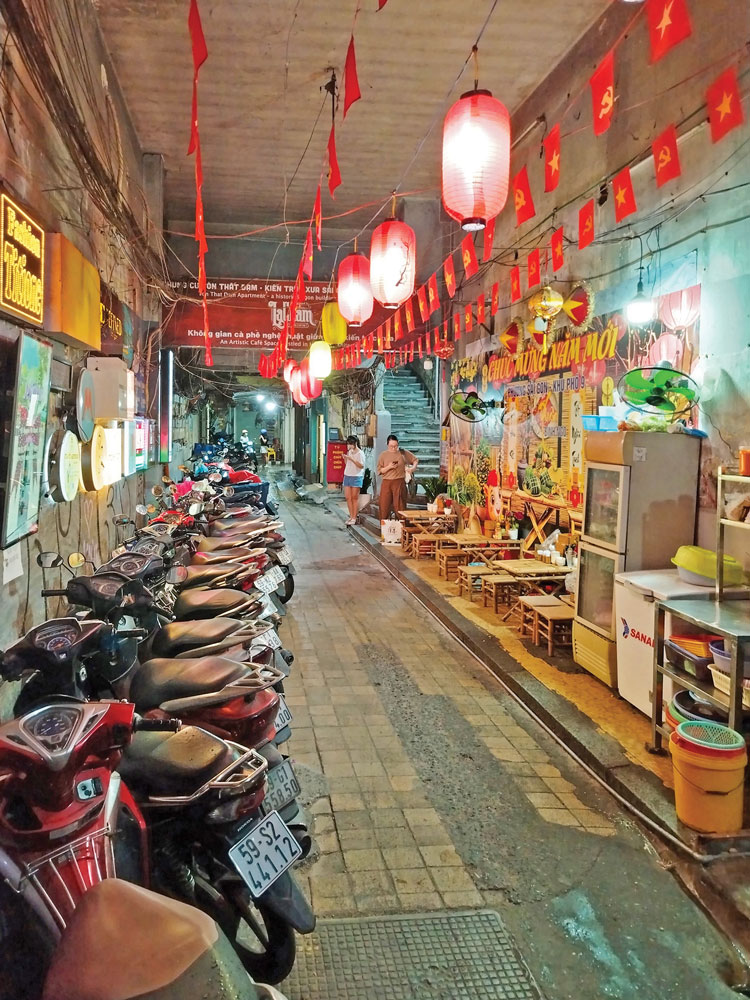

Whisfee Café, a quaint and unpretentious place to relax and unwind
If architects want to create spaces that allow people to actualize, they have to exercise less control over the environment and allow room for personal expression. They have to accept imperfections and resist the temptation to resolve everything neatly. And that is the lesson that a city like Ho Chi Minh can give us.
Contemporary mixed-use developments can learn to give up some of that centralized control in order to foster the development of personal creativity and self-expression. A tolerant environment that allows for the expression of one’s uniqueness is not only good for the individual in the sense that it allows for the blossoming of his or her unique identity, but it is also good for the community in a myriad of ways. People who are unique are more beneficial to the community than those who are conformist, because the unique individual has something unique to offer, whereas the conformist can only offer that which others are also offering.
If we don’t learn this lesson and continue to weed out imperfections and opportunities for personalization we are likely to end up with cities that are either homogenic and sterile, or at best expressions of the architect’s unique personality that offers nothing to the end user, and does not contribute to his or her journey of individuation.


