


THE RISE OF DIGITAL TOOLS AND EMERGENCE OF GAMIFICATION IN ARCHITECTURAL EDUCATION
Text & Photographs provided by Quratulain Asghar
The landscape of architectural education worldwide is undergoing a profound transformation, driven by the rapid integration of digital technologies. Over the past two decades, tools such as Computer-Aided Architectural Design (CAAD), Building Information Modeling (BIM), parametric design systems, and simulation platforms have transformed the architectural studio from a purely manual, analog space into a dynamic, data-driven, and highly interactive learning environment. These technologies not only enhance visualization and precision but also redefine how students conceptualize, test, and communicate design ideas. Studies show that integrating digital tools has significantly improved student engagement, academic performance, and project completion rates, indicating a clear pedagogical shift toward more interactive and student-centered learning models.
Globally, architectural education is no longer limited to drawing boards and physical models. Instead, it has evolved into a hybrid ecosystem where digital workflows, data analysis, and immersive visualization techniques expand the boundaries of creativity and critical thinking. The increasing dependency on digital tools has made them foundational to architectural curricula, especially in post-pandemic education systems where online and blended studios have become common. In contexts like Pakistan, this transformation is even more significant, as institutions negotiate between deeply rooted traditional studio cultures and the demands of a rapidly digitizing profession.
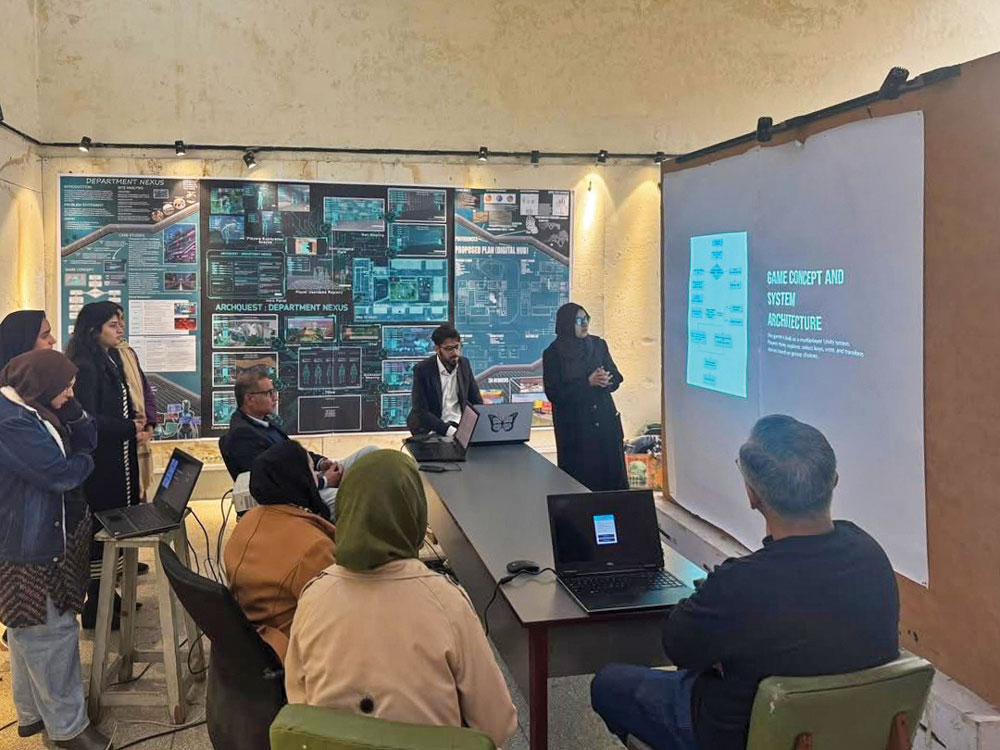
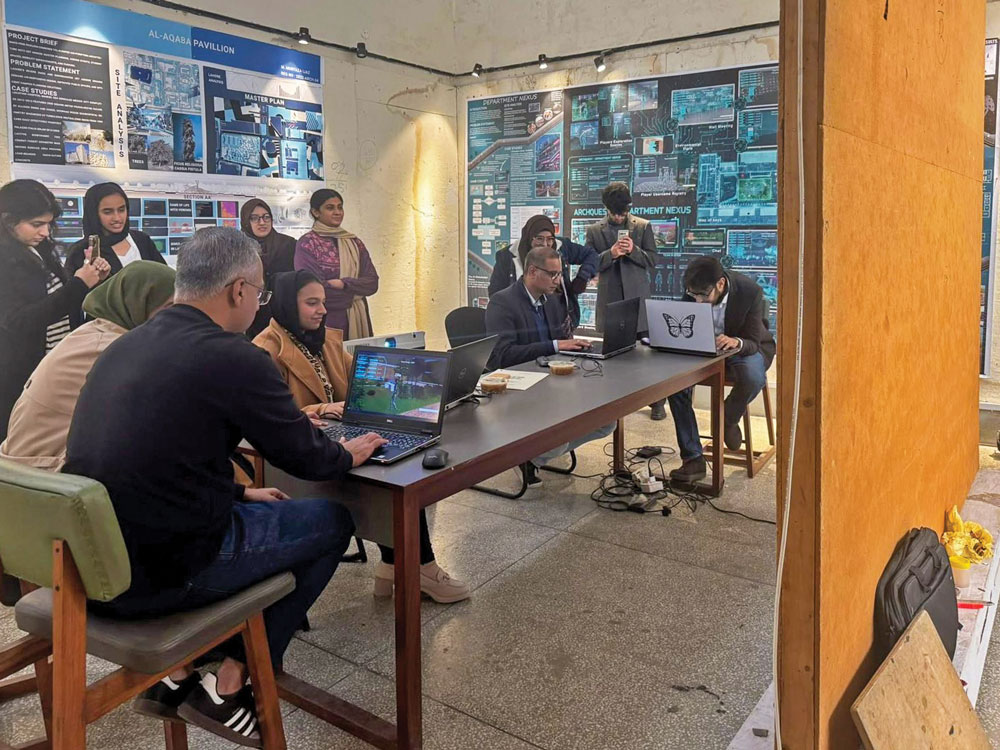
Within this evolving digital paradigm, Gamification has emerged as a powerful pedagogical strategy because of its engaging quality for the GEN Z learners. Gamification refers to the integration of game elements, such as challenges, rewards, levels, and interactive feedback, into non-game environments like classrooms. Its primary objective is to enhance motivation and engagement by making learning more immersive and participatory. Research shows that gamified learning environments can significantly increase student motivation, participation, and even learning outcomes, as they align with how contemporary students, often referred to as digital natives, interact with technology.
What makes gamification particularly relevant to architectural education is its compatibility with studio-based learning. Architecture studios already involve iterative processes, critique cycles, and problem-solving, elements that can be effectively restructured as “missions,” “levels,” or “design quests.” Gamification transforms passive learning into active exploration, encouraging students to take ownership of their design journey while fostering collaboration, competition, and creativity.
Against this global backdrop, a groundbreaking pedagogical experiment took place at the University of Engineering and Technology (UET) Lahore, marking the first-ever Gamification-based architectural design studio at the institution. Conducted by Associate Professor Quratulain Asghar and Dr. Fatima Javeed, this innovative studio was introduced in the fall semester of 2025 to fourth-year architecture students in the 2022 batch, who will be graduating in 2023. It culminated with “OPEN PARTICIPATORY CRIT”, which again was a completely new concept of jury. To support this initiative, IAP (Institute of Architects Pakistan), Ar. Faisal Sami, Ar. Shoaib Tahir, Ar. Zille Ali Naqvi and Ar. Gulraiz attended the crit and played games designed by the students.
This gamified studio challenged conventional teaching methodologies that have long dominated architectural education, methods often characterized by hierarchical critique systems, rigid studio structures, and a heavy reliance on instructor-led guidance. Instead, the gamification studio reimagined the learning environment as an interactive system of challenges, progressions, and achievements. Students were no longer passive recipients of knowledge but active participants navigating through a structured yet flexible design framework.

The impact of this shift was transformative. By embedding game mechanics into the studio process, the educators created a learning environment that was not only more engaging but also more reflective of real-world problem-solving scenarios. Students experienced increased motivation, deeper involvement in their projects, and a stronger sense of ownership over their design decisions. The studio fostered experimentation, risk-taking, and iterative learning qualities that are often constrained within traditional pedagogical models. More importantly, this initiative marked a critical departure from conventional architectural teaching in Pakistan. Traditional studios, often rooted in master-apprentice dynamics, tend to limit student agency and creativity. In contrast, the gamification studio disrupted these norms by flattening hierarchies and promoting a more collaborative and student-centered approach. It demonstrated that learning could be both rigorous and engaging, structured yet playful, and disciplined yet exploratory.
In conclusion, the gamification studio at UET Lahore represents a significant milestone in the evolution of architectural education in Pakistan. Situated within the broader global shift toward digital integration, it highlights how innovative pedagogical approaches can bridge the gap between traditional teaching methods and contemporary learning needs. By leveraging the engaging power of gamification, this initiative not only redefined the studio experience but also set a precedent for future educational experiments, suggesting that the architecture studio of tomorrow may be as much about play, interaction, and strategy as it is about design.


