


By Dr. Mamuna Iqbal
Architecture has always travelled. Ideas, theories, pedagogies and professional models move across borders with remarkable ease. Yet the conditions under which architectural knowledge travels are rarely equal. Some places are positioned as centres from which theory emerges, while others are approached as sites of application, observation or extraction. Within these uneven geographies of knowledge production, feminist spatial practice raises an important question: can international exchange be structured differently?
The International Solidarity is exploring precisely this possibility. Developed through a global network of Feminist Spatial Practices, the programme is conceived not as a single conference located in one institutional centre, but as a distributed series of interconnected gatherings across different parts of the world. Its aim is to develop tools for feminist knowledge-sharing and knowledge-making that foster international solidarity while remaining attentive to the cultural, political and spatial specificity of each location.
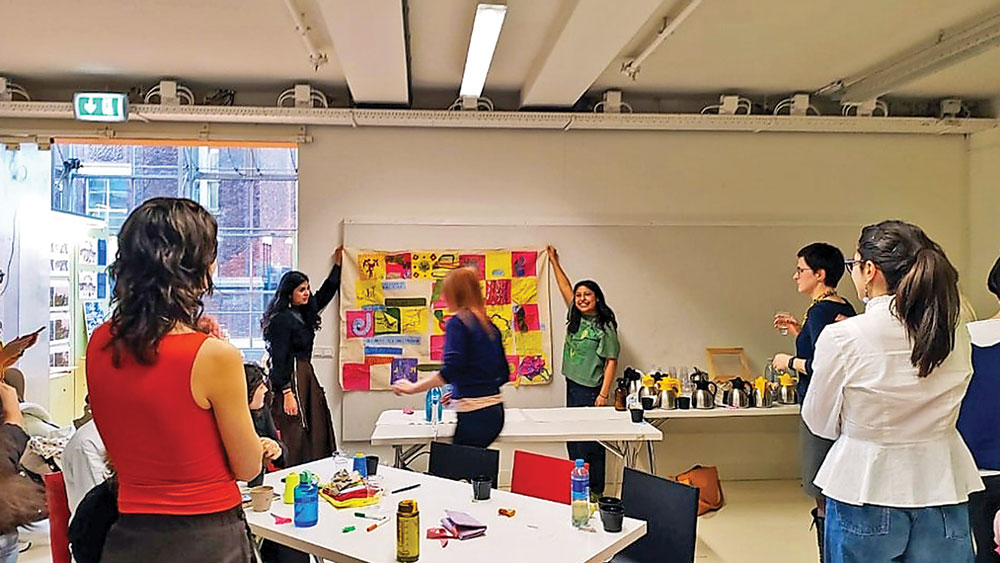

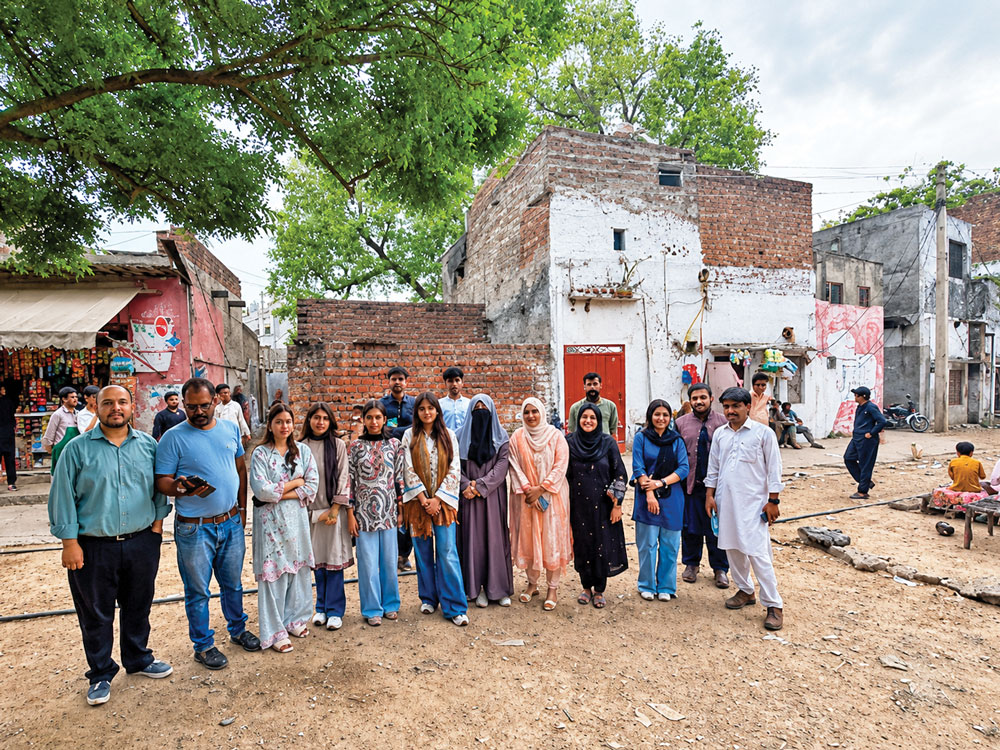
The first gathering took place at TU Delft on 6 March 2026, organized by Dr. Irene Luque Martin, Dr. Renske Maria Van Dam, and Defne Saysel, where Dr. Mamuna Iqbal represented Women in Architecture Pakistan (WAP). This was followed by a gathering in University of Engineering and Technology, Lahore on 10th and 11th April. The connection between these first gatherings reflects the sustained contribution of Dr. Mamuna Iqbal, whose role extended beyond participation in individual events. As a member of the FSP International Solidarity Working Group and Vice President of WAP she has played a key role in connecting Pakistan’s feminist architectural discourse with the wider international network. Representing WAP at the inaugural gathering at TU Delft and subsequently leading the organisation of the Lahore gathering, Dr. Iqbal helped translate the programme’s broader ambitions into a locally grounded exchange while ensuring that practices and perspectives emerging from Pakistan contributed back to the international conversation. Dr. Nishat Awan set the tone of the event in Lahore with her keynote, and Dr. Zahra Hussain and Ar. Nabah Ali Saad co lead the activities at the event.
These two were not isolated events, nor were they intended to define the geographical limits of the programme. They marked the beginning of an expanding sequence of locally grounded gatherings. Further events are being developed in Bangalore and Bratislava, with the wider evolving network extending towards locations including Los Angeles and other cities internationally. The programme’s planning documents envisage a broader trajectory that continues across multiple regions and into 2027.
This distributed structure is central to the programme’s significance. Rather than asking practitioners from multiple regions to travel to a single global summit, the initiative allows international exchange to unfold through local contexts. The broader festival framework explicitly describes the model as a travelling series in which each gathering builds on previous ones, carrying forward tools and knowledge while adding locally specific insights.
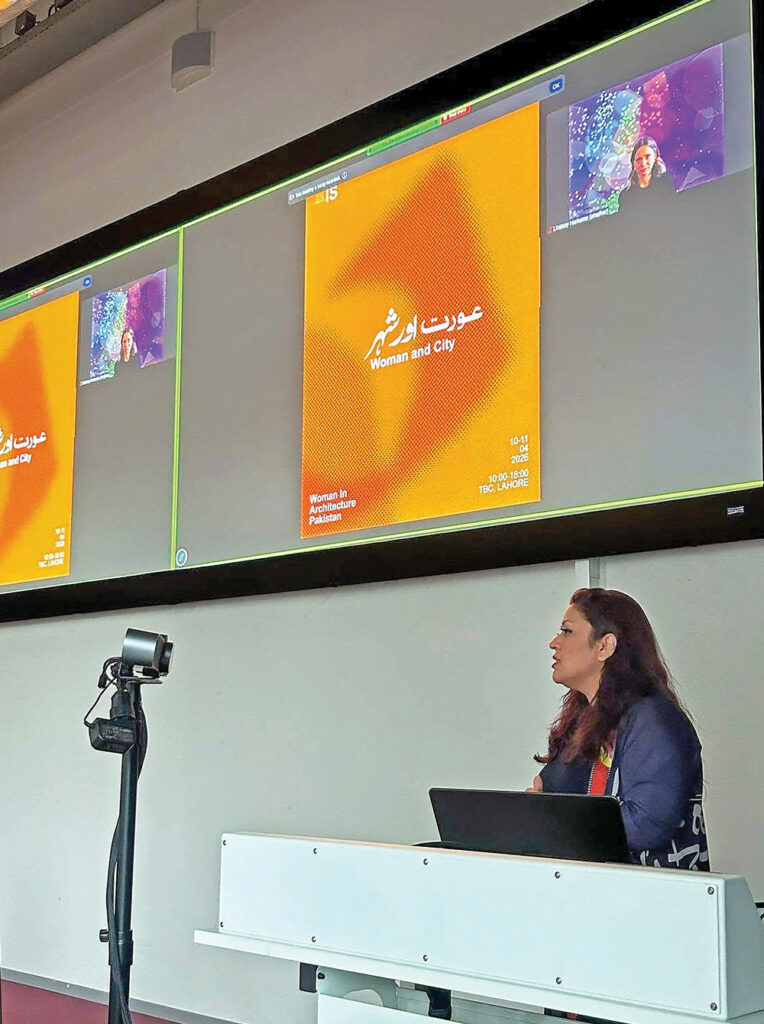
Such a model challenges the familiar geography of international architectural exchange. Conferences and biennales often depend upon participants travelling towards established centres of institutional visibility. While these encounters can be valuable, they can also reproduce inequalities of funding, mobility, visas and professional access. A distributed model asks a different question: what if the centre of the conversation keeps moving?
In this sense, Delft and Lahore represent not two ends of a bilateral exchange, but two early points within a growing constellation. Each location becomes a site of knowledge production rather than simply a host for an international programme. The aim is not to reproduce an identical event across cities, but to allow feminist spatial practices to emerge from local conditions, contribute distinct methods and perspectives, and then enter into dialogue with other contexts.
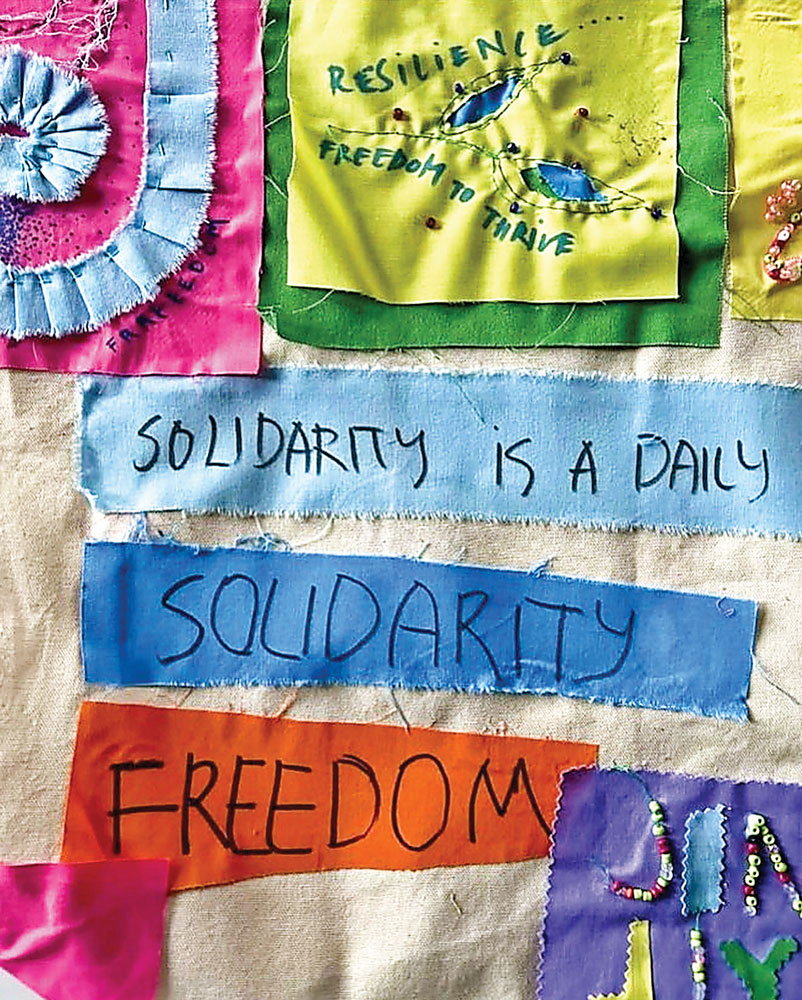
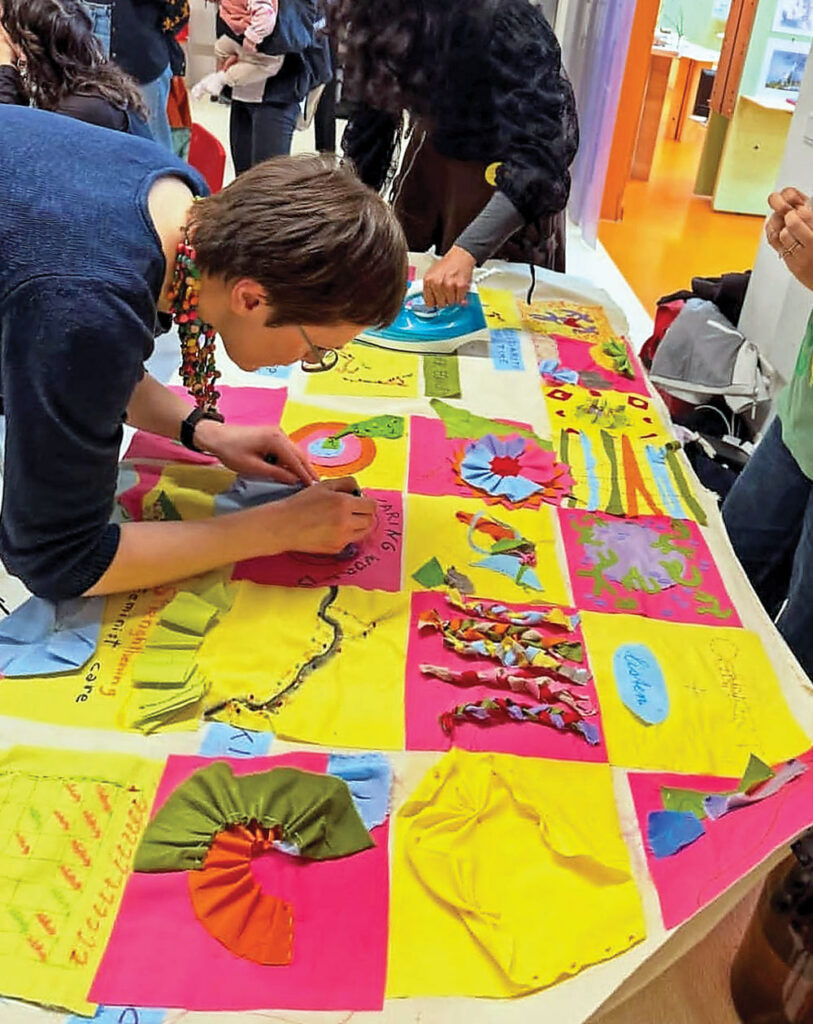
At TU Delft, the Sowing Solidarity gathering explored feminist knowledge-making through collective, tactile practice. A workshop led by Mexican craftswoman and textile artist Dian Soto Vega invited participants to co-create a feminist protest banner through fabric collage, repositioning textile craft-historically associated with women’s labour-as a site of knowledge, resistance and collective agency. Through making together, individual reflections became part of a shared material expression of solidarity, demonstrating how craft-based practices can create spaces for dialogue, connection and collective action.
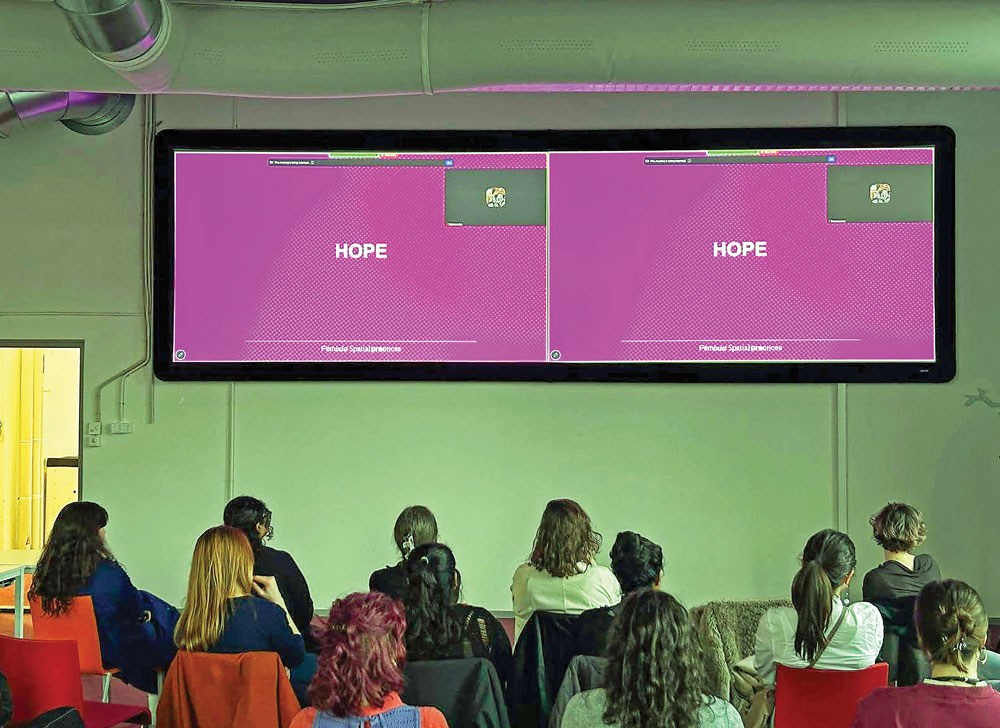
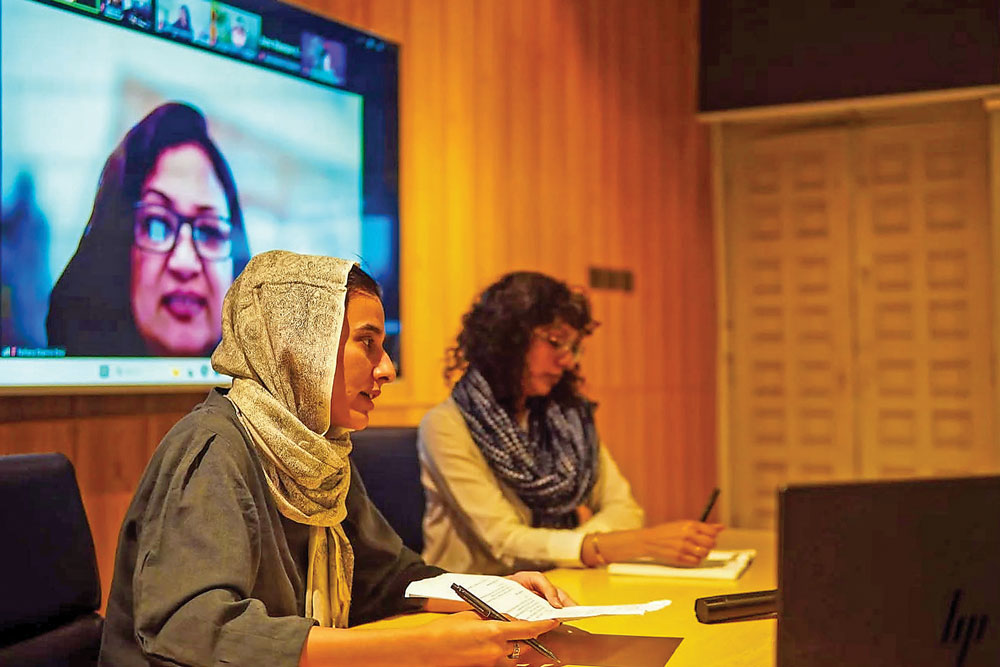
The Lahore gathering approached feminist knowledge-making through a different, locally situated lens. Questions of gender, mobility, visibility and access to public space were explored through practice-sharing and a Spatial Justice Walk, a method developed locally to examine how comfort, safety, movement and exclusion are negotiated across the city. Participants subsequently translated observations and experiences from the walks into collective maps, making visible forms of spatial knowledge often overlooked by conventional architectural analysis.
Together, these early gatherings illustrate a central principle of the programme: not methodological replication, but iterative translation. Practices emerging in one location are not intended to be copied unchanged elsewhere; rather, they contribute to an evolving repertoire of tools that can travel, be questioned, adapted and reinterpreted through different cultural and spatial conditions. As the programme expands, this repertoire includes tactile practices, spatial justice walks, feminist mapping, practice-sharing, discursive dinners and spatial storytelling. A discursive dinner developed in Bratislava, for example, combines shared food with conversation and collective reflection, while the Feminist Mapping Station emerged through collaboration in Belgium. Each method is grounded in a particular context yet capable of generating new meanings through encounter with others. In this way, the programme builds international solidarity not through a universal toolkit, but through a living and evolving process of exchange.
The programme’s concept of “pollinators” further strengthens this model. Rather than relying only on conventional speakers or international delegates, pollinators carry lived knowledge and experience between gatherings, translating insights from one context into another. The wider festival framework similarly proposes a growing travelling archive through which local maps, letters, reflections, tools and other traces can move between locations. The metaphor of pollination is significant. Pollination does not imply copying. What travels enters a different ecology.
This model also creates space for a critical examination of international solidarity itself. Feminist collaboration is not automatically free from inequality. Differences in funding, mobility, institutional recognition and geopolitical privilege remain. Practitioners from Pakistan and many other contexts encounter visa restrictions, limited travel funding and unequal access to global professional networks. The programme therefore raises difficult but necessary questions: who defines the agenda? Who travels? Who performs unpaid labour? Who receives authorship? Which institutions gain visibility? And whose knowledge is recognised as capable of shaping international discourse?
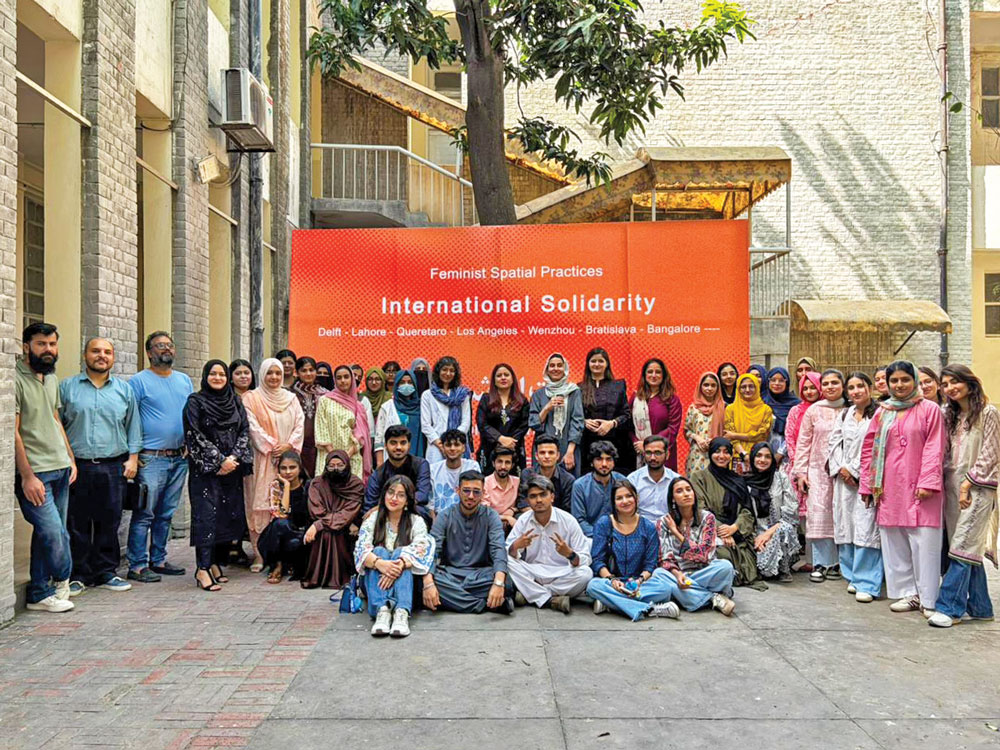
These questions make the distributed nature of the programme politically important. Lahore should not only send representatives elsewhere; it should be recognised as a place where knowledge is produced. The same applies to Bangalore, Bratislava and every other location within the evolving network. Local organisations are not simply hosts or access points. They are intellectual and methodological contributors.
Perhaps the most productive way to understand this initiative is therefore as an emerging infrastructure of solidarity. Its significance lies not in a sequence of events alone, but in the relationships established between them. Each gathering receives something, transforms it and contributes something forward. The programme’s broader framework explicitly imagines this as a relay in which tools, knowledge and practices move between locations while being enriched by local specificity.
In this model, no single city becomes the permanent centre. Delft does not define Lahore; Lahore does not become a regional case study; Bangalore and Bratislava will not simply repeat what came before. Each location enters the network with its own histories, practices and forms of expertise.
The most important movement across this expanding geography may therefore not be the transfer of a method from one place to another. It may be the creation of relationships through which different places can speak, question, translate, challenge and transform one another-while retaining the specificity of the worlds from which their knowledge emerges.
Dr. Mamuna Iqbal
Assistant Professor
University of Engineering and Technology, Lahore
Executive Council Member IAP-LC
Vice President – Women in Architecture Pakistan
PhD – Cardiff University


