


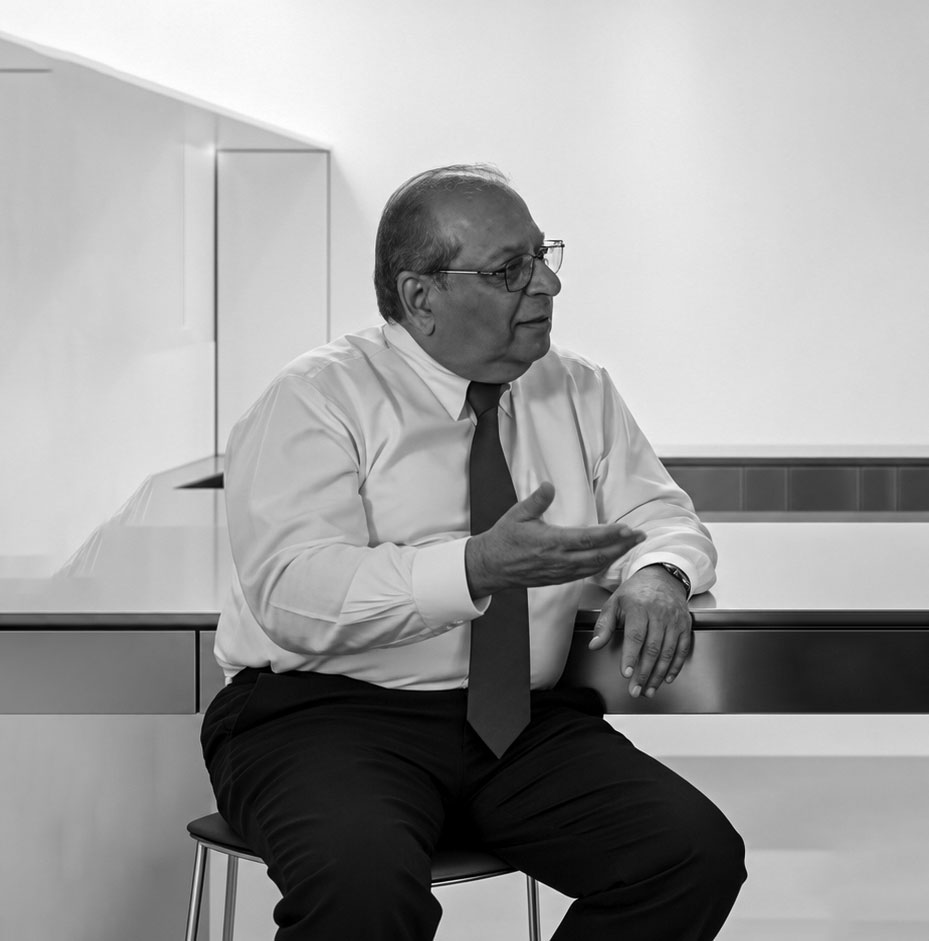
Hafeez Habibi is an architect and urbanist with over 46 years of professional experience in architecture, urban planning, and development, both in Pakistan and internationally. His early professional career included associations with NESPAK in Pakistan and Payette Associates while working in Boston, USA. He has subsequently remained in private consultancy practice for nearly four decades and currently serves as Chairman of CGD Consulting (Pvt.) Ltd.
His professional work encompasses architecture, urban planning, and large-scale developments, with particular emphasis on human-centred urbanism, liveability and the creation of socially and culturally responsive built environments. His planning approach advocates a more balanced urban mobility hierarchy, shifting emphasis from automobile-dominated development towards pedestrian movement, public transport, walkability and quality public spaces.
He is currently undertaken several major urban-scale initiatives, including the 9,000-acre Education City Karachi, the development of a major Special Technology Zone (STZ) in Karachi, Malir Industrial Park, and the DHA Karachi Transformation and Traffic Management Plan 2045. His earlier portfolio includes projects like the International Islamic University Islamabad, Pakistan Navy’s university, the PNS Rahbar at Manora and Mess complex for Pakistan Air Force in Islamabad, as well as the Redevelopment of Sehwan Sharif, among numerous institutional and development projects.
Throughout his professional career, Habibi has maintained that architecture and urban planning must extend beyond the physical development of buildings and infrastructure to address the social, cultural and human dimensions of the places they create.
Interview by Anzalna Wazir | Photos Credit: Architects
YOU TALK A LOT ABOUT THE “HUMAN ASPECT” IN URBAN PLANNING. WHAT EXACTLY IS YOUR VISION?
HAFEEZ HABIBI (HH): If a planner or designer is asked to design a habitat for a gorilla or a polar bear, the first thing he will do is try to understand the species itself-its physical and instinctive needs, its biological needs, its behaviour, and the spatial and environmental characteristics essential for its survival and well-being. Only then will he attempt to recreate those conditions in the habitat he designs.
Strangely, when we design the habitat of Humans, we often fail to begin with the same fundamental approach: What does a human being actually need from his environment-not merely to survive, but to live comfortably, socially and culturally… intellectually … happily?
“..Sans lene kee to azadee muyassar hai magar
..zinda rehne ke lye insan ko “kuch aur” bhee darkar hai
..Aur iss “kuch aur” bhee ka tazkira bhee jurm hai”(Ahmed Nadeem Qasmi)
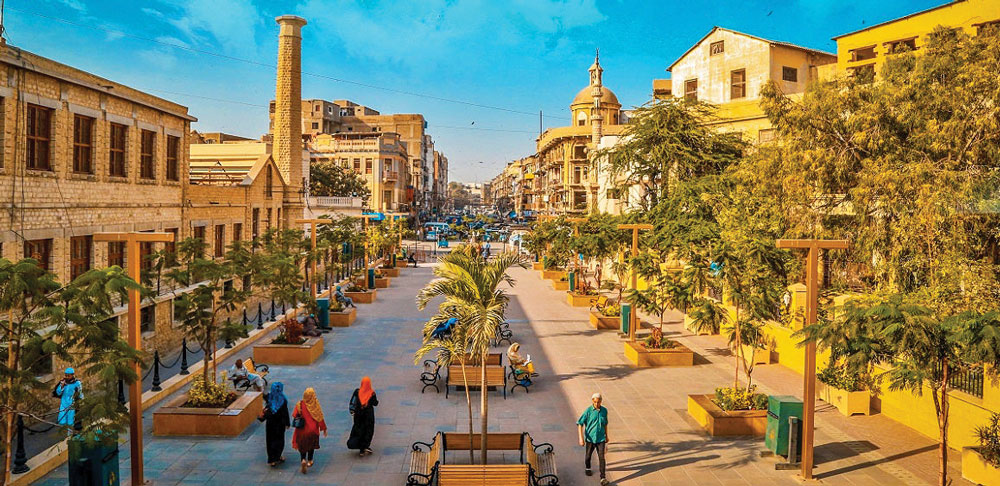
I believe this loss of awareness of the needs and aspirations of the Human Being has been one of the great shortcomings of post-industrial urban development.
Technology was supposed to serve humanity. We, unfortunately, in post-industrial urbanism, gradually began reorganising our cities to serve technology. With the extraordinary rise of the automobile, we started designing cities primarily to accommodate the movement and storage of vehicles, often displacing people from the very spaces in which human life had traditionally flourished.
For thousands of years, human beings experienced their habitat essentially at constant walking speed-around 5 km/h. At that speed, a person sees faces, surfaces, experiences spaces, encounters social and intellectual interaction, responding to his physical and psychological need to associate with. He experiences doors and windows; surfaces, textures, trees, light and shade; hears sounds and conversations; recognises smells, stops, meets and interacts with other people. Architecture surrounds the person. Streets and squares become places of encounter. These seemingly small experiences collectively create the emotional, social and sensory experience of a city.
A universal fact is that the Human Being has not fundamentally changed; he still walks at 5 km / h, which is the biological reality unchanged all the way till today and will remain constant forever, but the speed at which we design his environment has drastically changed while grossly disregarding his needs.
Once we began designing the city to be experienced at 60 or 80 km/h, its scale inevitably changed. Roads became wider, intersections larger, distances longer, and buildings increasingly became isolated objects viewed from moving vehicles. The intimate relationship between buildings, streets and people weakened. Spaces that once wrapped around human activity expanded beyond the human scale.
In the process, we did not merely change transportation; we changed the character of the human habitat itself.
This, to me, is one of the paradoxes of modern urban development. Instead of using technology to make human life richer, healthier, more convenient, and happier, we increasingly made the human environment subservient to the requirements of technology and the automobile and ruthlessly ignored them.
My vision therefore begins with a very simple premise: a city must first be designed for human beings as the prime objective; everything else should follow.
WHAT INSPIRED YOU TO WRITE, AND WHAT DOES “FOR OUR FEET, NOT FOR THE TYRES” MEAN IN THE CONTEXT OF KARACHI?
HH: Today we tend to measure urban success through traffic volumes, road capacity, travel time, FAR, infrastructure provision and real-estate values. These are all relevant, but they are instruments-not the purpose of a city. The real purpose is to create an environment in which people can live safely, comfortably and with dignity; where they can walk, meet, interact, work, play, experience beauty and participate in community life.
For me, therefore, the fundamental unit of urban planning is not the automobile, the road or even the building. It is the human being.
Once we reorient ourselves to this priority and accept it, the hierarchy of planning is reversed. The pedestrian comes first, followed by cycling and other forms of human-scale mobility, then efficient public transport, while the private automobile is accommodated as a necessity without being allowed to dominate the city. And the human dimension extends far beyond mobility. The entire built environment has to respond to our social, cultural, psychological, aesthetic and sensory needs. It should relate to human scale and encourage interaction, belonging and a sense of place.
Perhaps one of the simplest tests of a successful city is therefore to look at it through the eyes of a child, an elderly person or someone with limited mobility. Can they cross the street safely? Can they walk comfortably? Is there shade? Is there somewhere to sit? Can people meet and talk? Can children experience their neighbourhood independently? Above all, do people feel that the city belongs to them?
That is what I mean when I speak of restoring the human aspect that has too often been lost in modern planning.
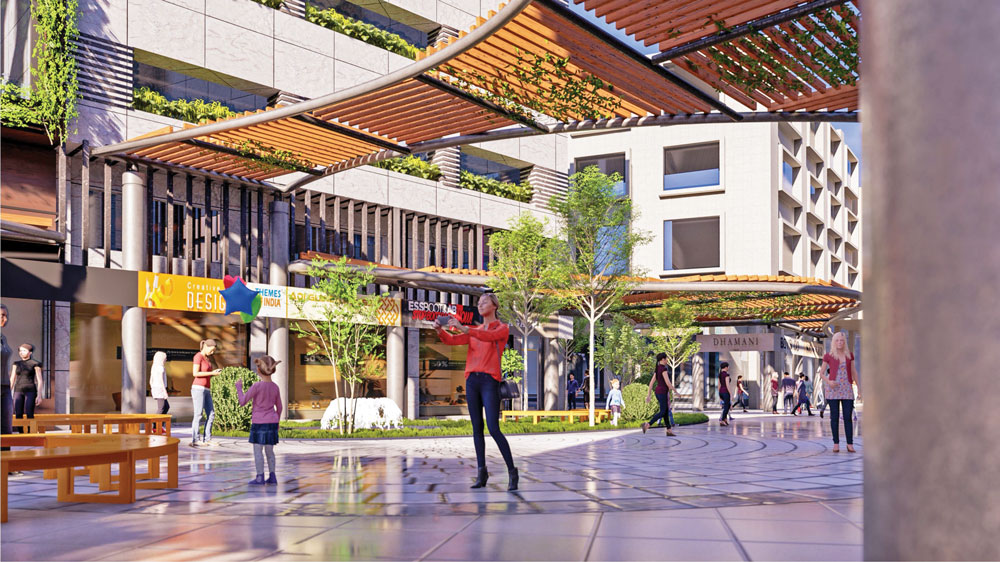
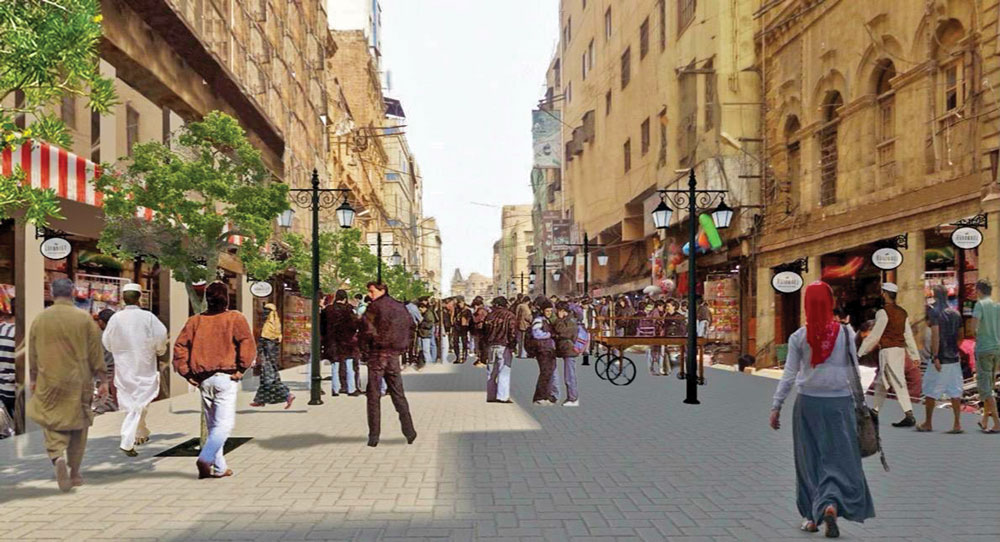

In short, the purpose of a city is not the movement of traffic. The purpose of a city is the enrichment of human life.
The industrial age, and particularly the dominance of the automobile, fundamentally altered this relationship. Technology, which was meant to serve human beings, gradually began determining the form of our cities. People were pushed into leftover spaces while vehicles occupied spaces that historically belonged to people. In many ways, we became subservient to the technology created to serve us.
Many Western cities have now recognised this mistake and are attempting to reclaim streets and public spaces for pedestrians, cycling, greenery and social life. In some places, even intrusive highways and elevated structures are being reconsidered or removed.
Karachi, unfortunately, is still moving in the opposite direction. We continue to measure urban progress largely by how quickly vehicles can travel between two points-often without recognising what is lost in between: human-scale spaces, social interaction, environmental quality and ultimately human dignity.
That is what inspired For Our Feet, Not for the Tyres. The title is a reminder that cities are habitats for human beings, not thoroughfares for automobiles. We should learn not merely from what the West built in the last century, but from what it is now trying to correct.
WHY DO YOU BELIEVE KARACHI NEEDS TO RETHINK ITS APPROACH TO URBAN DEVELOPMENT?
HH: It is high time that we must stop blindly copying the West and try to address mobility issues of the city with due regard to urbanism, instead making it merely a traffic engineering subject. Major infrastructure projects should therefore undergo not merely Traffic-Impact Assessment, but Comprehensive Urban-Impact Assessment.
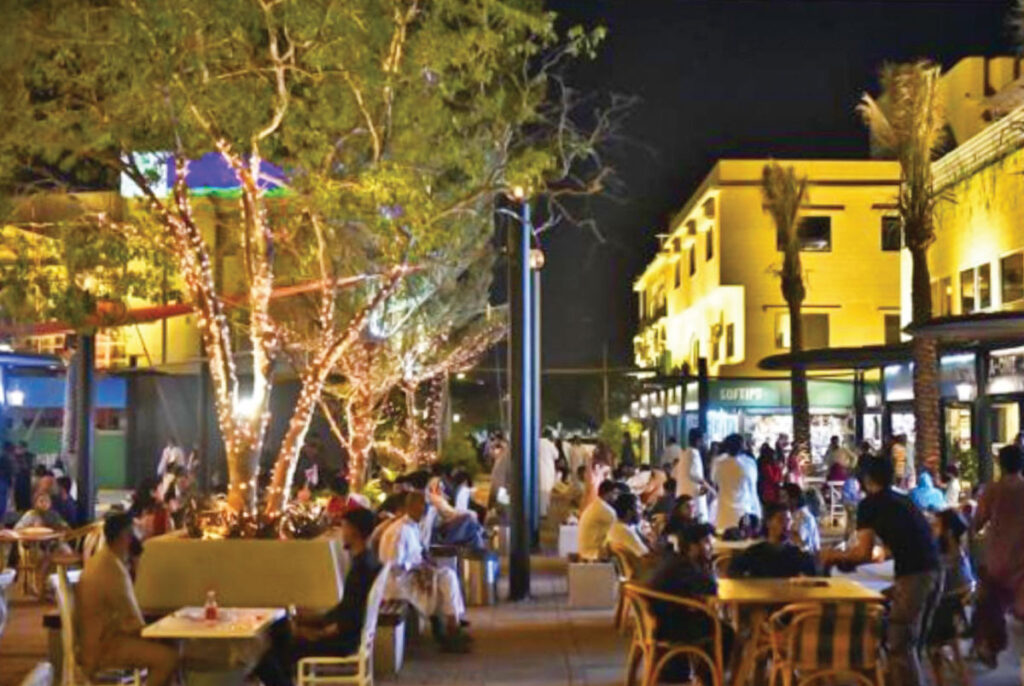
HOW CAN GOVERNMENT AGENCIES, ARCHITECTS, ENGINEERS, AND COMMUNITIES WORK TOGETHER TO CREATE BETTER URBAN SPACES?
HH: The fundamental problem, in my view, is not merely a lack of coordination; it is a lack of awareness and a shared urban consciousness, even among professionals. Government agencies, architects, planners and engineers cannot entirely absolve themselves of responsibility for the kind of urban environment we are creating.
Working together, by itself, is therefore not enough. If there is a vacuum of vision, collective effort may simply reinforce the same mistakes. In fact, all these disciplines are already participating in shaping our cities, yet the results often remain fragmented and insensitive to human needs.
The first requirement is therefore to develop a common understanding that the ultimate purpose of urban development is human well-being and liveability. Once that consciousness exists, collaboration between government, professionals and communities becomes meaningful, because every discipline can then contribute towards the same human-centred objective.
WHAT SOCIAL AND CULTURAL COSTS ARE USUALLY OVERLOOKED WHEN MAJOR INFRASTRUCTURE PROJECTS ARE PLANNED?
HH: What we most often overlook are the unchanged biological, social and psychological needs of the human being. In pursuing engineering efficiency, we frequently ignore people’s need for interaction, belonging, human-scale spaces, environmental comfort, aesthetic experience and connection with their surroundings.
The result is not merely a physical loss. It gradually creates social isolation, psychological and emotional stress, environmental discomfort and a declining sense of place and community.
If human satisfaction and well-being were restored as the primary objective of urban planning, we would realise that the cost of insensitive infrastructure is far greater than what appears in a project’s financial or engineering calculations. What is ultimately at stake is the quality of everyday human life in the city
Where, in our calculations, do we account for the destruction of pedestrian continuity? How do we measure the disappearance of a familiar streetscape, the decline of small businesses, the loss of trees and public spaces, or the gradual erosion of memory, identity and sense of belonging?
We have sophisticated methods for calculating the financial and engineering costs of infrastructure, yet almost no equivalent system for measuring the social, cultural and human cost of destroying a place.
YOU ARGUE THAT “BRT IS A TRANSPORTATION TECHNOLOGY. IT IS NOT AN URBAN PHILOSOPHY.” WHAT DO YOU MEAN BY THIS?
HH: Karachi desperately needs an efficient mass public transportation system. There should be no ambiguity about that.
But accepting the need for BRT does not mean that every physical manifestation of BRT represents good urbanism. BRT is essentially a means of moving people; it cannot, by itself, determine how a city should be shaped.
Jane Jacobs understood decades ago that a street is not merely a transportation corridor-it is a social institution. People walking, sitting, shopping, watching, and encountering one another create networks of familiarity, economic exchange, security, and belonging. These relationships rarely appear on an engineering drawing, yet destroy them, and something fundamental is lost, even if traffic moves faster.
A well-designed mass-transit system can reduce automobile dependence and strengthen urban life. But an elevated structure inserted insensitively through an established community can create physical barriers, residual spaces, visual disruption, and pedestrian difficulties, while damaging an existing social and urban culture.
That is why transport infrastructure must remain part of a larger human-centred urban philosophy. Mobility should serve the city; the city should not be reshaped merely to serve mobility.
WHAT LESSONS CAN KARACHI LEARN FROM THE IMPLEMENTATION OF BRT PROJECTS?
HH: In Karachi for instance, Nazimabad illustrates this concern. It was never merely a transportation corridor. It developed as one of Karachi’s important planned middle-class communities, with schools, markets, restaurants, tree-lined streets and everyday social activity creating a recognisable urban character.
A tea shop, a row of restaurants, a mature tree, a familiar market or the walk between one’s home and neighbourhood centre may appear insignificant on an engineering drawing. Collectively, however, they create place, memory and belonging.
Future BRT projects must therefore begin with a much broader understanding of their urban context. Alignment, stations, pedestrian connections, landscaping, public spaces, local businesses and the character of adjoining neighbourhoods should all be treated as integral parts of the project-not as secondary considerations after the engineering has been completed.
Every flyover is also a structure within the city. Every station is architecture. Every elevated corridor becomes part of the permanent cityscape.
Infrastructure must therefore be judged as architecture and urbanism-not merely as civil engineering
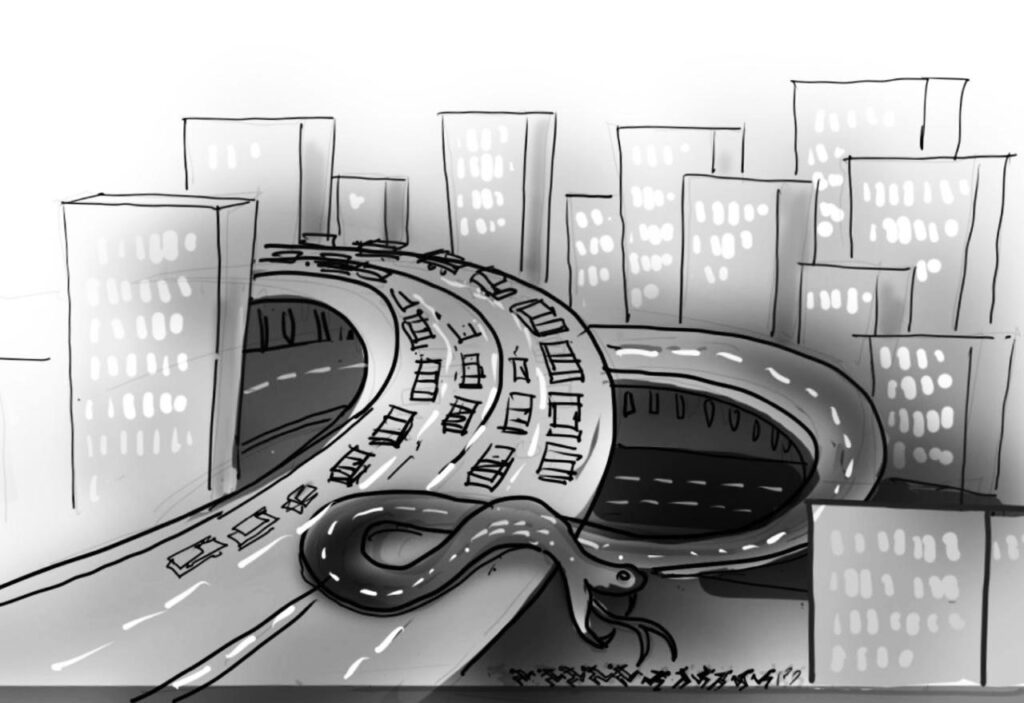
WHAT DOES THE PHRASE “MOVEMENT SERVES LIFE; LIFE DOES NOT SERVE MOVEMENT” MEAN TO YOU?
HH: Movement is necessary for every city, but movement is a means, not the purpose of the city. We travel because we need to work, learn, meet, shop, interact, and participate in social and cultural life. Transportation therefore exists to support these activities-not to dominate or displace them.
The problem begins when we reverse this relationship and start reorganising the city primarily around the efficient movement of vehicles. Streets become traffic corridors, public spaces become parking areas, neighbourhoods are divided by highways and flyovers, and pedestrians are pushed into whatever space remains. In trying to make movement faster, we can actually diminish the quality of the life that movement was intended to serve.
A successful city should therefore not be judged simply by how quickly one can move through it, but by the quality of life one experiences while being in it.
That is what I mean when I say: movement must serve life; life must never be made subservient to movement.
WHAT WAS THE VISION BEHIND YOUR REVIVAL OF SADDAR DOWNTOWN PROJECT AND YOUR EFFORTS IN ITS IMPLEMENTATION?
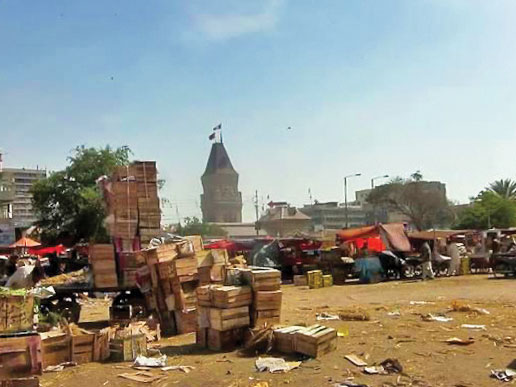
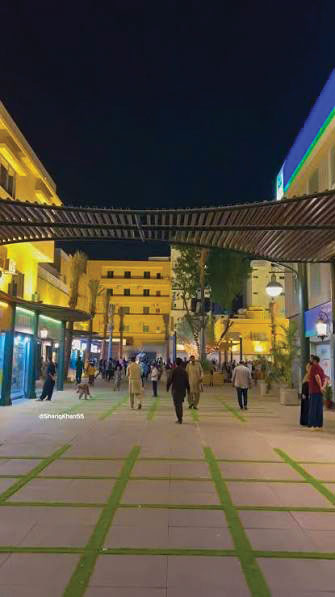
HH: The vision was fundamentally to transform Saddar Downtown into a vibrant, human-friendly destination rather than merely a thoroughfare-and, in doing so, restore the past glory and civic character of Karachi.
We initially presented the concept to the then Governor of Sindh, Dr. Ishrat-ul-Ebad, who supported it. It subsequently received support from the Chief Minister of Sindh and senior officials, including Mr. Mohammad Waseem, Chairman P&D, and Mr. Niaz Soomro. The challenge, however, was always to translate that support into implementation in its true spirit.
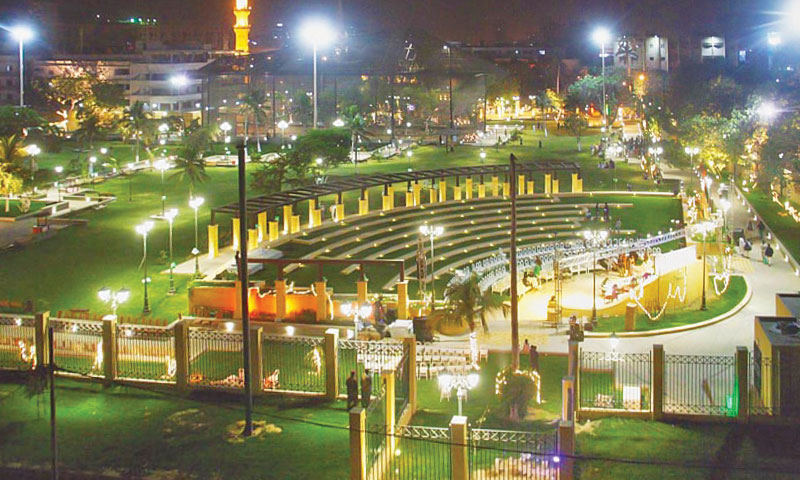
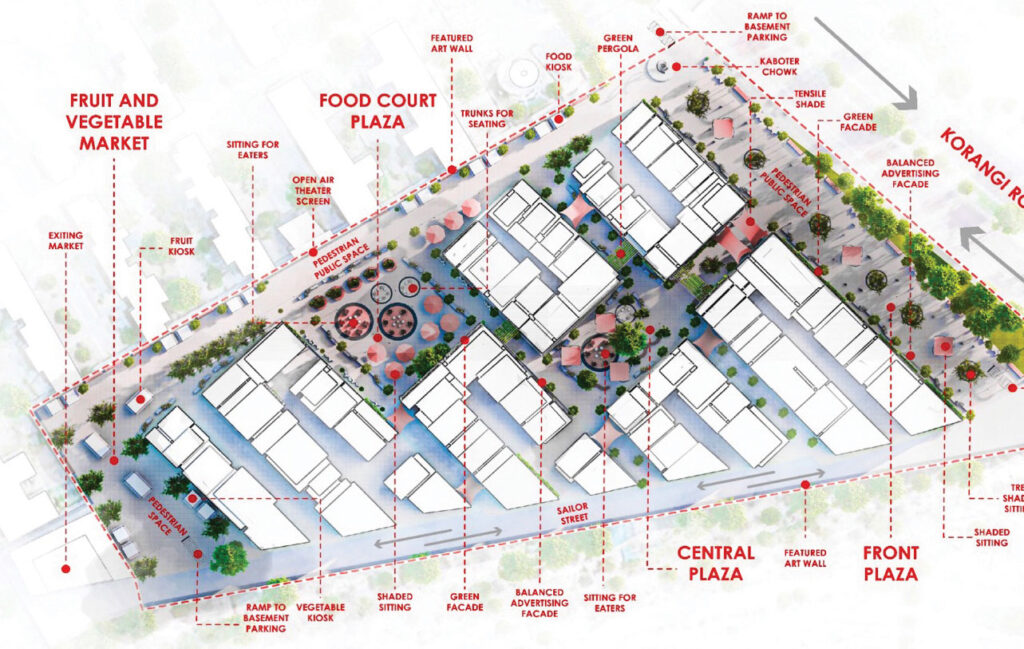
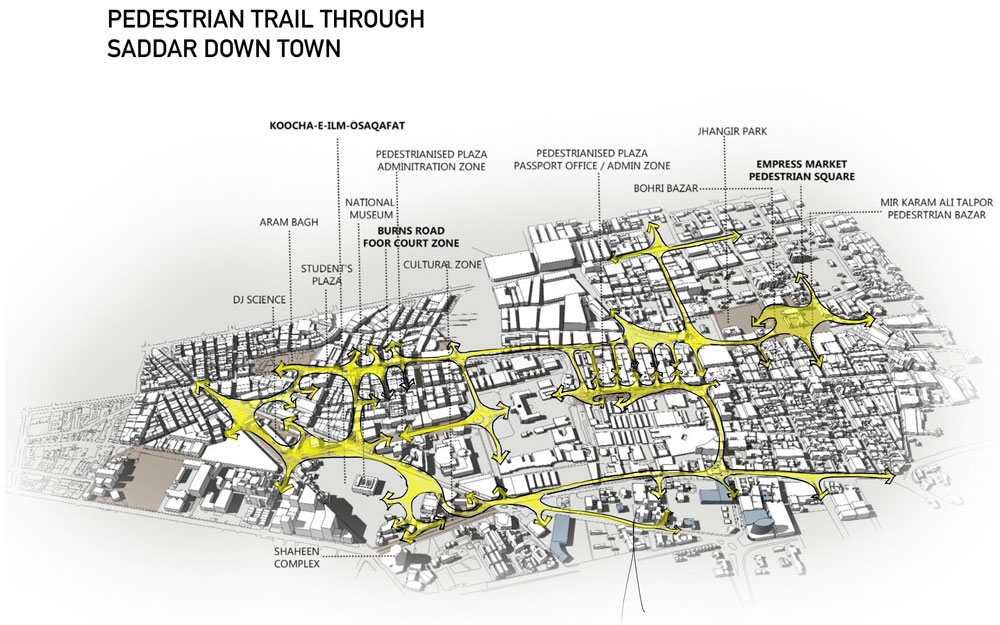
Our master plan placed pedestrianisation at the heart of Saddar’s revival. It envisaged a continuous pedestrian network extending from the historic Empress Market through Saddar towards Pakistan Chowk in the form of a Pedestrian Trail along with various pedestrian plazas designed to connect its important public, commercial and cultural spaces. Burns Road, for example, was envisioned as a vibrant pedestrian food street. Some parts of the larger vision were subsequently realised, including the redevelopment of the historic Jahangir Park. The plan also included restoration and the adaptive reuse of all heritage buildings of Saddar Downtown.
The concept and philosophy and human-centered approach of the master plan were highly appreciated by the World Bank, which on the basis of this philosophy, agreed to finance few components. With the support of the Project Director,of World Bank Program , Mr. Khair Mohammad Kalwar, the Education and Cultural Zone around Burns Garden and the adjoining educational institutions and upgradation of Pakistan Arts Council activity zone was taken up, incorporating pedestrianisation and public-realm improvements. This area was subsequently named People’s Square as a place of social and intellectual fusion of the educational, art and literature-related activities, of the Pakistan Arts Council.
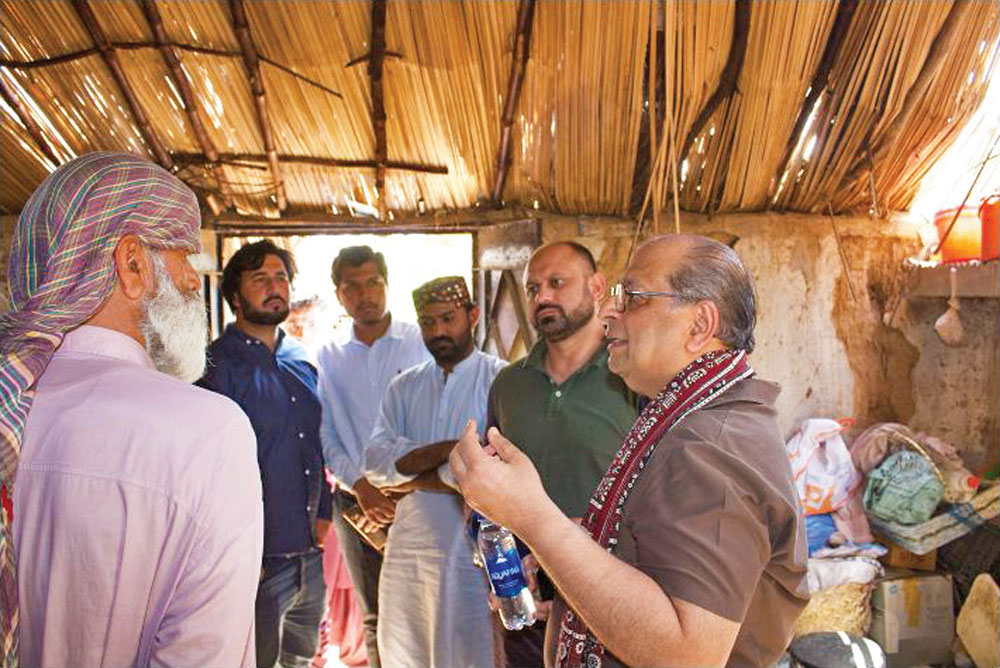
The philosophy throughout was simple: Saddar should not merely be a place people pass through; it should be a destination where people come to walk, meet, experience, and spend time.
Unfortunately, as the project moved through successive administrative processes, much of the original integrated vision and its underlying philosophy was diluted. Nevertheless, the objective remains as relevant today as it was two decades ago: to recover historic Saddar as the living civic, cultural and social heart of Karachi.
Reviving Saddar, therefore, was about the revival of the past glory of Karachi as a living civic, cultural and social heart of Karachi.
But unfortunately, the intent and philosophy were subsequently lost in the administrative rigmarole
WHAT LESSONS FROM YOUR URBAN DESIGN INTERVENTIONS COULD BE APPLIED TO THE DEVELOPMENT OF KARACHI AS A LIVEABLE, LOVABLE AND HUMAN-CENTERED CITY? WHAT SHOULD KARACHI’S URBAN MOBILITY PRIORITIES BE OVER THE NEXT DECADES?
HH: The most important lesson from our urban interventions is that we must first redefine what we consider urban success. We tend to measure it through traffic capacity, travel time, FAR, infrastructure provision, and real estate values. These are important, but they are instruments-not the purpose of a city.
The real measure should be the quality of human life: whether people can live safely and comfortably, walk, interact, enjoy public spaces, experience beauty, and develop a sense of belonging to their city.
This is the philosophy we have tried to introduce in Education City and the DHA Karachi Transformation initiatives. Once the human being becomes the fundamental unit of planning, our conventional mobility hierarchy has to be reversed:
– Priority 1 – Pedestrians: restoring dignity and comfort to human movement at the natural walking speed of around 5 km/h.
– Priority 2 – Cycling and other forms of human-scale mobility.
– Priority 3 – Efficient and accessible public transport.
– Priority 4 – Private automobiles: accommodated as a necessity, but not allowed to dominate the city.
But becoming human-centred goes beyond mobility. Karachi’s built environment must respond to our social, cultural, psychological, environmental, aesthetic and sensory needs. We need human-scale streets, shade and greenery, quieter neighbourhoods, accessible public spaces and places that encourage interaction and strengthen community life.
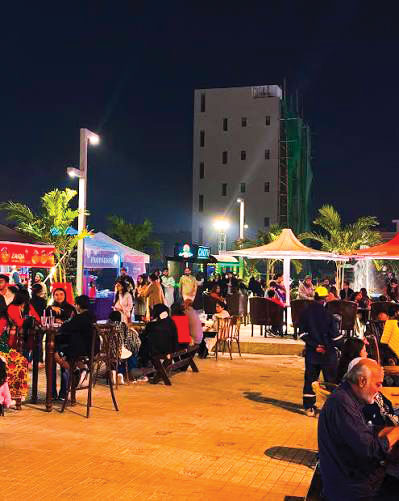
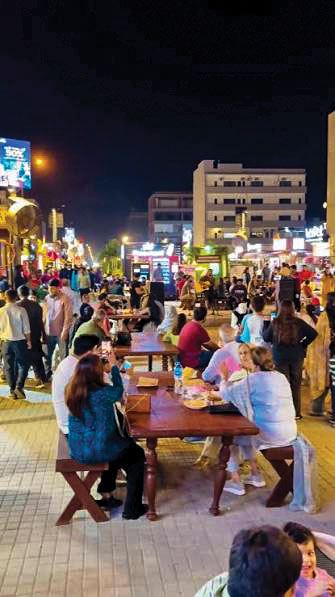
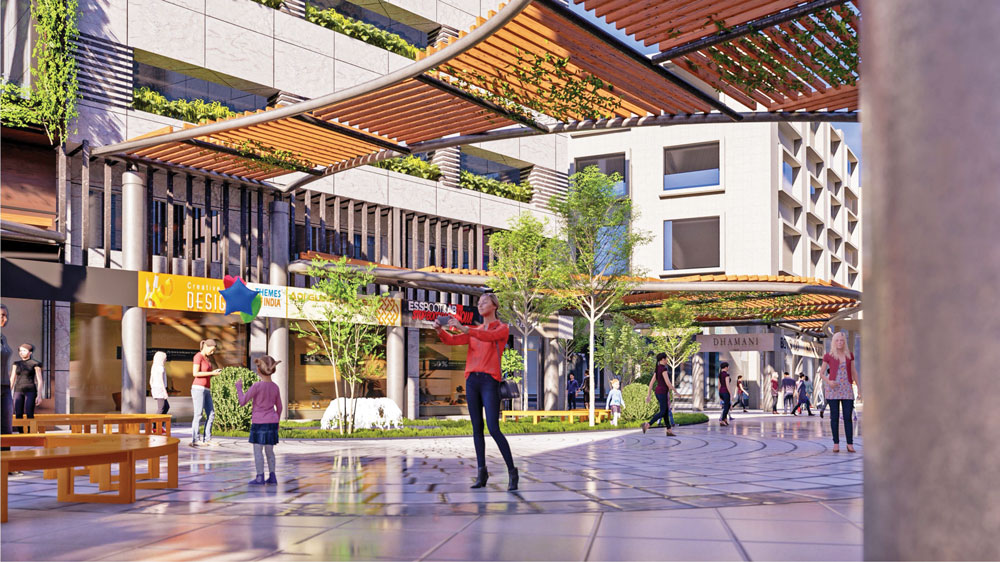
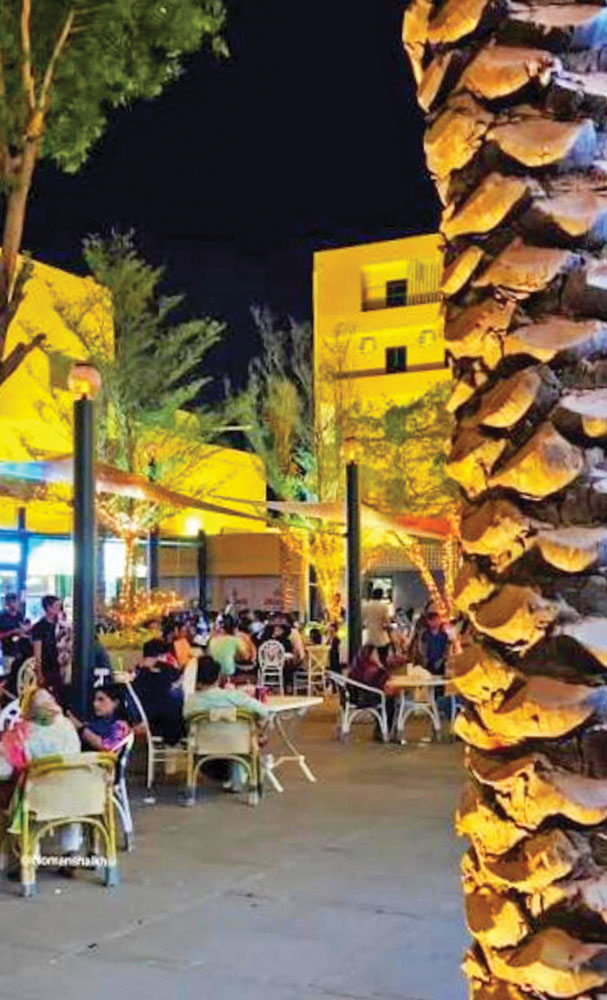
In the DHA Transformation Plan, for example, the typical pedestrian zone at educational city with 10 minutes walkability criteria proposed Superblock concept seeks to discourage through-traffic within residential areas, reduce unnecessary asphalt and create quieter, greener and safer neighbourhoods, with linear public spaces where children can play and communities can interact. Commercial areas are similarly envisaged as vibrant pedestrian-oriented destinations, rather than merely concentrations of traffic and parking. Pilot interventions such as the transformation of DHA’s historic A Market into a traffic-free, human-friendly space and the development of Creek Walk in Phase 8 demonstrate this approach.
These are principles that can be applied at a much larger scale across Karachi.
Perhaps the simplest test of our future planning should be to see Karachi through the eyes of a child, an elderly person or someone with limited mobility. Can they walk safely and comfortably? Is there shade? Is there somewhere to sit? Can children experience their neighbourhood independently? Can people meet and interact? Above all, do citizens feel that the city belongs to them?
Karachi’s next two decades should therefore not be about moving more vehicles faster. They should be about moving people better while creating better places to live.
The purpose of a city is not the movement of traffic; it is the enrichment of human life. If Karachi consciously reorients its planning around this principle, it can once again become not merely a functional city, but a liveable, lovable and genuinely human-centred one.
WHAT WENT WRONG IN THE DEVELOPED COUNTRIES? ARE WE REPEATING THE SAME MISTAKES IN OUR CITIES?
HH: We sometimes forget that many Western cities were not always the pedestrian-friendly environments we admire today. Particularly after the Second World War, the automobile began dominating urban planning. Expressways penetrated cities, neighbourhoods were divided, historic fabric was demolished, and vast areas were surrendered to roads and parking. Gradually, the automobile began determining urban form rather than human needs.
Proposed DHA Karachi Transformation and traffic management plan for the social and environmental uplift with change in priority from private vehicles towards pedestrians as first priority, then public transport system and private vehicles as last priority, while introducing low traffic super residential blocks with opportunities of social interaction.
Today, many Western cities are actively reversing these mistakes. Barcelona’s Superblocks, the reclamation of road space in Paris, Copenhagen and London, highway removals and waterfront regeneration in American cities, and Seoul’s transformation of automobile-dominated infrastructure all reflect the same emerging consciousness: cities are habitats and destinations for people, not merely thoroughfares for vehicles.
The irony is that while developed cities are spending enormous resources correcting the mistakes of automobile-dominated planning, we in Pakistan continue to reproduce many of them.
Faced with congestion, our instinct is still to widen roads, construct flyovers and underpasses, create elevated corridors and make arteries signal-free. These may move vehicles faster between two points, but we seldom ask what happens to the city in between-to pedestrians, neighbourhoods, businesses, trees, public spaces and the social life of the street.
A project may succeed as traffic engineering and still fail as an urban intervention.
Pakistan does not need to reject technology or modern infrastructure. We need efficient roads and mass transit, but technology must remain a servant of human needs, not the determinant of urban form.
We have the advantage of seeing what other societies did, where they went wrong and what they are now trying to repair. Our opportunity is not to copy yesterday’s developed world, but to learn from its mistakes and move directly towards the human-centred city of tomorrow.


