


A Jane’s Walk Through Karachi’s Saddar, Reclaiming Space In A City Built For Cars
Text by Samia Sarfaraz, Research Associates, NRUP
In today’s Karachi, walking is not just uncommon – it’s practically unthinkable. The city has been systematically designed for speed, not slowness; for cars, not people. Ride-hailing apps like InDrive and Bykea have amplified this shift, turning even the shortest distances into paid trips. The idea of walking five minutes to a bus stop or through a historic neighborhood seems foreign. Sidewalks are either broken or claimed by shops. Drivers behave as if pedestrians are in their way. And for women especially, walking in the city means braving unwanted attention, stares, and the lurking fear of harassment or theft. In a place like Karachi, where public space is increasingly privatized or neglected, the simple act of walking becomes an act of quiet resistance.
As part of the global Jane’s Walk movement, inspired by urbanist Jane Jacobs, to encourage people to experience cities on foot and reflect on how public spaces function, or fail for everyday citizens. Held annually in May in over 200 cities worldwide, these citizen-led walks which spark conversations about walkability, safety, heritage, and urban belonging. This year’s Jane’s Walk in Karachi began, as a group of curious, observant, and hopeful citizens came together to walk from Frere Hall to Empress Market, through the very heart of Saddar. As Jane Jacobs once said,
“Streets and their sidewalks, the main public places of a city, are its most vital organs.”
So we chose to heal and reawaken their flow. By reclaiming circulation within these vital organs, we sought to breathe life back into forgotten pathways, making movement meaningful once more. It wasn’t always easy, but it was certainly revealing.
Our Jane’s Walk began at Frere Hall, where banyan trees still stretch out over lawns once meant for British elites. Its sandstone walls, pointed arches, and open verandahs reflect an intent to create civic spaces suitable for Karachi’s environment. Today, Frere Hall remains not only a visual landmark but also a symbol of colonial urban planning that valued civic openness and walkability; a stark contrast to today’s congested, car-oriented cityscape.
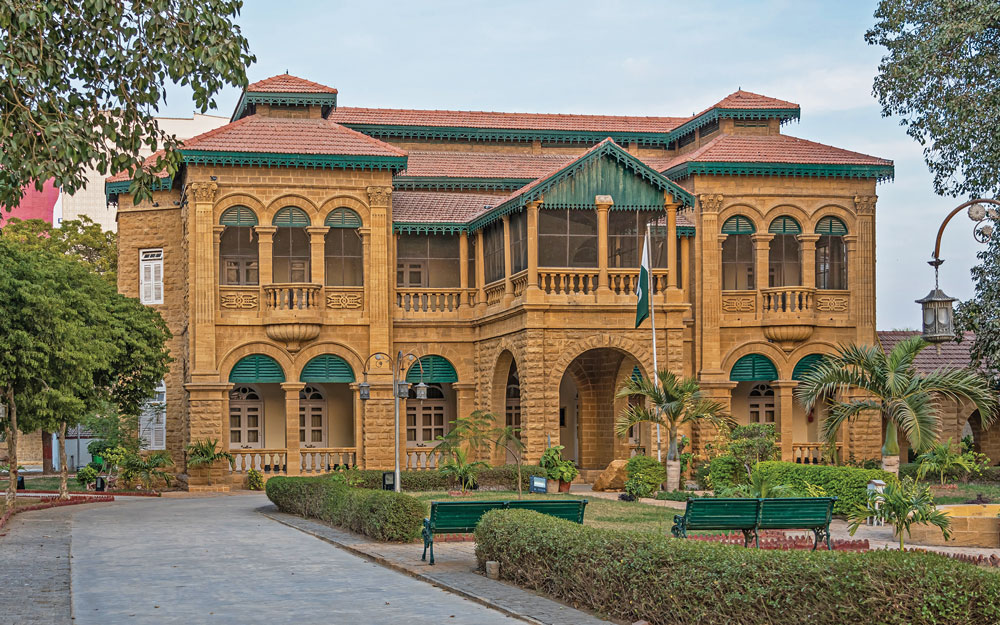
Stepped on to formerly known as Burns Road, Fatima Jinnah Road that cuts through some of Karachi’s most significant colonial-era institutional zones. Lined with landmarks like Frere Hall, the Sindh Club, and The Quaid-e-Azam House Museum. The road reflects a planned colonial civic order, designed with generous setbacks, and green buffers. The walk became a kind of architectural archaeology, revealing what Karachi was, what it has become, and what it still could be.
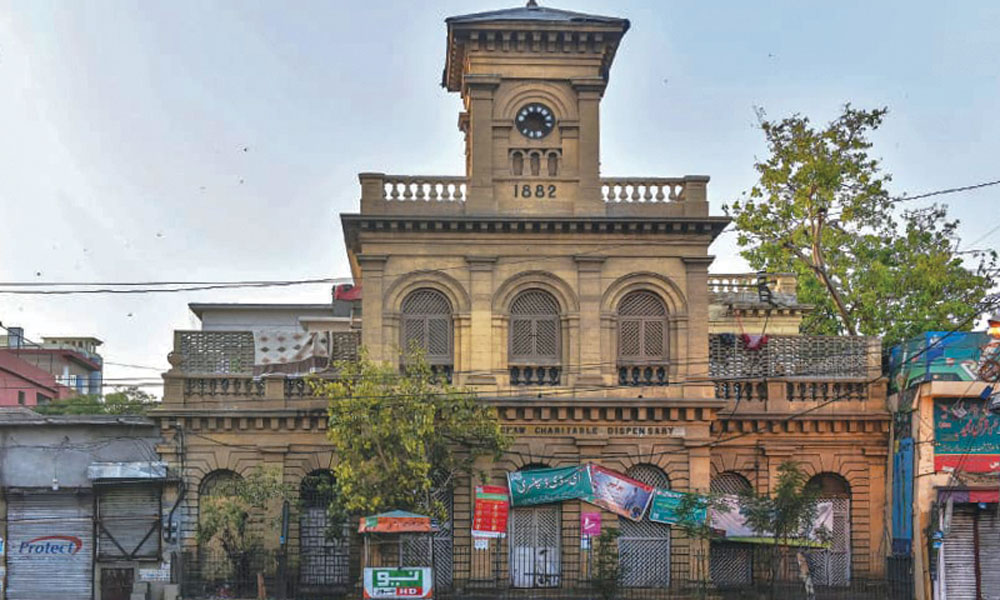
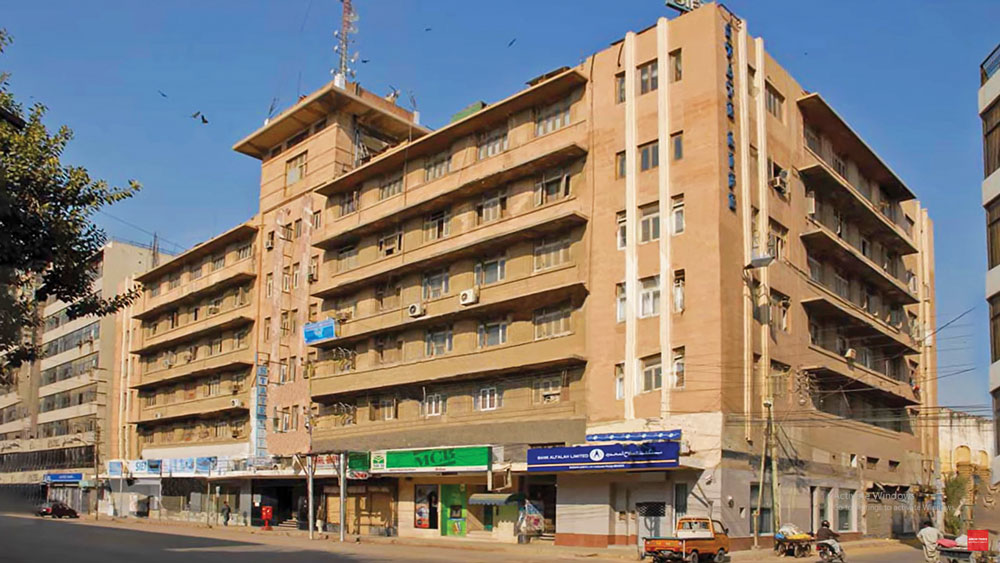
Our path led us onto the lively stretch of Zaibunnisa Street, formerly Elphinstone Street, a shopping promenade. Its original stone facades, balconies, and arched fenestration still peek out above the retail chaos below. The upper floors tell tales of another Karachi, one of elegant department stores and cafes while the ground floor is now overwhelmed by overflowing signage, informal vendors, and collapsing sidewalks. Crossing roads was the hardest part. There were moments when it genuinely felt like the vehicles were daring us to step forward. The further we walked, the more it felt like we were weaving through a timeline of architectural memory and commercial improvisation. We passed by Ilaco House and the Mohammadi Building, whose once-regal elevations and stone facades now mask underutilized upper floors. These buildings represent a missed opportunity in vertical urbanism; their upper stories remain vacant while the ground floors overflow with informal retail activity. Participants reflected on how these abandoned heritage structures could be reimagined as public libraries, art spaces, or co-working hubs; breathing new life into them while also enhancing walkability. By serving as engaging pause points along pedestrian routes, these revitalized spaces would offer comfort, shade, and purpose, encouraging more people to travel on foot and fostering a more connected and human-scaled urban experience. Moving on to the Preedy Street that has several heritage structures that reflect the city’s diverse cultural tapestry. Notably, the Eduljee Dinshaw Charitable Dispensary, established in 1882, stands as a philanthropic endeavors of the time. Someone pointed at an old building and said, “My grandfather used to work there,” drawing gasps from others who hadn’t realized the building was still standing.
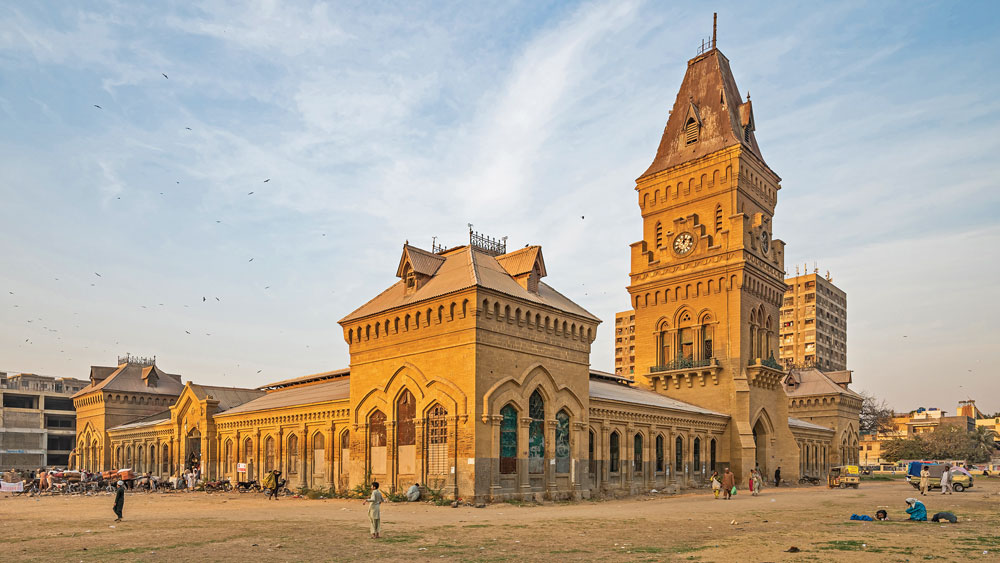
By the time we reached Empress Market, the air had thickened with smells of spices, meat, chai, and exhaust fumes, as chaotic as it was captivating. Childhood memories resurfaced. For some, the walk brought back long-lost memories of going shopping with grandparents, a time when Karachi moved at a slower, more human pace. Vendors sell everything from fresh produce, spices, meats, and grains to textiles, pets, and household goods, making it a one-stop hub for daily life in Karachi. The interior buzzed with activity and a sensory experience that reflected the cultural diversity of the city. Several participants stood in awe under the shadow of Empress Market.
Saddar was originally designed with pedestrians in mind wide footpaths, arcades, and tree-lined streets created a walkable civic environment. Buildings like Empress Market and Frere Hall were meant to be approached on foot, not by car. Today, those walkways are barely visible. Most are encroached by vendors or blocked by parked bikes and shop extensions. What was once a planned pedestrian network now feels like an obstacle course.
The walk ended at Jehangir Park, where participants gathered for a short reflection session, sharing insights, observations, and memories from the journey through Saddar’s rich architectural and urban landscape. The heat was harsh and and drained us. Sidewalks were blocked. Most walkways were overtaken by shopfronts and stalls, turning pedestrians into intruders in someone else’s space. Despite the obstacles, moments of joy and connection persisted; a group paused in front of a street food stall, exchanging tips on who makes the best bun kebabs and chaat.
Throughout our 2.5 km walk, we moved through 150 years of urban evolution, a continuum of building typologies, colonial institutions, mid-century commercial blocks, and organic market formations layered in time but connected by the same lack of pedestrian infrastructure. This wasn’t an act of activism. It was a quiet, collective reminder that reclaiming our streets doesn’t require grand gestures. Saddar still holds the scale and structure for walkability but it’s been overwhelmed by neglect and informal sprawl.
Jane Jacobs reminds us, streets and sidewalks are the city’s ‘most vital organs’ not just pathways, but living spaces where community breathes and life unfolds. Our walk through Saddar revealed how reclaiming these spaces for people, rather than cars, can revive the heart of Karachi, weaving together its rich history, vibrant culture, and everyday moments into a more connected urban life.


