


Text by Ar. Asma Qayoom | Photo Credit Students DUET
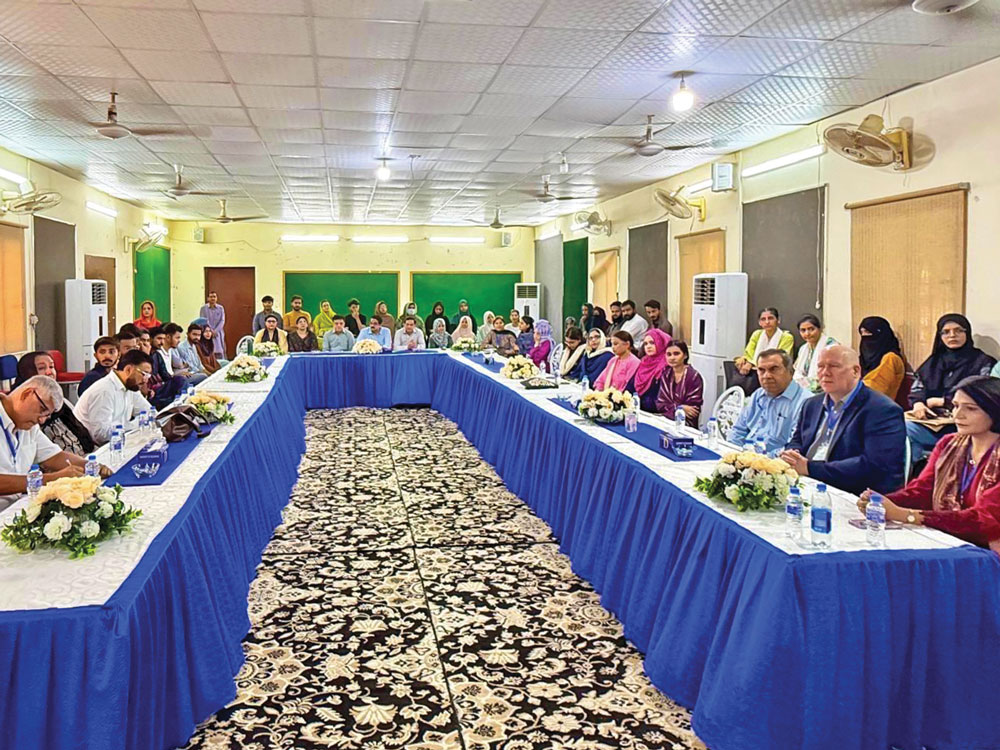
On May 27, 2025, the Department of Architecture andPlanning Dawood University of Engineering and Technology (DUET) in Karachi hosted a landmark event that promises to reshape the culture of mentorship within academic and professional communities. The Colloquium on Mentorship for Professional and Leadership Development, organized by the Department of Architecture and Planning (DAP), served as a powerful platform to reflect on the timeless value of mentorship, highlighting its critical role in shaping future leaders.
This inaugural event, steered by the visionary leadership of Prof. Dr. Yasira Naeem Pasha, Dean of the Faculty of Civil Engineering and Architecture and Planning at Dawood University of Engineering and Technology Karachi, was more than a mere gathering – it was a deliberate effort to revive and reimagine mentorship as an interdisciplinary, empathetic, and sustainable practice.
This event is a distinguished part of the DAP Colloquium Series Lifelong Discourse – a pioneering and thoughtfully designed initiative by Prof. Dr. Yasira Naeem Pasha, Dean of the Faculty of Civil Engineering and Architecture and Planning. This initiative aims to cultivate an ongoing culture of learning, reflection, and mentorship by creating continuous opportunities for interdisciplinary dialogue and knowledge exchange. It is committed to nurturing leadership and professional development through sustained conversations that bridge academia, industry, and community, ultimately fostering a collaborative environment where mentorship evolves into a deeply rooted, lifelong practice.
The colloquium commenced with a serene recitation of Surah Asr, which poignantly reflects themes of patience, truth, and righteous action – foundational values that resonate deeply with the spirit of mentorship.
Opening Session: Grounding Mentorship in Core Values
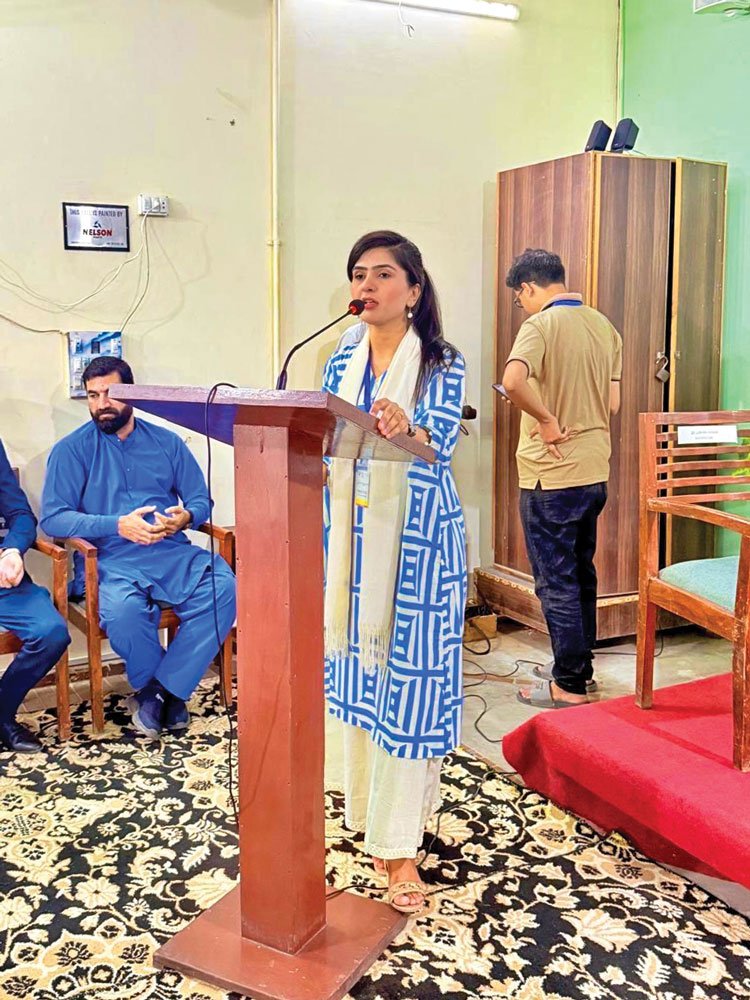
Ar. Asma Qayoom warmly welcomed the participants, setting an inviting tone for the day and acknowledging the dedication of the organizing committee. The gathering featured an inspiring mix of faculty, students, and professionals, all united by a shared commitment to fostering leadership through mentorship.
Ar. Asma Qayoom acknowledged the visionary leadership and foundational vision behind this colloquium by Prof. Dr. Yasira Naeem Pasha, Dean of the Faculty of Civil Engineering and Architecture and Planning, whose commitment has been instrumental in shaping the direction and purpose of this landmark event.


Welcome Address:
A Visionary Call by Prof. Dr. Yasira Naeem Pasha
Prof. Dr. Yasira Naeem Pasha, Dean of the Faculty of Civil Engineering and Architecture and Planning, extended a heartfelt welcome to all attendees, emphasizing the colloquium’s unique interdisciplinary nature. She highlighted architecture not only as a discipline rooted in creativity and technical expertise but also as a dynamic field that naturally bridges multiple domains of knowledge.
“Mentorship is more than guidance; it is a collaborative journey that transcends disciplines and generations,” Dr. Pasha stated. “This colloquium is the dawn of a new tradition – one where mentorship becomes a vibrant culture, enriching academic inquiry and professional practice alike.”
She expressed hope that this first event would spark ongoing dialogue and collaborative knowledge-sharing, encouraging faculty and students to explore the many facets of mentorship beyond the academic setting. Dr. Pasha envisioned this gathering as the beginning of a sustained series that would create meaningful networks, lasting legacies, and a profound impact on future generations of leaders.
Illuminating Insights:
The Keynote Presentations
The heart of the colloquium pulsed with wisdom and reflection during the keynote sessions, where three distinguished speakers explored mentorship’s multifaceted role in leadership development.
Prof. Dr. Noman Ahmed: Mentorship as Emotional and Ethical Stewardship
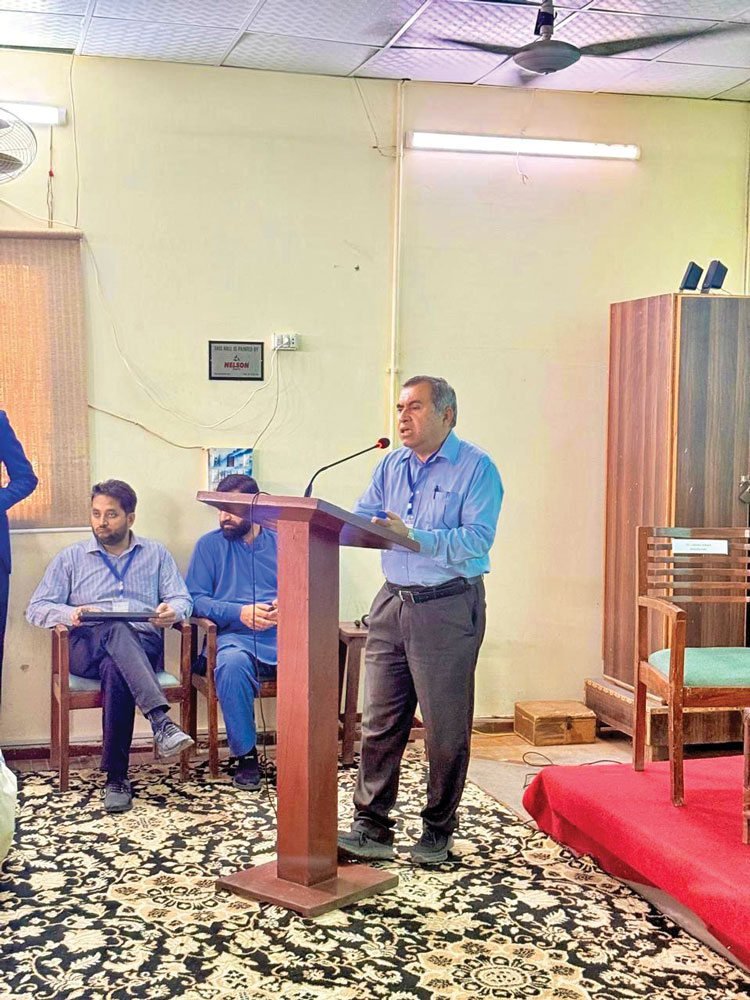
Prof. Dr. Noman Ahmed, Acting Vice Chancellor of NED University of Engineering and Technology, framed mentorship as an emotionally and morally charged responsibility. He reflected on the evolving expectations of mentoring across generations-Boomers, Gen X, Millennials, and Gen Z-and stressed that true mentorship demands availability, emotional intelligence, and commitment.
Drawing on stories from iconic mentors like Dr. Akhtar Hameed Khan and Parveen Rehman, Prof. Dr. Noman underscored the dangers posed by today’s academic culture-marked by poor documentation, eroding trust, and transient commitments. He reminded attendees that mentorship is not a checkbox exercise but a deeply human act of stewardship.
“Mentors must lead by example, nurturing trust and care over time,” he said, urging institutions to revive mentorship’s lost traditions with renewed passion.
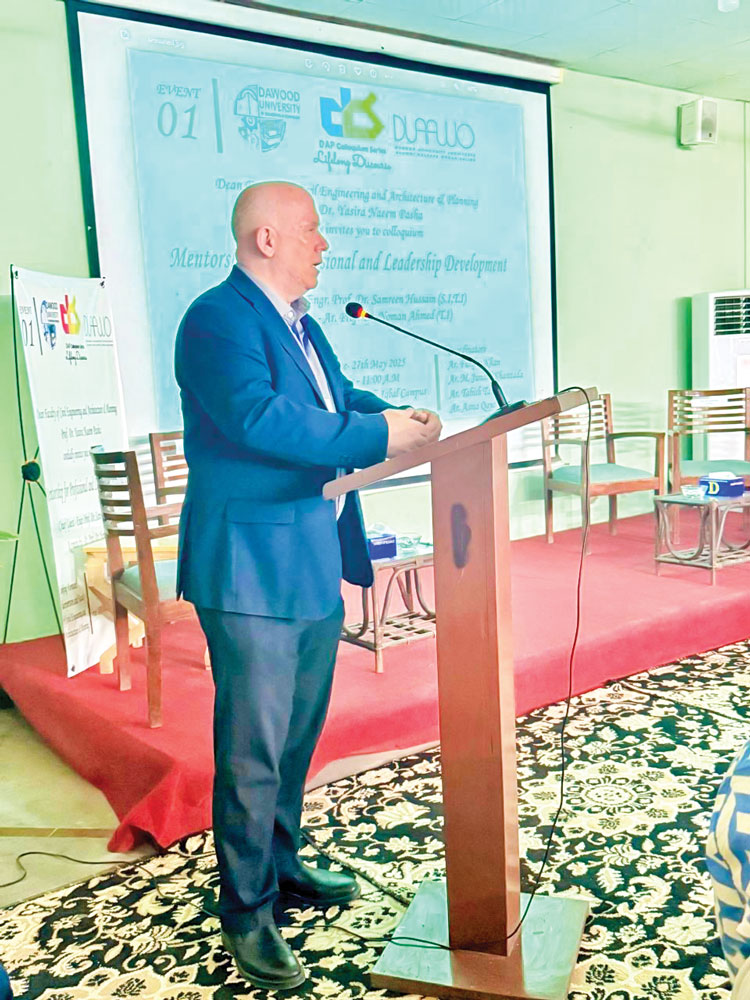
Prof. Stephen Lyon: Empowerment, Not Authority
Inaugural Dean of Arts and Sciences at Aga Khan University, Prof. Stephen Lyon, delivered a compelling vision of mentorship as a trust-based relationship built on empowerment rather than control.
Through personal anecdotes-including lessons from a Punjabi villager-Prof. Lyon illustrated that mentorship transcends social ranks and must foster safe spaces for mentees to grow and fail.
“Mentorship is not about obedience but about nurturing autonomy, especially for Gen Z, who value authenticity and self-expression,” he said.
His call for mentors to adapt to generational shifts encourages a move away from hierarchical, patron-client models toward partnerships rooted in respect and empowerment.
Prof. Dr. Sajida Zaki: Institutionalizing Sustainable Mentorship
Offering an institutional perspective, Prof. Dr. Sajida Zaki, Chairperson of English Linguistics and Allied Studies at NED University, introduced the audience to diverse mentorship models – formal, informal, peer, group, and virtual – that can be adapted to modern academic settings.
Drawing from her fellowship experience at Michigan State University, she advocated for structured mentorship programs integrated with monitoring and evaluation mechanisms to ensure sustainability.
“Mentorship is a holistic process, encompassing academic guidance, ethical support, and emotional nurturing,” she explained, stressing the need for clear communication and relationship-building.
Her insights emphasized that only through institutional commitment and incentives can mentorship become a lasting academic tradition.
Summary and Formal Closure of Addresses
Following the insightful keynote presentations, Prof. Dr. Yasira Naeem Pasha took the floor once more to synthesize the themes and messages shared throughout the morning session. She highlighted how mentorship, as echoed by all speakers, transcends mere guidance and transforms into an empathetic stewardship-one that demands emotional intelligence, trust, and a deep commitment to nurturing future generations.
Dr. Pasha emphasized that mentorship is not a hierarchical imposition but a collaborative and dynamic relationship, rooted in human values such as patience, respect, and empowerment. She reflected on the diverse perspectives shared-from the generational challenges outlined by Prof. Dr. Noman Ahmed Khan to the emphasis on empowerment over authority by Prof. Stephen Lyon, and the institutional frameworks advocated by Prof. Dr. Sajida Zaki.
Reiterating the importance of interdisciplinary approaches, Dr. Pasha encouraged participants to embrace mentorship as a lifelong process that enriches both mentor and mentee alike. She called on the academic and professional community to reimagine mentorship as an inclusive, sustainable culture-one that integrates traditional wisdom with contemporary challenges such as digital transformation and global connectivity.
Concluding her remarks, Prof. Dr. Yasira Naeem Pasha invited all attendees to reflect on their individual roles within this evolving culture of mentorship and to carry forward the spirit of collaboration, humility, and empowerment into their professional and personal lives.
With this inspiring close to the morning session, the colloquium transitioned into a lively panel discussion, where practical experiences and real-world mentorship dynamics would further enrich the ongoing conversation.
Panel Discussion:
Mentorship in Practice
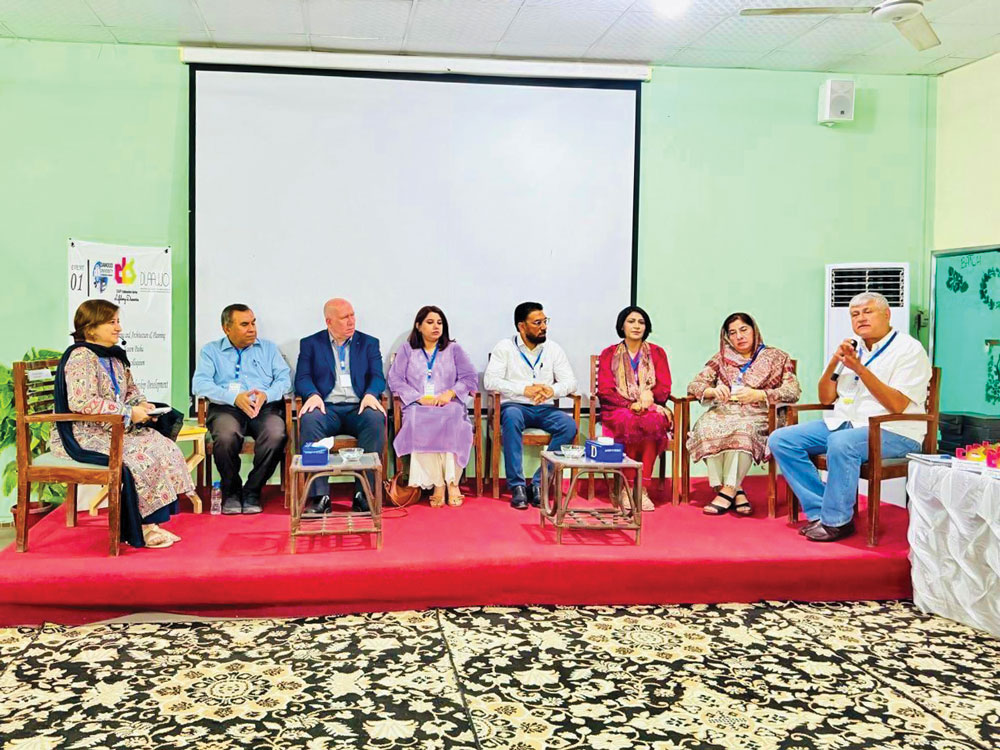
Moderated by Dr. Lubaina Adnan, the panel featured voices from architecture, media, and sustainability, each shedding light on mentorship’s real-world complexities.
Ar. Samar Ali Khan: Mentorship as Everyday
Care and Values
Ar. Samar Ali Khan began by rejecting the notion of mentorship as a formal role. Instead, he described it as an everyday act rooted in genuine care, openness, and shared values.
He credited his mentor, Ar. Arshad Abdullah, for instilling in him the importance of character and long-term relationships. His office culture reflects this ethos, where openness and familial bonds thrive.
“Mentorship happens through living your values and showing authentic care,” Samar said, underscoring the informal but powerful nature of mentorship.
Ar. Syed Arif Shah:
Melding Tradition with Digital Innovation
Ar. Syed Arif Shah emphasized practical skills often overlooked in mentorship, such as clear communication, understanding client expectations, and ethical governance.
He also shared how digital tools and remote work have broadened mentorship possibilities but cautioned that fundamental skills like contract literacy remain underappreciated.
“Digital innovation is an opportunity, but the fundamentals of professionalism cannot be sidelined,” he noted.
Mehwish Hasnain: Mentoring Creativity in a Globalized, Digital Age
Multidisciplinary professional Mehwish Hasnain highlighted the mentor’s role as a grounded, trusting role model who listens actively and embraces emerging technologies like AI and digital design.
Drawing on her international experiences in fashion and media, she discussed how mentorship fosters creativity and innovation through structured feedback and trust-building.
“Mentorship is a delicate blend of structure and humanity,” she reflected, noting the challenges posed by diminished emotional connection in digital media.
Dialogue with the Audience: Addressing Gaps and Opportunities
The interactive session brought forth critical questions about generational divides and the declining natural mentorship between teachers and students.
Prof. Dr. Sajida Zaki pointed to societal shifts and the fading of family-based mentoring as root causes, advocating institutional strategies to restore soft skills and communication etiquette.
Prof. Dr. Noman Ahmed cautioned against over-formalizing mentorship, arguing that mentorship works best when it emerges organically from genuine human connections.
Prof. Stephen Lyon echoed this sentiment, emphasizing the importance of mentors who empower rather than control, aligning with Gen Z’s desire for authenticity and autonomy.
Key Takeaways:
Foundations for a New Mentorship Culture
The colloquium crystallized several key principles:
– Empathy and trust must replace authority.
– Human connection remains vital despite digital advances.
– Restoring family and community mentorship is essential.
– Mentors should empower mentees, nurturing autonomy.
– Mastery of professional skills like contracts and communication is crucial.
– Institutions need structured, sustainable mentorship frameworks.
– Mentorship is holistic, encompassing ethical and emotional guidance.
– Storytelling and shared experiences foster mentorship culture.
– Adapting to generational changes ensures continued relevance.
– Early, ongoing mentorship paired with real-world experience is key to leadership evelopment.
Closing Remarks and Vote of Thanks
As the colloquium drew to a close, Prof. Dr. Yasira Naeem Pasha expressed her heartfelt gratitude to all speakers, panelists, and attendees. She reflected on the enduring importance of mentorship as a humanized and continuous process-one that carries a legacy beyond the formal settings of academia and professional practice.
Following this, Ar. Reena Majid Memon, Chairperson of the Department of Architecture and Planning at Dawood University of Engineering and Technology, delivered the Vote of Thanks. She acknowledged the tireless efforts of the organizing committee and the commitment of all participants who contributed to the event’s success.
DUAWOO – Dawood University Architects Alumni Welfare Organization
This landmark event was generously sponsored by DUAWOO – Dawood University Architects Alumni Welfare Organization, whose unwavering support underscored the significance of alumni engagement in shaping the future of architectural education and professional development. Their sponsorship played a vital role in enabling the successful organization of the colloquium, reflecting DUAWOO’s deep commitment to fostering mentorship and leadership within the architectural community.
The event was further honored by the presence of Ar. Sheema Amir, Secretary of DUAWOO, and Ar. Shah Monis, President of DUAWOO, whose attendance signified the organization’s active involvement and dedication to supporting initiatives that strengthen the bond between academia and professional practice. Their participation added a meaningful dimension to the proceedings, reinforcing the importance of alumni-driven mentorship networks.
Closing and Networking: Building Lasting Connections
The day concluded with the distribution of souvenirs and certificates, honoring speakers, panelists, volunteers, and organizers. Informal networking over refreshments allowed participants to forge new connections, exchange ideas, and continue the conversation beyond formal sessions.
With this landmark event, DUET’s Department of Architecture and Planning has planted the seeds for a thriving mentorship culture-one that is interdisciplinary, compassionate, and forward-looking.§ As Prof. Dr. Yasira envisioned, this colloquium marks the dawn of a new era, a tradition that will cultivate leaders who are not only skilled professionals but also empathetic, ethical, and empowered agents of change.


