


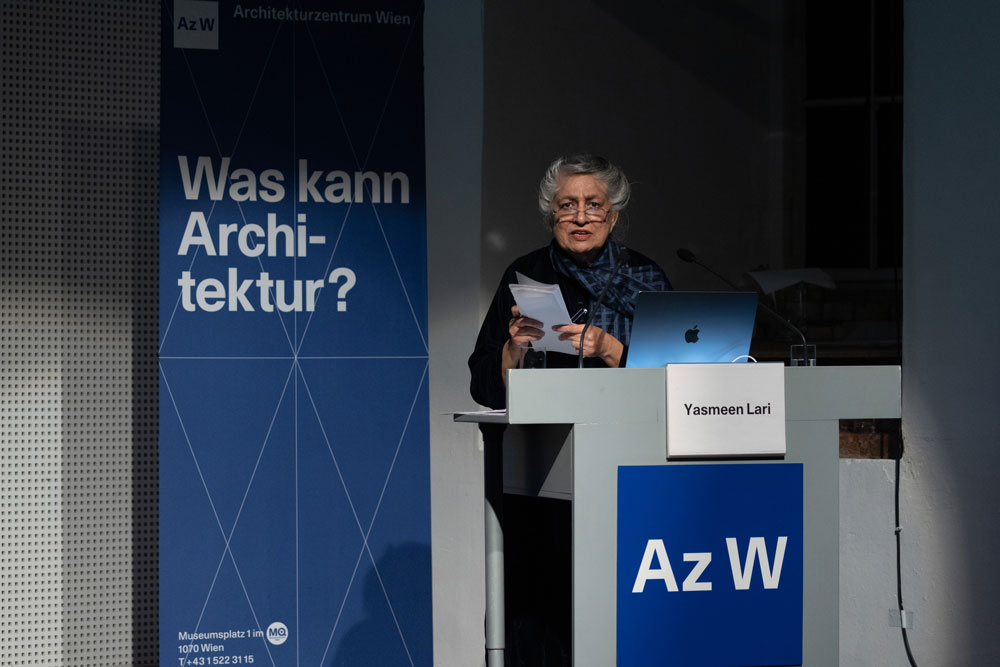
Text and Image provided by: Architecture Museum Vienna
What answers does architecture provide to the climate crisis? With the world’s first monographic exhibition on Yasmeen Lari, the Az W shows an exemplary position that evidences architecture for the future. As Pakistan’s first female architect, Yasmeen Lari (*1941) designed iconic modernist buildings before initiating a zero-carbon self-build movement for climate refugees and the landless.
The exhibition Yasmeen Lari. Architecture for the Future highlights Yasmeen Lari’s extraordinary work for the first time, from the modernist beginnings of the 1960s, through her time as a star architect, to a current humanitarian architecture based on decolonization and decarbonization. Today, Lari practices architecture as climate activism to uphold the rights of people and nature alike.
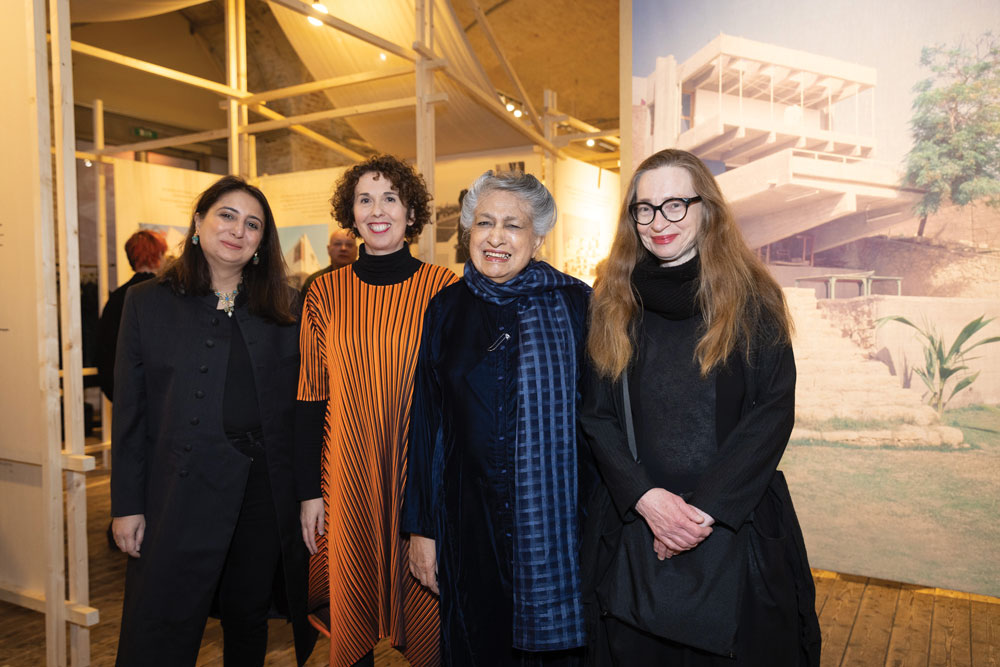
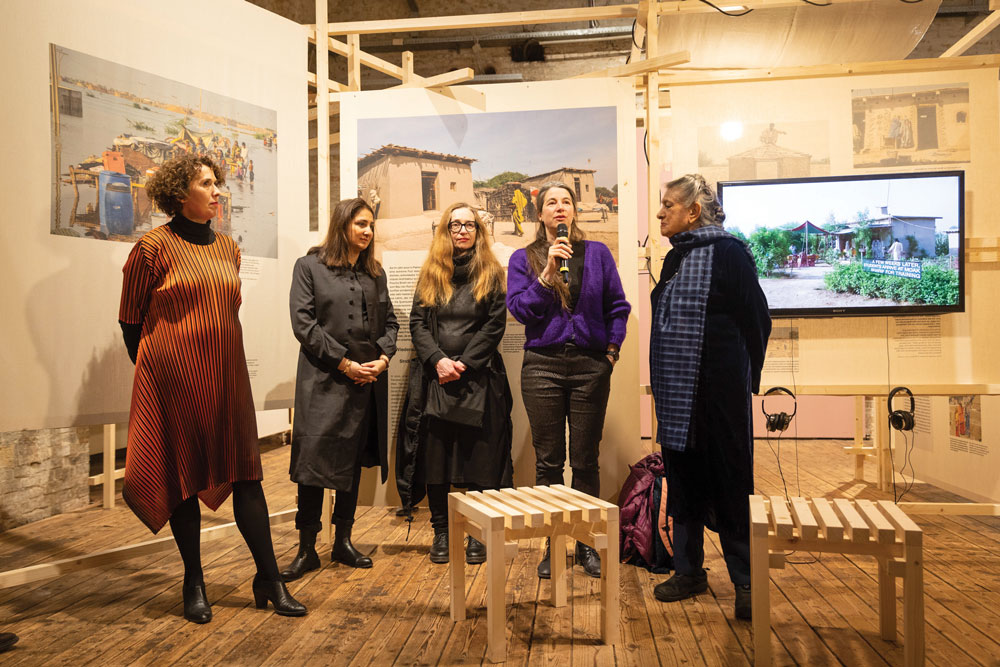
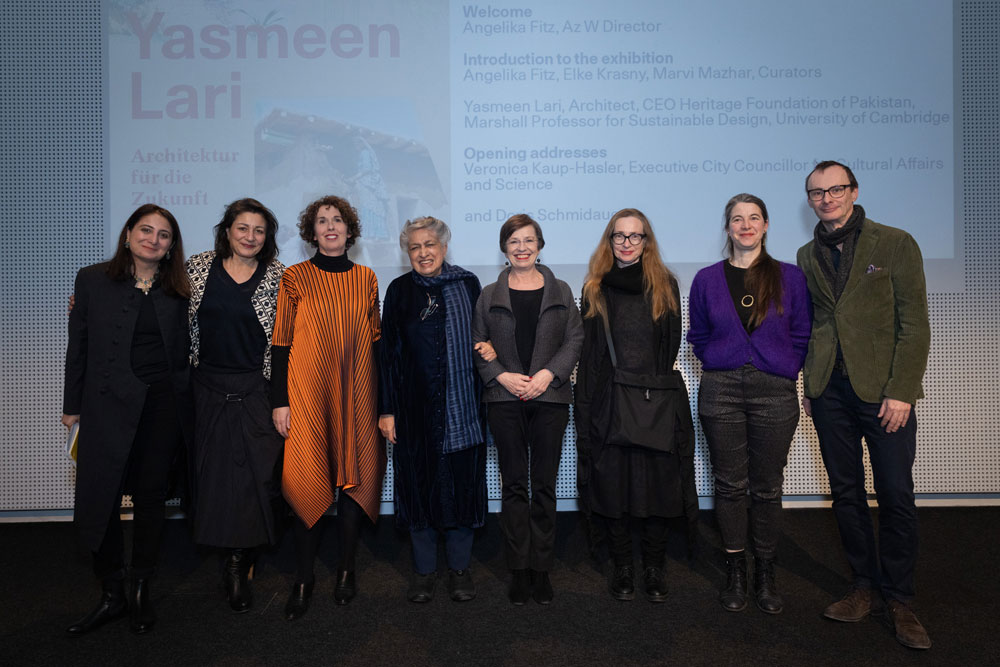
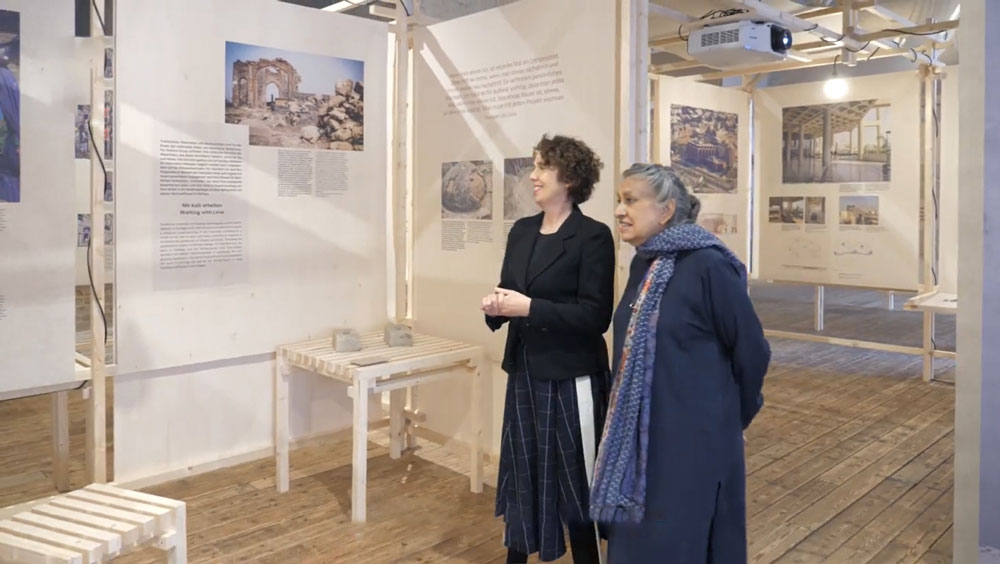
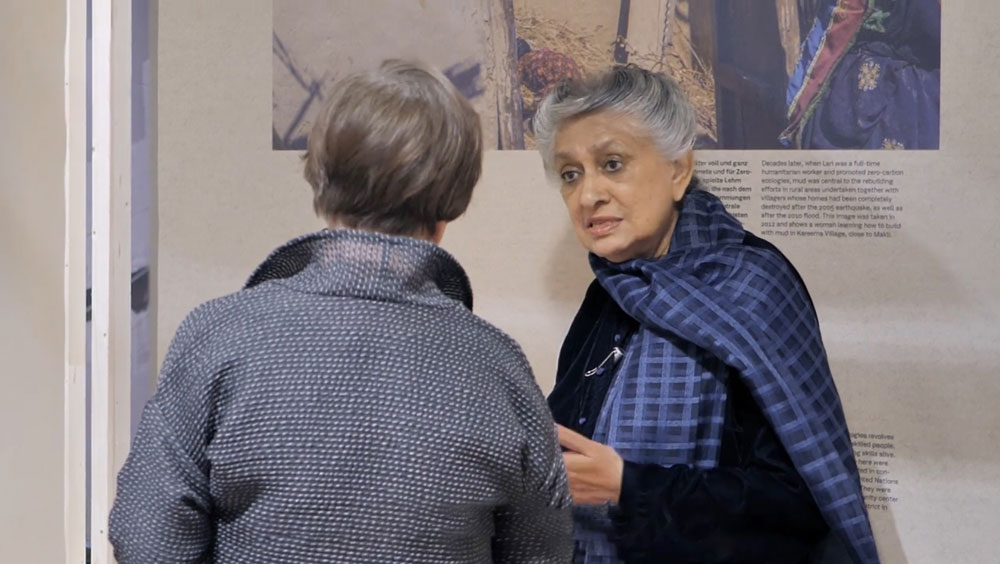
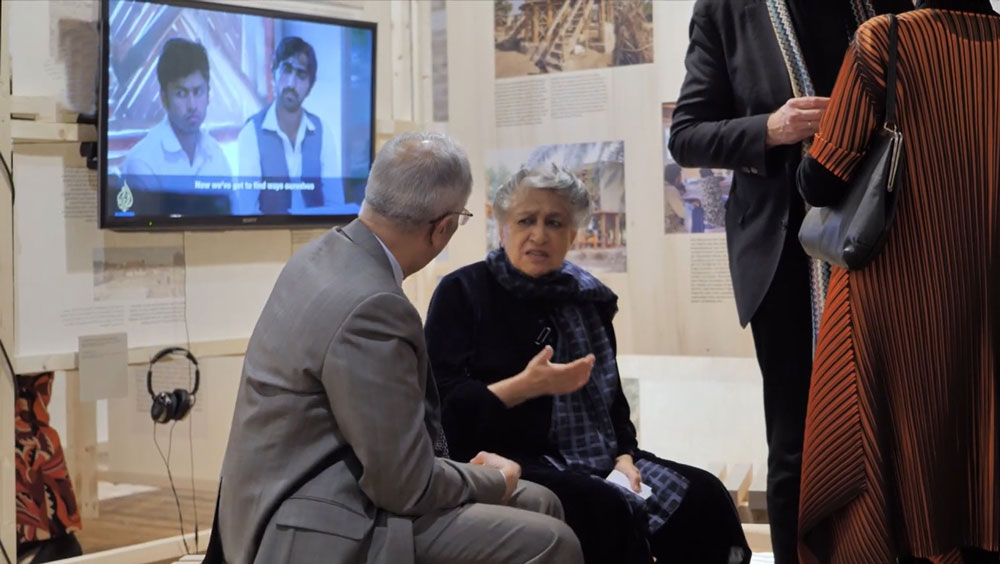
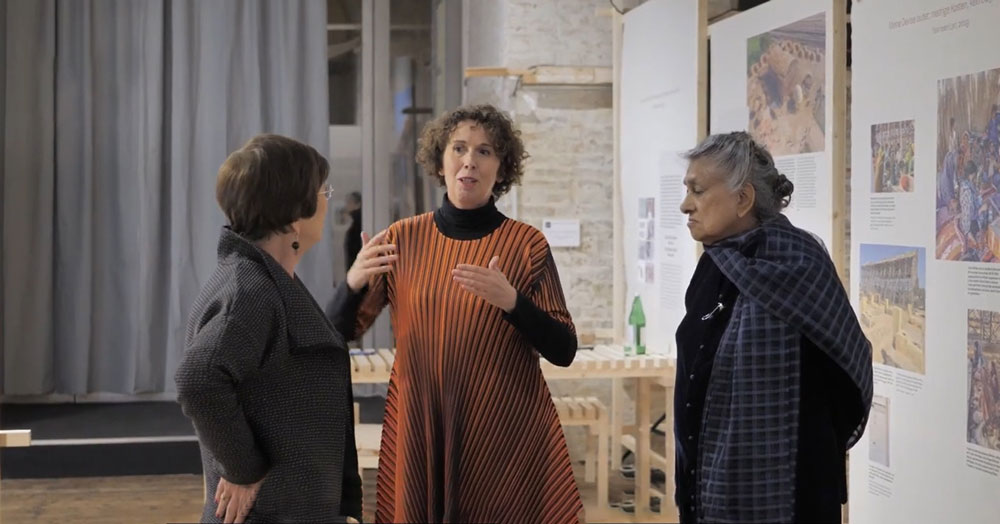
Using previously unpublished photos, drawings, and documents, the three curators Angelika Fitz, Elke Krasny, and Marvi Mazhar convey the architect’s impressive career from international modernism to zero-carbon architecture. Born in 1941 in what is today Pakistan, still under British rule back then, Lari received her architectural training in England. In 1964, she was the first woman to open an architecture office in Pakistan. She designed Pakistan’s first social housing complex in Lahore and landmark buildings such as the Pakistan State Oil headquarters in Karachi. Her own house, an icon of Brutalism, brought her international fame. At the same time, she began to investigate local building traditions. Together with her husband, Suhail Zaheer Lari, she founded the Heritage Foundation of Pakistan and researched and saved the built heritage of her country, the two World Heritage Sites in Makli and Lahore, as well as everyday buildings.
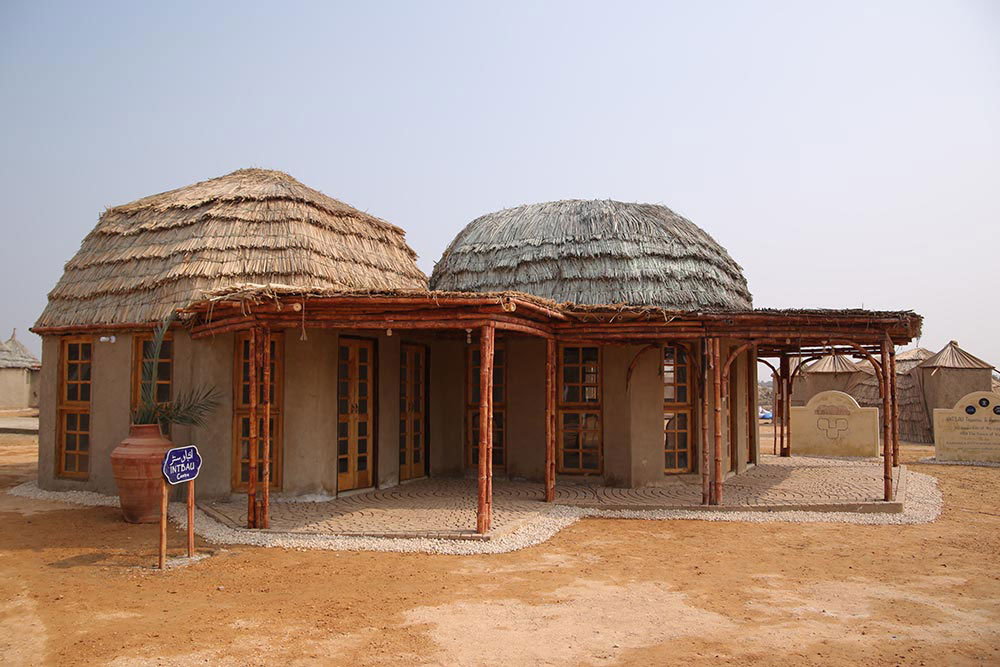
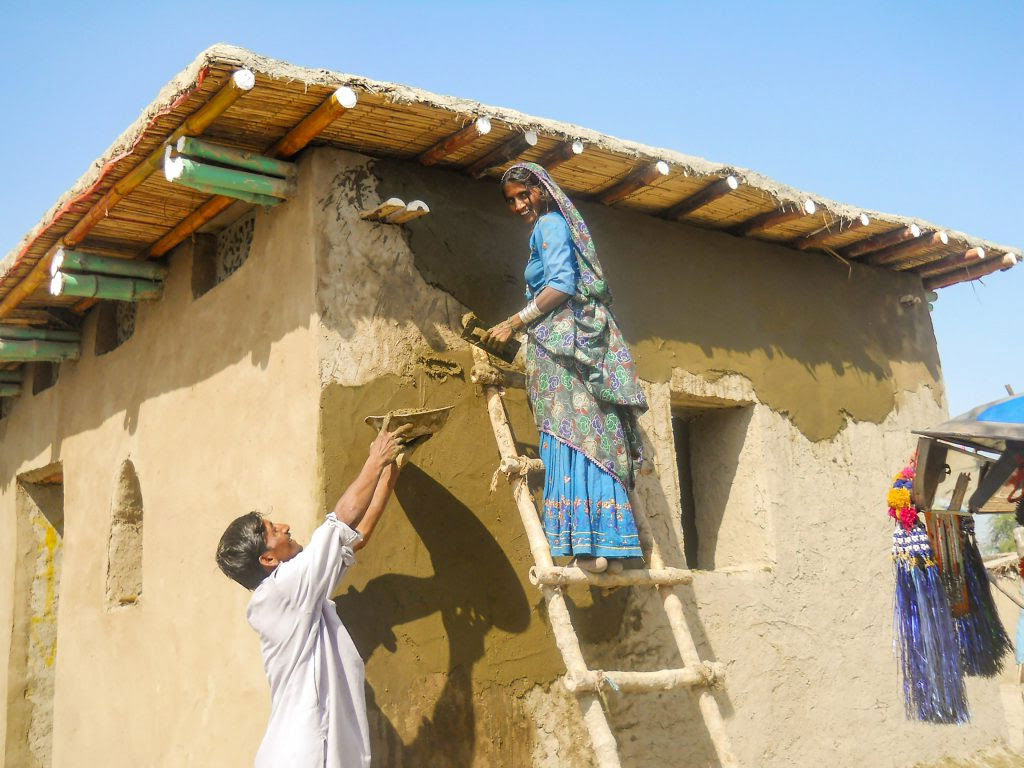
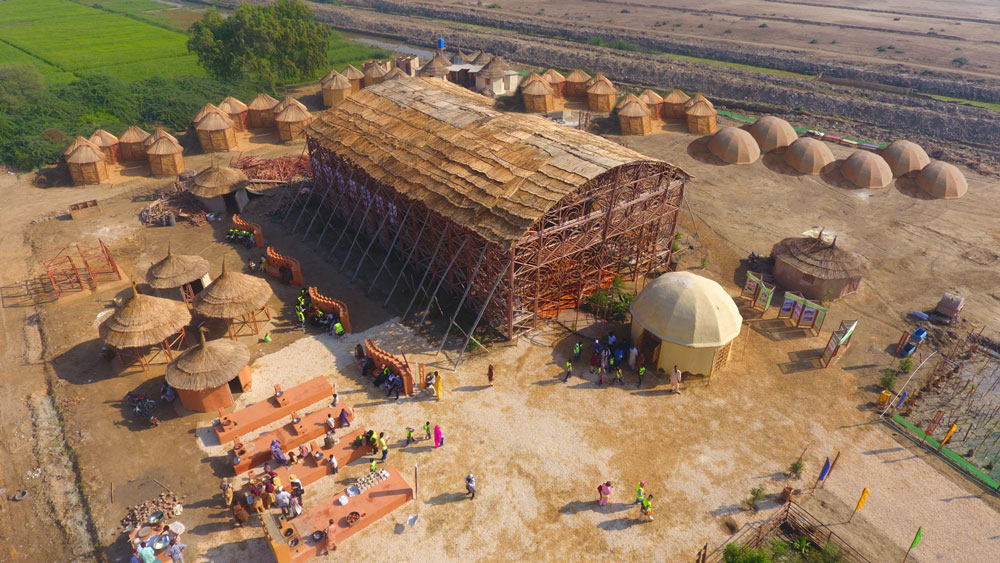
Since 2005, Lari has been redefining architecture as climate activism. In Pakistan, one of the countries hardest hit by the climate catastrophe, she initiated the world’s largest zero-carbon self-build movement. Tens of thousands of flood- and earthquake-proof houses, sanitary infrastructure, smokeless stoves, and community facilities made of zero-carbon materials such as bamboo and mud were self-constructed according to plans by Yasmeen Lari—by people who had lost their homes, many of them among the landless poor. This work has also garnered international awards in recent years: In 2016, Lari received the Fukuoka Art and Culture Prize, in 2020, the Jane Drew Prize, and, in 2021, an honorary doctorate from the Politecnico di Milano.
She currently holds a visiting professorship at the University of Cambridge.
“We need to rethink everything, and we must do it now,” says the over eighty-year-old architect who tirelessly provided architectural disaster relief in the summer of 2022 when a third of Pakistan was submerged. For Lari, architecture must balance the survival and dignity of the individual with nature and the protection of the planet. Considering the magnitude of the housing and infrastructure needs globally, Lari relies on hand-made prefabrication and low-tech serial production from low-carbon materials. “It is about finding out which method is the most cost-effective, safest, and most ecological, and then implementing it en masse,” Lari explains.
She uses traditional technologies and local materials for her self-build program. She attaches particular importance to working with women.
The exhibition Yasmeen Lari. Architecture for the Future asks questions that point far beyond Lari’s work: How does architecture build the future? How radical does the building turnaround have to be so that we still have a future? How can architecture work on social and ecological justice at the same time? Modernist architecture asserted the claim to build a better future—today we are living with the aftermath of this building. The global construction sector with its enormous carbon emissions and even the globalized aid industry are partly responsible for the climate catastrophe. Yasmeen Lari’s stance and her systemic way of working show that architecture can assume responsibility. “We must tread lightly on the planet,” Yasmeen Lari insists.
The aim of the exhibition Yasmeen Lari. Architecture for the Future is to contribute to a different understanding of architecture: an architectural history that is not Western- and male-dominated, and an architectural practice that cares for people and nature. Such a practice will find locally situated answers in specific contexts, from building differently with low-carbon materials or the circular economy, to no longer erecting new structures, and working with adaptive re-use. “With this exhibition, the Architekturzentrum Wien wants to make an active contribution to ensuring that we don’t give up the possibility of the future,” says Az W Director Angelika Fitz.
About the Structure of the Exhibition
Based on Yasmeen Lari’s work, the exhibition shows how the relationship between architecture and the future has been changing. Lari’s work, ranging from modern buildings made of concrete, glass, and steel to the current self-building movement with the materials of mud, bamboo, and lime, tempts one to think in terms of ‘before’ and ‘after.’ For the curators Angelika Fitz, Elke Krasny, and Marvi Mazhar, their many years of intensive research rendered the continuities in Lari’s work legible. Early on, Lari experimented with mud buildings, and her preoccupation with traditional architecture and historical urban planning in Pakistan influenced her first large social housing projects. What runs through the entire six decades of her work is the focus on the needs of those historically silenced, on disenfranchised and low-income populations, and especially on women and children. Later, she added the ecological needs of nature and the environment. For Yasmeen Lari, decolonization at the level of architecture and urban planning means ‘unlearning’ and lifelong ‘relearning.’ The exhibition follows this relearning in a loose chronology, structuring Lari’s work by themes relevant far beyond Pakistan. The central concern is how the relationship between architecture and the future can be better understood and redefined.
The Nine Chapters of the Exhibition Karachi Modernism: Postcolonial Living
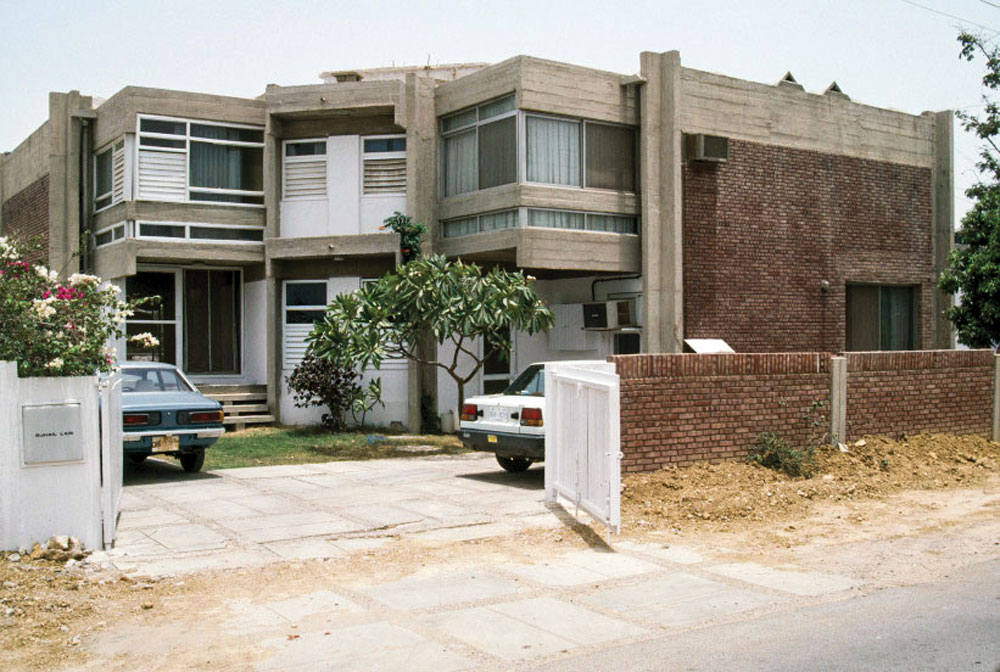
Yasmeen Lari belongs to the first generation of postcolonial architects in Pakistan, which has existed as an independent country since 1947 with the end of British colonial rule and the Partition of India. For Lari’s generation, building meant nation-building: new buildings, infrastructure, neighborhoods, and entire cities were planned and erected. Lari’s own house in Karachi, completed in 1973 and where she still lives and works today, is regarded as an international icon of Brutalism.
Housing Equality: Innovating Modernism and Tradition
In the 1970s, the Pakistan People’s Party (PPP), founded by Zulfikar Ali Bhutto, promised roti (bread), kapda (cloth), and makaan (shelter) to all. Yasmeen Lari was commissioned to design social housing in Lahore as part of the People’s Housing Programme. For the Angoori Bagh project with 787 residential units, she developed approaches that would be decisive for her later work: public forums; focusing on women’s needs; using local building materials; training unskilled workers in the construction process; building in a climate-conscious, resourcesaving, and cost-effective manner.
Icons for a Karachi Boulevard
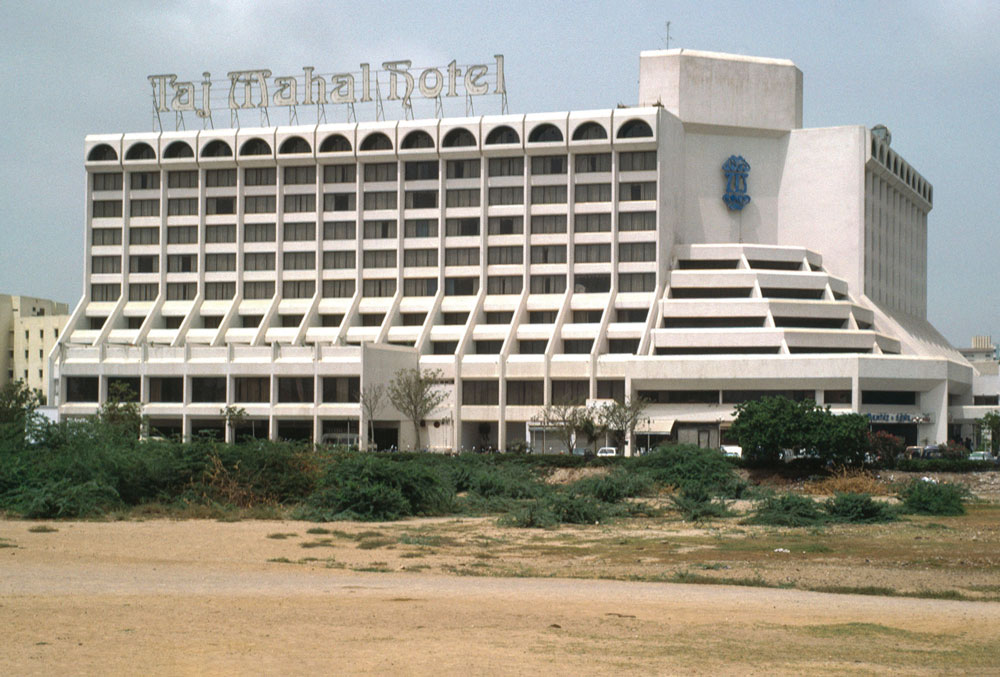
In the 1980s and 1990s, Lari realized large, prominent buildings in Karachi, such as the FTC – Finance and Trade Centre, the headquarters of Pakistan State Oil, and the Amro Bank. Lari describes this phase as her ‘star architect’ period. In 2000, she decided to cease this architectural production determined by capital, power, and clients. At the same time, these representative large-scale buildings also give something back to urban society: Communicative platforms and green atriums create generous spaces for the users, whom Lari considered as the actual clients to whom architecture bears responsibility.
Material Ecologies: Building the Local
Based on the work of others, such as the Egyptian architect Hassan Fathi, Lari began to explore mud as a building material in the early 1970s. Later, in her humanitarian work, mud, lime, and bamboo became the “Lari materials.” She responds to the global need for living space and infrastructure with low-tech series production from low-carbon materials. A major concern for Lari is to further develop this knowledge internationally in architectural teaching.
Heritage as Future: Decolonizing Legacies
After her return from Great Britain, Lari began to study Pakistan’s built heritage and local building traditions. In 1980, she co-founded the Heritage Foundation of Pakistan with her husband, Suhail Zaheer Lari. She sees the built cultural heritage as an opportunity to preserve the traditions of different religions and ethnic groups in equal measure. She has worked on two UNESCO World Heritage Sites in Pakistan, the Lahore Fort and the Makli Necropolis. Lari innovatively applies her knowledge of local building traditions in her climate activist humanitarian work.
Building Policies, Laws, and Institutions
For Yasmeen Lari, architecture is much more than buildings. In order for architecture to be able to help shape the future, it needs institutions and laws in which it is also actively involved, from the establishment of the Pakistan Council of Architects and Town Planners to the first monument protection law for urban buildings in Sindh Province. Although Lari’s built work is located entirely in Pakistan, her networks are international. In 1976, she was one of the speakers in the forum of the legendary UN Habitat Conference on Human Settlements in Vancouver.
The Architect as Humanitarian Worker
Yasmeen Lari has been a ‘humanitarian worker’ since the 2005 earthquake, which registered 7.6 on the Richter scale and left millions homeless in Afghanistan, India, and Pakistan. The catastrophic floods in Pakistan in 2010 and 2022 led Yasmeen Lari to see architecture for the future as climate activism. Dignified living conditions and the preservation of the environment are two of the issues most important to her. She works with the populations most endangered by the climate catastrophe in Pakistan.
A Zero-Carbon Revolution in Architecture
Today, the decarbonization of architecture is Lari’s central concern. The construction sector, one of the largest CO2 emitters worldwide, is accelerating the climate catastrophe. Construction must become more disaster-resistant and contribute to climate protection. For over a decade, Lari has been developing ways of working towards humanitarian and climate-activist architecture: low-cost, zero-waste, low-carbon materials. Instructions for self-building are given through on-site training, but also by digital means of communication, such as the Zero Carbon Channel started in 2020 during the pandemic.
Essentials for Life
Yasmeen Lari sees architecture as having a duty to develop feasible, affordable, and sustainable solutions for vital infrastructure and, in particular, to create livelihoods for women. According to Lari, this includes shelter, cooking, drinking water, and toilets. To this end, Lari has further developed traditional architecture: The smokeless Pakistan Chulah (Pakistani stove) made of mud and lime needs only half as much fuel as traditional stoves. This illustrates that local knowledge leads to better-performing innovations than international aid programs that provide factory-made metal stoves.
About the Creation of the Exhibition
Angelika Fitz, the director of the Architekturzentrum Wien, and Elke Krasny, Professor for Art and Education at the Academy of Fine Arts Vienna, already featured examples of Yasmeen Lari’s work in the 2019 exhibition Critical Care. Architecture for a Broken Planet. Between 2020 and 2022, when research trips were difficult due to pandemic conditions, they held regular research sessions with Lari using digital technology. Finally, in 2022, they were able to travel to Pakistan and conducted research there together with the third co-curator, Marvi Mazhar, a former collaborator in Lari’s office who is now an architect and urban activist in Karachi. Yasmeen Lari generously and unconditionally allowed access to her archive, which is why many photographs and plans can be shown publicly for the first time in this exhibition.
Curators: Angelika Fitz, Elke Krasny, & Marvi Mazhar
Scenography: Alexandra Maringer
Exhibition Graphics: Alexander Ach Schuh


