


DAP-NED Inter Architecture Student Trip to Islambad, Taxila and Northern Khyber Pakhtoonkhua
Sarah Ather Khan, Assistant Professor, DAP-NED University
Travel, like books, teaches important lessons about diverse locations, peoples, cultures, and environments. The value of travel is multifarious; it not only introduces people to others, but also to themselves, fostering them both individually and academically. On personal level, the most essential benefit of travel is the improvement of interpersonal skills-traveling to different areas and meeting and interacting with new people improves communication skills. Traveling fosters leadership qualities by teaching the value of foresight, planning, readiness, patience, and acceptance in dealing with unforeseen situations. Since experiential learning is an essential component of architectural education, travel enhances architecture students’ understanding and appreciation of the built environment by exposing them to diverse social, cultural, and climatic contexts, as well as the evolution of architecture in their respective spheres. Traveling broadens students’ architectural vocabulary, providing them with a deeper grasp and experience of various architectural typologies simultaneously inculcating an appreciation of the rich cultural and built heritage.

Due to Pakistan’s incredibly diverse and well-endowed geography, the Department of Architecture and Planning NED University of Engineering & Technology (DAP NEDUET) consciously incorporates study tours and field research to numerous important historical, cultural, archeological and contemporary architectural sites in its history & theory course stream. These study tours are routinely conducted as part of the second, third and fourth year history courses, which cover the understanding of regional history and various civilizations that have left their footprint in the physical boundary of Pakistan ranging from prehistoric Soan River valley, Harappa civilization, and Gandhara civilization to contemporary architecture in modern world.
These educational tours allow students to visit significant historical and contemporary sites while learning about the cultural influences on architecture, construction methods, and architectural design. They expose and widen participants’ perspectives on diverse readings of cultural and built heritage, allowing them to comprehend what they are learning in the classroom and elsewhere. These student led initiatives serve as a confidence boaster and while providing them with precious memories and experiences, they also help enhance their organizational and interpersonal skills. From developing itinerary, raising funds, making professional contacts to problem solving and making on spot realist decisions, this endeavor serves as a holistic learning exercise.
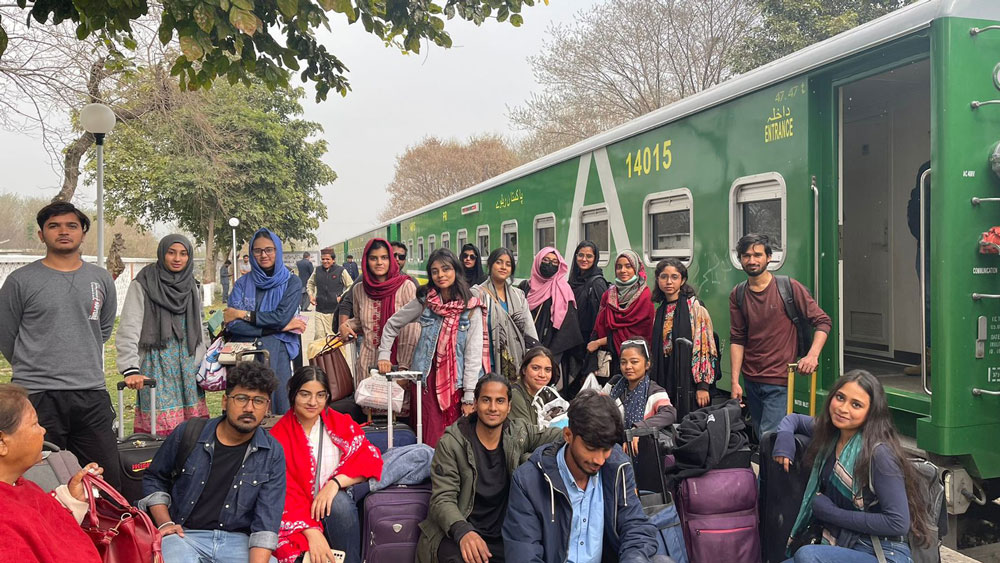
During the semester break in spring 2023, three student groups from 2nd, 3rd and 4th year architecture accompanied by their respective history course teachers travelled to Mohan jo daro, Taxila & Islamabad, Multan & Lahore respectively to comprehend these significant historical and modern-day monuments and sites in and around these cities. These trips were predominantly self-funded; however the students were able to secure some sponsorship. The current batches are those who have suffered from the down side of pandemic lockdowns and online teaching and for them this tour was a refreshing break and an introduction to the real world.
I was personally apart of the Islamabad & Taxila tour group. The most essential lesson was a comprehension and appreciation for Taxila’s archaeological and heritage sites, as well as exposure to numerous public buildings, museums, national monuments, small and medium hotels/motels, and tourism interventions in and around natural landscapes. The participants were able to obtain a first-hand understanding of the importance of scale, hierarchy, geometry and inclusion of natural terrains in the creation of key national monuments. Ayan Wakil and Hansaka Wijesinghe, students of inter architecture DAP NED, who visited Taxila & Islamabad, compiled their experiences and memories in a write up as follows:
Day 1: Pakistan Museum of Natural History, Pakistan Monument, Rawal Lake
The group began their journey by visiting the Pakistan Museum of Natural History, where they studied about Pakistan’s flora, wildlife, and geology. The museum exhibits nearly 300,000 items, including fossils, rocks, minerals, plants, and animals, demonstrating the country’s amazing natural diversity. The participants then went to the Pakistan Monument, a national landmark that represents Pakistan’s unity and diversity. The monument, built by Arif Masood, is an architectural marvel that reflects the country’s four provinces and three regions. The group learned about the monument’s concept and design, including the use of space, contour planning, architecture design, and landscaping. Participants also went to the Faisal Mosque, which is one of the world’s largest and most recognizable mosques. The mosque, created by Turkish architect Vedat Dalokay, is a masterpiece of modern Islamic architecture, with a one-of-a-kind design that combines traditional and contemporary elements. The participants learnt about the mosque’s spatial organization and design, as well as the use of light, color, and geometry. The day concluded with a tour to Rawal Lake, a man-made reservoir in Islamabad’s core. The lake is surrounded by lush green hills, making it a peaceful and scenic backdrop for outdoor activities like boating, fishing, and picnicking.

Day 2: Taxila
The major target of our field trip, Taxila, was visited on the second day of our journey. Taxila is regarded as one of South Asia’s oldest and most significant archaeological sites. The city was founded in the sixth century BCE and served as a major center of scholarship and trade during the Mauryan Empire, which dominated most of India from 322 to 185 BCE. Taxila was famed for its excellent artisans, particularly in the industries of pottery and metallurgy, and was located at the intersection of three important trade routes. The city was also a hub of Buddhist scholarship, with some of the most prominent Buddhist universities in ancient India located there. Over the ages, the city was ruled by a number of dynasties, including the Mauryan, Indo-Greek, and Kushan empires. The Kushan period, which lasted from the first to third centuries CE, is regarded as Taxila’s golden age. The city was a prominent center of trade and culture at the period, and its influence stretched throughout the region. Taxila’s ruins are now a UNESCO World Heritage site, with tourists able to witness the remnants of numerous notable monuments, including the Jaulian Buddhist monastery, the Dharmarajika Stupa, and the Sirkap archaeological site. Sculptures, coins, and pottery, as well as old books and manuscripts, are among the city’s archaeological treasures.
So the first thing we did when we arrived in Taxila was go to the Taxila Museum. It is centrally positioned and easily accessible by road. The museum edifice is a lovely colonial-style structure surrounded by lush green grounds. The museum is entered through a spacious courtyard, where visitors can relax and enjoy the tranquil surroundings. The museum is divided into three galleries that house antiques and treasures from Taxila’s old city. The first gallery features prehistoric artifacts such as stone tools and earthenware. The second gallery houses Mauryan and Gupta period antiquities including as coins, jewelry, and sculptures. The third gallery houses Kushan period antiquities such as Buddhist art and sculptures. We were greeted by polite employees as we entered the museum, and we began our tour with the first gallery, which displayed prehistoric antiquities. The items were well-preserved, and seeing the tools and pottery used by Taxila’s early occupants was intriguing.
The group was blown away by the beautiful jewelry and sculptures from the Mauryan and Gupta dynasties in the second gallery. The famed “Mother Goddess” sculpture, considered one of the finest masterpieces of ancient Indian art, was the highlight of this gallery. Finally, we arrived at the third gallery, which featured Kushan period antiquities. The exhibition was filled with Buddhist paintings and sculptures, including the well-known “Buddha Head.” There was also a portion of the gallery dedicated to Taxila University, which showcased old texts and other educational items. The museum gave visitors an insight into the rich history and culture of Taxila. The museum’s well-preserved antiques and treasures attest to the city’s importance in the ancient world. The museum is an important repository of the region’s cultural and historical legacy, and it is a valuable resource for scholars, researchers, and tourists.
Next we went to Dharmarajika Stupa that is regarded as one of the most significant and well-preserved stupas from the early Buddhist period. The stupa was initially constructed to house Buddha’s relics. Many centuries later, it was expanded and rebuilt multiple times, especially during the Kushan period, when Taxila was a prominent center of Buddhist learning and art. The stupa is a massive structure with a diameter of more than 50 meters and a height of more than 30 meters. It is composed of mud, brick, and stone and is ornately carved and sculptured. The stupa is also noteworthy for its historical and religious significance and was also a popular pilgrimage destination for Buddhists from around the world. The stupa also represents the ancient civilization of Taxila’s cultural wealth and aesthetic abilities.
Julian Temple was our next stop. It was constructed about the 2nd century CE during the Kushan period. The temple is thought to have been part of a larger monastic complex that includes additional temples and structures. The site was uncovered in the early twentieth century during the excavation of Taxila’s ancient city. The temple, noteworthy both historically and religiously, was in ruins, but it’s one of the region’s best examples of old Buddhist architecture and art. Beautiful carvings and sculptures adorn the temple, featuring images of Buddha, Bodhisattvas, and other key figures from Buddhist mythology. The temple is especially notable because of its connection to the Kushan dynasty and their support for Buddhism. The Kushan dynasty was essential in the expansion of Buddhism in South Asia, and their support for the religion aided in the establishment of Taxila as a major center of Buddhist learning and art.
There have been recent efforts to preserve and promote Taxila’s historical value. The Pakistani government has constructed a museum dedicated to the city’s history and culture, and plans are in the works to develop the area as a significant tourist attraction. Taxila, despite these efforts, faces considerable hurdles. Earthquakes and other natural calamities have caused damage to the city, and there are continuous concerns for the preservation of its archaeological treasures. Finally, Taxila is a significant historical site that provides insight into the ancient civilizations of the Indian subcontinent. As preservation and promotion efforts continue, the city has the potential to become a major cultural and tourist destination in the region.
Day 3: Saidpur Village, Trail 5
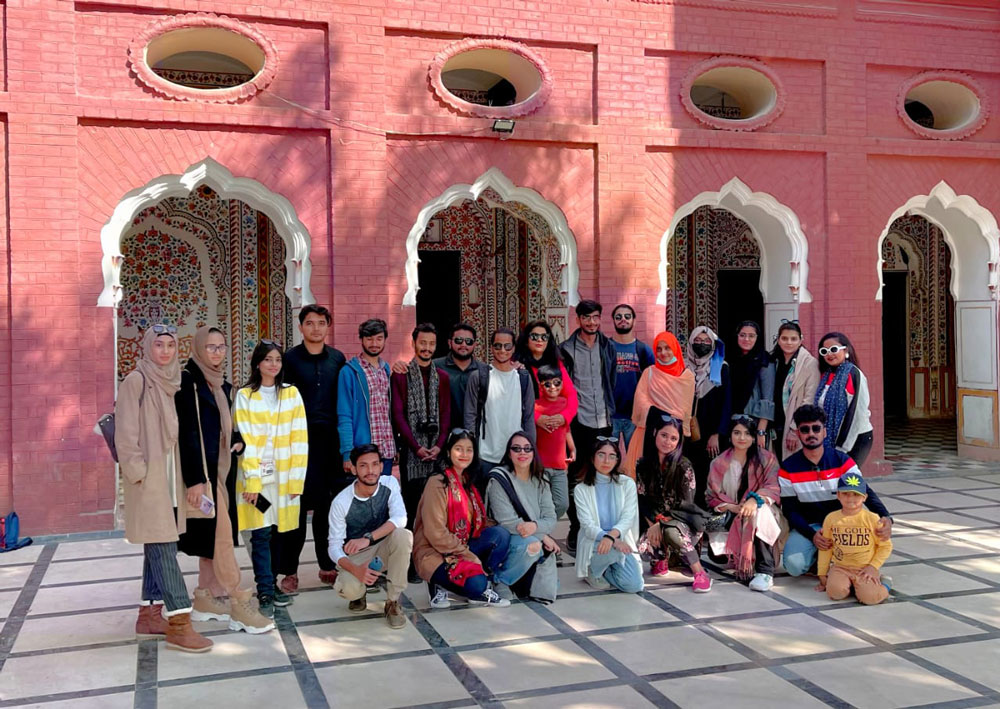
On the third day of the excursion, the group went to Saidpur Village, a picturesque hamlet on the Margalla Hills’ slopes. The village is home to various historic structures, notably the Singh “Sar e Khana,” a 16th-century Sikh shrine. The pupils particularly appreciated the village’s natural beauty, which provides breathtaking views of the city.
The group then went to Trail 5, a prominent hiking track that winds through the Margalla Hills and is recognized for its stunning beauty and difficult terrain. They hiked across the Margalla Hills, soaking in the spectacular vistas of nature and wildlife. The walk provided us with a fantastic opportunity to connect with nature and appreciate the beauty of our surroundings. The trail provides a 360-degree perspective of the city and is home to a diverse range of flora and fauna, including birds, butterflies, and mammals. The participants studied about conservation and the role of national parks in maintaining biodiversity. The day concluded with a visit to Monal, a restaurant perched on a hilltop with a panoramic view of the city. The group participants enjoyed the delicious food and the stunning aerial view of the city.
Day 4: Murree, Ayubia, Mukshpuri top
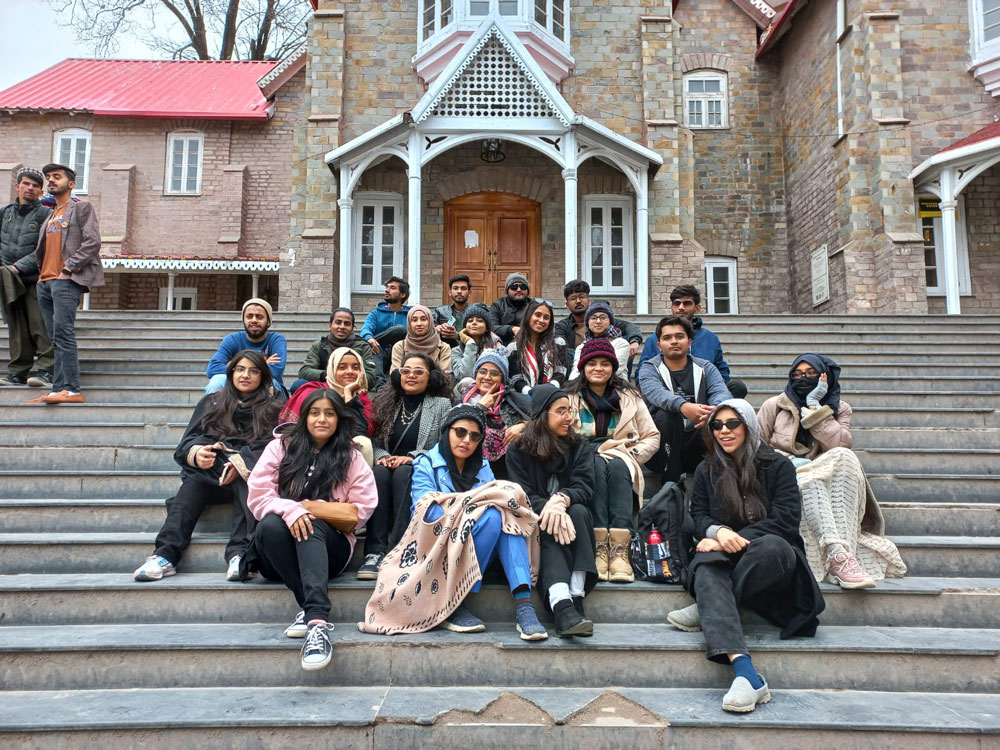
The students spent the fourth day of their trip exploring the architectural marvels of Murree, a prominent hill station in Pakistan. They were enthralled by the GPO building, which is a spectacular specimen of British colonial architecture, and learned about its history and design. They also went to the Holy Trinity Church, which is a lovely late-nineteenth-century structure. They learnt about the church’s complex characteristics, such as its Gothic-style arches and stained glass windows, and admired the skill and craftsmanship that went into its construction.
The students then traveled to Ayubia, another picturesque hill station, where we were met by breathtaking vistas of snow-capped mountains and abundant foliage. We were particularly captivated by the area’s distinctive home designs, which are specifically designed to survive the cold temperatures and snowfall. We studied about the materials and techniques used in their creation and developed a greater appreciation for the inventiveness of local builders.
Ultimately, Student led us on an exciting walk to Mukshpuri top, where they witnessed a live snowfall. The trek was difficult but worthwhile because it allowed them to see the area’s spectacular natural splendor up close. For a group of students from Karachi, the snowfall was a truly lovely event, and they were grateful to have had the opportunity to witness it in person.
Day 5: Thandiani
After spending the night in a motel in Abbottabad, students had the opportunity to visit Thandiani, Pakistan, a lovely hill station known for its breathtaking natural beauty and tranquil setting. During our visit, we explored the area and were amazed by the magnificent St. Francis Xavier, a beautiful church built by the British during their rule in the region. We also had the chance to witness snowfall and experience the enchanting winter wonderland that Thandiani transforms into during the winter months.

Day 6: Rawalpindi Heritage walk
On Day 6, students visited Rawalpindi’s old street and went on a heritage tour to learn about the region’s rich architectural history. The students explored the historic architecture dwellings including Sujan Singh Haveli. Sujan Singh Haveli, built it in the late 1800s, is a well-known historical structure in Rawalpindi, Pakistan. Sujan Sing was a wealthy businessman and philanthropist. The haveli is a remarkable example of regional traditional architecture, with delicate wooden carvings, gorgeous courtyards, and vast chambers. The purpose of the visit was to learn about the traditional architecture and design of the haveli, as well as to obtain a deeper understanding of the region’s history and culture.
The participants learnt about the building’s various architectural elements, such as the use of local materials like wood and stone, the ornate carvings on the doors and windows, and the courtyard arrangement that allows for natural ventilation and illumination. The students were also able to interact with the Haveli’s present owners, who shared their knowledge and experiences with maintaining such a historic structure. They discussed about the difficulties of maintaining traditional architecture in a rapidly developing city, as well as the efforts being done to promote the importance of historic structures like Sujan Singh Haveli.
Overall, the educational tour for third-year NED Architecture students was a huge success, allowing them to explore and learn about Pakistan’s varied culture, history, and architecture. It was a fantastic trip that increased their grasp of the country’s background and instilled a stronger appreciation for its natural beauty and cultural value in us. This initiative is likely to have a significant impact on both their personal and professional life.


