


By Ar. Zain Mankani
Film Space
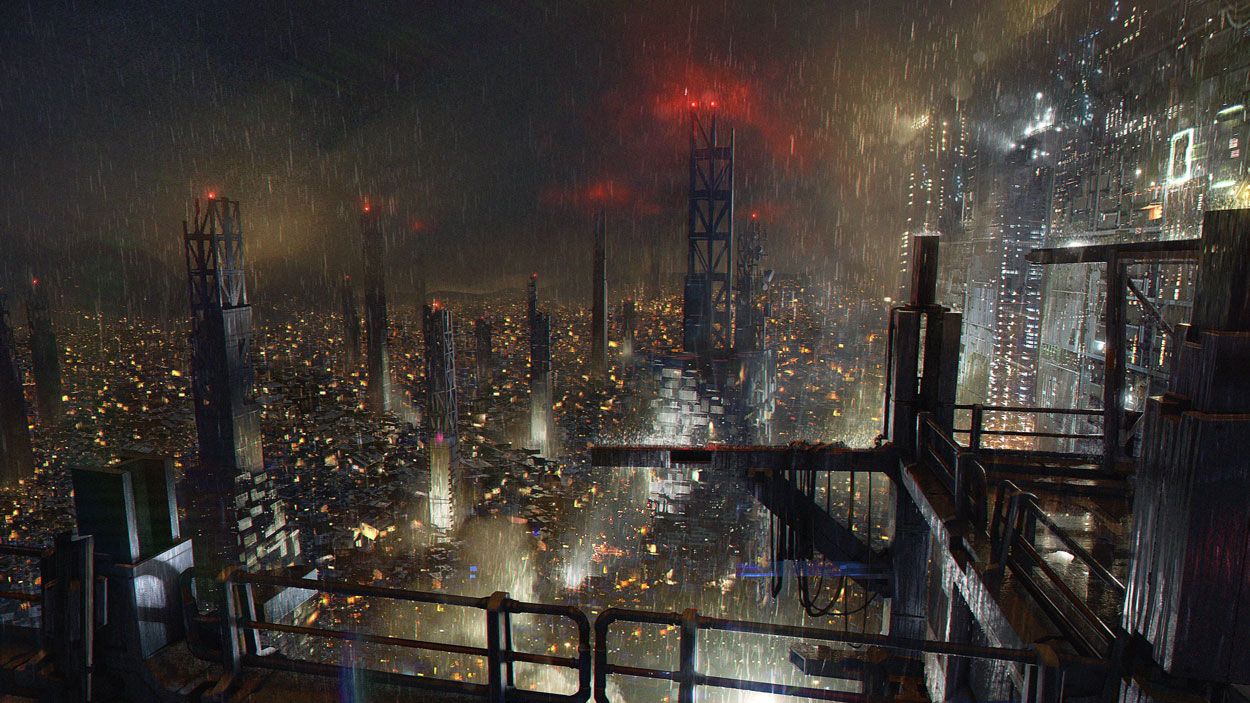
If we define architecture as an experience of space, we must include in the realm of architecture any experience that may fall under a spatial experience, however slight or removed from our orthodox understanding of architecture it may be.
In this respect, one cannot deny that space that is represented in film must be seen as architecture. Indeed, there have been architects that have involved themselves in the designing of film space. The set for the 1920 German film Golem was designed by Hans Poelzig, an architect, and the film owes much of its fame to his extra-ordinary vision, which produced a bizarre and twisted space for the equally dark narrative. Claudia Dillman writes in an article, “The architecture of Golem city was considered by architecture critics to be so important that the film became the subject of analysis whilst still in production.” 1
Space that is represented in film extends our understanding of real space and real architecture in much the same way as H.G. Wells’ or Jules Verne’s literary predictions of our scientific/technological future helped in shaping this future, or Aldous Huxley’s moral admonitions in Brave New World helped to evolve our stands on moral issues. “By using all the possibilities inherent in film, and all of its technology, the medium could offer the architectonic potential to allow us to look far into the future by enabling us to immerse ourselves in previously unimaginable spaces.” 2
But more important than that, though perhaps not as significant, is the fact that what we confront in a film enters the domain of experience. For a number of people this is a notion that is difficult to accept, though it is not very difficult to understand. How can events that are viewed externally, as a third person, be equated with events that are experienced personally?
We all feel, after reading an intensely involving novel, that we have closed a chapter of our lives. A really good book, is one that we don’t want should end, because it is a part of our life, or has become entangled with our life.
When we watch a film, we associate with the characters in the film. We see in the protagonist, a reflection of ourselves. We experience his experiences with him. When he laughs, we laugh. We are happy with him and sad with him. Indeed, the very success of a film depends on how easily the audience can associate with the characters. The viewer therefore lives the life of the character in an indirect way. In the film he participates in the events that he cannot participate in real life. Though distanced from the action, he is still in the center of it. The experience of the film becomes an actual experience by somewhat the same mechanism that Bachelard explains allows childhood fantasies to get entangled with childhood reality and hence enrich the memory.
The experience of film, though a virtual one (that is, one not directly apprehended by the senses) is still experience at some level. “We have to accept the fact that the world we can experience with our senses is only a partial view of a multilayered reality, and that it is only with the aid of instruments that we can access a further area.” 3
To say that experience is not experience without physical interaction is to say that dreams, for instance, which are psychic experiences, are not experiences at all. But many psychologists today would give as much importance to these nighttime escapades as they do to our daytime activities. Even if one refuses to attribute any meaning to dreams, one cannot disregard them as lying within the circle of experiences. Once we have witnessed a dream, we cannot deny it, at least in this very superficial sense that we are aware of a possibility of such a series of events. In short, as bizarre or unrealistic a dream may be, we cannot deny that the particular form or configuration of events depicted in it has entered our consciousness.
If one views film space even at this superficial level, one must attach some importance to it. It is space, and therefore architecture that has entered our consciousness, regardless of how removed from reality its particular form or configuration may be.
Why Film Succeeds Where Architecture Fails
The notion that architecture is a three-dimensional art is slightly off the mark – by one dimension. There are, in truth, four dimensions to architecture, the fourth being the narrative.
The process of conceptualizing space begins from this four-dimensional form. Space is conceived along with the narration. One designs space with this pre-requisite of narrative. It is impossible to conceive a space without this pre-requisite, although the narrative may be indistinct or left undefined by terminology.
Even when one simply conceives of a space without imagining an activity there, the form, scale, language, material, etc., predisposes it to a particular kind of activity. One can say, that space is an archetype, and a particular space is a model by which one can see the archetype, because it is impossible to conceive archetypes except in the form of definite models with definite attributes (or, in this case, narratives).
The inclusion of narrative is most obviously applicable to film space, and its necessity can be best understood in connection with film space. The narrative here is linked to the characters played out in the film and is shared by the viewer when he projects himself into the characters, thereby partaking of their experience. “So space is not simply the enclosing horizontal and vertical planes but the physical being in that space, which is created between the director’s three-dimensional vocabulary and the spectator’s projected emotional occupation of that space.” 4
There is no mode of escape from this appendage of narrative. However the appendage itself is not the cause of distress for the architect, but the lack of control over it.

The trouble begins when one carries the thought, or the architectural idea, onto the 2 dimensions of the drawing, and subsequently the 3 dimensions of the actual work. These will always fall short of the original idea, because here the narration is missing. Without the essential narration, from which the architecture draws its life, it appears pale and banal. The architect cannot endow the work with the narration that existed in his mind along with the work. This is always grafted onto the work by a third entity (the people who inhabit or use the space).
It is therefore impossible to exercise any sort of control over this dimension. No matter how carefully an architect takes into account the living patterns of the eventual users, it is not in his capacity to determine it with precision and design the space accordingly. Moreover, great architecture (in the formal respect) may stem from a fictitious narration that is the creation of the poet in the architect. In that case, it may not be based very rigidly on the lives or stories of the end users (which are often rather mundane). One therefore sometimes sees beautiful and powerful architecture that seems misused, and therefore outside of its narrative or context.
Not so with film. This problem simply does not exist. The three-dimensional space of the film and the narration within it are produced simultaneously, with the result that there are no gaps, no misfittings, and no disappointments.
The team that creates the separate parts of the film is one team. The story in its entirety is present before them in the form of the script and the characters that are to act out the narration are clearly mapped out and their traits set forth in character sketches. All fronts are therefore guarded. The director and his team are aware of all the possibilities, and there is no question of a variation in the script and no element of surprise. They are at liberty to play God with the action of the film. The actors are people who willingly conspire with them in carrying out the scenes exactly as decided to the end of the film.
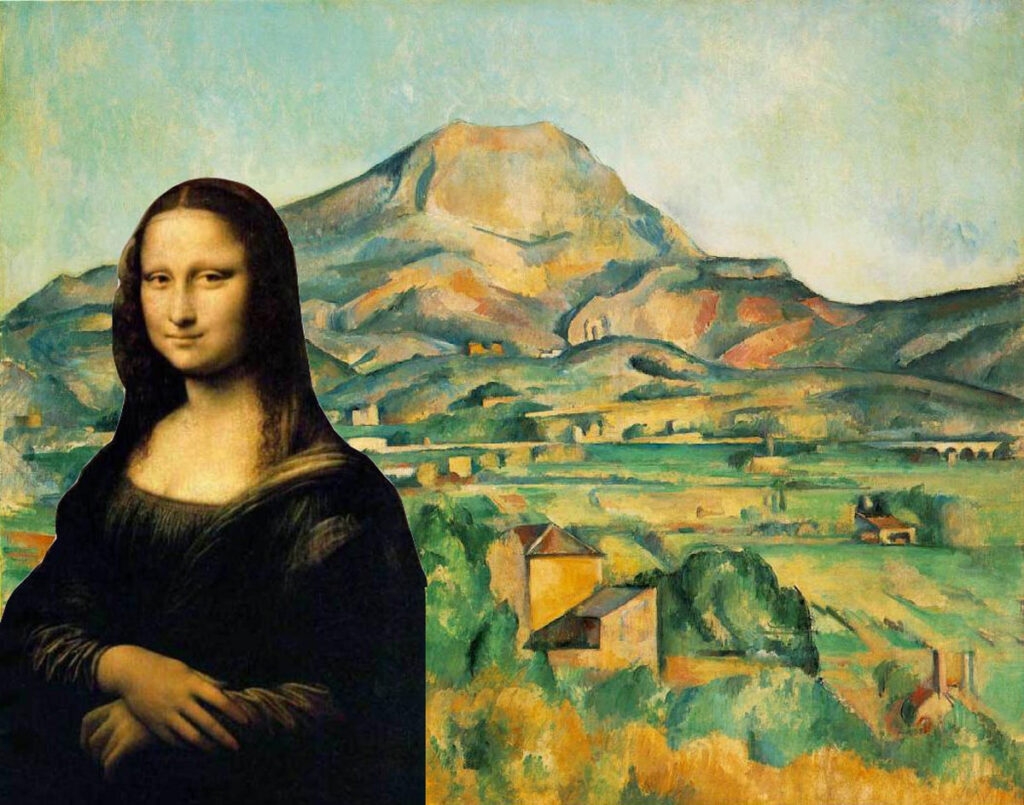
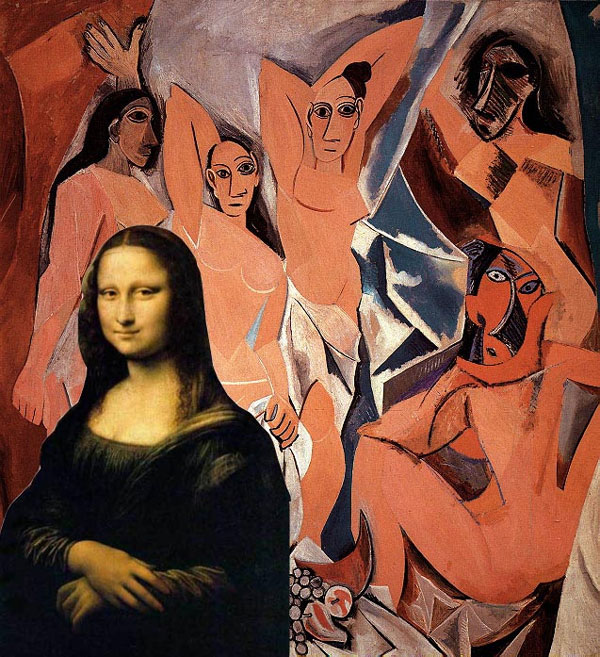
The result is obviously a beautiful retreat from the ugliness of life. The set of a film (where sets are professionally designed) compliments the action of the film, and is hardly at odds with it. One rarely finds the actors and the action standing out sorely against the backdrop. This is an altogether inconceivable notion because the proceedings of the film, unlike the proceedings of our daily lives, are altogether predetermined. To try and conceive it would be rather like trying to imagine what background would be better suited for the face of Mona Lisa.
Meaning and Non-meaning in Film Architecture
The representation of space is essential to film, because film is a narrative. However, disjointed this narrative may be, the film is supported by it. And just as space cannot be conceived without a narrative, so narrative cannot be conceived without space.
In film space, there can be two modes of representation. One remains merely superficial and to the extent of description, while the other transcends and arrives at symbolism and meaning.
In Master Space, Barbara Bowman makes a distinction between habitual and acute spaces in film. In her analysis, film can represent spaces as being familiar to the characters (habitual) or in a sort of tension with them (acute). The former, she explains, “don’t demand our interpretation. These habitual spaces have an “unframed” quality, unlike acute spaces, which are framed and composed.” 5
A similar distinction can be made when talking about meaningful and non-meaningful spaces. What I mean by the term meaningful space, corresponds closely to what Bowman calls acute space. It is space that is not neutral, but interacts in the narrative of the film by communicating alongside the characters. It is, in a way, anthropomorphized, or humanized space; space that has a feeling-value; that is not inert, not a backdrop, but a living part of the production endowing the narrative with meaning.
“Certainly, a director might pragmatically instruct an actor to move in a certain way through space – to saunter or scurry. But were the director to embody character’s motives in the total scene, he or she might achieve “acute space”. The actors still act, but the simple distinction between characters, props, set design, and camera position and movement break down, and convey the same message in a more intensely realized manner.
Sometimes this means that the qualities we conventionally attribute to character inform the environment as well; “motive” or “intention” (the inner state of the fictional character) would be apparent in the composition of the film space as well as in the actor’s performance” 6
This meaningful space is possible to achieve in film because film space is engineered with a single specific narrative in mind. It is exclusive, as opposed to real architecture, which has to be inclusive in order to stand against the very varied narrative of real life. Real architecture cannot convey one feeling, one idea, one script, because life does not end after 90 minutes. It goes on, and keeps changing. If anything, it can be compared to a soap opera, where the storyline can take any sort of twists and turns. One can therefore observe the same banality and superficiality in the set of a soap opera as can be seen in most built architecture.
To produce film space for real life, one would have to have a complete character sketch of the client, displaying his psyche and suggesting his mode of behavior in any situation, and perhaps also knowledge of the series of events that he is meant to experience in the course of his life. One would thence be in a position to design the kind of space that would produce a dialogue similar to the character’s own expression, thereby lending integrity and meaning to every event.
But since this is clearly impossible, one must turn to film to get a notion of the extent to which space can acquire meaning, in the context of a specific narrative. “Film architecture is an architecture of meaning. There is nothing in the frame that does not have something to say…Film space is an emotional place made up of wall, light and shade.” 7
Film allows us to explore space, which for various reasons, would be impossible to realize. In that sense, film space becomes important, if not meaningful, when it presents a unique spatial configuration, or presents space in a previously unseen perspective.
In Danny Boyle’s Shallow Grave (1994), David (Christopher Ecclestone) lays siege on the attic of the apartment he shares with his two friends and, in his paranoid state, drills holes in the floor of his lair in order to keep watch on his fellow boarders. In one scene, Alex (Ewan Mcgregor) climbs up into the attic, and the camera reveals the dark space traversed with numerous tiny beams of light emerging from the drilled floor. This is an example of a space that, because of its reliance on an extraordinary and specific narrative, would hardly be possible to apprehend in real life.
Architecture as Communicator of Idea in Brazil
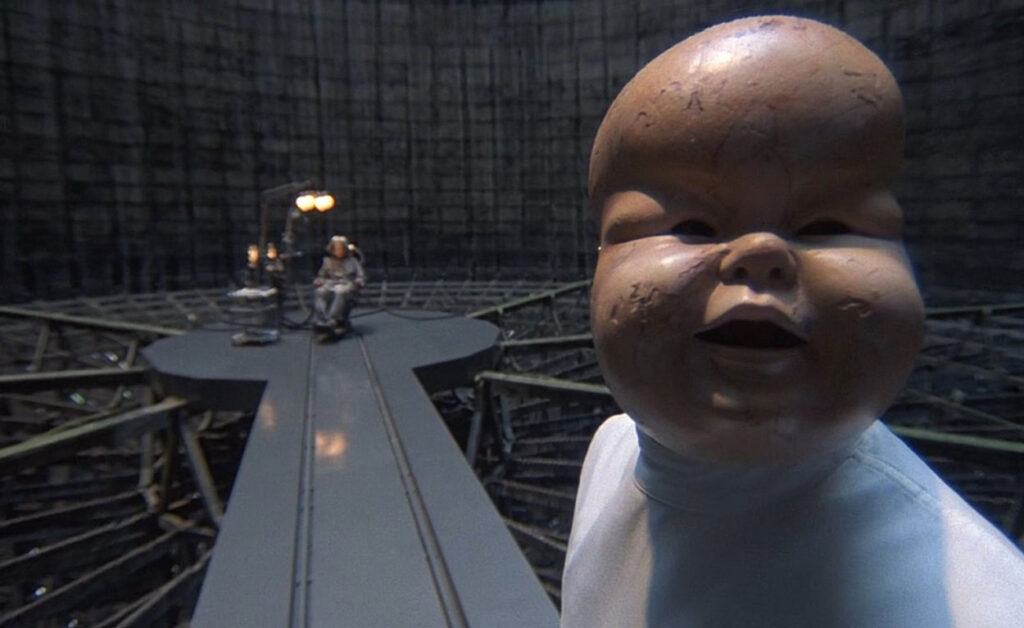
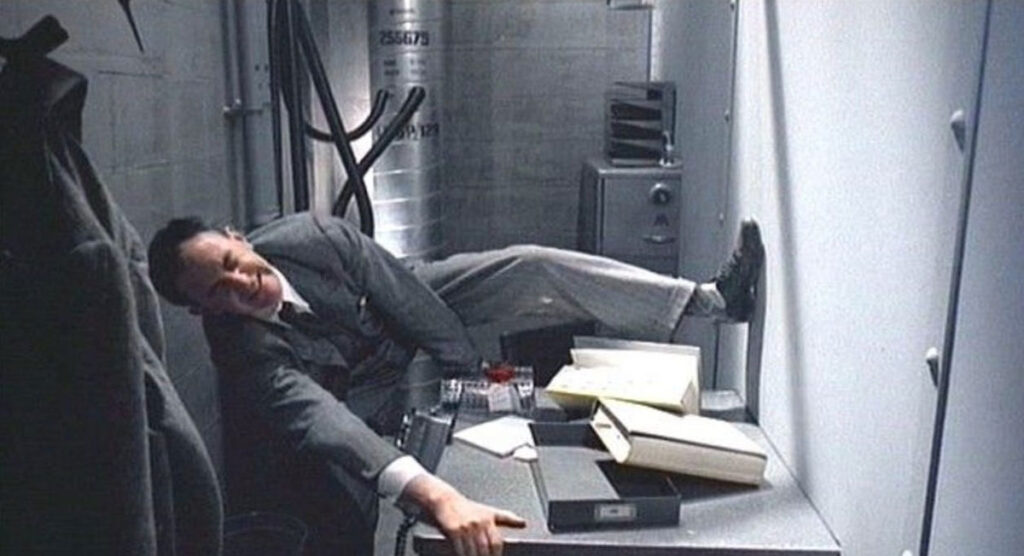
Terry Gilliam’s Brazil (1985) provides a perfect example of film space that has an anthropomorphic character. The city portrayed in the film has a psyche, by way of which it becomes a living, breathing organism that exerts its will on its inhabitants.
“Brazil is a cannibalistic environment where human flesh and trivial data fuel the expansion of the metropolitan superorganism.” 8
Brazil narrates the trials of one mal-adjusted citizen, Sam Lowry (Jonathan Pryce), in a malicious and hostile future city run by an oppressive system. The scenario is straight out of George Orwell’s 1984, but Gilliam also creates a critique of Modern architecture, and uses the film to “demonstrate the demoralizing and oppressive nature of social modernity”. 9
He therefore gives special importance to the architecture of the film, since that is much of the subject. The buildings, he uses as characters that also act and thereby communicate. “In Brazil, buildings appear as malevolent beings, vomiting their guts at any provocation. They are machines for living in that function reluctantly.” 10
It is because Gilliam’s buildings appear as “beings” that they are able, so well, to communicate the idea behind the narrative. Here we come across meaningful or acute space because “the qualities that we conventionally attribute to character inform the environment”. The space acquires a feeling-value and is no more inert.
Of course, in order to do this, the director has to overstep the bounds of reality. He has to exaggerate certain things. Even the narrative (the script is co-written by Gilliam) does not depict reality, but certain trends in real life that are pushed to the extreme. Just as in Orwell’s 1984, the notion of surveillance is heightened to the extent that big brother actually watches you all the time, and it is suicide to attempt to avert his gaze, so in Brazil, the system is all-powerful, everyone is suspect, and no one can be trusted.
To heighten the idea of a claustrophobic and vicious system, Gilliam portrays the buildings, products of the system, as oppressive and dangerous beings, that assist the system in making the lives of the inhabitants miserable. “Gilliam is not interested in capturing “reality” so much as capturing a particular mood or feeling”. 11
This mood or feeling is best conveyed when all components of the film, the actors, the set, the camera movement, are working in synergy, thereby producing a unified effect. Brazil achieves this by putting its architecture through the same processes and ordeals as are undergone or suffered by the characters. Or if one chooses to see things the other way round, one can say that the narrative is specific and engineered in such a way that the characters reflect the events that are experienced by the architecture of the film so that their experiences itself become a critique on architecture or on Modernity in toto.
“Even the individual characters are unstable beings on the border of personal rejection or destruction. Lowry’s mother employs the technologies of medicine and surgery to transgress her biological ‘old age’ and restore her ‘original’ femininity, but her body is constantly at war with the unnatural processes of ‘eternal reinvention’. She suffers many surgical ‘complications’ and finally ends up on the floor as a gelatinous mixture of separate cyborg components. The fabric of the metropolis is also on the edge of dissolution, manifesting its systems’ weaknesses through accidental detonations as deliberate acts of sabotage, as system malfunctions and information errors.” 12
References
1. Claudia Dillman, Realizing the Spiritual City, pg.17, Architecture + Film II, Architectural Design vol.70.
2. Karin Damrau, Fantastic Spatial Combinations in Film, pg.58-61, Architecture + Film II, Architectural Design vol. 70.
3. Ibid.
4. Barbara Bowman, pg.6, MASTER SPACE Film images of Capra, Lubitsch, Sternberg, and Wyler.
5. Ibid., pg.31.
6. Ibid., pg.8.
7. Hans Dieter Schaal, Spaces of the Psyche, pg.13 Architecture + Film II, Architectural Design vol. 70.
8. Rachel Armstrong, Cyborg Architecture and Terry Gilliam’s Brazil, pg. 55-57, Architecture + Film II, Architectural Design vol. 70.
9. Keith James Hamel, Brazil (critical review).
10. Edwin Heathcote, Modernism as Enemy, pg.20-25, Architecture + Film II, Architectural Design vol. 70.
11. Keith James Hamel, Brazil (critical review).
12. Rachel Armstrong, Cyborg Architecture and Terry Gilliam’s Brazil, pg.55-57, Architecture + Film II, Architectural Design vol. 70.


