


Interview by Anzalna Wazir | Photos Credit: SAKA Associates
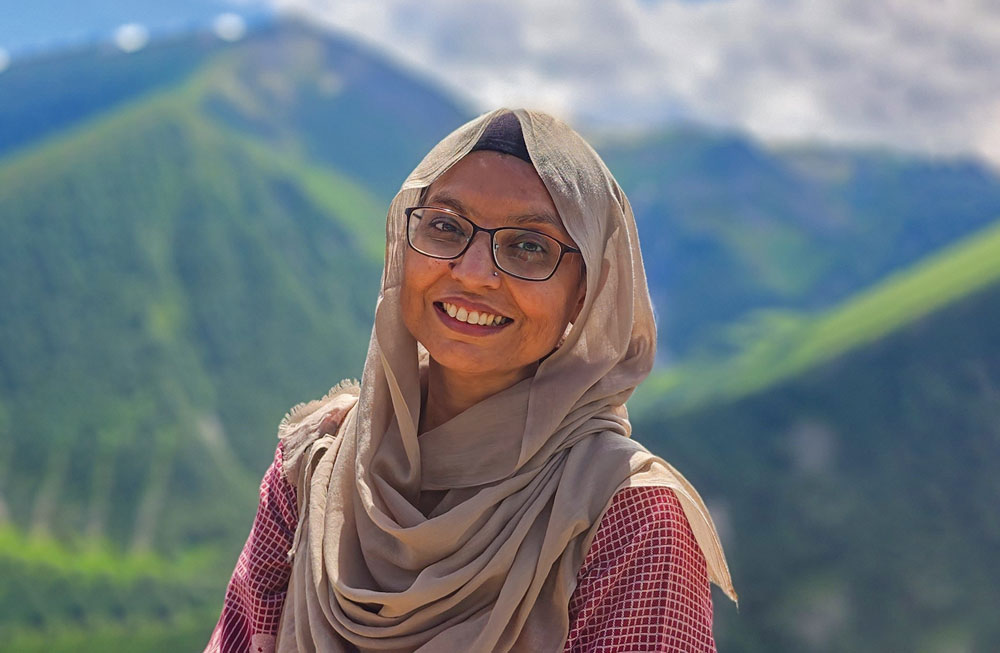
Shazia Qureshi is a distinguished Pakistani architect and the Principal Architect at Sohail A. Khan Associates (SAKA). A graduate of the University of Engineering and Technology Lahore in 1994, she brings over three decades of professional experience in architecture, interior design, and spatial planning across residential, commercial, institutional, and hospitality projects.Known for her human-centered and environmentally responsive design philosophy, Shazia Qureshi believes architecture should create meaningful connections between people, spaces, and nature. Her work emphasizes flexibility, spatial harmony, sustainability, and the seamless integration of indoor and outdoor environments. Over the years, she has collaborated with several renowned architectural practices in Pakistan and has contributed significantly to contemporary architectural discourse and sustainable design practices. Her notable projects and professional contributions continue to shape progressive architectural thinking in Pakistan.
LET’S SHARE YOUR EARLY LIFE AND A LITTLE BIT ABOUT YOUR EDUCATIONAL BACKGROUND IN ARCHITECTURE.
SHAZIA QURESHI (SQ): Born in Lahore, early education was received in Lahore, Karachi and Islamabad. Did matriculation and FSC from Islamabad. Bachelor’s in architecture degree was completed from University of Engineering and Technology, Lahore in 1994.
Basically, i was a shy, silent and introvert child of the family who always tried to think differently, always would try to explore novel ideas and develop own philosophies from opportunities. Waited patiently and with hard work for success to seep in.
My journey in Life and Architecture has been very gradual. Step by step, to the point, following the dream and patient.
During studies, we used to think of ourselves as kings and queens of the World and believed that everything will be in our control, ever. But as soon as we stepped in the practical world, the dream kingdom crashed, and we realized that there is no fancy life awaiting us. Every step of success will need pure hard work and a continuous struggle to craft the way ahead from all odds.
And that defines me… Only one expression of hard Work. Very hard work – Not giving up… always finding the ways out of problems…. Always setting up hard targets and working to reach to them.
God has been very kind. He rewarded the intent and fulfilled every desire.

WHAT INSPIRED YOU TO PURSUE A CAREER IN ARCHITECTURE?
SQ: Architecture was not a childhood dream. It was just by chance that i ended up in Architecture Department in UET. My mother wanted me to do MBA instead.
Till 3rd year, it was like trying to grab the bits and pieces of Architecture’s real meaning. And then, a short course in Space Behaviour changed the whole perspective. I started street strolling and observing people’s space experience and user pattern as to how a space unfolds its meaning to different activities. How responsive Architecture is produced.
From there onwards, started the excitement of Challenge. Exploring the hidden beauty of a space became the utmost inspiration.
HAVE YOU WORKED WITH ANY OTHER ARCHITECTURE FIRM BEFORE JOINING SAKA FIRM?
SQ: I started professional carrier with Humaira Rahman in 1994, then joined Amir Ali Qamar Chartered Architects. Left the job to take care of ailing mother and after some time, joined Misbah Najmi Associates and worked on the famous under ground Masjid Faran and Maritime Museum Karachi external display.
Then Joined Navaid Hussain for two years. Then, Ghani Ansari partnership where i worked on Golf Club Karachi and then joined Arshad Shahid Abdulla Pvt Ltd where i worked as Head of Residence Department for six years. This chequered experience, helped me find my style and confidence in Design. Reaching ASA was the goal though.
WHICH ARCHITECT ARE YOU INFLUENCED BY AND WHY?
SQ: Frank Lloyd Wright and Arshad Shahid Abdulla. The Organic, bold and daring Architects who had the sagacity to challenge the norms. The trend setters in spaces and material craftsmanship.
I had always found the semblance of my style in the works of Arshad Abdulla (Late) and Shahid Abdulla. Two Icons and Institutes, with their distinct style, Love for crafting out details, brining in a challenge of doing something different with every space, every material. Prompting to think with a little twist of “What if”. Firing the desire to reach to the best. Never settle for less.


WHICH WAS YOUR FIRST PROJECT?
SQ: When we graduated, fresh Architects were given the job of manual pencil and pen drafting to understand drawing. Started with assisting the senior Architects on odd jobs, surveys, small designs and worked on Hotels, Mosques, Museums, Houses and Interiors. My first major project was Maritime Museum external development.
WHAT IS THE MEANING OF RESPONSIBLE ARCHITECTURE TO YOU?
SQ: Responsible Architecture is not a term confined to definitions. Rather, it reflects an attitude — one that resonates with the sincere stewardship of entrusted responsibilities. And Responsibility itself is a pattern of behaviour cultivated at home, in schools, and through the values and practices of society. It cannot be imposed, nor can it simply be acquired overnight.
If Architecture is understood as a user-centric physical expression of thought, then responsibility toward the user’s needs, along with sensitivity to the habitat and surrounding context, becomes an essential ingredient. And when I say ingredient, I refer to an entire recipe composed of:
The age and social patterns of the user, the context of region, surroundings, materials, and culture, Respect for the natural habitat and solar orientation, Consideration of views, light, shade, and weather cycles and most importantly – Giving back to the environment more than we take while shaping an idea into reality.
God has bestowed upon us one of His most beautiful attributes — creativity — and with it comes the responsibility to return that gift to the universe with care, purpose, and humility.
WHAT FACTORS DO YOU CONSIDER MOST SIGNIFICANT WHEN DESIGNING A BUILDING?
SQ: Space Experience and Context of that area are two most important factors in designing of any building or Interior with Sun, Wind, Views, Spatial connections of Interior Spaces, Capital and Operation costs. The success of a Building or Interior Design depends majorly on the maintenance ease and inherent costs related to its operations. A beautiful building giving headaches of operation to facility management team is a bad design.

WHICH OF YOUR PROJECTS DO YOU FEEL BEST REFLECTS YOUR DESIGN PHILOSOPHY AND WHY?
SQ: My Design Philosophy is Creating Spatial Happiness for User and Contextual Happiness for Passerby plus built environment. Exploring the sense of belonging, learned from past and creating a sense of awareness in the present, through the power of responsiveness.
Few projects are very close to my heart.
OEC Tower, Islamabad, (IAP Design excellence award 2024) – In this project, i tried to showcase how sustainability can be best achieved through Architecture without the help of technology, specially in a multi rise building. Achieving it in small scale residential projects is easy but on a multi rise building, there are several factors of building lifecycle and operations have to be considered before making any Architectural intervention. Floating Projection around the building are shielding it from Solar rays while keeping the interior lit at all times of day. These projections were carefully designed with ergonomics of workspace. A true example of Contextual and social Happiness.
Its main feature, 80 feet high Vertical Garden was designed and developed at a time when specific material provision was not available in Pakistan. Several moulds and methods were tried to come up with a suitable size and shape that can be produced locally without adding much weight to building structure and can be maintained easily in all weathers.
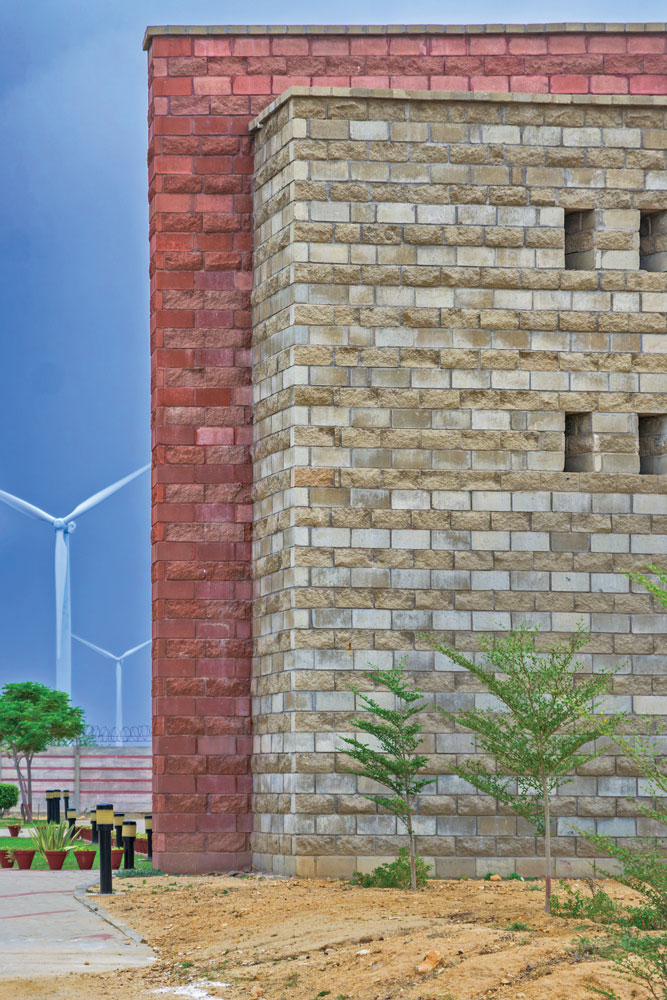
Management Club- Jhimpir. (IAP Design Excellence recognition 2024) This project is special because of the challenge it gave us. To provide a comfortable interior environment to user while remain connected with exterior in a windy and dusty wind power generation zone where wind was not welcome as a context of building but was as an essential element to generate Wind Power. It involved a lot of research to use this natural element friendly to Power turbines but not for human habitat.
After careful evaluation, we derived a form with Barrier walls which were positioned to cast a wind shadow for building placement while lifting the same wind upwards to power the turbine.
Another challenge was to combine different user activities in one building to control infrastructure cost. Selection of construction material, Details, availability and expertise of construction staff, all had to be worked out very carefully for the design to become adoptable.
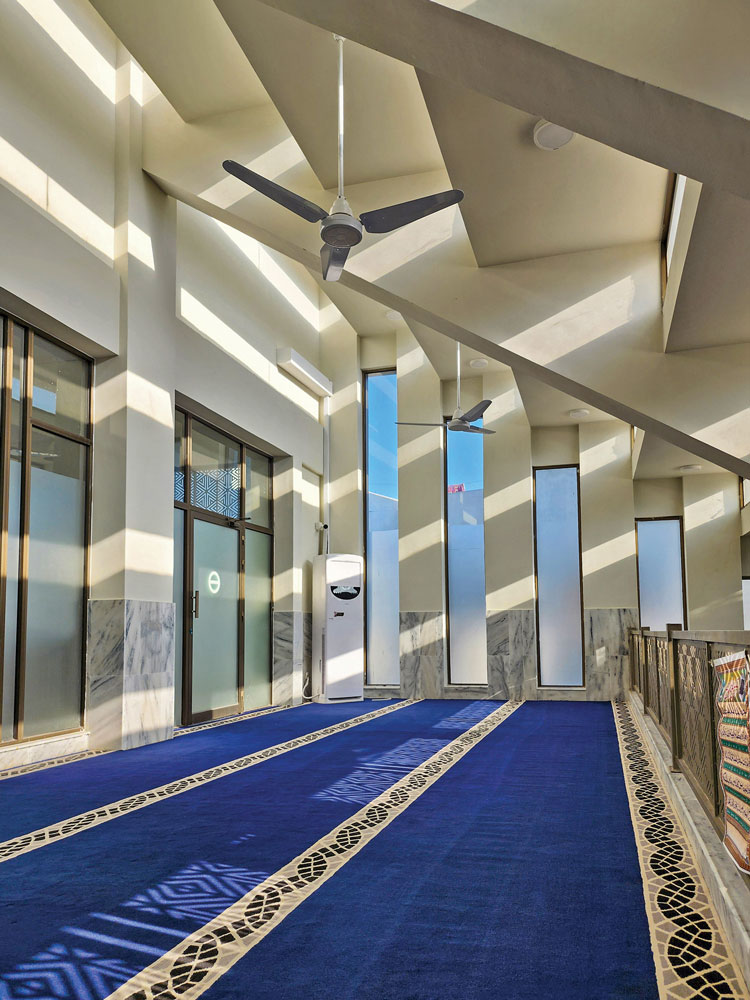
Masjid Gulzar- DHA, Islamabad. The site was sloping in two directions making a ridge at the corner of plot front. For a simple mind, it was a simple double basement design but that was adding the budget. So we derived a method to replicate the site contour in the form of terraces in the main hall design which served as a cascading dome, brought in light to prayer hall while cutting off heat and making the Architecture a true representative of Social Space. This approach has added depth, peace and connection of soul to divine in the prayer hall, while giving a silent psychological inspiration to user that there are multiple ways to create and adopt a space.

This is the learning from our cultural context as well.
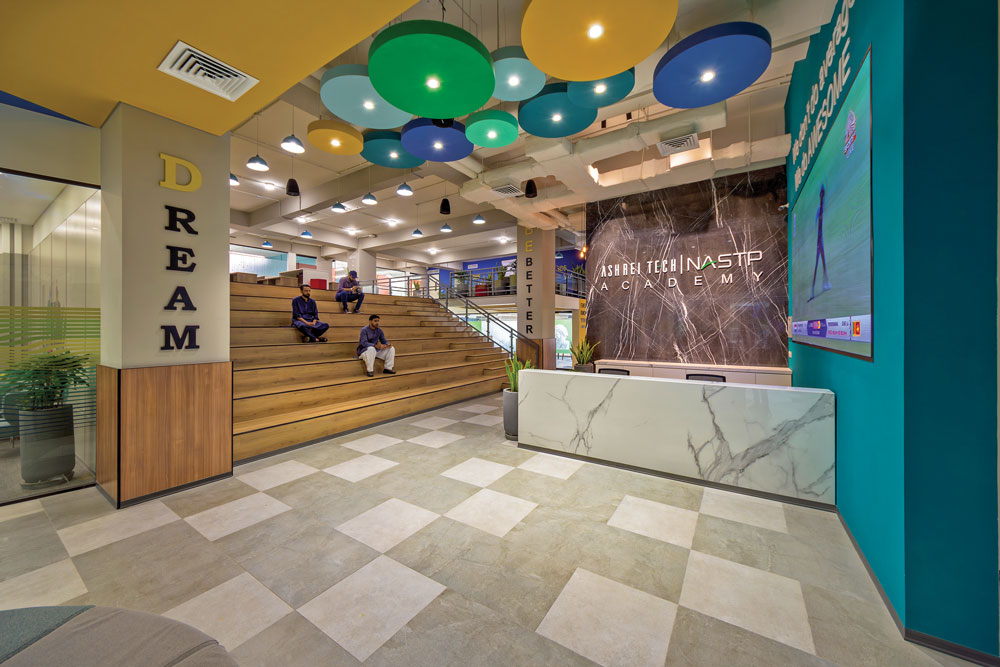
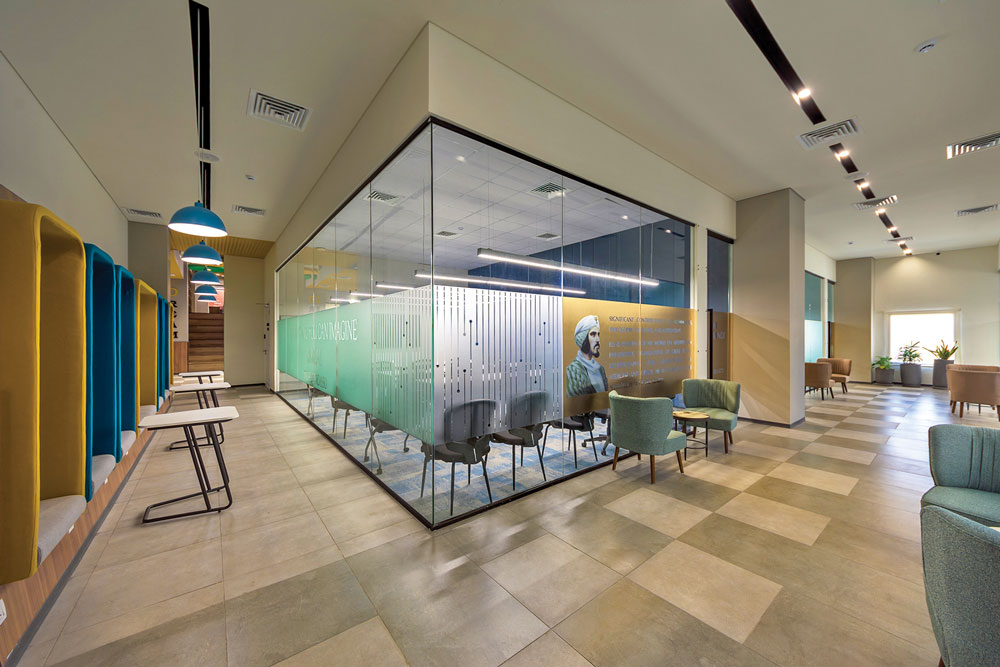
Ashreitech Academy (ADA Awards recognition), Daraz Head office, Byte by Xanders in Karachi, Start up Grage at Telenor Head office (IAP Design Excellence recognition2022) and Shared Services office at Islamabad, Huawei Pakistan interiors and many other interior Projects are carrying forward the same philosophy of providing Spatial Happiness which can mould User experience and can create a ripple effect of change about the use of materials in connection with space design.
Can you describe your most successful Architectural project to date?
SQ: Let’s first explore what makes a project successful. Happiness of User and environment after commission of building determines the scale of success. Any form of design which is fulfilling the requirements of psychological, physical, and social needs of occupants with the aesthetics of urban context, materials choice and its inherent sustainable goals is a successful project.
Most of my designs, Architecture or Interior at any scale, have happy user feedback with low maintenance cycles and contributing positively towards sustainable markers.
Hive Tower, Suzuki Racecourse Showroom, NLC Dry Port, NUST Hostels and Schools, Multiple Residences, Club House at Jhimpir, Telenor offices, Daraz Office at NASTP, Ashreitech academy, Fetchsky office, PDMS office, KEENU Head office, Mosques at DHA and many more – all have multiple scale of success stories with the philosophy of providing Spatial Happiness that can mould User experience and can create a ripple effect of change about the use of materials in connection with space design.


HOW DO YOU SEE YOUR DESIGNS CONTRIBUTING TO THE FUTURE OF SUSTAINABLE & RESPONSIBLE ARCHITECTURE?
SQ: By creating awareness in the user and generating a lifecycle of Hope with ripple effects of change. Our role as Architects is to guide and inspire the user, not only immediate but passerby and society to feel, appreciate and take forward a system of responsibility.
We modify user experience in a silent way with sense of:
• Belonging through history and memory, when our designs are built with context to past and strike user’s memories with references of materials and behaviours.
• Power over the modification of a space in different ways for adaptation and responsiveness towards use and reuse.
• Growing with the building in all its context with landscape, Sun, Wind, and weather patterns
• Appreciation and care towards built environment by first taking care of User needs.
WHERE DO YOU SEE THE ARCHITECTURAL FIELD HEADING IN THE NEXT DECADE, AND HOW DO YOU ENVISION CONTRIBUTING TO ITS EVOLUTION?
SQ: Next decade is full of surprises and unpredictable market trends due to the increased involvement of Artificial Intelligence in all fields, specially design. Young minds are too susceptible to technological advancements, and this may lead to confusion in crafting out a way ahead or even follow an already established path. So, coming years will see a cycle of exploring the new developments and adopting them in our context. Professionals with a better understanding of Architectural value system will be able to adopt more successfully without much confusion compared to those who opt for a hit and trial method.
Our role as Seniors will be to provide a strong emotional and analytical foundation to the next generation to help them make better and aware decisions.
WHY ARCHITECTURE MATTERS AND HOW CAN ARCHITECTS MAKE AN INVALUABLE CONTRIBUTION TO OUR CULTURE AND SOCIETY?
SQ: Interesting Question. Greed has become the wheel of today’s Architectural language. Build more and for more – which destroys the essence of Shelter and its basic needs. Unnecessary coverage of land on ground, unoccupied volumes, ill developed colonies which are not built for human needs but to just market, sell and abandon. Scores of such projects are seen around without a single soul occupying them. Urban canters without Urban spaces are creating cluttered noise and developing a psychology of forced usage pressure in overall urban scape.

SQ: Both. I enjoy design in its pure form. Having a little expertise in Spatial Design, the process of crafting a user experience becomes a challenge and enjoyment in both mediums. My goal has always been to create an individual and distinct identity for every project, which keeps me involved in the design process from schematic to construction supervision.
WHAT DO YOU ENJOY MORE ARCHITECTURE OR INTERIOR DESIGN PROJECTS AND WHY?
WHAT ARE SOME CHALLENGES AND DIFFICULTIES YOU HAVE FACED BEING A WOMAN ARCHITECT?
SQ: Well, there have been many. As an Architect and specially being a female. Recognition of works was the foremost among them. Designers like me who are not extroverts and enjoy their desk with paper pencil more, it becomes a real time challenge to get recognized or acknowledged. I had to tread a very patient and tedious path.
Female Architects have to groom themselves more than male counterparts for society, clients and construction teams to take them seriously. We have to know more than male Architects to get the work executed on site. Our designs have to be very strong and speak for themselves to get recognized.


WHAT DO YOU DO IN YOUR FREE TIME?
SQ: I read, travel and enjoy my Coffee. Silent reflection time is a must in my daily routine to recharge and learn from the day’s happenings. Any available free time, is spent on self recharging.
WHAT IS YOUR ADVICE TO FEMALE ARCHITECTS AND STUDENTS?
SQ: My advice would be to not give in to prejudices and psychological barriers. Always keep your eyes focussed on a bigger goal, on a better perspective both personally and professionally. Dont let in to smaller, petty roadblocks. You have been granted a special responsibility by God of carrying forward Life and nurturing it. Highest platform of respect in this world and hereafter. You are not weak. You are the force behind a positive society. You are the architects of Norms, Behaviour and environment. You are the Power.
God has given you an advantage of having a sensitive soul. Use it to your benefit. Use it to create influential aura around yourself.
Remain honest because only this trait will garner respect for you which is the most treasured tool while competing with male counter parts.
Groom yourself for challenges. So that you can come out of them unscathed.
Read, travel and observe human behaviour around with reference to spaces, materials and their negative positive effects, actions and reactions. Improve yourself everyday. This will increase your vision and inner strength. You will be able to talk with authenticity and convince others easily.
Win yourself first before embarking on a journey to win others.
Learning is to never let go of your inner strength. Profession is more Personal than Professional. This inner strength will keep the fire burning and Architecture can not be practiced without the fire and passion.


