


Interview by: Zulekha Sarfaraz | Photographs by: Engineer
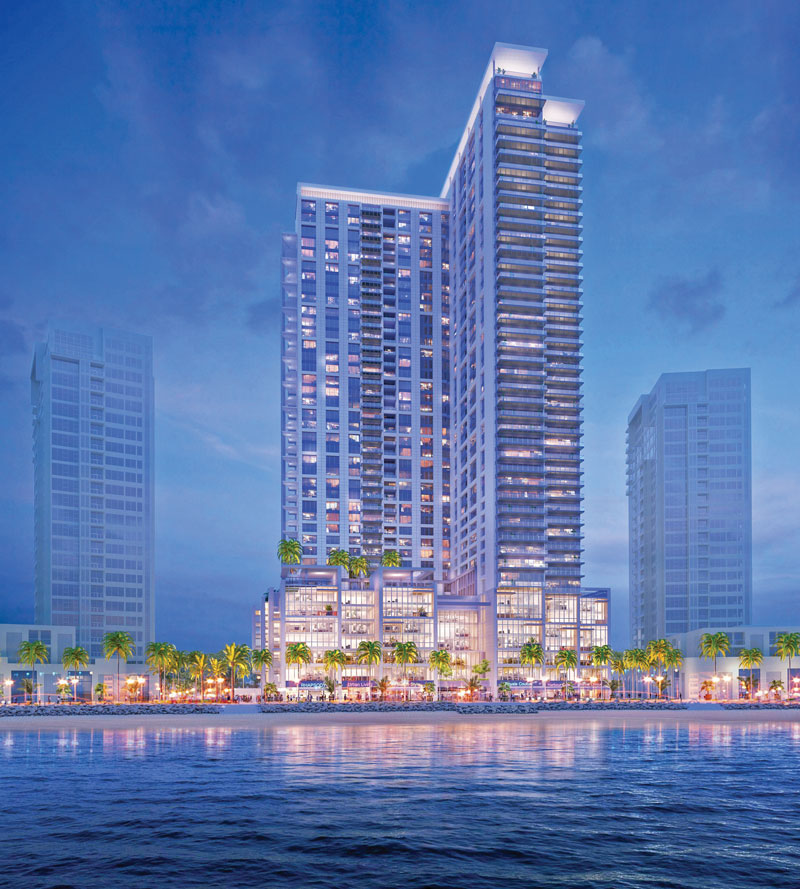
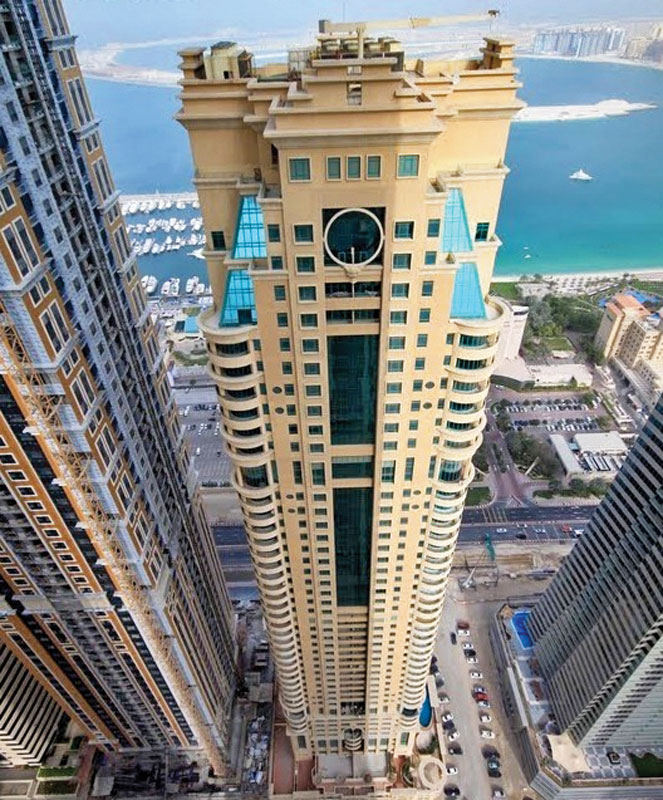
Farhan A. Mehboob is the CEO at S. Mehboob & Company, Consulting Engineers (SMC). Pakistan’s premiere MEP Consulting firm, with more than 40 years standing, SMC has offices in Pakistan and the Middle East, with projects located all the way up to North Africa and Central Asia. Farhan graduated in Mechanical Engineering from University College London (1990), followed by a Masters in Refrigeration and Air conditioning from Kings College London (1992), and has since, served the company for more than 30 years. Farhan has to his credit successfully completed over 900 projects. His work includes high-rise buildings (up to 65 floors), airports, campuses, hotels, hospitals, industrial and infrastructure projects, and internationally certified green building projects. The firm has a history of designing projects that are sustainable, energy and water-efficient, and extremely innovative and is credited with several firsts in Pakistan. In this exclusive interview with ARCHI TIMES, he talks about his successful professional journey and other related issues.
BEFORE WE DIVE INTO YOUR ENGINEERING CAREER, COULD YOU SHARE YOUR EDUCATIONAL BACKGROUND?
FARHAN MEHBOOB (FM): I attended Karachi Grammar School before pursuing an undergraduate degree in Mechanical Engineering at University College London. After graduating, I returned to Pakistan, worked for a year, and then went on to complete an MSc in Refrigeration and Air Conditioning at King’s College London.
However, education doesn’t end with formal degrees. Over the years, I have undertaken significant professional development courses, including earning certification as a certified board director, which added valuable expertise to my work both within the firm and for my customers as well.
Additionally, I’ve been an active member of ASHRAE for the last 20 years, where I gained substantial knowledge through sitting on various technical and other committees, such as the Chapter Technology Transfer Committee (which I chaired globally), Planning Committee, Sustainabioity, Clean Spaces, Large Building HVAC Systems and the Decarbonization Task Force. Learning from these experiences and from esteemed colleagues has been an incredible journey.

HOW DID YOU INITIATE YOUR ENGINEERING CAREER? WHEN DID YOU START PRACTICING, AND HOW DID YOU BEGIN?
FM: I returned to Pakistan in 1990 after completing my undergraduate degree and worked at the family firm for a year. This was important for me to confirm that engineering was the right career path.
The firm was established by my father, and being part of it was a natural progression. After a year of working, I decided to further my education and pursued a Master’s degree. Since then, I have been actively working in this field for almost 34 years.
I started as a Junior Design Engineer and worked my way up the firm through every stage, and I believe this is essential for gaining a deep understanding of the work one does as well as how the firm operates and what challenges and opportunities lie ahead.
TELL US ABOUT YOUR FIRM, ITS ROLE, AND HOW IT OPERATES.
FM: The firm was founded by my father, Farooq Mehboob, in 1980 as a Mechanical, Plumbing, and Firefighting design consultancy. Our core services include design and supervision.
I joined the firm in 1990, and later, my younger brother, an electrical engineer from the UK, joined in 1994. This expanded our capabilities, turning the firm into a full-service Mechanical, Electrical, and Plumbing (MEP) consultancy. My sister-in-law also became part of the company at a later stage and we further expanded our offerings to include Sustainability Consulting.
Today, we provide LEED and EDGE certifications, Energy Modelling, and comprehensive design services for building systems. These systems include HVAC, plumbing, firefighting, ICT, security, vertical transportation, illumination and renewable energy systems.
Our ethos is centred on creating sustainable value for our clients. We incorporate sustainability into all our designs, regardless of whether a project is being certified. For instance, we conduct box energy modelling to assess the performance of different materials and designs. For certified projects, we develop detailed energy models and water efficiency analyses.
We are currently working on Pakistan’s first net-zero water building at NED University, an ambitious project that aligns with our commitment to sustainability.

Our operations span 30 countries, with offices in Karachi, Islamabad, Lahore, and Dubai. While most designs are developed at our Karachi head office, our Dubai office supports projects across the Middle East, North Africa and Central Asia.
A significant part of our approach is understanding client needs. We prioritise communication and develop a clear basis of design, ensuring alignment with client objectives before progressing to concept design. From energy-efficient facades to passive design strategies, we emphasise solutions that balance cost, maintenance, and performance while minimising disruption to architectural vision.
WHAT KIND OF SERVICES AND PROGRAMS ARE OFFERED AT SMC, AND HOW ARE THESE DESIGNED?
FM: SMC provides a full range of MEP engineering services. Additionally, we specialise in sustainability consulting, which includes certifications like LEED and EDGE, as well as energy modelling.
All our projects are designed using advanced software tools. These include both engineering calculation software and platforms like Revit for BIM (Building Information Modeling). This allows us to maintain accuracy and efficiency in our designs and enables us to provide innovative solutions many of which have been introduced to the Pakistan market for the first time by our firm – take for example the Telenor Head Office in Islamabad, which introduced radiant cooling to this market.
WHAT SHOULD BE THE ROLE OF ENGINEERS IN OUR SOCIETY?
FM: Engineers are the enablers of civilisation. We design the systems that make modern life possible, whether it’s in buildings, hospitals, factories, or infrastructure. For example, in a hospital, engineers create the sterile environments needed for surgeries and ensure the air quality in patient rooms to reduce mortality rates. Engineers provide temperature and humidity control solutions for the textile and printing industries which allows them to perform their core business operations.


What excites me most about being an engineer is the opportunity to learn about different industries. Designing for diverse projects like hotels, hospitals, automotive plants, and tech facilities has given me deep insights into how these sectors operate. Additionally, seeing something tangible-starting from a blank screen to a fully operational system-provides immense satisfaction.
The Engineers role in society is one of an enabler, an innovator and a teacher who is able to share his knowledge and help grow a competent workforce.
DO YOU THINK ENGINEERS ARE PLAYING THEIR ROLE EFFECTIVELY IN SOCIETY TODAY?
FM: Globally, engineers are making significant contributions, but their impact depends on market conditions. In regions with educated clients and strong systems, engineers can perform at their best. In Pakistan, market conditions pose challenges.
The engineering profession here struggles with low fee structures leading to lowpay, which has led to a significant talent exodus. This, coupled with low literacy rates and a lack of compliance with standards, makes it difficult to deliver consistent value.
Despite these hurdles, many professionals continue to excel, often going above and beyond their job descriptions. However, for meaningful progress, systemic changes are needed, including better enforcement of laws, improved education, and greater awareness among clients about the value that good engineering creates for their bottom line.
Engineers also need to take the lead in first educating themselves and then their clients and the public about the effects of climate change and what each can do to mitigate them. I speak regularly at conferences and with customers on decarbonisation and sustainability.
CLIMATE CHANGE IS A PRESSING CHALLENGE. WHAT STEPS SHOULD BE TAKEN TO ADDRESS THIS ISSUE, PARTICULARLY IN PAKISTAN?
FM: Buildings account for 40% of global carbon emissions, with two-thirds stemming from operational carbon and one-third from embodied carbon. In Pakistan, while our contribution to global emissions is small (0.4%), we face significant climate impacts due to our geographic location and global pollution – the big industrial economies account for 60% of total carbon emissions.
To address climate change, we must prioritise solutions that are economically feasible in our context. Passive design, for example, is critical. Architects and engineers must collaborate to create energy-efficient buildings that reduce carbon footprints without significantly increasing costs.
I’ve contributed to drafting Pakistan’s Building Energy Code, which focuses on passive design strategies as well as active. However, for such initiatives to succeed, the government must enforce compliance, train professionals, and promote public awareness. Collaboration between the public and private sectors is vital to creating a sustainable future.
HOW CAN THE EFFICIENCY OF AIR QUALITY, GREEN SPACES, DECARBONIZATION OF BUILDINGS, AND ELECTRICITY GENERATION BE IMPROVED IN PAKISTAN?
FM: In Pakistan, renewable energy constitutes only 3-4% of the energy mix, with the majority being fossil-fuel-based. To improve efficiency and sustainability, we need to decarbonize both the electrical grid and our buildings.
Decarbonizing the grid involves increasing the share of renewables, such as wind and solar, and phasing out fossil-fuel-based power plants. For buildings, the focus should be on passive design to reduce energy demand and adopting all-electric systems for cooking, heating, and other uses.
Additionally, urban planning must incorporate green spaces and microclimates and center around biophilic design. Historically, methods like wind catchers and shaded structures were used for natural cooling, which modern architects can adapt for contemporary designs.
With the appropriate strategies and architectural and landscaping interventions it is possible to design naturally ventilated with good IAQ and comfort conditions for most of the seasons.

HOW IS YOUR FIRM ADDRESSING THE CHALLENGES OF GLOBAL WARMING AND CLIMATE CHANGE?
FM: At our firm, we use energy modelling to make informed design choices, ensuring buildings have high energy efficiency and a low carbon footprint. Even if a client doesn’t request it, we conduct these studies to guide our designs.
We also track the performance of past projects, comparing real-world data with design predictions. This helps us refine future designs. Furthermore, we focus on using low-embodied-carbon materials and improving indoor air quality. For example, we’re worked on solutions to keep pollutants like smog out of buildings, which is particularly relevant in cities like Lahore.
We are also looking at designs for net zero buildings in the residential sector.
The performance of our buildings is testament to the value we create for our clients – our buildings operate at very low cooling demand densities upwards of 300 square feet cooled area per ton of Airconditioning – this is more than 50-80% better than most buildings. What this means is customers save a lot of money on MEP systems which is invested into passive strategies on the project like enhanced thermal performance of the facade – this results in building with much lower operating costs and carbon emissions at the same initial cost as an inefficient building.
WHAT CHALLENGES DOES THE ENGINEERING PROFESSION FACE IN PAKISTAN?
FM: The engineering curriculum in Pakistan is solid, but there’s always room for improvement. Fresh graduates often lack industry exposure, and training them can take six months or more. Universities should incorporate internships and practical experience into their programs, similar to the sandwich courses offered abroad. They should strengthen industry-university liaisons to get regular feedback on curriculums and new graduates performance from the industry. Another significant challenge is the lack of skilled and certified labour. Outside of the oil and gas sector, there are few certified professionals, leading to gaps in quality and safety. Vocational training programs need to be enhanced and integrated with engineering and architectural curriculums.
Lastly, fee structures for engineers are inadequate. While engineering services account for a large portion of construction costs, the corresponding design fees are disproportionately low. This discourages quality work and drives firms to seek opportunities abroad, where markets are more regulated and rewarding.

WHAT CONSIDERATIONS SHOULD BE PRIORITISED IN BUILDING SAFETY AND DESIGN?
FM: Building safety starts with adhering to appropriate design standards and ensuring proper testing and commissioning. For example, selecting the right air quality standards and fire safety measures can prevent issues like indoor pollution or hazards during emergencies.
Public safety also requires resilience in building design. This includes accounting for future climate conditions and incorporating redundancy in systems like generators and air handling units. It’s about designing buildings that can adapt to changing circumstances without excessive costs.
WHAT ADVICE WOULD YOU GIVE TO THE YOUNGER GENERATION?
FM: Be curious and committed. Dedicate time to deep learning, and don’t shy away from hard work. Success comes from consistent effort and a willingness to explore beyond your comfort zone.
In this digital age, limit distractions like excessive social media or streaming platforms unless they contribute to your goals. Instead, invest your time in skill-building. For example, even 15 minutes a day spent learning something new can amount to over 90 hours in a year. Small, focused efforts can lead to significant results.
There are abundant free online training opportunities available as well as paid ones which lead to different professional certifications – invest your time in these and build your knowledge and skills.
I enjoy speaking to students and give time at universities and schools whoever I can to speak about sustainability and career choices.
WHAT DO YOU DO IN YOUR FREE TIME?
FM: I play padel every morning at 7am before heading to work and hard ball cricket once a week. Music is another passion of mine. I enjoy catching up with close friends on weekends. I don’t watch much TV, but i do spend 30 mins everyday on YouTube learning something new – I try to spend time on meaningful activities that bring balance to my routine.
I have twin daughters who are in London, my wife and I go to see them as often as possible and travel with them to explore new places whenever we can.


