


EMPOWERING YOUNG MINDS THROUGH INNOVATION (Beginner Level Program)
By Ar. Sobiya Munawar
Over the past few months, I’ve had the privilege of conducting a series of beginner-level workshops on Generative AI for architects at various architectural institutions. These sessions were an incredible opportunity to engage with the vibrant and curious minds of the next generation of designers, who are eager to explore the intersection of creativity and technology.
The experience was nothing short of invigorating. Students approached the topic with a mix of enthusiasm, curiosity, and understandable skepticism. Among the recurring questions, two stood out:
* “Can AI make our projects its own?”
* “Is it just creating copied versions of designs?”
These concerns reflect a natural apprehension about new technologies. They brought a smile to my face as I reassured students that Generative AI is not here to replace human creativity but to amplify it. It’s a tool-a powerful one-that architects can use to visualize ideas with greater precision, achieve perfection in conceptualization, and streamline workflows. The goal is not just efficiency but elevating the design process itself.
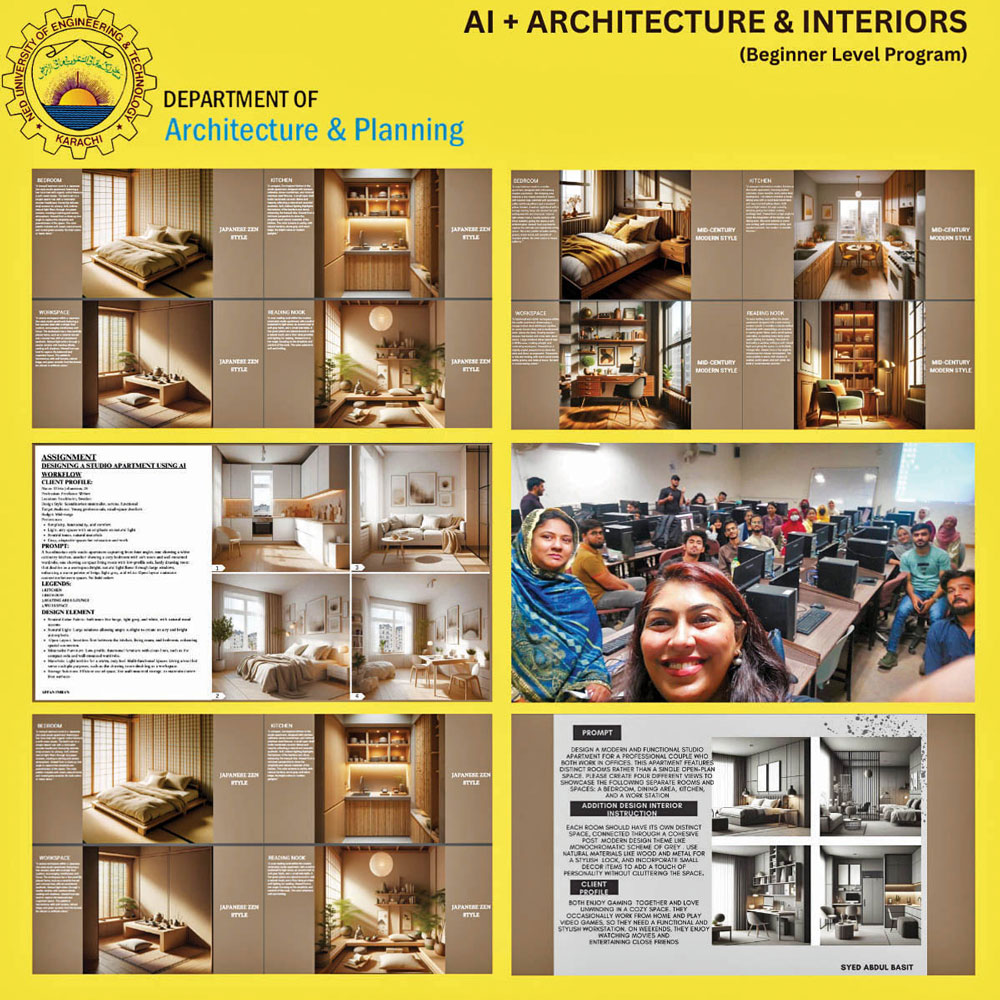

The workshops were structured to provide a balanced introduction to Generative AI, combining theory with hands-on application. We began by breaking down the fundamentals of AI, focusing on its role in architectural workflows and its potential to push creative boundaries. While AI can assist with visualization and refinement, the human intellect and imagination remain irreplaceable.
A significant aspect of the sessions revolved around crafting effective prompts, a skill that unlocks the full potential of AI. Students were introduced to step-by-step techniques, empowering them to achieve their desired results through iterative experimentation. They explored free AI platforms, ensuring accessibility, and experimented with generating visuals. The focus was on achieving consistency in imagery and aligning the outputs with their design concepts.
Participants were guided through transforming design briefs into conceptual mood boards, which were then developed into technical drawings. This process showcased how seamlessly AI can integrate into design workflows, bridging the gap between concepts and execution. Faculty members joined these discussions, exploring the evolving role of AI in architectural education. The conversation emphasized the importance of focusing on technical proficiency and fostering a deeper understanding of design principles in an AI-driven landscape.

The sessions were highly interactive, with live exercises providing students the opportunity to rapidly visualize ideas, test AI-generated design iterations, and refine their understanding of technical execution through feedback loops. Witnessing their creativity flourish as they combined their unique perspectives with the capabilities of Generative AI was truly inspiring.
The workshops underscored several key takeaways. Generative AI is a collaborative tool that amplifies architects’ creative visions rather than replacing them. Mastery of prompting is essential for unlocking unlimited creative potential. While AI accelerates conceptualization, human intellect and imagination remain at the heart of architectural design, and technical execution remains as vital as ever.
These sessions mark the beginning of an exciting journey into integrating Generative AI into architectural education. Each interaction reinforced the idea that the future of architecture lies not in choosing between technology and creativity but in harmonizing the two. As technology evolves, I look forward to exploring new frontiers and contributing to the reshaping of architectural education for the better.


