Text & Images by Quratulain Asghar
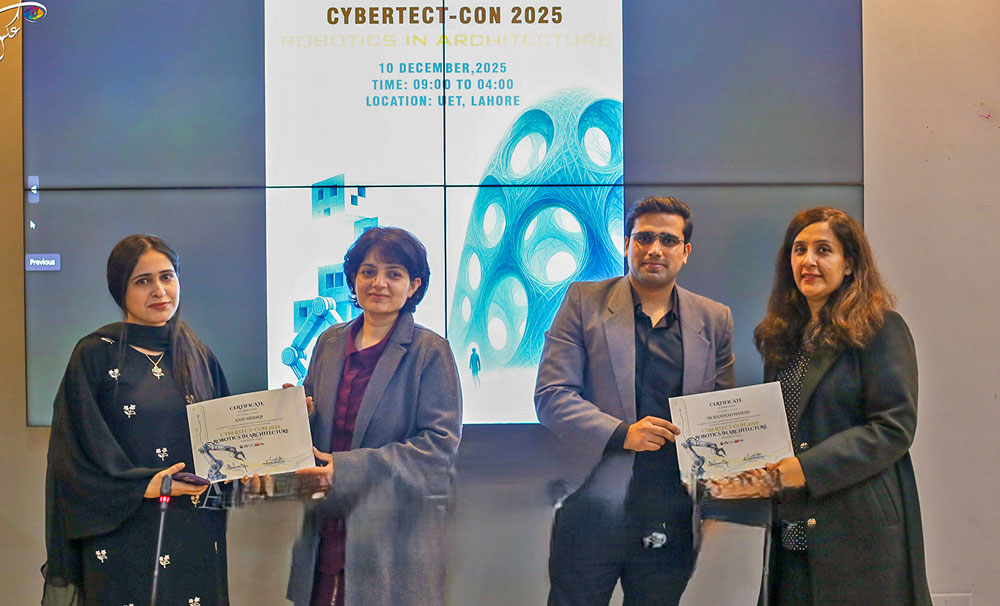
The future of architectural design isn’t just digital; it’s also robotic. This conviction was explored in depth at the Department of Architecture, University of Engineering and Technology, Lahore’s inaugural Cybertect-Con 2025, a pioneering one-day workshop to forge an unprecedented dialogue between architecture and mechatronics. Far from being a distant vision, robotics is now actively reshaping how we conceive, craft, test, and ultimately reimagine space. This one-day workshop is the brainchild of two faculty members in the department: Assistant Professor Dr. Fatima Javeed and Associate Professor, Quratulain Asghar. These two tech enthusiasts, both Fulbrighters (2019 and 2008), credit the Fulbright program for shaping their forward-looking approach. The program prepared them to explore and to inspire the next generation to think and grow in ways that position) architecture as a discipline within STEM (Science, Technology, Engineering, and Mathematics. With this new vision, they took a decisive step toward a critical convergence of innovative STEM fields and architecture. Among these, the two distinct disciplines of architecture and mechatronics begin to share a unified language of innovation, turning it into a tangible reality in architectural design.
Laying the Groundwork: Bridging Disciplines
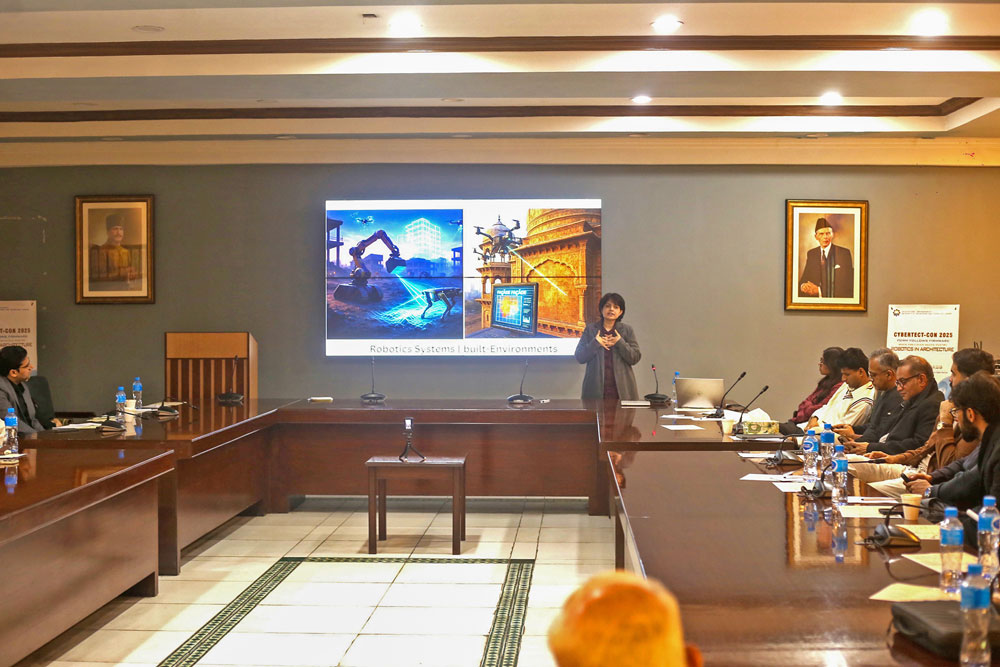
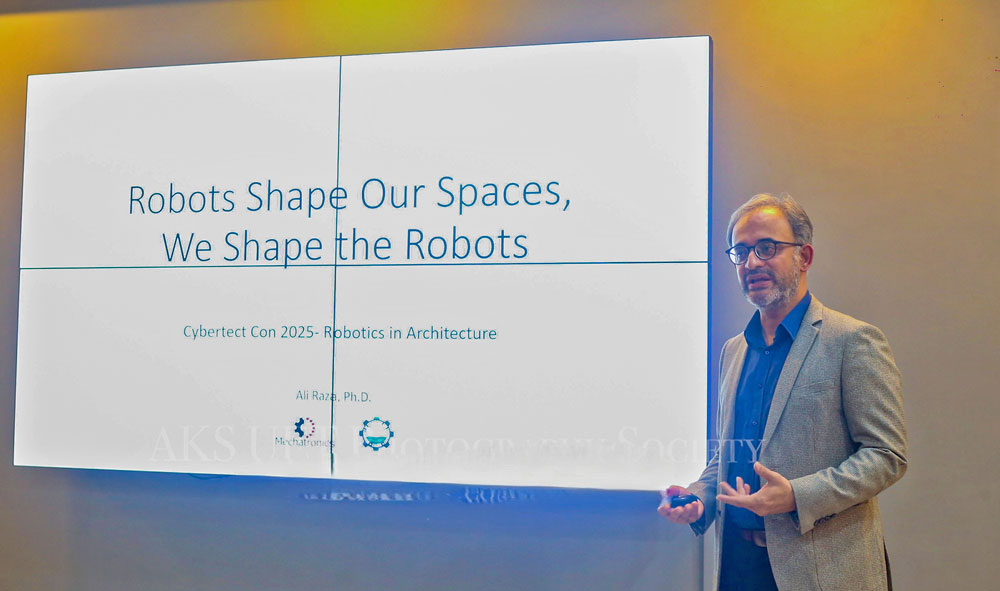
The morning session of Cybertect Con 2025 meticulously laid the intellectual groundwork for this interdisciplinary venture. Mechatronics faculty opened the floor, lifting the veil on the capabilities of the next generation of industrial and collaborative robots. Dr. Ali Raza (Chairman, Mechatronics Department UET Lahore) elucidated on the diverse spectrum of robotics, from the precision of the Da Vinci mechanism to the autonomy of self-driving cars and the agility of humanoid platforms. He highlighted their burgeoning roles in construction, assembly, inspection, and automated fabrication, underscoring why robotic thinking is now indispensable for architectural design.
Following this foundational insight, the Architecture faculty stepped in to map the seamless integration of robotic fabrication tools into contemporary studio culture and design research. The energy in the hall palpably shifted during a live session demonstrating the dynamic link between a KUKA robotic arm and Grasshopper, fluidly translating complex code into physical motion. A student presentation then injected a jolt of fresh perspective, showcasing how young designers are already bending robotic workflows in unexpected and inspiring directions. The first half culminated in a candid panel discussion, posing the essential question: “Where do we go from here?” The diverse responses clearly indicated that this was merely the beginning of a multifaceted journey.
From Concept to Construction: Voices from the Frontline
The workshop delved deep into specific applications and visionary concepts through a series of insightful lectures from both faculty and students:
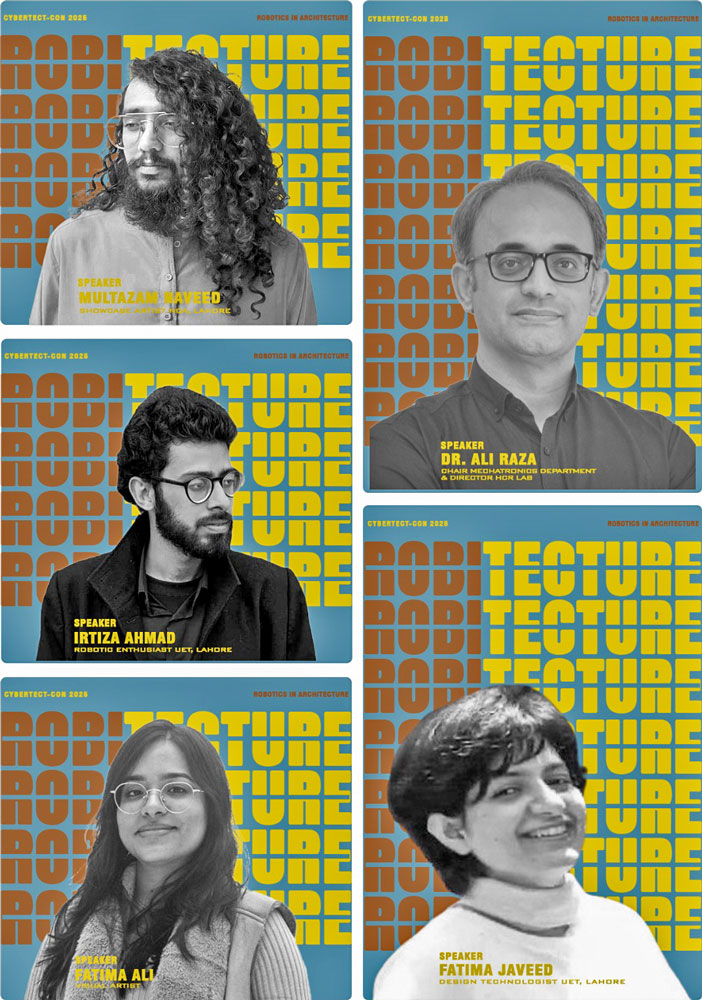
Dr. Ali Raza explored Robotics in the Architectural Design Workflow, detailing how drone-based mapping revolutionizes pre-design terrain modeling and site documentation. He showcased how robotic 3D printing and KUKA-Grasshopper integration enable the fabrication of parametric designs, while sensory nodes in buildings provide continuous data for intelligent supervision. His subsequent talk on Robotic Fabrication, Construction Automation, and Human-Centered Innovation highlighted examples such as robotic timber assembly and automated bricklaying, citing large-scale projects such as the DFAB House as evidence that robotics is reshaping construction. The emphasis was on a future shaped by convergent thinking and interdisciplinary collaboration, yielding truly human-centered robotic design.
Multazam Naveed, a final year student from the National College of Arts (NCA), captivated the audience with his presentation on N-Blocks, a modular, self-reconfigurable architectural system inspired by cinematic transformations. He elaborated on the system’s innovative lock-in mechanisms, mobilization phases, and drive-shaft mechanisms within each block, all coordinated by microcontrollers. Naveed’s performance analysis revealed N-Blocks’ impressive structural potential, capable of reaching two-storey heights, and ignited discussions on “architectural pixilation “the vision of buildings as dynamic, transformable entities.
Irtiza Ahmad, a fresh graduate of the Architecture Department of UET Lahore, shed light on the Digital Design Workflow and Global Academic Influence, emphasizing the pivotal role of tools like Rhino, Grasshopper, and robotic fabrication. He highlighted the seamless Grasshopper-KUKA Integration for Computational Fabrication, demonstrating how robotic arms interpret design logic directly, translating digital instructions into precise physical movements. Ahmad’s discussion on Robotic Mechanisms and Material Handling showcased how pick-and-place robots extend architectural capabilities beyond human limitations, ushering in new efficiencies and innovative construction techniques.
Fatima Ali, a graphic designer from Beaconhouse National University (BNU) Lahore, offered a compelling interdisciplinary perspective, framing her work at the Convergence of Art, Environment, Material Studies, and Technological Processes. Drawing inspiration from artists like Andy Goldsworthy, she explored the interplay between permanence and impermanence, in which natural forces influence artistic outcomes. Her practice uses a robotic arm as a subtractive tool, engaging in the “unmaking” of form, thereby creating a profound dialogue between human intent, mechanical precision, and environmental abstraction.
Lastly, Dr. Fatima Javed articulated Robotics as an Extension of Architectural Thought. She drew parallels between architectural imagination and the historical conceptualization of architecture as a machine. She cited contemporary research, such as work by IAAC, ICD, and TU Delft on robotics in architecture, as evidence that robotics is fundamentally reshaping architectural methodologies. While acknowledging the power and limitations of current Fabrication Technologies, Dr. Javed passionately advocated for a “humanized” version of robotic design, where machines complement human creativity. She also introduced the exciting possibilities of Rule-Based Design, Self-Organisation, and Material Exploration under robotics in architecture. Her presentation illustrated how simple computational logic can generate complex patterns, leading to responsive, autonomous architectural systems that evolve rather than conform to rigid plans.
Action and Vision: The Second Half Unleashed
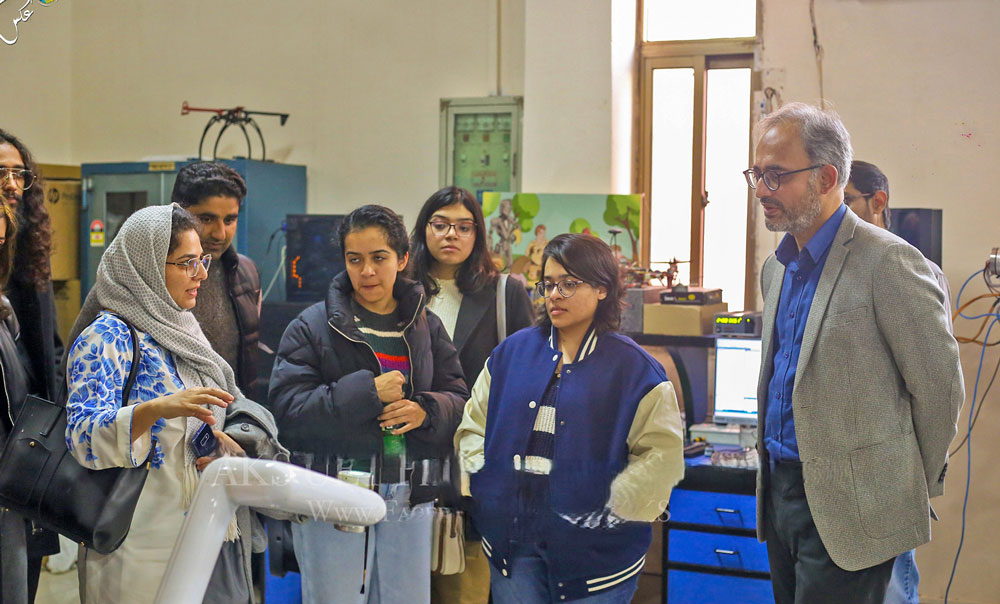
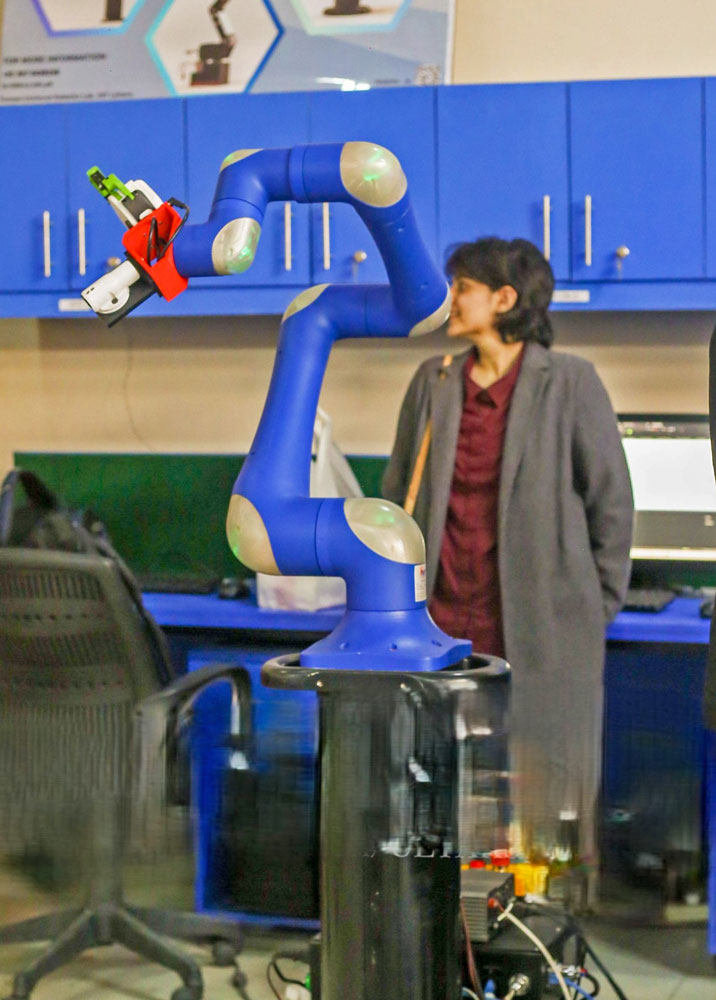
The afternoon session moved decisively from theoretical discourse to tangible action. The Human-Centered Robotics Lab delivered a captivating live demonstration, presenting a full pipeline in motion: sensors, controllers, real-time logic, and robotic behavior unfolding dynamically before the audience. This demonstration vividly illustrated the transition from a digital idea to a physical act, revealing how these sophisticated systems are not just expensive props, but can genuinely integrate into everyday architectural practice.
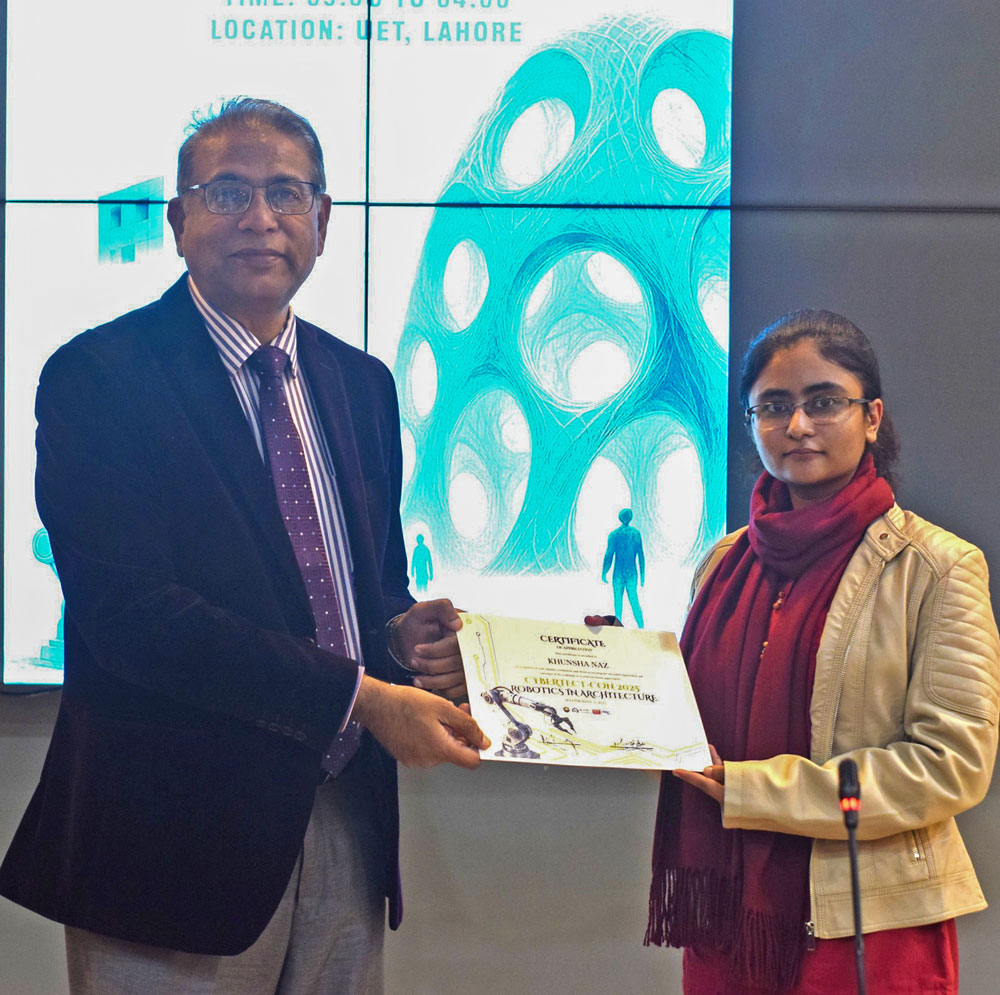
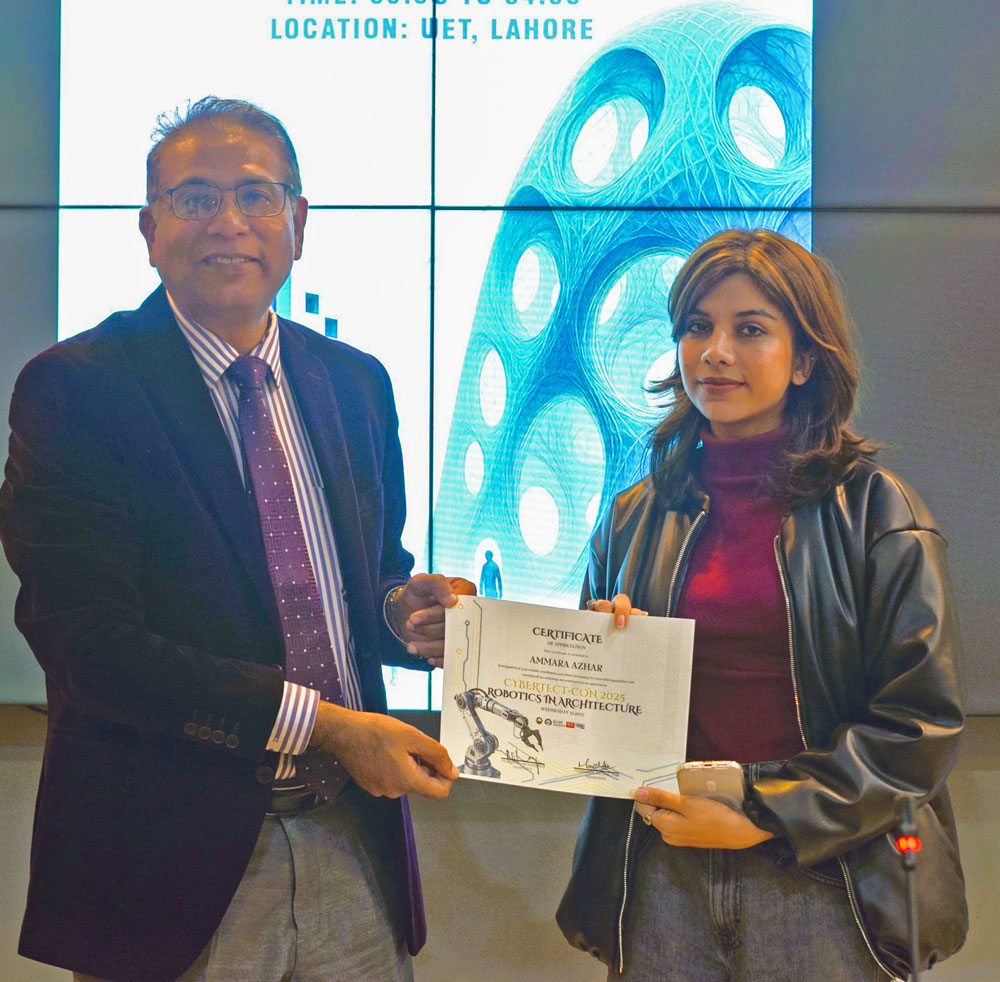
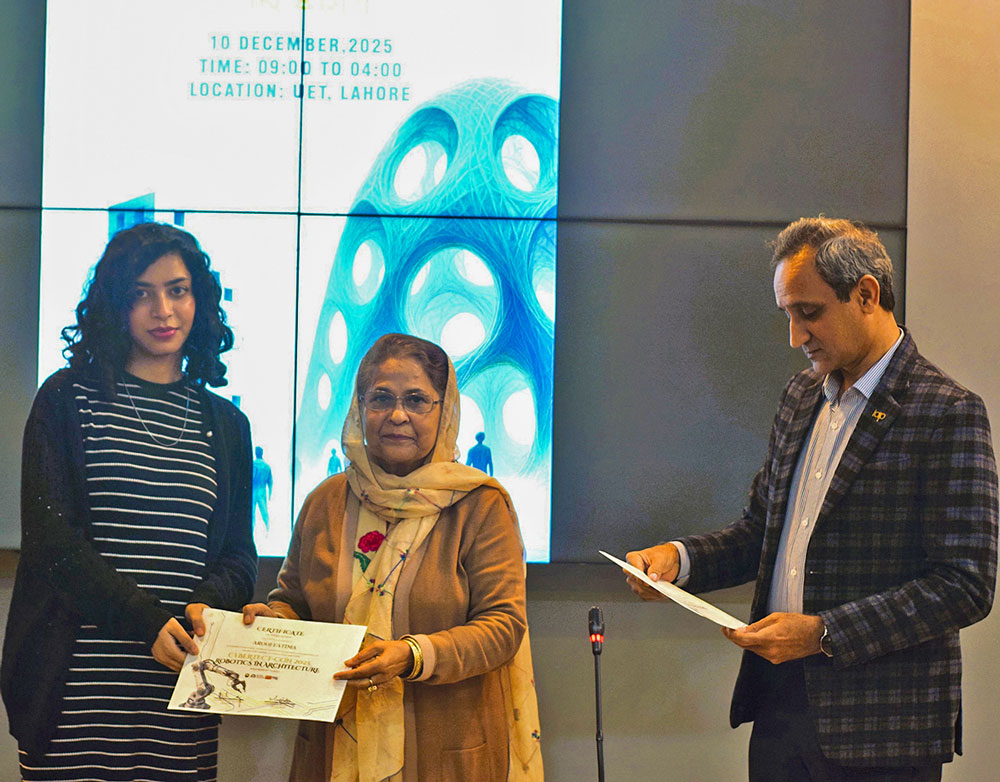
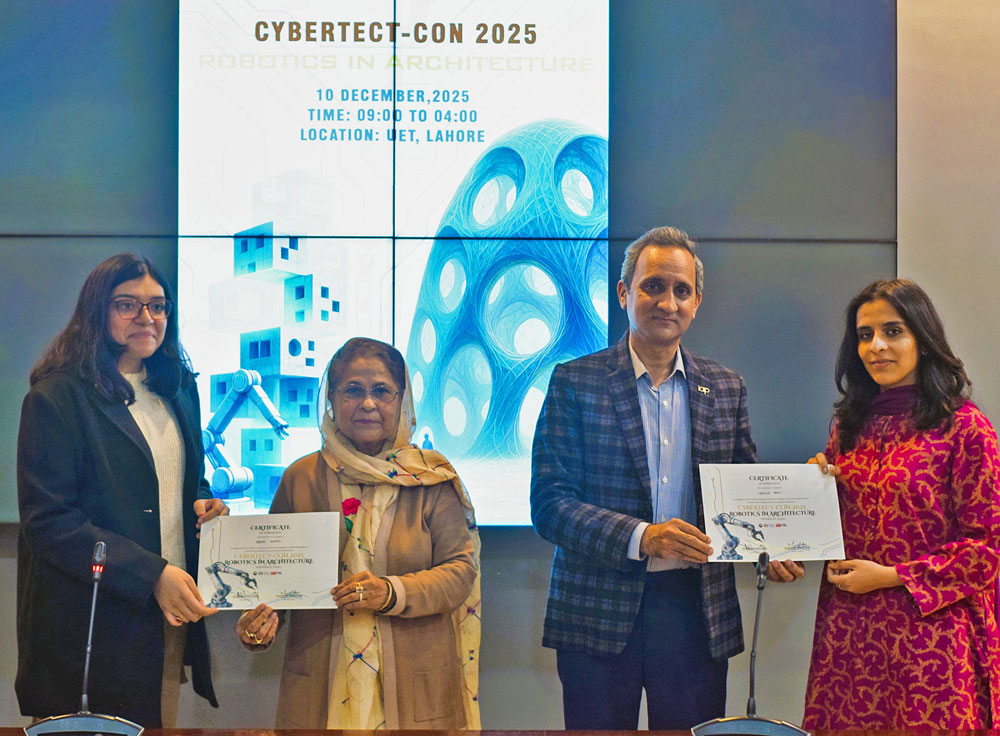
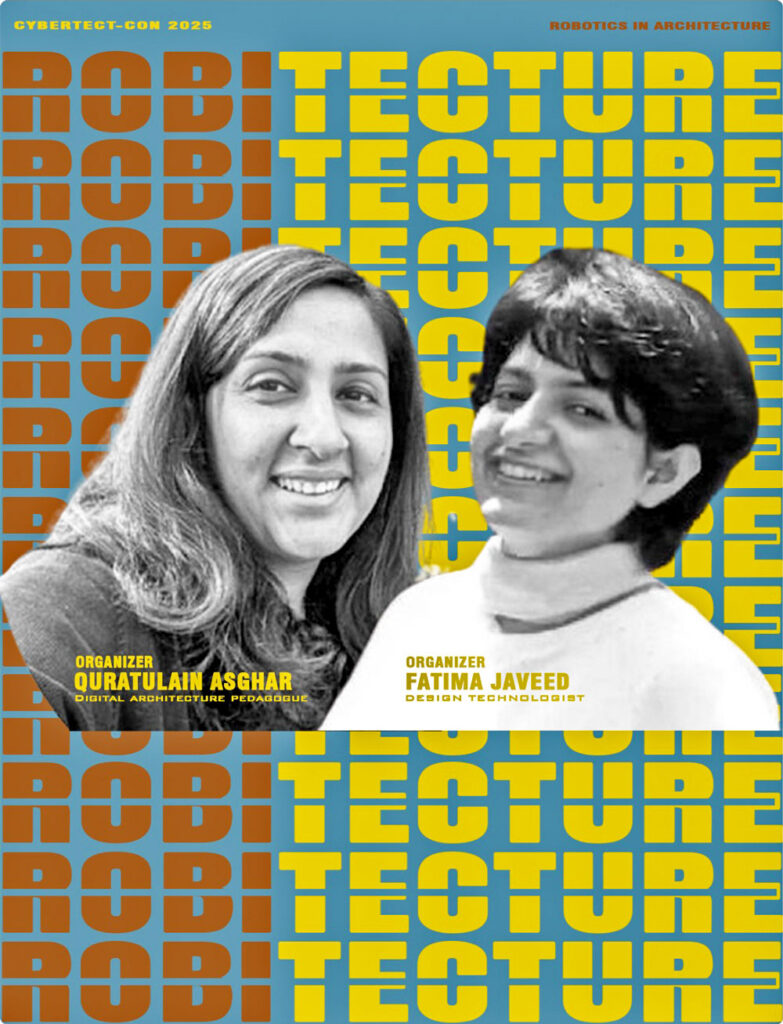
Cybertect-Con 2025 concluded not as an end, but as a focused spark. One day, two fields, and a plethora of overlapping ideas. If the rich conversations and demonstrations are any indication, this workshop at UET Lahore will undoubtedly seed new collaborations, inspire novel tools, and cultivate fresh attitudes within the architectural community, where robots transcend their role as mere background hardware and truly become integral design partners. The era of the Cybertect has officially begun. This event was graciously sponsored by BETA and VODA pipes and was organized by Quratulain Asghar and Fatima Javeed.