


Text & Photographs: Irfan Naqi

Have you ever experienced a fantasy or science fiction that you enjoyed ? How do writers make those settings feel authentic? do you think the writer has actually been to those locations ? or was it just written out of his/her imagination? or let’s say if you had been to a place where it felt like you were in a fiction movie, and you had to write about your experience in ways that you saw the place. What would you do ? Would you look at all those pictures you took? Or write about what you saw and felt ? An editor from Canada saw my Instagram posts on Expo, and had asked me to do just that, which is to write about the event that I had witnessed in Japan.
I travel a lot, and I have a habit of taking lot of pictures. When I share my pictures on social media, I get a familiar question all the time –How did you take that picture or what camera did you use. The answer to those questions is really simple, you just have to be there !, there is no art in it, nor do I consider myself to be a highly creative person. I just follow one element of nature that make my pictures and my imagination come alive, and that is light.
Light is visible in day and at night, but how you see it can change it from reality to fiction, the camera on your phone can even do that for you, but you have to be the one to press the shutter button at the right time and be able to tell us what you saw in that moment.
So, I am an Architect, and I do photography for architects, my perception of space is slightly different from a person who is not an architect. This perception focuses mainly on unique features of the space that is not visible to the eye literally. Communicating an experience such as Expo 2025 in Japan is not easy. These events generally rely on neon lights, visual illusions and sounds that distort our experience of the actual space, and the viewer generally leaves with no real recollection of that experience other than a saying “wow” for few minutes.
Let’s start with what is Expo 2025 ? -World Expos in its core purpose is to showcase the future technologies and societal advancements, while also highlighting unique national and regional cultures. Like past Expos, it features a vast array of pavilions, interactive exhibits, and opportunities to experience cutting-edge innovations. It focuses on specific themes like “Designing Future Society for Our Lives” and emphasizing the fusion of cyber and physical worlds to create a future society. This might sound a bit confusing, but it all makes sense when you experience it in real life.


My senses generally don’t awaken with illusions, and this allows me to see what lies beneath its appearance, This writing is about the meaning behind the appearance of Expo event and how things in Japan are not about what you are looking at, but it’s actually about what you see beyond it.
One example of “meaning behind appearance” is a simple act of sitting under a tree. We all have sat under a tree at some point in our lives and walked away as if it never happened. In Japan there are seasonal Cherry Blossom trees that Japanese sit under it, and experience something ephemeral nature of existence (or joy), in other words they feel something that I don’t (or I can’t). But I can see them experiencing that moment for hours under a tree lying down and looking at the flowers in the wind. This concept of “being under a tree” can also be seen everywhere in Expo.
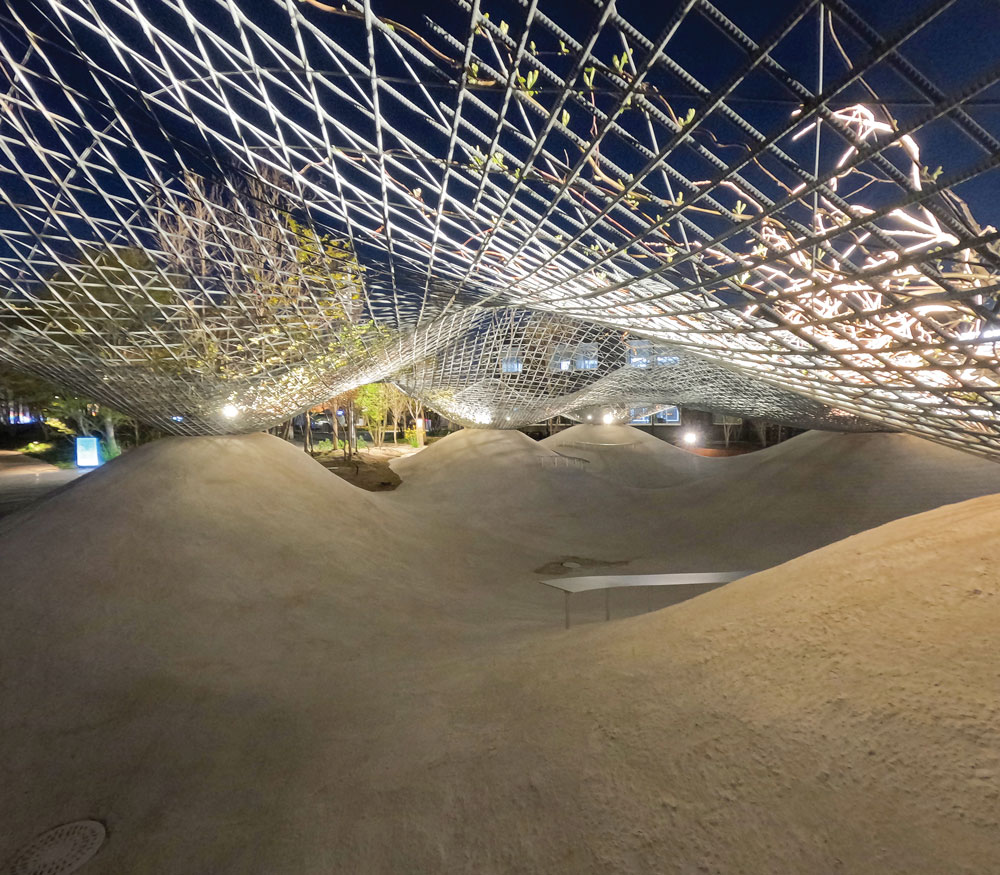
Here is an example of a steel cage, which is a fairly simple structure, and it’s difficult to understand why it is there in first place. I had passed it many times during a day, and never thought twice what its purpose was. On my last day at Expo, I finally decided to take out my camera and walk inside it, and as I was walking inside, there was a nice scent coming from the wisteria growing on top of the cage net, the uneven flooring under the wisteria were actually holding the sweet scent, and I was completely blown away by this simple cage-like space.
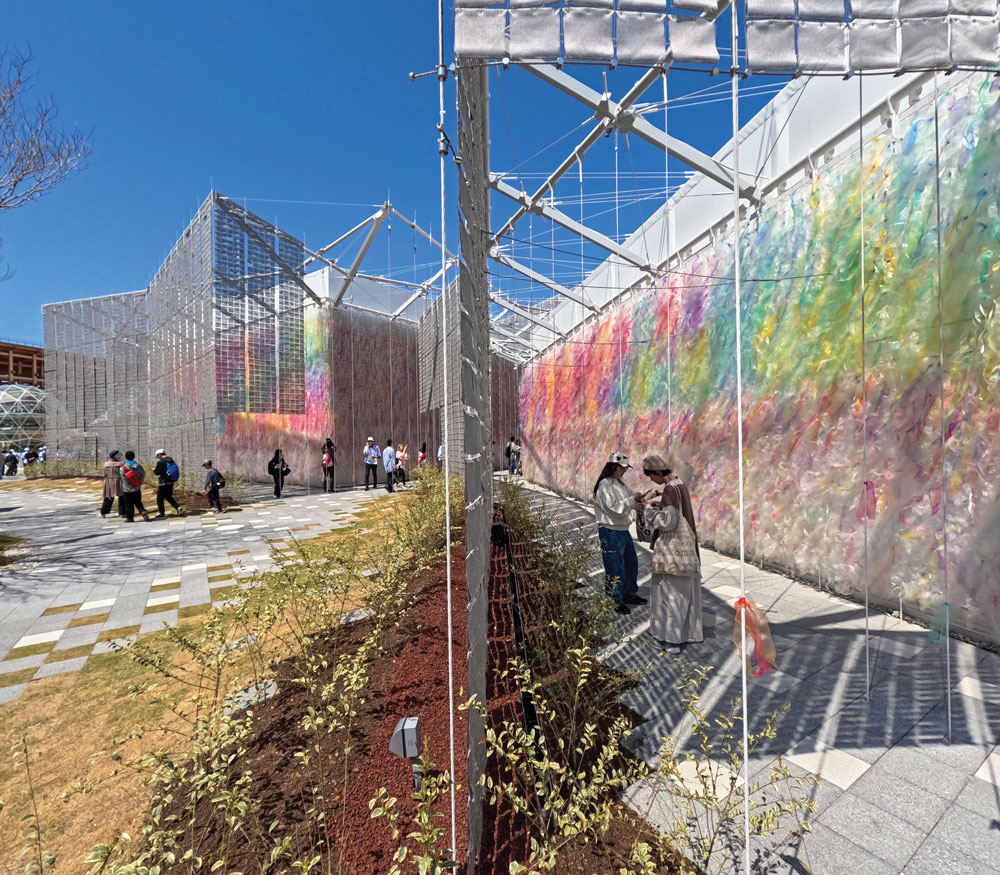
Pictures below show how walkways are covered by trees, and as one walks under it, there are art installations that one can experience while resting inside it.

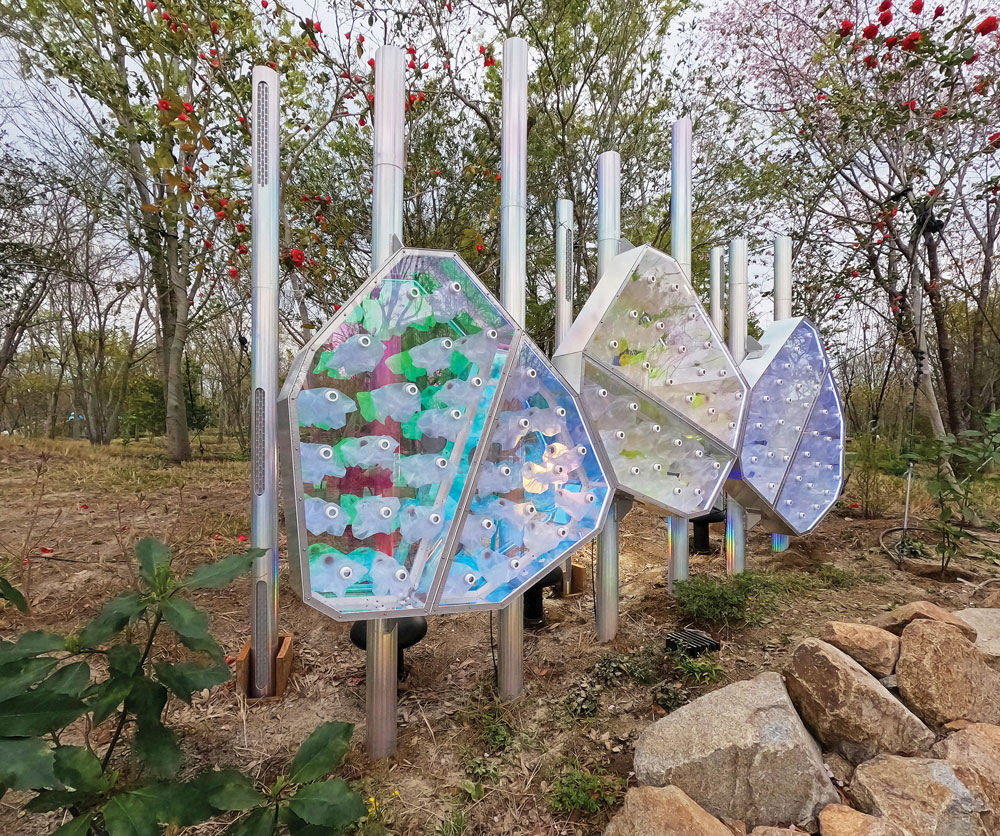
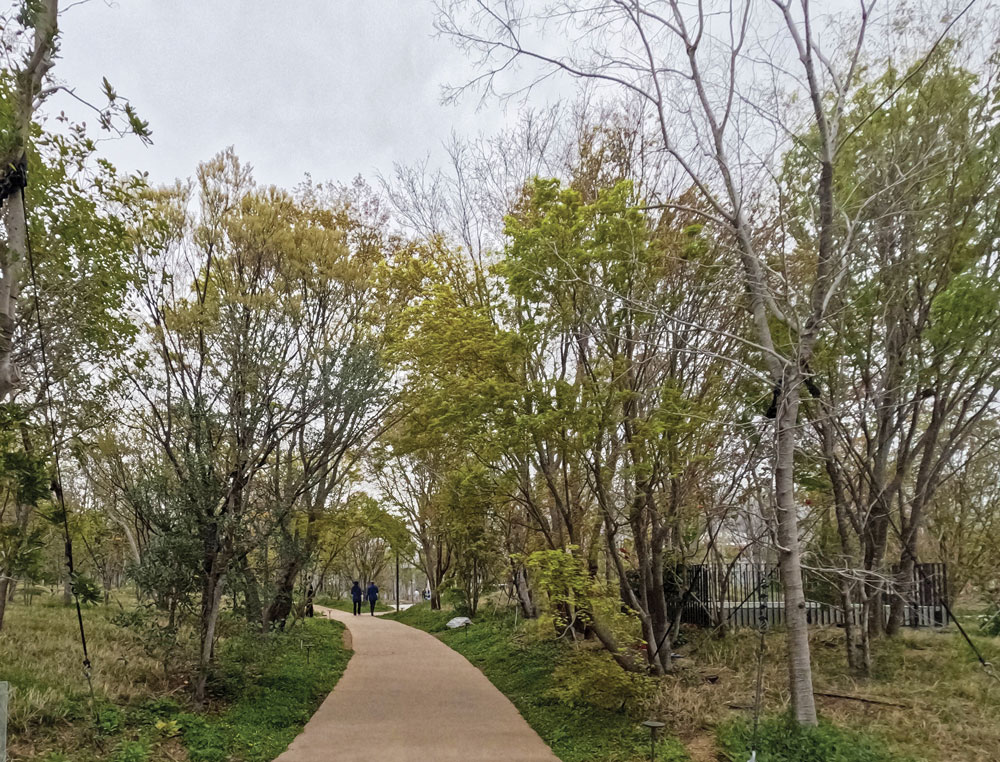
Children can also experience art by going inside these neon colored balloons.
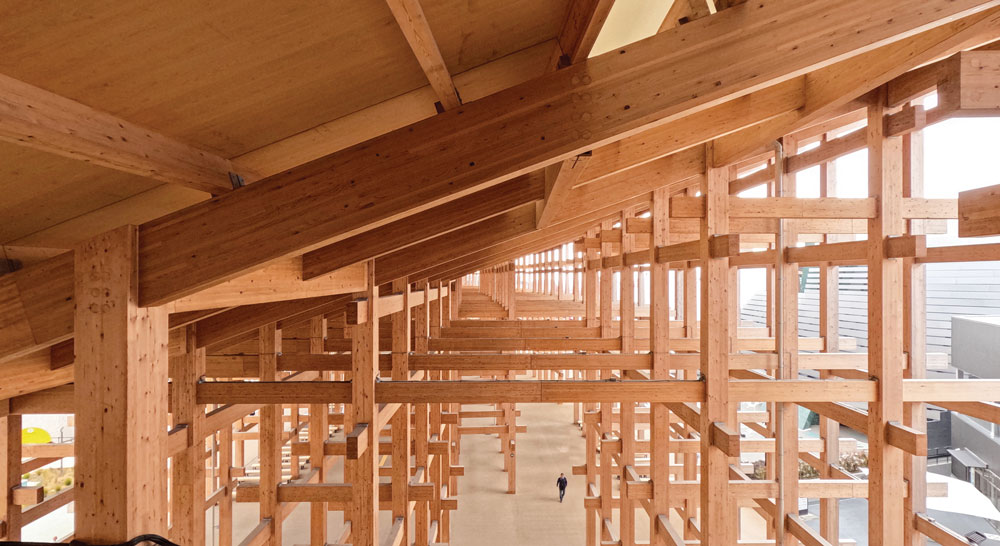
Human experiences like these are found everywhere at the Expo. Uzbekistan’s pavilion also had a similar experience of walking in the forest, these wooden trees were taken from all parts of Japan and laid out in a geometric sequence like a forest without leaves, and there was scent of pine everywhere like I was walking in a forest with cool breeze.
The biggest attraction of the Expo by far would have to be the The Grand Ring (as shown on left). The construction techniques used to connect the horizontal beam with verticle post was through slots that slide into each other. They are also known as Nuki Joints, which are used in traditional temples and shrines.
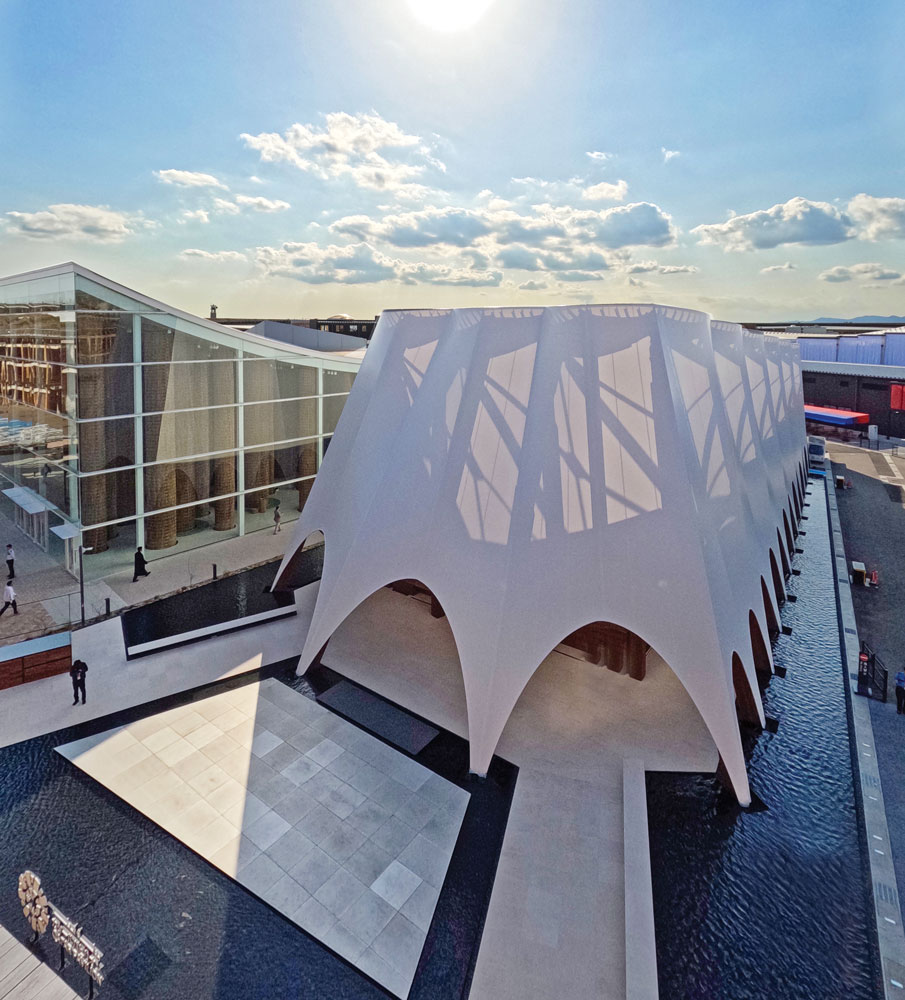
The Grand Ring was masterplanned by Sou Fujimoto Architects in collaboration with fellow Japanese studios Tohata Architects. This is the only Expo that is held on the sea and there are many pavilions that are centered around the concept of water (or water vapours). One that really stood out for me from the rest of the pavilions was the Qatari Pavillion.
The canopy depicts the tradional dhow boats of the Persian Gulf which is seen everywhere in Doha (Qatar). Architect Kengo Kuma used a white fabric that wraps outside the Pavilion, and the woooden structure of the dhow boat is visible in a form of shadow (as shown in picture a). This is how dhow boats are seen in the Qatar (litrally).
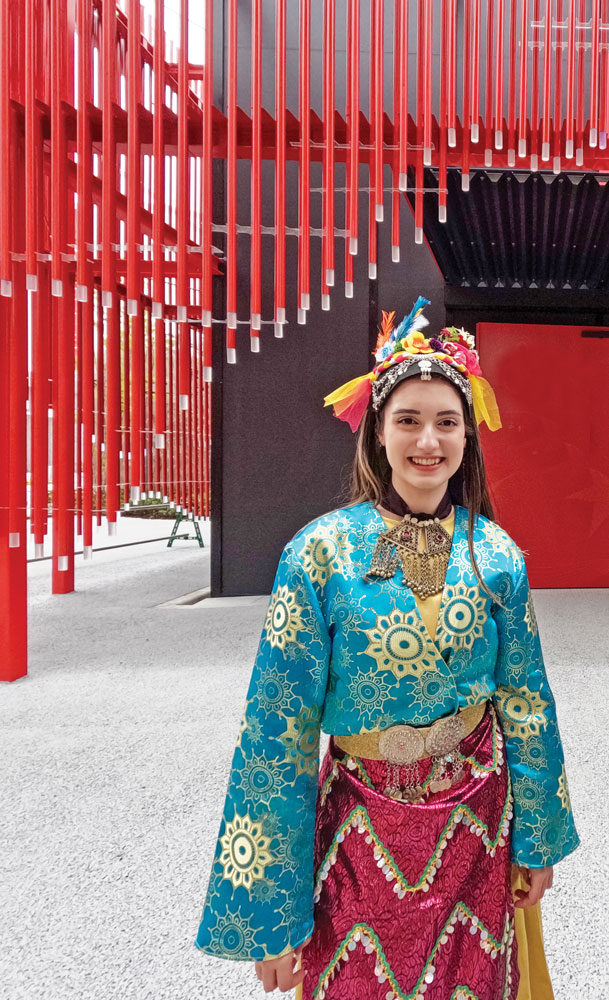
Turkish Pavilion showcased culture with their vibrant array of folk dances and traditional clothing which matched the colors of their pavilion. Among the most popular dances of Turkey, I was told that Halay dances was the most popular dance of the country. Halay dances are played with a shrill pipe accompanied by a drum. The red pipes hanging outside the Turkish pavilion was about instrumentations and how music flows through it. Dancers would hold visitors hands and forming a row and then a circle according to the rhythm of the music. The experience of holding hands makes everyone smile and the shared movement experience (in circle) brings people together.



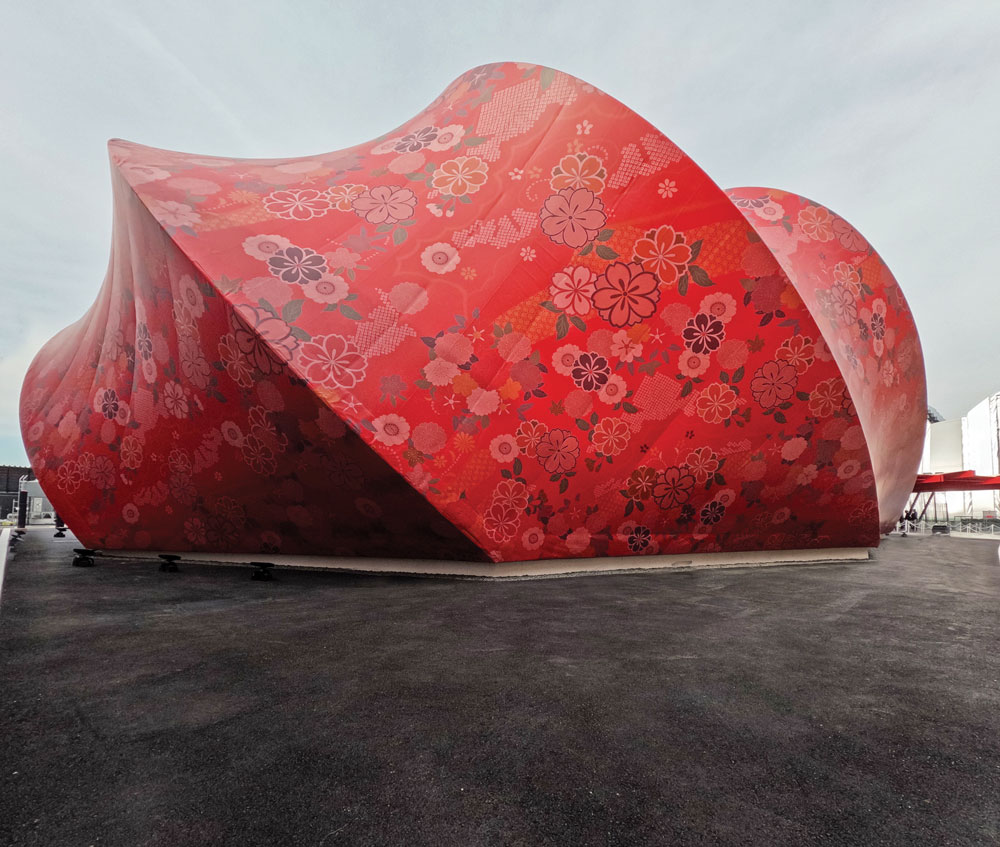
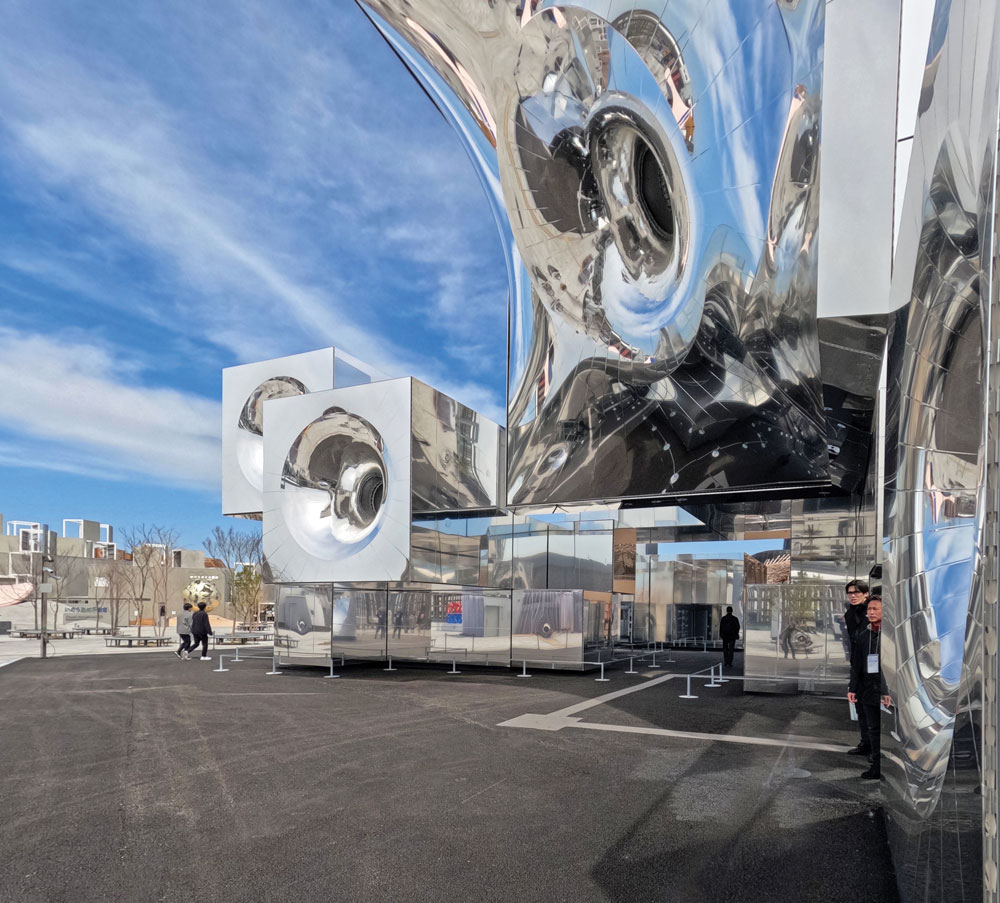
Another Japanese Pavilion that broke the record for the largest building wrapped in Jacquard fabric is shown on top right. Shin Takamatsu, the architect, intentionally used the historic Nishijin textile to bridge the past and future, cherishing tradition while proposing a future-oriented design.
The main Japanese Pavilion was also full of life and regeneration of different forms of life. It’s a fairly complex web of walkways as you enter, but if you look at it carefully it starts to communicate with you. Here is an example of a farm area inside the Japanese Pavilion where the tubes contain Photosynthesizing algae that are transforming into energy. At first it’s easy to get amused by colors and reflections of this space, but if you take your time to look beyond the visual distractions, there are some beautiful meaning behind its appearance.
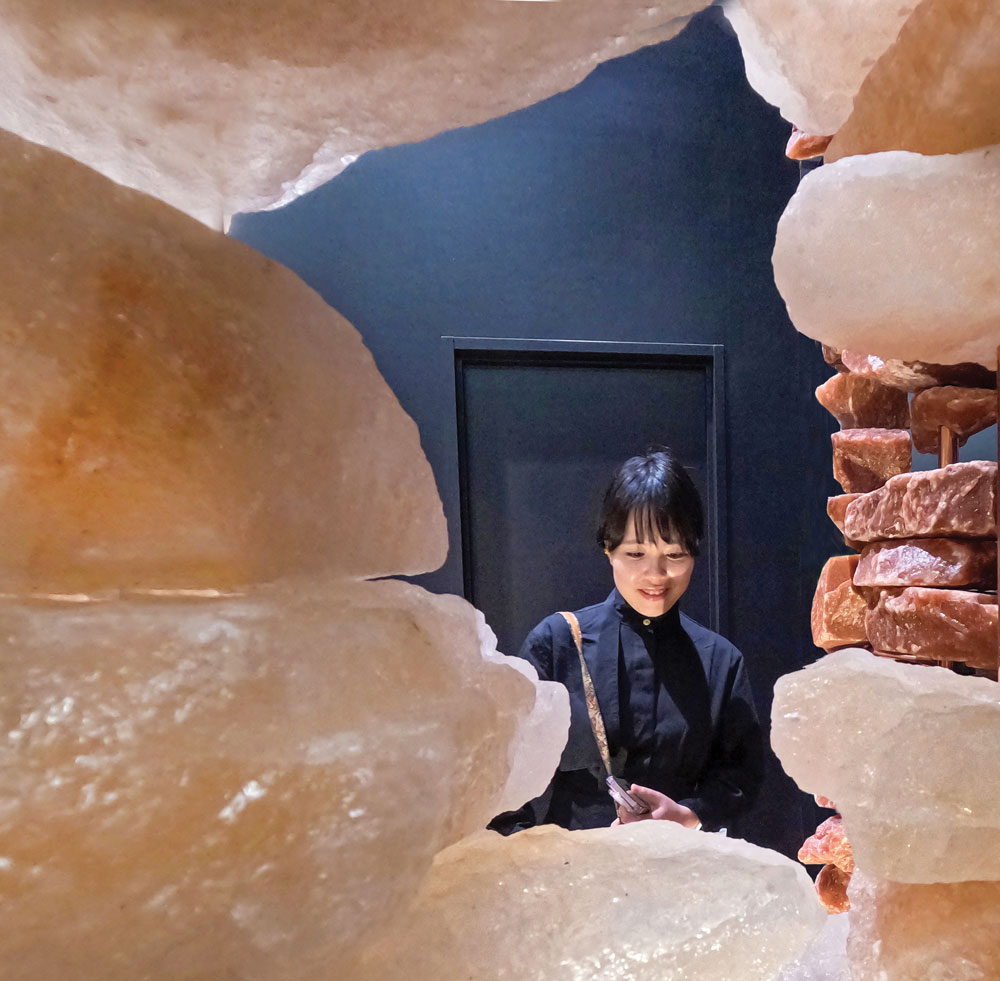
As an architect, I was helping curator Noorjehan Bilgrami to set up the Pakistan Pavilion at the Expo. The pavilion is easy to walk in, experience salt rocks and walk out. Its one of the few pavilions where one can touch the actual salt brought in from Pakistan. Each salt was sculpted by sculpturer Fahim Rao so the rocks can be balanced vertically.

Understanding Japan:
The Osaka Expo 2025 is a once-in-a-lifetime event, while other tourist spots in Japan will still be there and can be visited at another time. Most people despised the Japanese and call them “robots”, which is not true. I have walked on streets of Osaka every day at night after work, and have experienced two beautiful things about them: Firstly, they are extremely polite, and secondly as you walk on streets, you will notice that no one rings a bell on their bikes even if you are on their way. Silence is a form of respect in Japan and this is evident everywhere from roads to any public events.
I cannot speak about the entire country of Japan, but People in Osaka are known to have more sense of humor in general. If you make a joke in Osaka, people would play along with you, but in Tokyo maybe there won’t be much of a response.
Osaka is also a city of self-made people, especially the Pakistani community, who have worked for decades and have done fairly well for themselves. They were able to communicate fluently with locals, and it was amazing to see their integration into the Japanese society. If there was one factor that I had to pick which unites Japanese people with foreigners, it would have to be small gestures of politeness.


If all this hasn’t sparked your curiosity, I recommend visiting the Pasona Natureverse pavilion.
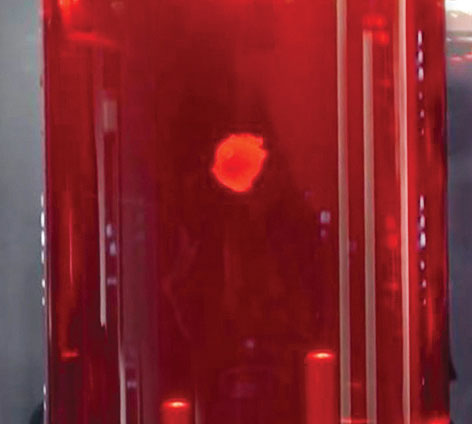
And the reason I’ve selected this pavilion from all the other ones, it is because it showcases an artificial heart (as pictured on left). Yes, an actual beating heart in a clear vessel, filled with blood-red fluid. It is made up of an actual heart cells created from human-induced pluripotent stem cells. And just like a heart, these cells can beat, but it is incapable of flowing the blood (like our heart does with arteries). The technical name of this heart is iPs heart, or heart made up of human-induced pluripotent stem cells.
In the evening there is a spectacular drone show, these tiny drones with lights fill up the sky above the Grand Ring as part of the theme: “One World, One Planet”, and there are 1,000 synchronized drones that display free flowing art in the air. I personally think that drones are more environmentally friendly than fireworks.
Final thoughts .. .
There seem to be lot of negative publicity surrounding the Expo 2025 and the host city itself. And in conclusion, I would like to clarify some of the confusions that people are putting up on the social media. I would like to ask few questions to those tik tokers, instagramers or Gen Z podcasters to understand Japan first.
I will reference the questions within the limits of article that I have wirtten here: were you able to hold hands with the Turkish dancers and move around with the beats of a drum ?. did the scent of pine tree was able to clear your mind as you were walking inside the Grand Ring ?… . Did you experience a connection to nature when sititing under a Westeria tree ? Or how we as humans are evolving with the invension of heart created from our cells ? . .. .
There are no right or wrong answers to these questions, but its important for us to realize that when we travel to a different country, we should be ready to question our previously held assumptions before taking a selfie and tagging it to the rest of the world. If we start with a simple understanding of ways of life that Japanese people live by, we might be able to understand lot of things. This is how our experince with beautiful spaces and people can become “memorable”.
About the author:
Irfan Naqi is an architect, who is persuing Criminology and human behavior with Artificail Interllegence.
He travels to various cities for work and can be reached via email: Irfan97156@gmail.com


