


Text by Dr. Masooma Shakir
Mosques are integral to our cities, representing the Muslim Ummah and making the spiritual connection. While the mosque is primarily a place of worship, it is described in historical sources as having played an important role in the socio-political context and in community dynamics to shape the Muslim Ummah. To simplify, mosques have been more than places of worship throughout
history. The evolution of mosque architecture, and an analysis of well-used and well-known Mosques, highlights their role as more than just for worship. The mosque is a well-preserved building typology of the Muslim world and can offer a window for the study of perspectives, interpretations, and representations of its followers in varying shapes, forms, and functions. The rapid growth of cities and
the complexity of modern life bring forth significant challenges faced by the architecture of the mosque. The conference series on Mosque architecture and awards sponsored and promoted by the Abdullatif Alfozan Awards for Architecture aims to discuss how value can be added to mosque architecture. ‘How can the Renaissance be inspired in mosque design, embracing contemporary challenges?’ (Alfozanaward.org). Previous
conferences were held in Dammam, Saudi Arabia (2016); Kuala Lumpur, Malaysia (2019), and Kuwait (2022). The 4th International Conference on Mosque Architecture was held last November 4th -6th, 2025, in Istanbul, a city well known to be the City of Islam during the Ottoman ruling period. As an experience, the coincidence of the two was beneficial learning for people like me. Held at the Architecture Department Campus of Istanbul Technical University uno. the Conference brought together researchers, academics, and architects from different parts of the world to talk about Mosques from their regions. This brought together a diverse sharing of perspectives an what mosques are all about, what aspects of thearchiteeturol design of mosques may be left flexible, and others open to interpretation and use. Case studies of mosques were presented from different pans of the world, giving insights into varying cultural and geographical viewpoints. Besides conferences. awards were announced for mosque architecture designs. There was an exhibit of nominated and award-winning works and representations by the Institute of Architects from various countries. Among these. Bangladesh was well represented. Publications on various historical and contemporary, religious and secular architecture works of the Muslim world were also on display. The proceedings of the Conference were published within these days and are available for display and distribution. Spread out over three full days. the main theme of the Conference was rethinking mosque architecture in the contemporary world. focusing on paradigm shifts, new issues. and trends. Its sub themes were: Evolution of mosque architecture through the ages; mosque architecture of the future; design morphology and composition, and mosque urbanism and mosque communities. The current Architecture Department of the Istanbul Technical University. host and partner to the conference. is housed within a heritage building in Taskisla. the city center of Istanbul.

It was originally built to be a modem Medical School of its time. Designed by English architect William James Smith, it served as a military hospital for French soldiers during the Crimean War in 1853-56. It was damaged by a major earthquake in 1894, after which it was restored by well-known architects Raimondo D’Aronco and Alexander Valiancy. It was allocated to ITU in 1944. Today it sits in the heart of Istanbul, close to Taksim. The Conference included 16 keynote speakers and about 4o scientific papers. The keynote speeches set the tone of the conference, bringing out key ideas and issues around mosque design. Saleh Al-Hathloul, Secretary Abdullatif Alfozan Award presented the perspective of the organization in rethinking contemporary mosque design. Historically, the mosque was built and used as an extension of the street, he began. In contemporary time, he questioned the vision of the mosque for its use, representation of Muslim community, incorporating emerging new technologies. Established in 2011, the award aims to foster a deeper understanding of the cultural and social significance of mosques in the modern world.
The award selections happen every three ears and so far there have been four cycles. It aims to bring out the significance of the modern mosque to honour the spirit of traditional mosque design, along with integrating concepts important to the contemporary world, carrying forward spiritual and architectural heritage. Papers in the sessions on Evolution of Mosque Architecture through the ages, presented evolving form, representation and ornamentation details of mosques from Saudi Arab, Bangladesh, Turkey, Pakistan, Iran, Egypt, Qatar, Canada, Indonesia and Syria. Case studies made comparisons between historic mosques, past and present mosques, elements that define the character of mosques and makes them impactful, evolving symbolism in mosque architecture. The work of Mimar Sinan and its evolution, impact and influence was presented by Zeynep Ahunbay in a keynote. Some papers also discussed sustainable applications in mosques and their evolution, an important aspect to study in today’s age as energy efficiency and conservation are key subjects. Papers in sessions on Mosque Architecture of the Future included presentations around decoding shape, geometry, adaptations of mosque spaces in disaster situations, hermeneutics, a manifesto for future mosque design, the use of AI for the design of mosques, integration of technology in futuristic mosque design, and better accessibility for mobility limitations in mosques. The session on Design Morphology and Composition brought out case studies on formal composition of mosques, openings, volumetric configurations, and impact on the indoor environment. Interesting debates formed around the need to connect with master craftspeople in mosque architecture construction.
The practice of crafts was identified to be therapeutic in nature, and its potential to develop and support modern-day challenges of dealing with anxiety and depression was also discussed. The fourth and last session on Mosque urbanism and mosque communities was focused on highlighting the significance of the relationship of the mosque to its surroundings, urban dynamics, planning, and development, influencing design and vice versa. The role played by the communities that manage mosques, bringing them together and playing a socio-cultural role besides the religious.
An important question under discussion in these sessions was the potential of mosques to be inclusive, tolerant, and vibrant to attract the younger generations. Flexibility of space use of the large community space to be used for secular functions was debated about and shared with some case studies.
There were four paper presentations from Pakistan. Samina Nasim spoke about the evolution of architectural elements in Pakistan’s mosques, their styles, influences, and modernity. Farhana Naz presented the integration of historical design in Bahria Mosque (Lahore) with the modern landscape. Areej Babur presented on Theological aesthetics and the dynamics of crafting transcendental sacred space, using case studies from Multan.
My paper presented the significance of integrated subsidiary functions of the mosque and its impact in creating an inclusive relationship within the city. Taking well-known historic mosques as case studies, I presented the view of the success of these mosques in their socio-political context, especially because of the presence and role of secondary functions that catered to the needs of the Muslim Ummah. They acted as focal points for the community in directing its theological and scientific knowledge, apart from catering to issues of community welfare.
Rasem Badran, a well-known architect and educator from Turkey, presented a view of the functionalist character of the mosque in his keynote, highlighting how the spaces and elements are owned and adapted by the users. ‘Anti-monumentalize in mosque architecture’ is significant enough for the space to be adapted and utilized by the people, serving the needs of the users. An iconic mosque may be beautiful with many rules for how it can and cannot be used; however, people’s adaptation and ownership come not from its aesthetics, but from the little ways in which people connect to the spaces and their functional provision. This may include a humble entrance to the mosque, storage for shoes. Orientation of a mosque, its transition from the profane world to the sacred world, and its relationship to universal principles of design are some characteristics that make the space spiritually attuned. Having been a jurist in the Aga Khan Award for Architecture as well, Badran presented his thoughts through handmade sketches, drawings, and maps, along with photographs of his projects that were a treat to learn from.
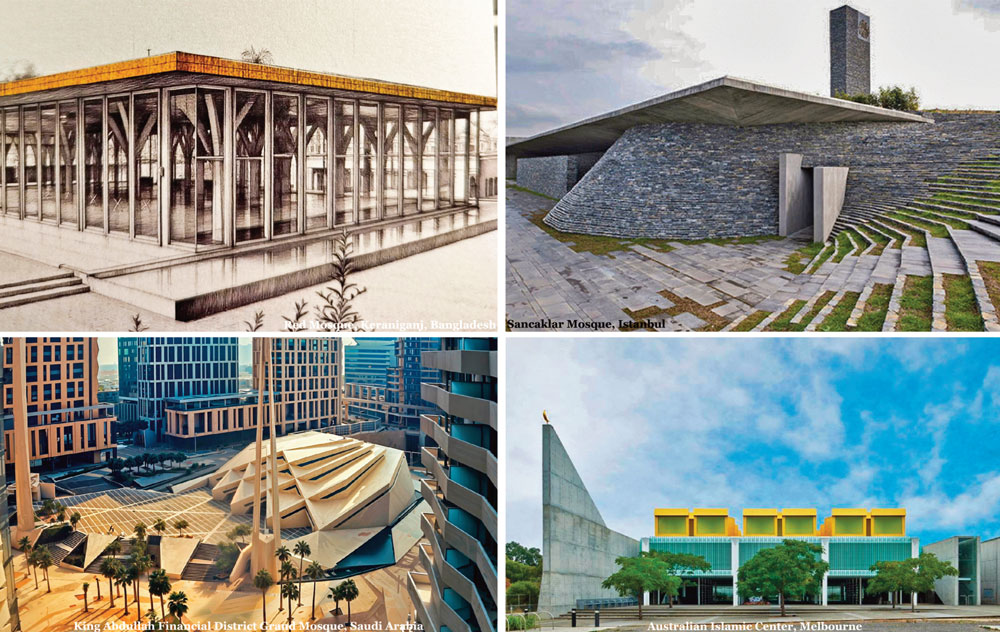
Emre Arolat, well well-known Turkish architect, presented his recently awarded contemporary design of Sanckalar Mosque in Istanbul. The mosque is buried into the landscape and steps down into a poetic experience, bringing together the geographical landscape into the stone-constructed built space. He presented the process of design using three-dimensional analysis and site lines to show the originating lines and idea of creating a transcendental experience, sustaining silence, playing with light and shadows from access to worshiping inside the mosque. Bangladeshi architect Rafiq Azam spoke about the mosque as a place for social rejuvenation.

Moving around Istanbul city, historic and contemporary mosques offered some insightful experiences. The mosque at Taksim Square, the largest public square in Istanbul, carried a smooth transition from the mosque’s public entrance to semi-public spillover, outdoor circulation spaces. This allowed entrance to all, irrespective of religion. Benches along the mosque terrace overlook the Taksim Square. Here, people sit, watch, and wait while an open freestanding ablution area in the round is adjusted well in a semi-public zone. A souvenir stall offered a collection of crafts, calligraphic arts, items, and religious and cultural materials of varying sizes. A cafe, an exhibition space, a library, and an admin office are connected from this semi-public circulation space to other levels. While these facilities were open for use by Muslims and non-Muslims, curious and religious both, the entrance to the mosque itself was used primarily by worshippers. In its true sense, the natural flow of spaces imparted inclusivity of the place connected to the mosque, open and receptive for the curious foreigner and the less inclined to peek in. Several historic mosques in Istanbul are tourist attractions. Circulation for Muslim worshippers and non-Muslims is clearly demarcated and communicated, allowing the varying levels of interaction with the mosques. Yet the demarcation lines are never too strictly drawn and allow the inquisitive ones through. Head covers and appropriate attire are mandatory for all. These mosques continue with the primary function, calling worshippers to prayer at their hours. Guides [personal, group, and audio only] alongside inform tourists of the history and appropriate mannerisms. Dialogues in design and cultures between the Muslim and European spur their interrelated past and present. Inclusivity, tolerance, and freedom to practice religion outlined the contemporary Muslim’s lifestyle.


