


Justine Emard is a new generation artist. A new defination and angle to the classic word that we all know as artist. She explores the new relations between the way we live and technology. By combining different visual media – photography, video, virtual reality and performance – she places her work within a flux that links robotics, neurosciences, organic life and artificial intelligence. Her works have been exhibited at the Moscow International Biennale of Contemporary Art and in museums such as the NRW Forum (Düsseldorf), the National Museum of Singapore, the Moscow Museum of Modern Art, the Cinémathèque québécoise (Montreal), the Irish Museum of Modern Art (Dublin), the Mori Art Museum (Tokyo), the MOT – Museum of Contemporary Art Tokyo, the Barbican Centre (London) and the World Museum (Liverpool). In 2020 she was in residence at the ZKM, Center for Art and Media and she was awarded the “National photographic commission awarded” by the CNAP in partnership with the Jeu de Paume in Paris. In 2022, she is in residence at the Cnes (National Center for spatial studies) and she recently participated in the Karachi Biennale KB22. Where her display was outstanding and creatively triggering to the new minds and young enthusiasts. She believes her work is in motion and her mediums are still in the making and there are much more boundaries to push and make new forms of Art.
Text by: Solmaz Regi | Photographs: Artist
WHO IS JUSTINE BEFORE BEING “THE ARTIST, ”?
JUSTINE EMARD (JE): Since my childhood, I always wanted to be an artist, I think it’s something which has been here since the beginning, a way to approach and think about the world. So it’s quite hard to separate who I am and the artist.


HOW DO YOU DEFINE ART AND HOW DID THIS EVOLVE FOR YOU AS A PERSON?
JE: I think we all have a different vision of art and it’s evolving regarding the experiences we live. I have always been very open minded and curious about the world. I think art is an interpolation between the artist’s mind and the physical material.
WHAT ARE DIFFERENT ART ASPECTS THAT YOU COVER?
JE: I started to create with images and films since my childhood and I never gave up this practice. I kept an aware interest in how images appear and how we can find new ways of creating, generating, extruding them. My last piece is a dialogue between 40 000 years of technology, a research at the origins of images.
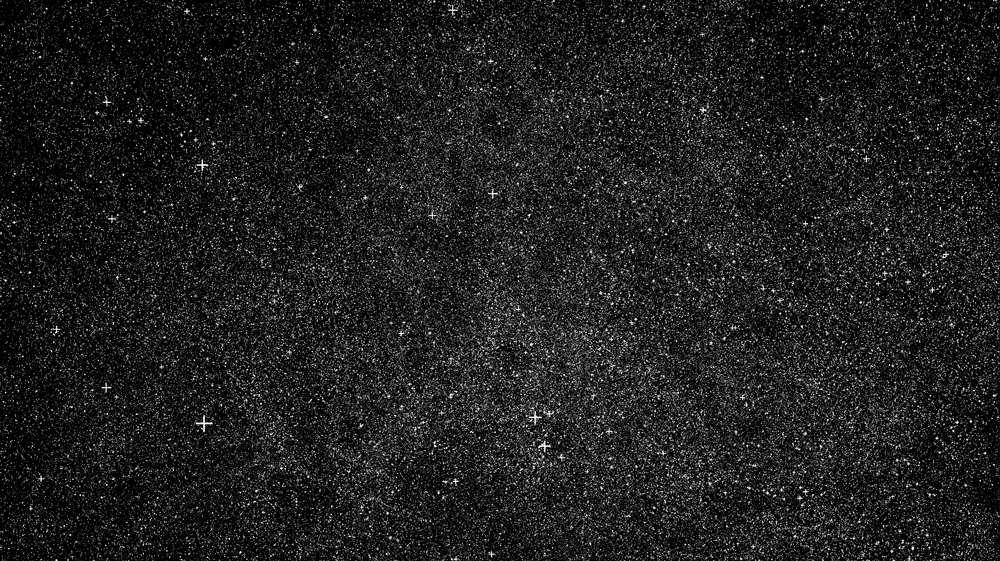
In the Palaeolithic era, people plunged into the depths and darkness of caves, seeking to inscribe the work of the human mind on the rock walls. In 2022, computational sciences allow us to analyse large amounts of data and generate predictions. Using a scientific database about the Chauvet Pont-d’Arc cave, I trained an artificial neural network to produce new images of prehistory in order to create the work.
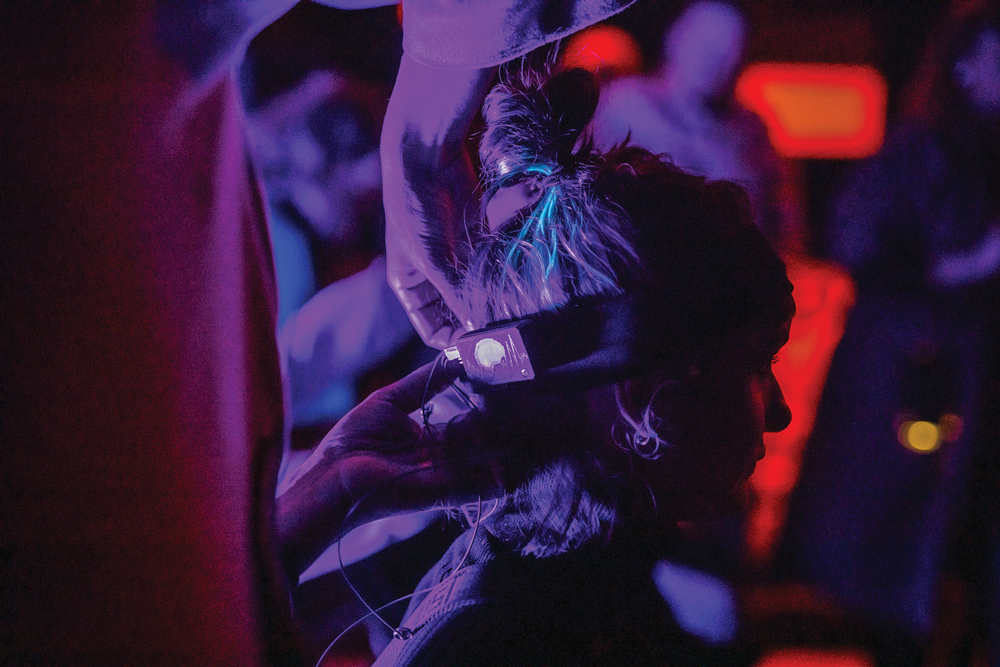
A video wall slowly comes to life, giving a glimpse of a “new” prehistory, of the parallel imaginations of our ancestors. In 2021, a CNES and ESA mission began studying the evolution of sleep in space. Encephalographic data recorded over several nights made it possible for the artist to work with dream signals from space. These signals from the depths of our unconscious are embodied in 3D printed dream architectures. A landscape stemming from the mental images appears in the light of the video.
From generating new images of prehistory using machine-learning models to the extrusion of dream sculptures from space; we follow the birth of new images from the depths of our imaginations that will merge and synchronize.


WHO IS YOUR FAVORITE ARTIST? WHO INSPIRES YOU LOCAL AND INTERNATIONAL?
JE: I like many artists works but I won’t say I have a favorite artist. The inspiration for me is not coming from other artworks but much more from the sum of my experiences and my vision of the world. I collaborate a lot with the sciences world and I would say inspiration is mostly coming from other fields. I like to cross my thinking with different fields and keep an open vision outside of art.
For several years, my work explored the depths of the mechanics of the human and non-human brain.
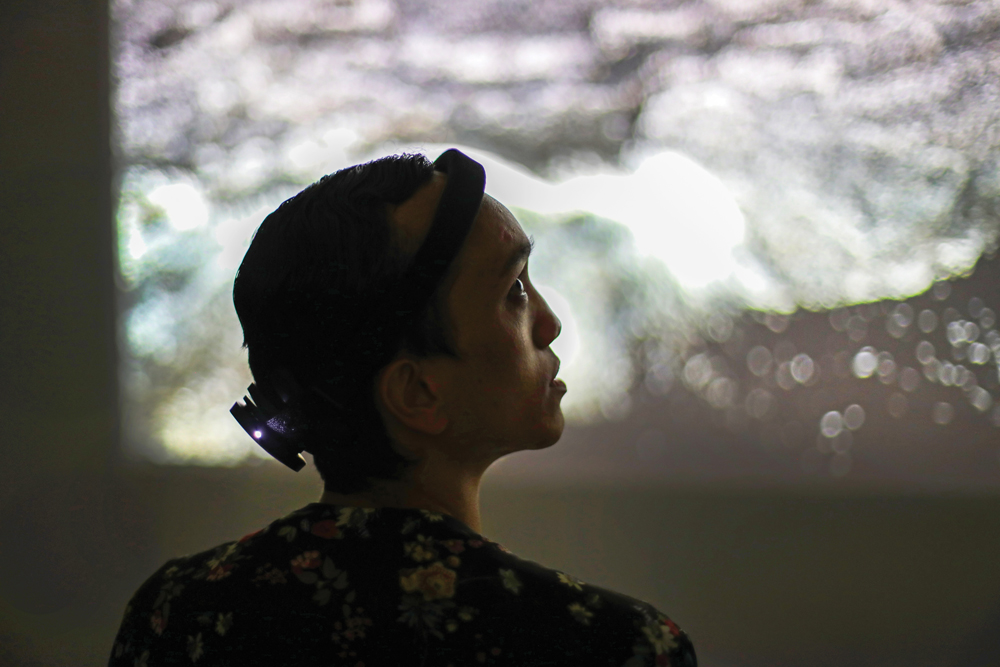
Neural interactions, artificial neural networks, sleep recordings and spatial experiences generated the basis for the creation of my new works. Visitors become passengers in my installations, sometimes at the heart of the experience (Neurosynchronia, Live Dream).
From the conscious to the unconscious, from the accessible to the inaccessible, different stages intermingle in my practice. Based on encephalographic recordings of my own brain, I invented a creative protocol for Dreamprints, dream impressions. During my residency at Cnes in 2022, I created a repertoire of twenty-three dreams from space that I interpreted in the form of 3D printed sculptures (Hyperphantasia, from the origins of the image).
YOUR WORK IS VERSATILE WHAT’S YOUR FAVOURITE MEDIUM?
JE: I like to invent new mediums and ways of making art. As an artist, I work a lot with protocoles and I invent some tools to measure the world. In 2010, I started to program with augmented reality (Screencatcher 2011) and it was not easy to display the work. The technology was not really developed yet and we had to rent digital tablets to see the works. Now it has become quite easy to see augmented reality around. The artwork Co(AI)xistence (2017) that I exhibited at the Sambara Gallery during the Karachi Biennale KB22 is a good example of the protocoles I work with. I filmed, edited, recorded the work but also I was at the origins of interactions between the robot and human. I established the protocole and setted up a way for the robot to be aware of the human by using extra microphone, cameras and sensors. It was a whole experience. The two entities learn from each other, responding by signals and try to define a new perspective of coexistence for machines and humans.
WHAT DOES JUSTINE DO THAT NO ONE ELSE DOES?
JE: It’s hard to answer that question myself, it would be a task for an art historian. But I think I am always trying to push further the definition of what is an artwork, what is a public commission, especially facing digital mediums, conservation challenges. The preservation of digital works is a great challenge for our XXIst century. It’s not easy to create a work which is not only an experiment but a true display. It takes a lot of time to be well organized and to define the protocols of the works but I truly think its worth it.


HOW IS ART IMPORTANT FOR SOCIETY AND INTERNATIONAL RELATIONS?
JE: I like to consider that art is a universal language which can be understood without words. Definitely it’s amazing to talk to the audience and see how the pieces are received in different countries in the world. Also, by exhibiting in the world, I realized that the artist carries a political role and represents its country in whatever they do.
HOW DO YOU DEFINE SUCCESS AS AN ARTIST?
JE: The most important thing in art is not the success, but the duration. How long you can do your art, and how long it can be preserved. The most important thing for me is to be able to continue until the end, in good conditions.
HOW DO YOU MANAGE WORK-LIFE BALANCE, SCHEDULE AS AN ARTIST?
JE: As an artist, it’s impossible to divide the personal and professional life and time. Ideas are always in motion. Also the borders between personal and professional are hard to define. But still, it’s important to manage to be professional in all circumstances. The most difficult thing in our digital world is to manage to keep some time to create.
HOW DO YOU DEFINE THE ART SCENE IN PAKISTAN?
JE: While I was in Pakistan, I was impressed by the strongness and quality of the artworks. I met really beautiful artists. The Pakistani Art Scene can be proud of its artists and art production.
About the Interviewer:
Solmaz Regi, The writer is the Creative Head at Ruralz Inc. – It is an Interior Design firm in Karachi.
Co-Founder of the platform Identity Pakistan – A Social Patriotic Initiative.
She believes in Metaphysical thinking and going beyond boarders, a multilingual, an occasional poet and a humanitarian activist.


