


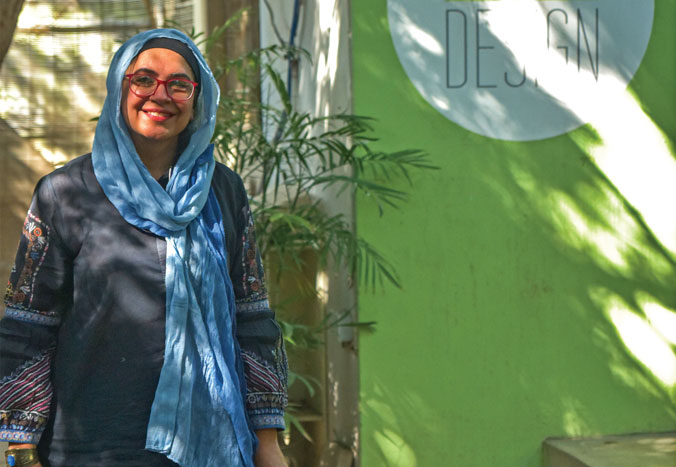
Interview by: Anzalna Wazir | Photos credit: Co-Design
Moyena Ahmed Niazi, an Architect who graduated in 1995, from the first batch of Indus Valley School of Art and Architecture. She obtained a master’s degree from Newcastle University, England in 2017 on full scholarship by Commonwealth program.
She was a recipient of the Founders Award at IVS 1995, as well as the Commonwealth Shared Scholarship Award 2016. Most recently she was awarded with Design Excellence Award 2019, by Institute of Architects Pakistan in the category Commercial Architecture and Interiors. She believes in passing on knowledge and educating young minds. Along with her practice, she has been teaching undergraduate and masters classes; and continues to assists as an external thesis advisor at IVS, NED and KU. She was the Principal Architect at design options in partnership with Khadija tul Kubra. This partnership of 18 years was archived and dissolved in 2021. She established her solo practice by the name of Co-Design during pandemic in response to the new normal lifestyle. She has served as the president of IVS Alumni Association and the member Board of Studies, she has previously worked as a senior Architect at Naheed Mashooqullah, an associate Architect at Design Group Practice and Project Architect at ARCOP Associates. Her Design philosophy is human centric, work for people, about people, inspired by people and their environment. Her calm, spiritual nature reflects in her harmonious work that speaks of continuous evolution creating experiences that change according to the need of the user. Her professional experience spanning over twenty-six year serves as a platter with soul food for Architecture.


GOOD TO KNOW YOU AS A PERSON? ALSO PLEASE THROW A LITTLE LIGHT ON YOUR EDUCATION AND BACKGROUND?
Moyena Niazi (MN): As a child, I was good at drawing, and I was always interested in creative and artsy activities. I used to cut out pictures of buildings from wrappers and papers, my scrapbook was full of them.
I come from a conservative family and my father wasn’t comfortable with me studying Architecture as it was considered a man’s field. I had to be optimistic about the situation. I realized that given all kinds of peer pressures there will be people who will understand me, and they might have the same pressures as you, and I will make friends even in that situation. I went into the university with that kind of a mission that my challenge is to uphold values and the benefit is that I will get a degree. I am from the first batch of Indus valley. When the ad for the institution came in the newspaper was the day when I spoke to my father. Luckily, my father knew some of the teachers and founders of Indus Valley which helped my case because those were one of the best Architects who laid the foundation of the university.
I can summarize the journey by saying that if the Indus Valley Institute of Art and Architecture was not found, I won’t have been able to study Architecture because of safety and security reasons by my family. And of course, Qarz e Hasna, a scheme in Indus Valley at that time where you are payable when you are able, without that student fund It was impossible for me to get through the five-year program.
I owe a lot to the founders of Indus Valley School of Art and Architecture in that sense, I am deeply respectful of that because they gave women a place to feel safe and provided funds to support Art education.
HOW DID YOU DECIDE TO BE AN ARCHITECT AND WHAT IS THE MEANING OF ARCHITECTURE FOR YOU?
MN: I realized later that artists can make spaces and forms that can have paintings within them. The old city area of Lahore was fascinating for me, then I found out that Architects study and work with the old buildings. All this inspiration led to the decision that I want to study Architecture. It intrigued me, the three-dimensional part of an Architect.
The first impression of my project is what is the experience of the entrance, what is visible at first glance, what is the effect on the passers-by or when someone parks the car outside what kind of anticipation is built in the person. All of it enables me to develop sight context from that perspective as to who is seeing it and who isn’t? who is coming in, who isn’t?
I usually don’t call residential projects ‘houses ‘and prefer the term ‘home’. There is so much more responsibility than understanding whose home is it and what will they be comfortable with. Then I can improve their life by proposing something comfortable for the person. Everyone has their challenges, sometimes people are making mistakes in the way they are using those spaces, or they are too influenced by what other people think about their house.
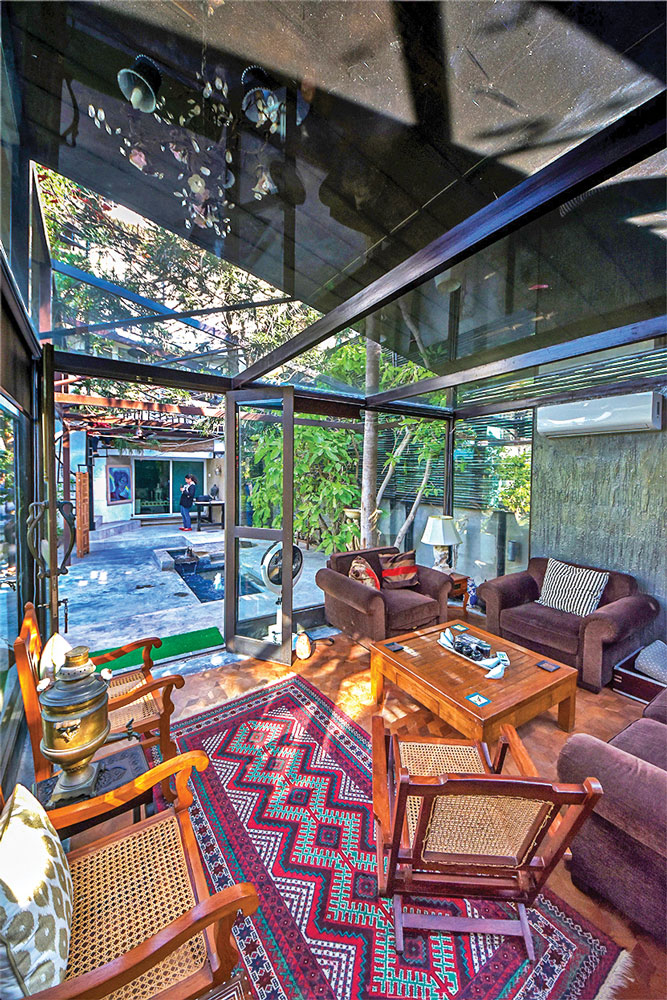
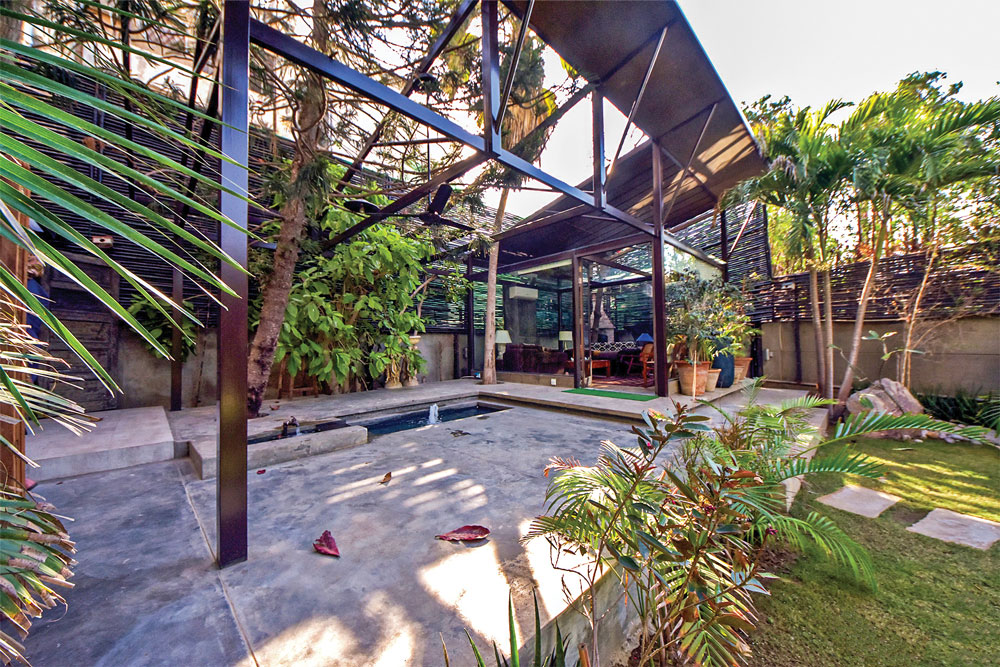
I have this house verses home thing in my head when I design residences. The idea solidified when I did my own home. It’s a single-story, small, efficient house with multi-functional spaces. All the Spaces that are taken for granted generally in a house; I don’t have them. I have a very big garden for informal gatherings which saves the cost of air conditioning, cleaning, etc. and the living room becomes the drawing-room for formal guests. I am an Architect who works from morning until evening. By the time I go home, I don’t want a foyer or the whole formal experience, a drawing-room, or a foyer to welcome me or go from space to reach my comfortable area. The point is, as soon as I open the door, I am inside my living room, and I am very happy.
Your house should reflect you, not what other people perceive of you. As an architect, it’s important that a home enhances the well-being of its dwellers.



ALSO TELL US ABOUT YOUR PROFESSIONAL CAREER EXPERIENCE, IT’S UP AND DOWNS.
MN: I wanted to explore the urban side of Architecture after graduation. I had a plan to do social work and projects as OPP inspired me! I was fascinated with Parveen Rehman’s work. My wish was to join OPP or Parveen Rehman. When I discussed it with Shahid Abdullah Sahab, he advised me to gain at least two years of experience and see what an Architect does so I can make an informed decision about my genre. With this mindset, I accepted a job offer from ARCOP. I bid them farewell after two years to join OPP. It was one of the lowest points of my career because while I was at OPP, I was told that I am an excellent designer but not required at OPP.
I was offered an associate architects post by Samar Ali Khan to join his firm Design Group as a Senior Architect. That boosted my self-confidence and made me return to mainstream Architecture. While I was expecting my first child, he suggested logical advice to have a break from my job. I assisted as a Design Studio teacher at Indus Valley for a term.
Another point where I considered staying at home was while nursing my first child. Five months later, I received a call from Naheed Mashooqulaah the Interior Design practice. Thanks to my husband, my mother, and mother-inlaw, the family supported my return to practice and took care of my baby.
Naheed, being a working mother was most helpful, she mentored me in balancing work and home. I worked full time with her for over two years and it was a great experience.
My father advised me to utilize my grandmother’s portion to set up my studio when my second child was a year old. Here I founded Design Options in 2002 and Khadija joined me as a partner.
In 2016, thanks to my supportive husband and teenage children, I went to Newcastle University, England on a full scholarship for my one-year master’s program in Sustainability in Architecture and Environment. The studio practice also continued thanks to Khadija’s presence at the office.

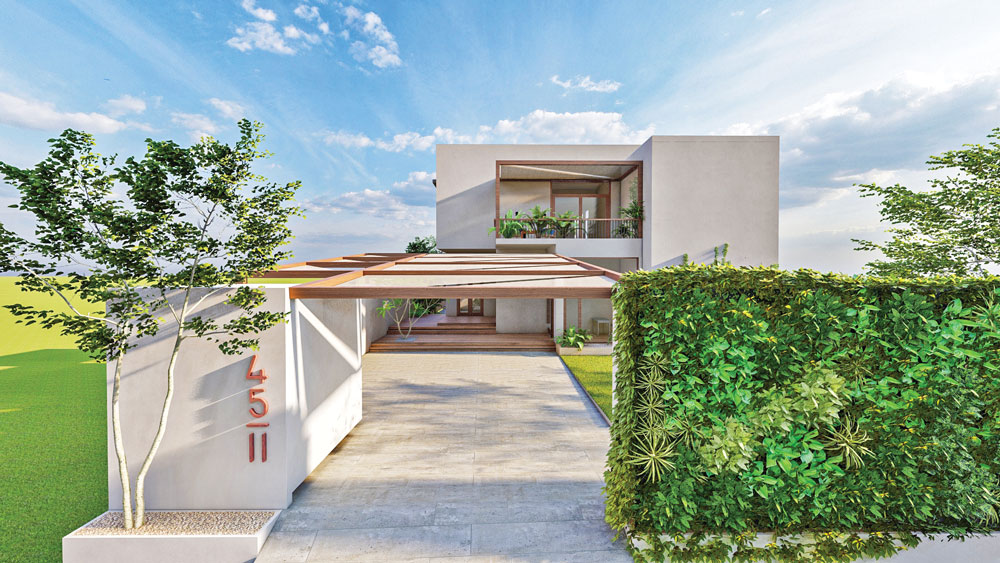
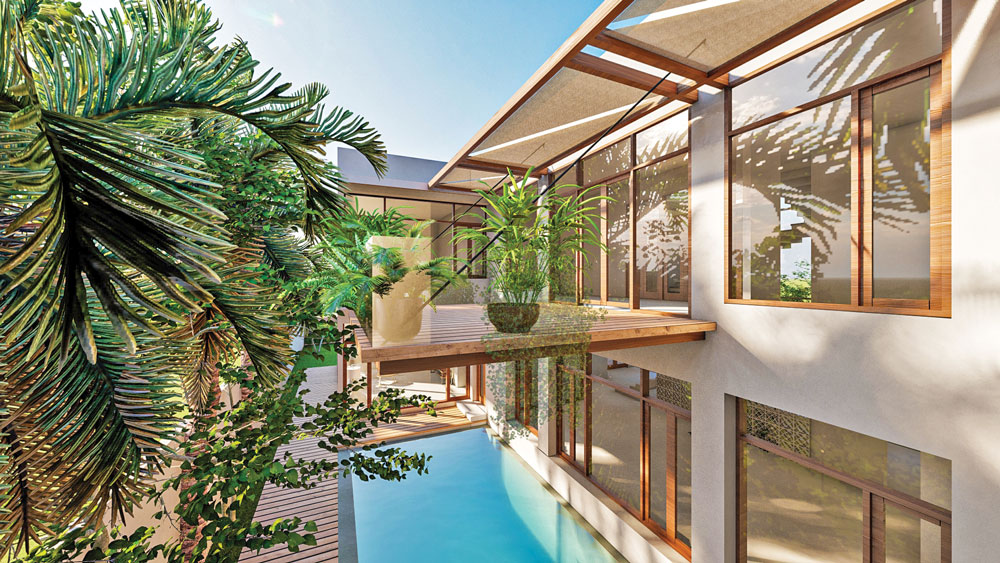


SHED SOME LIGHT ON THE FORMATION CO-DESIGN, BEING THE CEO WHAT IS YOUR VISION BEHIND CONCEIVING THIS FIRM?
MN: I formed Co-Design with the understanding that the pandemic has changed Architecture and its role. Co-Design is a process by which all stakeholders empathize, define, ideate, prototype and test the outcomes. The practice is about the people who are building it, people who want it to be built, and people who are going to work or live in it. The intention is to sincerely guide people about more appropriate solutions for their projects. My role is of an advisor who is with the client throughout the journey of construction. When I meet people now with this approach, the bond I share with them is on another level. Whether I am designing a residence, office space, interior, or landscape, it always becomes about the team. Co-Design is about those practices through which together we discover things along that imperfect path. Secondly, we can achieve more sustainable designs together.
The first five months of the pandemic significantly impacted and changed my portfolio and suddenly my degree in sustainability was something coveted. Universally people started talking about air quality, toxins, carbon waste, wellbeing, and the environment. They observed a better quality of life and environment by reduction of cars on their streets.
During this time, I got my solo space to work and researched what kind of projects are rising during the pandemic. I did a lot more interior projects and makeovers.
It was a transformative year for me and everybody, I guess. I started doing a lot of meditation, thinking about my life’s purpose, and discovering the reality of my new normal. New clients and connections were formed, and my Instagram was highly activated. I restructured the way things should be in the firm now. I put practices in place that worked with the new normal. I discovered myself by going through covid. I was ready to take the jumpand fly.


WHAT KIND OF FINANCIAL EDUCATION DO YOU FEEL SHOULD BE INCULCATED WITH THE PROFESSIONAL PRACTICE IN THE FIELD?
MN: I think we have PCATP’s green book with the ordinance of 1983, standards, contracts, and everything required. That book is what you need, to know your legal rights as a professional Architect. There is a chapter on the rights of the Architect and the client. The handbook is available online for everyone. If you know the law yourself, you’ll have an idea about your services, condition of engagements, professional charges, and percentage scale. It’s a must-read.
HAVE YOU FACED ANY PROBLEMS BECAUSE OF BEING A FEMALE ARCHITECT IN THE FIELD OR ANY KIND OF GENDER DISCRIMINATION IN THE PROFESSIONAL PRACTICE?
MN: Yes, when you enter a room people will look at you. There are contractors who don’t want to be bossed or scolded by a woman. The point is that you need to be aware of your power as a woman. So, when I say that I don’t feel any discrimination, I know my soft subliminal advantages because it is very easy to become someone who is hated but it is easier to come across as a non-threatening woman. I believe in equality as professionals and that respect begets respect.
WHAT DO YOU ENJOY MORE: ARCHITECTURE PROJECTS OR INTERIOR PROJECTS? DO YOU SEE INTERIOR AND ARCHITECTURE AS SEPARATE ENTITIES WHILE DESIGNING?
MN: I like projects with fun and challenging briefs. Somehow over time challenging projects have meant working with things that people could not work with. It could be something like a wasted building, material, or a tight budget. I feel sometimes the best solutions come out of those challenges. Those are the kind of projects I enjoy. As for interior and architecture being one entity or not. For me, they are one. Architecture is an envelope; it must be about inside and outside. I am designing for people; my approach is who is going to be using it. With this design philosophy, for me, interior, and architecture blend into each other and become co-existent.
WHAT ARE YOUR INSPIRATIONS IN DEVELOPING YOUR DESIGN LANGUAGE?
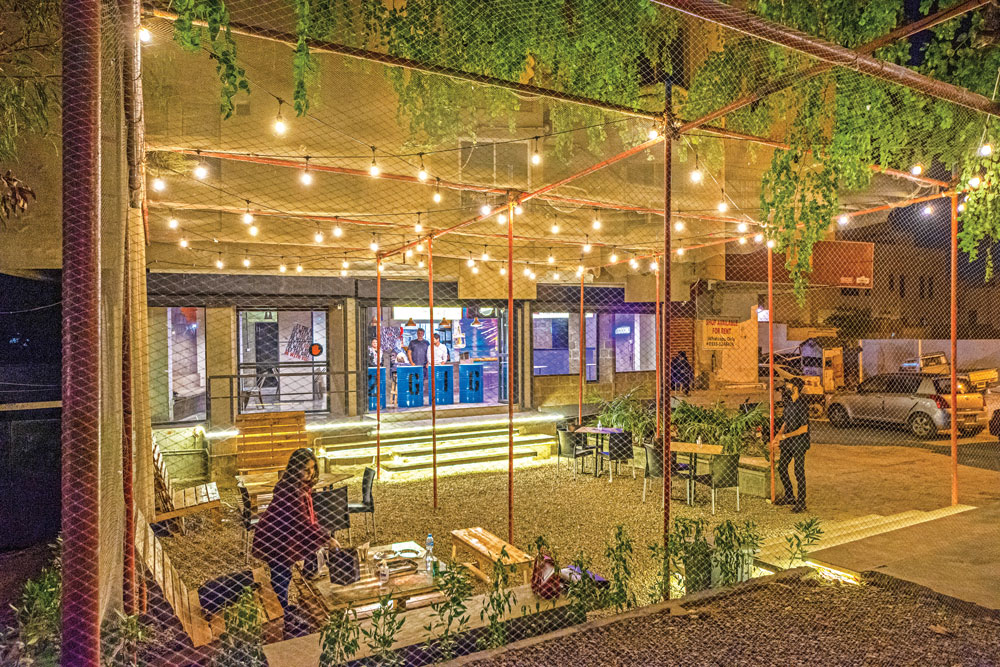
MN: Nature has always been an inspiration for me, and people are a part of nature for whom I design. People need to breathe, and the tree is giving them oxygen. They are interconnected so all of it is one being. My new clients in Co-Design, almost all of them brought me an amazing site. I am designing a beach hut, a farmhouse in Mirpurkhas, a meditative retreat in ShahAllah Ditta so you see your energy resonates with the universe and you receive what you ask for Two Guys One Grill. A minimalist and ecofriendly burger joint interior.
The works of Architects like Geoffrey Bawa and Charles Korea always have been an inspiration for me. Also, I have been fortunate enough to learn from maestros like Shahid Sahab who can change your perspective of life, Nayyar Ali Dada Sahab whose persona and poetry make you think on whole new levels, so we have great people like them and more than the work it’s their energy and enigmatic approach towards what they believe in is what inspires people. It is manifested in their work. I have realized that these Artists have inspired me because they are on about something. It’s not just the buildings, it’s the people who inspire me.
WHICH IS YOUR FAVORITE PROJECT TO DATE AND WHY? WHAT ARE THE PROJECTS CURRENTLY ONBOARD?
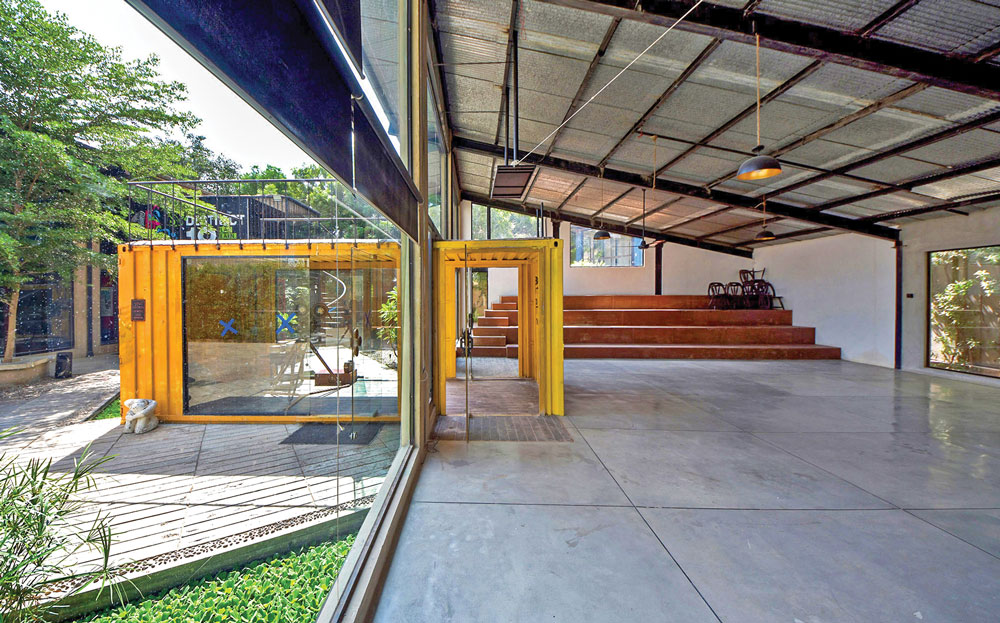
MN: I thoroughly enjoy the vibe of District19. It’s one of my favorite projects where the whole city gets this creative hub and to be able to have a channel like that for people to plug into that creative mindset is amazing. It is the spirit of Karachi that resonates there. It has no class or gender bias-ness. It’s freeflowing, imperfect, and fluid. You add and subtract to it, you keep building and breaking. It’s a constant process like that plus it’s very cyclical. I like the fact that in that project all these non-natural materials go through the natural cycle of change because the demands of people are changing, and the brief keeps evolving.
I’ve experienced a shift in my work pattern. It has opened up a new conversation. It may be due to embracing the new normal or maybe the online methods of communication might even be simply posting a narrative on Instagram that has led to it. The current projects are mostly inspired by nature as the clients that I’ve attracted have similar aspirations.
With Minimalism and well-being as the core values, we are working on small-scale projects on sensitive sites such as the beach, a meditative retreat in the northern mountains, a farmhouse in Mirpurkhas, and a pool house for Co-living.
The projects are presented with their climatology and site analysis to clients as their brief is interpreted and resolved. Budgets, timelines, and sustainability are addressed simultaneously. This leads to a fresher Codesigned aesthetic
HOW DIFFICULT IS IT FOR YOU TO CONVINCE THE CLIENT OF THE APPROPRIATENESS OF DESIGN SOLUTIONS?
MN: Since I formed Co-Design, I meet clients by appointment only. Therefore, before the client meets me, they have an idea about me and what I am about. I send them the data which they can see and then if they still want me to do their project, we meet.
Sometimes I even tell them that I am not the right Architect for them. If I see that what they want is something that goes beyond the vision with which I conceived this firm, I convince them to opt for someone appropriate to design the project. I am open and honest about voicing my opinion professionally especially post-pandemic.
YOU VISITED DUBAI DESIGN EXPO 2021, HOW WAS YOUR EXPERIENCE, AND WHAT ARE YOUR THOUGHTS ON THE PAKISTAN PAVILION DESIGN?
MN: I went out of the country after two years. Dubai has transformed itself, especially in these two years. At the Dubai expo, what I noticed was at every pavilion you would find young volunteers and they are the new generation of Dubai. That is the asset of Dubai because people from all around the world came to work there. It has become a much more international place than London.
Another milestone that they achieved was that the whole expo has one standard of construction which is excellent. For me as an Architect to witness that level of construction while I do such raw work, was a visual treat.
Pakistan Pavilion was the best. It had clean lines, was well built, perfectly aligned, and conceptually strong. It had way more substance to it than I or anyone else for that matter expected.
I went to about 60 pavilions and stayed for three days at the expo. They were all well finished and different in terms of design. Some pavilions that were designed expensive had a big budget and had bought a piece of land to build their pavilion permanently while Pakistan was given the land for the occasion only. But what matters is the number of people lining outside to
see the pavilion and that’s where Pakistan won. We were given a shell and we made the best out of it.
WHAT WOULD BE YOUR DREAM PROJECT?
MN: I want to design public housing projects and apartments. I missed my opportunity of landing the first job at OPP. I feel that is where people need design and Architecture, and they are not getting enough of it.
Otherwise, Alhamdullilah I am content with my portfolio. Each project is a dream come true in some way.
DON’T YOU THINK ARCHITECTURE IS A PROFESSION FOR THE ELITE IN OUR COUNTRY AND WE ARE NOT FULFILLING A BIGGER SOCIAL REQUIREMENT?
MN: I have never appreciated the elite approach toward Architecture. For me, Architecture is about enriching people’s lives and creating experiences.
The fault lies in the practice by professionals, not the profession itself. We need to understand that good design is needed for everyone because it touches everyone’s heart. The mindset needs to shift so we can reach the masses. No university is teaching you to work for the elite only, you must broaden your mind.
WHAT ARE YOUR VIEWS ABOUT THE STANDARD OF ARCHITECTURAL EDUCATION IN PAKISTAN?
MN: Architecture is not like medicine or law; it is needed by everyone, and nobody teaches us that in school. All the architectural institutions have their fortes and goals which is good because they know who they are. It’s when we work collectively is when we come to that city-level conclusions. If students of IVS are more design-driven verses we are looking at KU graduates with a liberal arts background, then we have people from NED who are coming out with design responses to the city’s issues. All of us are plugging into different needs and types of projects and clients.
DO YOU THINK THERE ARE NEED FOR REFORMS IN ARCHITECTURAL EDUCATION IF YES WHAT TYPES?
MN: Yes, reforms are required but for me, they are needed at the matric level. Art and Design should be a subject in Matric and Intermediate because O’ or A’ Levels have these subjects. If I was born in a village, matriculation won’t have allowed me to get in touch with design as a subject. To deprive someone of that God-given gift of creativity is something I am not okay with. A lot of talent is going un-nurtured because there are no platforms.
You will see humongous improvement if you have Architects and Designers living among people. Raise the ratio and you will have a better environment.
Another reform I feel should be done is about these not required taxes on us. The law declares us as elitist, that’s why we are having value-added tax. This needs to be corrected. Also, bylaws should be amended regarding the conservation of energy.
WHAT ARE YOUR INTERESTS BEYOND DESIGN AND ARCHITECTURE?
MN: I used to travel a lot but during the pandemic, I understood the importance of traveling within myself. I realized the power of the self and how we already know so many things intuitively, but you don’t listen to that inner voice. Making space for that voice and finding myself is something I do focus on.
My interest now is directed toward self-exploration, the power of manifestation, and the spiritual aspect of being in this world. It helps me in running Co-Design as well.
WHAT ADVICE WOULD YOU LIKE TO GIVE TO THE FEMALE STUDENTS AND ARCHITECTS ENTERING IN THE FIELD OF ARCHITECTURE?
MN: Embrace who you are and your challenges. Then try to be yourself within those challenges. Women can multitask so much better than the other gender because it’s inherited. Look into ways of empowering yourself. Out of all the patriarchal notions, accept the love for yourself.
Many thanks for talking to us!


