


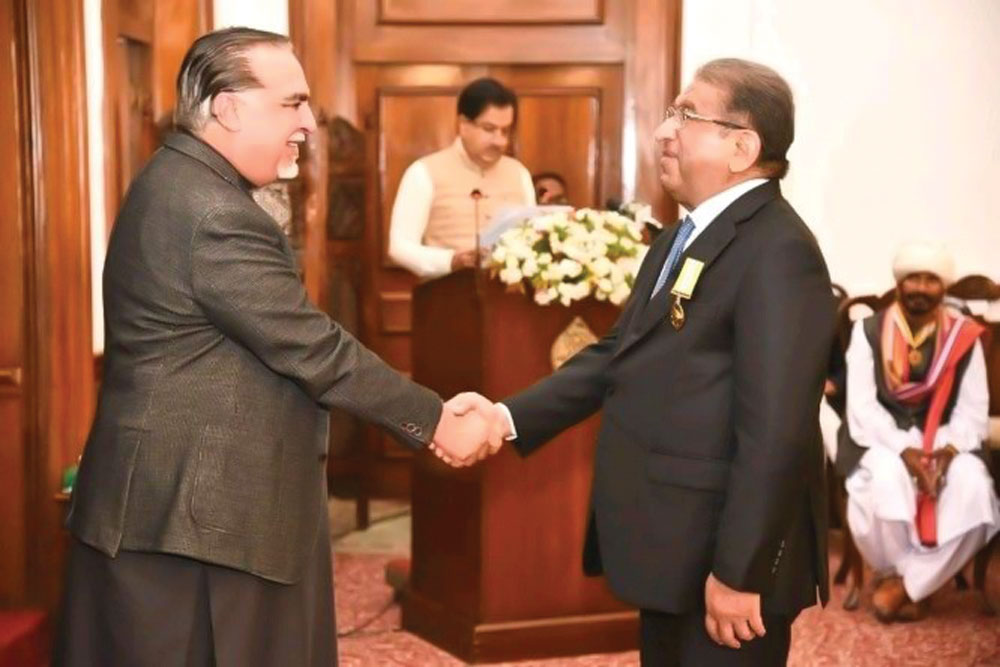
Dr. Faizullah Abbasi was born and brought up in Hyderabad, Pakistan. Dreaming to become a Doctor, life led him towards Engineering and ultimately towards Academia. Having studied Mechanical Engineering in Pakistan, he obtained a Master’s in Industrial Engineering from the University of Strathclyde, Glasgow, and a Ph.D. in Metallurgy from Sheffield City. He has been Vice-Chancellor of Dawood University of Engineering And Technology for two tenures now and his work for the University is not unknown to anyone. He strives to bring change in the education system and be a part of the change with the new generation. In this exclusive interview with ARCHI TIMES, he talks about the Profession of Engineering and Educational issues.
By Anzalna Wazir
ARCHI TIMES (AT): Tell us about your education and long journey in the engineering field.
Faizullah Abbasi (FA): I was born in Hyderabad and got my early education from a Mission School which was one of the best at that time.
My grandfather and my uncle were practicing Doctors. I wanted to be a Doctor as well so I took Biology in Matric. My grandfather was worried about my acute myopia eyes, so we went to the Eye-Specialist and he strongly recommended against me opting for a career in Medical. It was decided then that I will become an Engineer and not a Doctor. There weren’t advanced treatments like laser surgery available at that time.
I completed my Bachelor’s in Mechanical Engineering in 1975. In those days Jobs were plenty, Pakistan Steel Mills was in the making and the industries were growing. I also got a scholarship for post-graduation studies in England so I went to Scotland for my Master’s in Industrial Engineering and Doctorate in Materials Engineering from Sheffield.
AT: Share with us the professional ups and downs in your career.
FA: I was offered to establish a Sugar Mill in Mirpurkhas as Deputy Managing Director. I had not seen a Sugar Mill in my life so it took me a few months to learn the drill and adjust myself to the new conditions because the aim was to set it up all in eleven months. I used to listen intently though, about the equipment, the plants, and the machines because we had no idea about them. The engineer would come and sit with me and we would have discussions about the different techniques of the machines.
My love for teaching brought me to Mehran University and I was appointed as Chairman of the Department in 1985. University work is slow and different from the Industry. It’s not as active as being in the industry. So I thought as to what we should do now. We thought of quitting.
There was a conference in Orlando, U.S.A. I went to present a paper on Natural Gas. Then I went to another high-profile conference in Dallas and that’s where we met my employer. I got a job in his company called Metal Manufacturing Company. I had no experience working with HVAC at all but he assured me that it will all work out. When I came back to apply for my work Visa and take my family along, the Mehran University people agreed on giving me an early retirement in 2002. So I went to Tucson Arizona, U.S.A, and worked with the Metal Manufacturing Company Ltd for almost 9 years.
AT: What made you come back to Pakistan after living in America for several years?
FA: I was Vice President of the company when I decided to come back to Pakistan in 2010. My wife wanted to come back home. Our Children are all settled there. When I came back, I was offered a high-profile job as Managing Director at Sui Southern Gas Company. I have had a tremendous career there and thoroughly enjoyed the experience.
After that in 2013, I was appointed as Vice Chancellor of a newly established/upgraded Dawood University and I have been here since then. As we all know, in 2019 COVID hit us all. Unfortunately, my wife contracted COVID in Nov-2020 and we lost her.
AT: As the Vice Chancellor of Dawood University, what reforms do you plan to make for the betterment of education, training, and the overall form of the institute?
FA: When this was a college, it was in very bad shape. I didn’t know at the time of joining that one of the Principals was shot by the students and another one mysteriously fell from the roof and died. The Jinnah campus used to be the center of campus violence every alternate day. Students were ruling and making rules fueled by the political parties. Exams were conducted and canceled as per their wishes and copy culture was considered to be okay by default.
There was no financial support was required for the College to convert into a University. It was a college under Federal Government, the Sindh Government received devolved funds from the Federal Government of Rs.116 million and for the first few years, we were supposed to establish the University with that amount.
There was no hope left in the system, the faculty was demoralized. The administration had to be built from scratch. There was no direction, no leadership, no nothing.
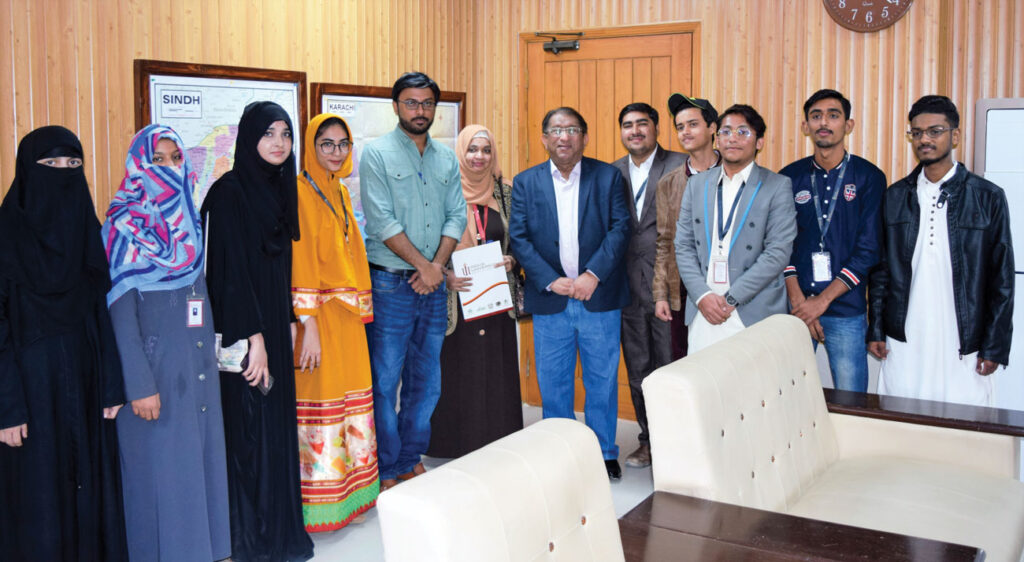
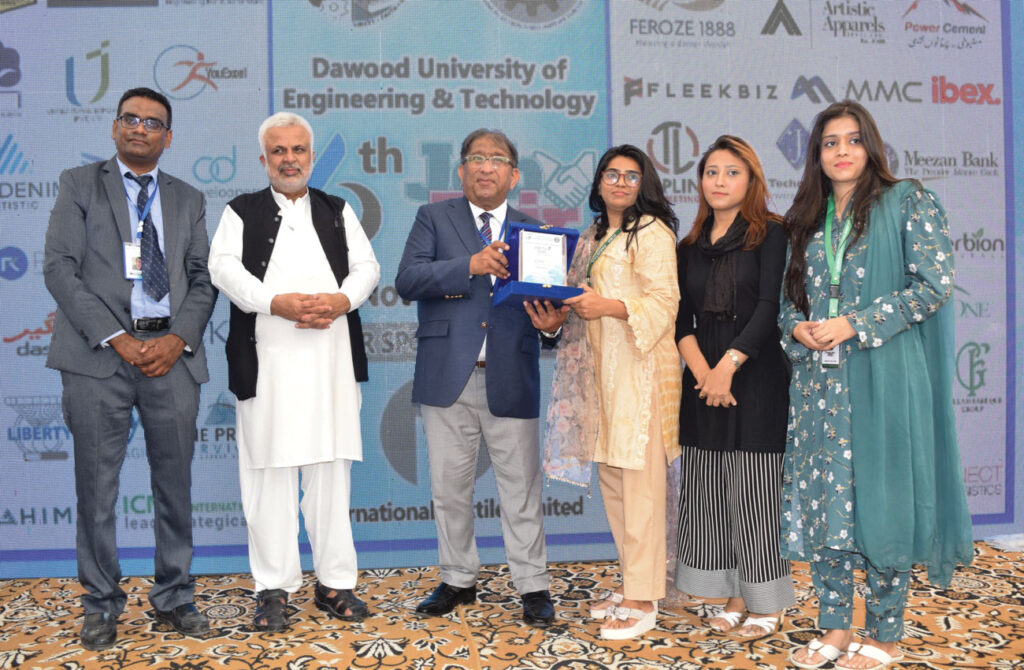
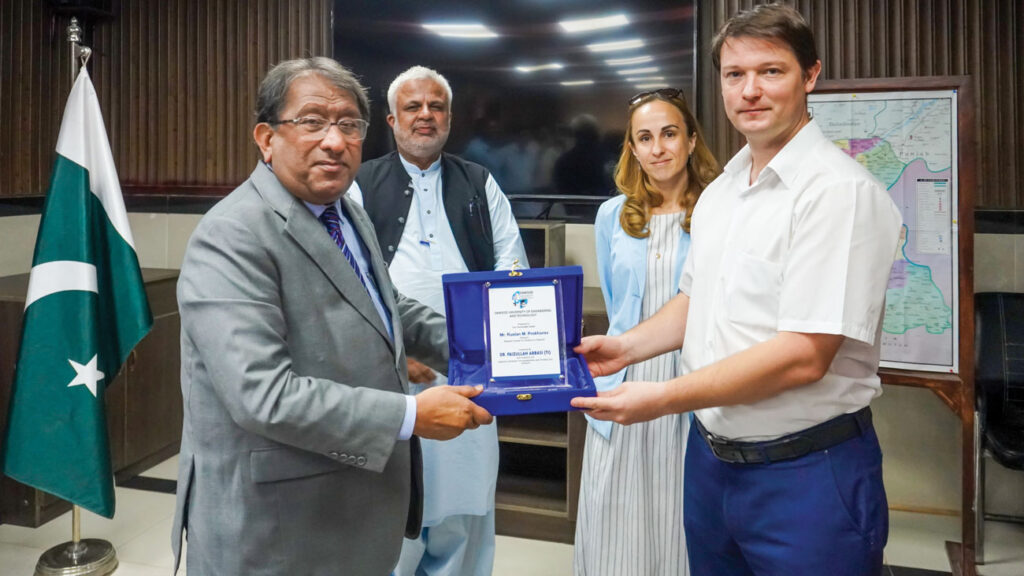
We had to start forming teams and we don’t know how we managed to gather qualified teachers as there was no Ph.D. faculty. Four Departments were facing serious accreditation issues with the PEC. These Departments were established without their permission in 2010 and the college got devolved by Federal Government in 2012.
We were in turmoil and a crazy transition phase. PEC had a valid point. On top of that, HEC didn’t recognize us as a University either. I was called Vice Chancellor of a ‘College’. For HEC, we were a degree awarding College / Institute.
We had to put a Feasibility report and then HEC sent a delegation to inspect us even after that it took us good two years to get the N.O.C from HEC in 2015. Then PEC and PCATP gave us accreditation for our programs.
One of the achievements was to get the Institute recognized as a University and the fact that we got accredited for all the Departments. We had eight Engineering Departments and one Architecture Department. We have now added more Departments including Bachelor of Science, Computer Science, Artificial Intelligence, and Cyber Security.
AT: What are your plan and strategy now for the Institute?
FA: I have been Vice Chancellor for two tenures. We have seen an acute financial crunch and we know that we should be self-sustainable and not be dependent on any other body. That’s my primary goal right now. We expect that by next year things will be in a better state and we will have more space to expand.
Another thing we are doing is that we are introducing new Bachelor Programs in Business Information Systems and Industrial Chemistry. For this, we need space for classrooms and studios/Labs. We are also starting a Civil Engineering Department.
I have had a lot of experiences in life but the work I have done for this institute is one of the most gratifying ones. To see the transformation and witness the journey of evolution is satisfying. Inshallah, we will continue to grow.

AT: Would you consider yourself a practicing Engineer?
FA: That’s a good one. I have never been a practicing Engineer. Granted we have worked in the field on and off. I worked in America as an Engineer but in hardcore practice. In Pakistan, I have reinvented myself as an academician and administrator. My inclination has always been toward teaching, management, and education.
AT: What do you think should be the role of an Engineer in Our Society?
FA: The concept of Engineering has completely changed over the past years. It’s not the Engineering we used to have in our time. Once a Mechanical Engineer always a Mechanical Engineer, it’s not like that anymore.
We will give you an example, there was a Chemical Engineer who was fond of reading books, especially on anthropology. There was an oil storage warehouse nearby and now and then there used to be a blast. Nobody could understand the reason. They hired this Chemical Engineer who was also an anthropologist. He studied the workers and noticed that there were drums full of oil in one section of the warehouse and another section there were empty drums. He figured out that it was not an Engineering problem but a language and habitual problem. The workers were putting out the Cigarette in the empty drums and smoking in that area. These drums remarked empty were as they were not. He advised me not to smoke or throw cigarettes in the empty drums and the blasts stopped after that. Now, an engineering problem had a linguistic solution to it.
Therefore, an engineer today is not strictly an engineer only. His scope is very wide. There are so many branches that he can opt for. The point is to solve the problem.
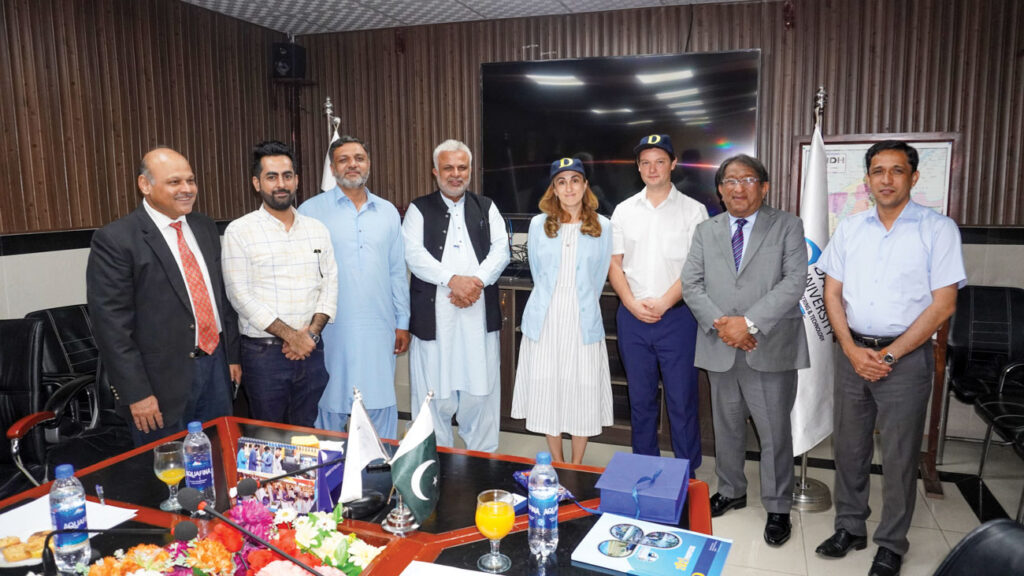
AT: Do you see the Engineering in Pakistan progressing?
FA: We have seen the desire to communicate with young talent today. If given the right opportunities and platforms, they can do wonders. For that, we need to have vibrant opportunities in Pakistan for them which are currently negligible compared to abroad. Whenever a Pakistani Graduate goes to America or somewhere else, they are very successful. The reason is that most of them are street smart besides their qualification.
We see a lot of entrepreneurship skills developing in our students, they are fast and sharp. This new technology has come in, and this generation has gotten into it.
The progression happens every few years. But we need to harness the skills of youth and let the system grow in the new age and come out of the box to maintain the diversification of Engineering.
We are living in the age of Online Certified Licensing and Recognized Programs which in turn are offering jobs as well. If we want to progress we have to adapt to the change otherwise the sharp decline in the number of candidates applying to study in engineering institutes will ultimately go to zero.
AT: What are the challenges that the profession of Engineering is facing in Pakistan?
FA: As we said earlier, the old way of running things is going out of fashion and unadaptable for today’s generation and young professionals.
In America, there are regulation systems but they give opportunities to people who are smart and not only have a piece of paper called a Degree.
AT: What motivated you to get so intimately involved in education?
FA: The only way to bring change is to get involved in the education system. When we worked in the industry that gave me a flavor of how the industry operates, but it didn’t excite me. The satisfaction we have gotten from teaching on the other hand is something we cannot explain. It has always been my passion. We have done my bit I would say. We had good innings so far. We just want to now retire.
It gives me great pleasure to train young minds and understand their point of view. The way we have transformed this place that’s Dawood University has made it a learning organization and example for everyone.
The fact that I can have an idea when I wake up in the morning and materialize that idea by the evening gives me tremendous satisfaction and it’s all going out in the world, to the people. What more motivation can we have? For me, it’s always about ‘What’s next.
AT: Are you satisfied with the standard of Engineering education in Pakistan?
FA: To upscale the standard of Engineering Education in Pakistan, we need to meet the demand of time and industry. The gap between the institutes and the industry is huge. A fresh graduate is not prepared for the reality of the field and the standards. A practicing Engineer should be prepared for the industry and that’s going to happen by having professionals sharing their experiences with the students, having practicing professionals in the faculty, and introducing internships and programs that involve communication between students and professionals.
AT: Do you think Engineering education in Pakistan today is ready to prepare students for the Engineering profession?
FA: On some levels Yes, on the other, No. Recruiting Students and bringing them to field would greatly help in improving the skill sets of the young graduates. If we want to improve the standards of education in our institutes, we need to provide opportunities and platforms for the students to taste the flavor of the industry before they step out of the University Gate after convocation.
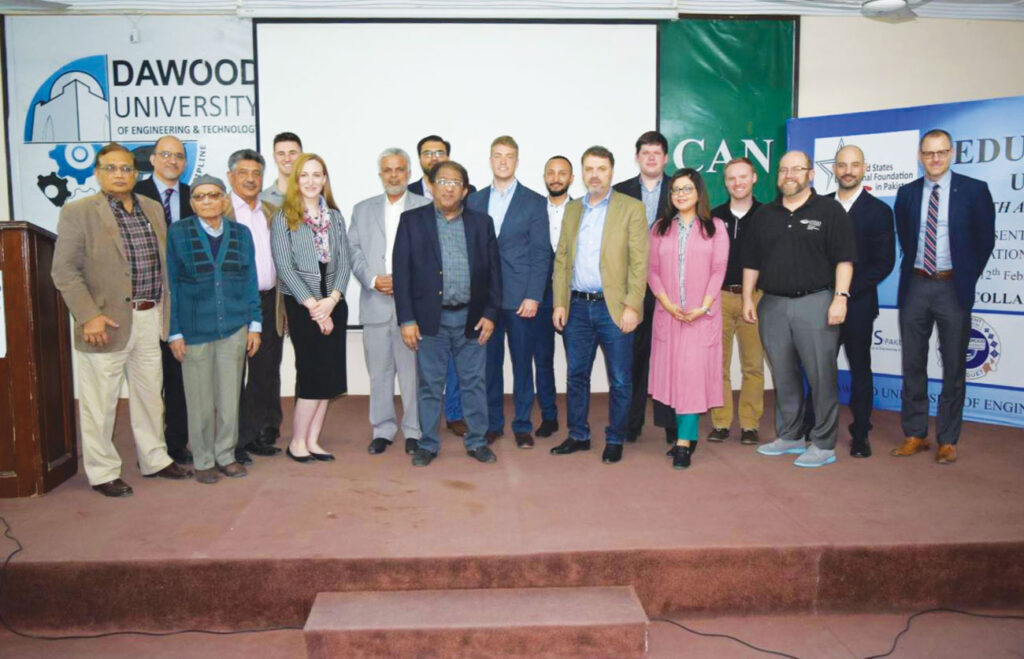
We provide such workshops and seminars to our students. We have worked hard on minimizing the gap between the faculty and industry. The professors should be able to speak the language of the industry so they can teach the students accordingly. The faculty should be exposed to the industry and work with them.
AT: Do you feel like there is a need for reforms in the educational field of engineering? If yes, what type?
FA: All the institutes have created their niche. We have highly qualified people in the institutes but do we have professionals in the institutes? That’s where the answer lies.
One of the thing that needs tweaking is the regulators. They are choking us. We are not as irresponsible as they think. There can be a better way of running things.
The need for reforms will always be there because time keeps changing, and so does the demand of the industry.
Also, we should have a proper system that can get the funds to the right place.
AT: What difference do you see in the standard of education in Pakistan and Abroad?
FA: There is a huge difference in the way of doing things, recruiting, educational system, management, training, and the list goes on. They have codes, standards, rules, and regulations! They abide by it. They prepare their students for the industry. There is not such a huge gap between professionals and faculty. Also, their check and balance system are amazing. They give opportunities to their youth and graduates. The standard of work they have achieved is solely through following the system and for us to reach that level we have to come up with a system that supports the growth.
AT: What are your views about the role of PCATP & PEC playing in the betterment of Education in Pakistan?
FA: Organizations like PCATP & PEC can greatly help in bridging the gap between industry and graduates. They can be more active and conduct workshops creating work opportunities with professionals from abroad. Their regulation system can be upgraded to help the institutions.
DCET -Department of Architecture has completed 50 years and 2022 is the year of celebration of the Golden Jubilee. What are your views on completing these 50 years?
It feels great to have achieved what we have achieved and be a part of the roller coaster ride. We celebrated the anniversary here in the courtyard of our Campus. It was an evening of memories made and dreams for a better future and another tremendous 50 years to come.
AT: What are your hobbies and what do you do in your free time?
FA: Music is the food for the soul we feel. We love musical instruments. We used to play the guitar for my wife a lot. Even now when I get time I play my musical instruments. We have a whole room dedicated to my love for music and collections.
AT: What advice would you like to give the younger generation and students?
FA: Be resilient and smart and consistent!
Consistency is everything. Keep calm and have patience. Take the opportunities, and don’t be afraid to accept the change.


