


ARCHI TIMES Interview | Photographs by Engineer
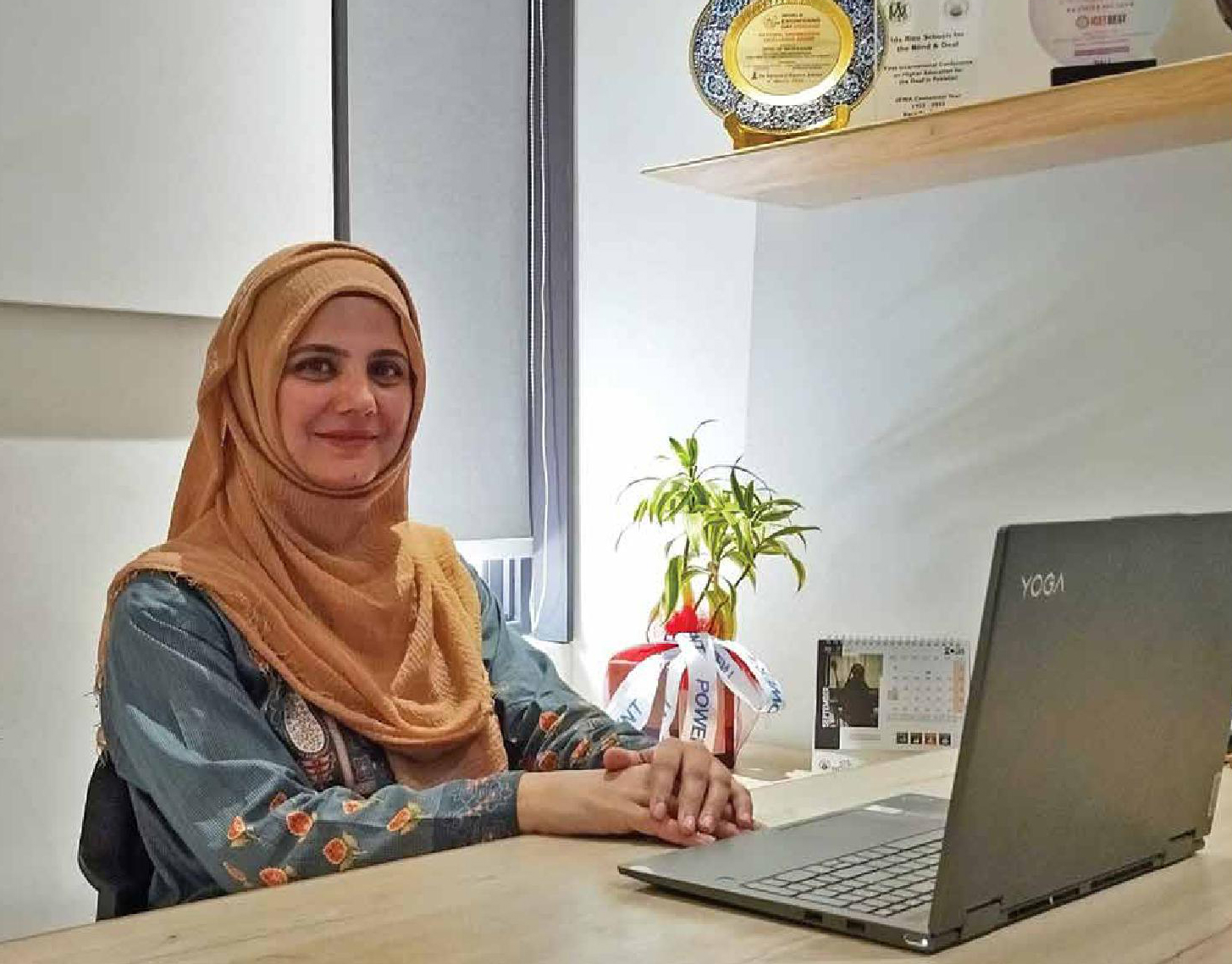
Dr. Majida Kazmi is an Electrical Engineer and Professor at NED University of Engineering & Technology (NEDUET), where she plays a vital role in advancing academic excellence through her dedication to teaching, research, and student mentorship. With a strong commitment to higher education, she actively engages in developing innovative learning environments that encourage critical thinking, creativity, and professional growth among her students.
Dr. Majida Kazmi is a seasoned engineer with a strong background in digital system design, FPGA-Based hardware accelerators, and responsible AI. She has 20+ years of experience in academia and research, with a focus on image processing and hardware design. She is affiliated with NED University of Engineering and Technology and has held various positions in research institutions and companies.
BEFORE WE BEGIN TALKING ABOUT YOUR ENGINEERING, WOULD IT BE GOOD TO KNOW YOUR EARLY LIFE AND EDUCATIONAL BACKGROUND?
DR. MAJIDA KAZMI (MK): I belong to a middle-class family where education was the primary priority for all siblings, without discrimination. Like many households at that time, the default path for a good student was “doctor or engineer.” My mother wished I would become a doctor, but I chose engineering, partly because I felt the hospital environment would be emotionally heavy for me.
What stayed constant, though, was the desire to serve society, especially in healthcare. At that stage, I did not know how engineering would connect with healthcare, but life unfolds in steps. I did my bachelor’s in Electrical Engineering, later completed my masters after my first child, and then pursued a PhD. I did not plan everything in a straight line; I moved step by step, accepted each turn with hard work, and learned to navigate new directions.
WHAT INSPIRED YOU TO PURSUE A CAREER IN ENGINEERING?
MK: Initially, it was a natural choice because I was good at studies and science. But what truly inspired me later was realizing that engineering is not only about building systems, it is about building impact. My definition of success is very linked to social impact: how much a piece of work benefits people, improves access, reduces cost, or solves a real pain point. That is why my work has repeatedly gravitated toward healthcare, accessibility, inclusion, education, and practical industrial problems.

WHAT ARE SOME CHALLENGES AND DIFFICULTIES YOU HAVE FACED BEING A WOMAN?
MK: Many challenges are not technical; they are mindset and perception challenges. From childhood, we hear “this is for boys” and “this is for girls.” Those early messages travel with women into universities and workplaces. In male-dominated environments, women may be assumed to be less suited for high-stakes tasks, leadership roles, or time-demanding projects, especially after marriage or motherhood.
I also noticed another difficulty: when women perform well, sometimes people look for “hidden reasons” instead of recognizing merit, like assuming someone must have favoured you. I learned that you cannot correct every perception. The best response is to stay focused, do the work, build results, and let time speak.
YOU ARE SPECIALIZED IN ARTIFICIAL INTELLIGENCE. PLEASE HIGHLIGHT ITS IMPORTANCE.
MK: AI is one of the most powerful technologies of our time, but we should see it clearly: AI is a tool. Its value depends on human intention. Used well, AI can expand access to healthcare, improve early screening, strengthen education, support inclusive services, and raise productivity. Used irresponsibly, it can create harm.
That is why I emphasize two things:
1. AI should facilitate humans, not replace them, and
2. We must build strong foundations for ethical use, policies, and responsible deployment, so AI becomes a force for good.
WHAT, EXACTLY, IS AN EMBEDDED SYSTEM ENGINEER?
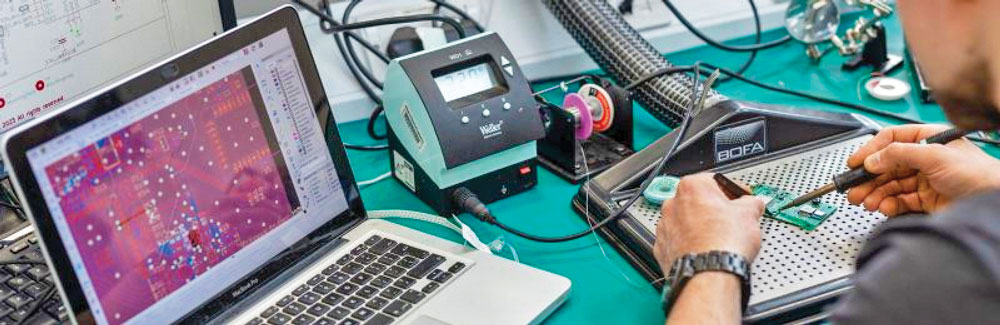
MK: An embedded system engineer designs the “brains” inside electronic devices, systems where hardware and software are tightly integrated to perform a specific function. Unlike general purpose computers, embedded systems are built for dedicated tasks, such as controlling a medical device, managing an automotive system, operating an industrial machine, or running a smart sensor.
These engineers work at the intersection of electronics, computing, and real-world applications. They design circuits, write low-level software, optimize performance, and ensure that the system is reliable, energy-efficient, and capable of working in real-time conditions.

ARE YOU ALSO DOING ENGINEERING PRACTICE?
MK: Yes. My work is deeply connected with real-world problems. Alongside teaching and research, I collaborate on projects that require delivering workable solutions, especially in AI for healthcare, assistive technology, education technology, and industrial automation.
I enjoy practice-based engineering because it keeps your work grounded: you are constantly asking, “Will this actually work in the field? Can it scale? Can it be maintained? Can it serve the people who need it most?”
PLEASE TELL US ABOUT YOUR PROJECTS YOU HAVE WORKED ON (NAME A FEW).
MK: A few projects that reflect my impact-driven approach are:
1) AI for Diabetic Retinopathy Screening: Diabetic retinopathy is a major cause of preventable blindness, and its early stages often show no symptoms. We developed an AI-based screening and diagnostic system to enable early detection, especially in underserved areas. One of the biggest challenges was that conventional diagnostic hardware is expensive and not easily deployable in remote settings. To address this, we worked on low-cost, AI-enabled solutions that can be used by trained health workers, reducing dependency on scarce specialists for initial screening.
Moving forward, our focus is on scaling and integration, linking the solution with hospital information systems (HIS), ensuring long-term sustainability, and addressing environmental, social, and economic aspects of deployment. We are also placing strong emphasis on the responsible and ethical use of AI in healthcare. This project has been carried out in close collaboration with Dr. Rehman Siddiqui, a leading retinal specialist.

2) Urdu Digitization (OCR and Text-to-Speech): Urdu is among the most widely spoken languages in the world, yet its digital footprint is very limited. This means that a vast amount of historical, religious, and cultural knowledge remains locked in printed form and is difficult to access. Urdu OCR is particularly challenging because of its complex, overlapping script.
We developed Urdu OCR and text-to-speech technologies to convert printed text into machine readable and audio formats. This supports accessibility, enables digital archiving, and helps preserve linguistic and cultural identity in the digital age. This project was carried out with the support of Anjuman Taraqqi-e-Urdu Pakistan.
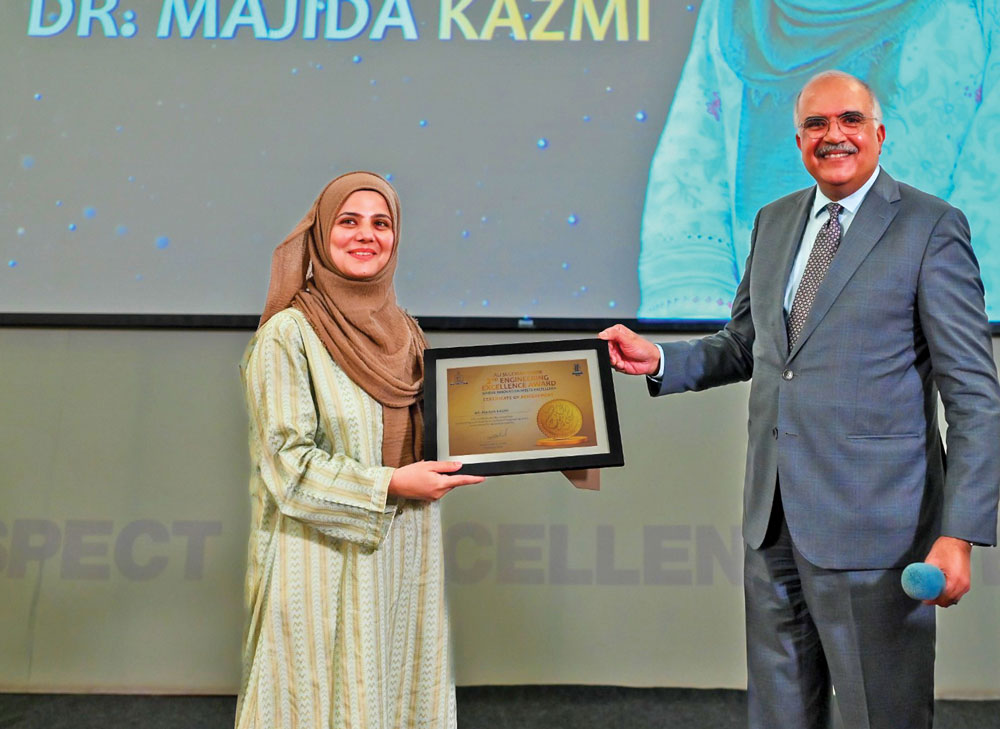
Both of these initiatives were recognized with the Ali Suleman Engineering Excellence Awards. However, I always emphasize that such achievements are never individual; they are the result of collective effort by students, interns, researchers, and institutional leadership.
WHAT KIND OF EDUCATIONAL PROGRAMS ARE OFFERED UNDER YOU AT NED, AND HOW ARE THESE DESIGNED?
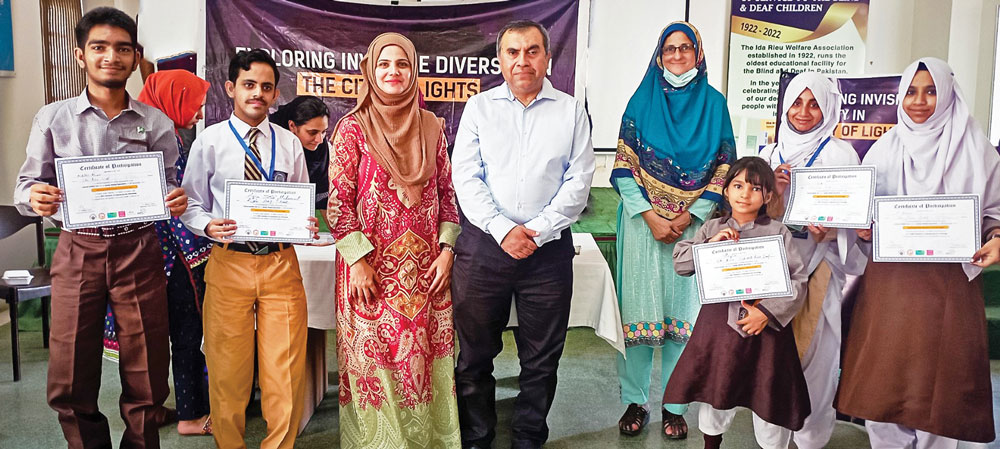
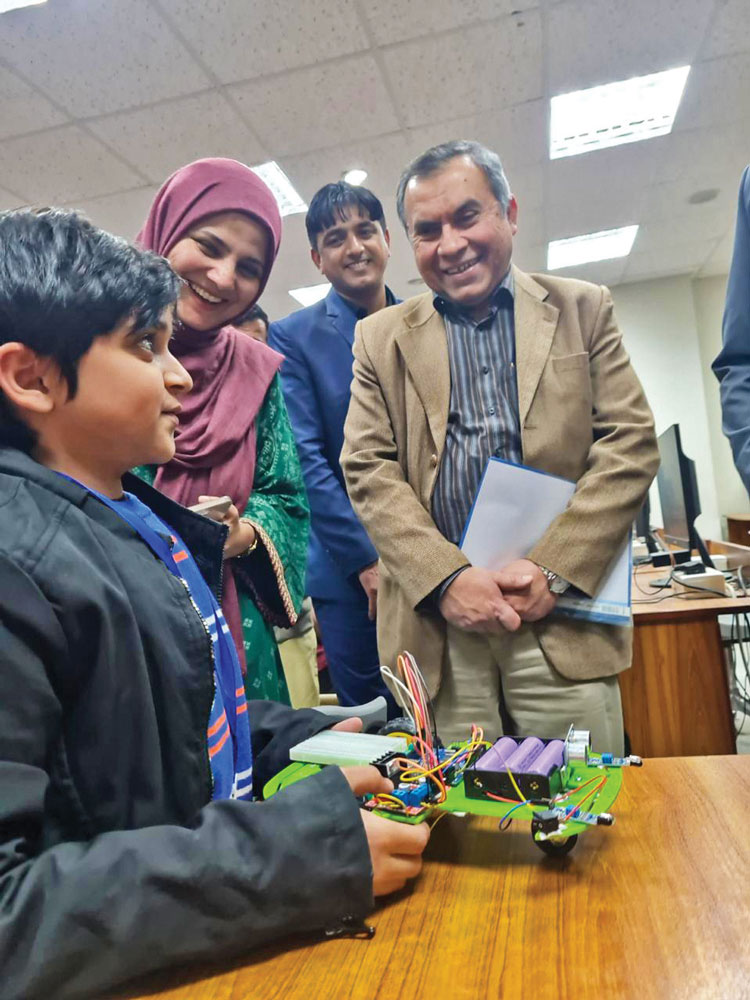
MK: At NED, I lead the Asma M. Hashmi STEM Centre, which is designed to strengthen the pipeline from school to higher education. We realized that quality graduates require quality input, so we cannot wait until students reach university.
Our STEM programs are designed around real constraints in Pakistan:
– We focus on schools and colleges, not only universities.
– We prioritize government schools because that is where the largest population studies and where intervention can be transformational.
– We use a Train-the-Trainer model because training teachers creates a long-term multiplier impact.
We also collaborate internationally with institutions and trainers, bringing global exposure and modern teaching practices to strengthen local capacity.
HOW DO YOU FEEL ABOUT THE STANDARD OF ENGINEERING EDUCATION AT OUR INSTITUTIONS?
MK: Engineering education in Pakistan has several strong foundations. We have talented students, committed faculty, and some very capable institutions that produce graduates who perform well both locally and internationally. Many Pakistani engineers contribute successfully in global industries, research labs, and technology companies. This shows that the intellectual potential and technical capability exist in our system.
However, there are also some important challenges. One issue is that many students enter engineering without consciously choosing it. Often, the decision is driven by family expectations, social pressure, or limited awareness of other career paths. When engineering is not a personal choice, motivation and engagement can suffer, which affects learning outcomes.
Another concern is the gap between theory and practice. In many institutions, teaching is still heavily focused on textbooks, exams, and theoretical understanding, with limited exposure to real-world problems, industry projects, or hands-on innovation. This makes it harder for graduates to transition smoothly into professional environments.
A deeper issue begins even earlier, at the school level. STEM subjects are often taught in ways that feel difficult, abstract, and disconnected from real-life applications. As a result, many students develop the belief that they are “not good at science or mathematics” and lose confidence long before they reach university.
So, while Pakistan’s engineering education has strong talent and potential, it needs better alignment with industry, more practical and project-based learning, and stronger foundations at the school level to fully realize that potential.
DO YOU THINK THERE IS A NEED FOR ENGINEERING EDUCATION REFORMS?
MK: Yes. Education must evolve with the demands of modern technology, industry needs, and societal challenges. Engineering is no longer just about theory; it is about innovation, problem-solving, and relevance.


IF YES, WHAT TYPE OF REFORMS ARE NEEDED TO IMPROVE ENGINEERING EDUCATION IN PAKISTAN?
MK: A few reforms I strongly believe in:
o Make learning more application-based and problem-driven, starting from the school level. o Improve STEM teaching methods to connect concepts to real-life impact.
o Strengthen the ecosystem through teacher capacity-building, not only student training.
o Create stronger links between academia and real-world challenges in society.
o Encourage innovation, creativity, and ethical responsibility, because technology should serve people.
DESCRIBE AN EXPERIENCE IN WHICH YOU IDENTIFIED EDUCATIONAL NEEDS AND SUCCESSFULLY DEVELOPED A WAY TO TEACH/TRAIN STUDENTS.
MK: When I joined NED, we observed a clear gap: students were entering engineering but lacked motivation and clarity because engineering was not truly their “choice.” We realized university level interventions alone were not enough.
So we shifted earlier: schools and colleges. We designed interventions to improve STEM engagement and then scaled it through the Train-the-Trainer model, focusing on teacher development, especially in government schools. This approach strengthens learning at the root and improves readiness for engineering education over time.
YOU PROMOTE STEM EDUCATION FOR STUDENTS FROM SCHOOLS TO HIGHER EDUCATION. WHAT IS STEM EDUCATION?
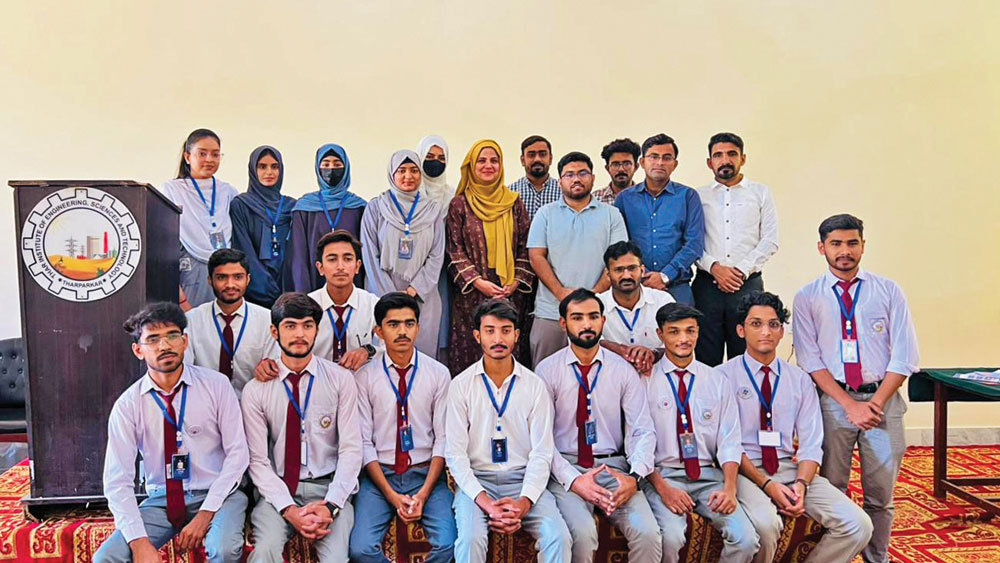
MK: STEM education is not just teaching Science, Technology, Engineering, and Mathematics as separate subjects. It is a way of learning that builds problem-solving, critical thinking, creativity, and confidence to experiment. STEM should make students feel: “I can try, I can build, I can solve.” That mindset is as important as the content.
YOU ARE INVOLVED IN SO MANY PROGRAMMES. HOW DO YOU HANDLE STRESS?
MK: I think a major stress for working women is silent guilt “Am I giving enough?” Many women carry that question daily, especially when kids are small.
What helped me most was a strong support system. My husband and family shared responsibilities in a very balanced way, especially at difficult times. And I reframed guilt into a more meaningful perspective: when children see their mother working with purpose, they grow up with pride and a broader understanding of what is possible.
Also, I genuinely enjoy my work. I often say, my work is my passion. That makes the workload feel meaningful rather than draining.
WHAT DO YOU DO IN YOUR FREE TIME?
MK: Honestly, a large part of my quality time is still connected to my academic and research environment because I genuinely enjoy what I do. It is not just a job for me, it is something I feel deeply passionate about.
At the same time, I value family time a lot. Spending time with my children and family helps me stay grounded and keeps life balanced. Simple moments, talking, sharing meals, or just being present, are very important to me.
I also enjoy reading, reflecting, and sometimes traveling or meeting new people and learning from their experiences. These moments help me recharge and gain new perspectives.


WHAT IS YOUR ADVICE TO FEMALE ENGINEERS?
MK: Dream big but start with small, steady steps. Do not assume that marriage or family will become barriers. With the right mindset and mutual support, relationships can become a strength, not a limitation.
Balance is not a fixed pie chart; it is dynamic. Priorities change month to month, year to year. If you look at life over time, balance becomes visible.
Most importantly: do not compare your journey with others. Success is relative. Define your own pace, your own priorities, and your own version of impact and then move forward with confidence and consistency.


