


Mr. Asghar Siddiqui is the principal engineer and CEO of ElekEn Associates. The reputed firm was founded in 1990 by the pioneer engineer and has done 1800+ projects in the sectors of Health Care, Commercial, Residential, Industrial, Infrastructure, etc. Mr. Asghar Siddiqui has set new trends and introduced new technologies in the field of Electrical Engineering in Pakistan. He gained a consolidated 5 years of experience in Operation and Maintenance, Execution, Project Management and Consultancy. He then successfully applied the gist and essence of his gained experience in his own firm, making it one of the leading consultancy firms in Pakistan.
By: Anzalna Wazir | Photo courtesy: Engineer
ARCHI TIMES (AT): Before we begin talking about your engineering, it would be good to know you as a person and your educational background?
ASGHAR SIDDIQUI (AS): If passion and profession come on the same platform then it becomes an ideal situation. I wanted to be an architect but by default I became electrical engineer and graduated from NED University in 1985. At ElekEn, what I am doing is that I am connecting with the youth, promoting them so that in future people will know ElekEn more than me. I have made three of my personally trained engineers, as my legal partners due to which even when I plan to retire from ElekEn, the company will go on and continue to prosper. Our firm is one of the leading MEP Consultancy firms operating in Pakistan. We have one of the strongest team of 65+ members with overall 27+ graduate engineers, cost engineers, associate site engineers, draftsmen, administration and support staff in our organization.
I would like to mention the name of my mentor Engr. Ashraf Kareem (My Ashraf Bhai) who has played a pivotal role in making this field interesting for me.

AT: Also tell us about your professional career experience, it’s up and downs as you are working since so many years?
AS: The dilemma I faced after graduation was what should be the next step?. I had major interest in architecture and I wanted to stay connected with this field and architects as much as possible. So, Consultancy was the only profession through which I could achieve this target staying within my field.
I studied the salient features required to be a good Consultant. Theoretically, there are two major things that a Consultant should know and well conversant with:
* Engineering
* Economics
Engineering without economics is a common practice in our country. People tend to save money from Consultant fees but never think about the cost and quality of works, which may suffer without a professional consultant.
There are four other tricks of trade which a consultant must be equipped with, before starting their own practice:
* Operation and Maintenance Issues
* Execution
* Project Management and
* Design
I gained experience in all these four fields to get command over my profession. After 5 years of gaining professional experience, I started ElekEn in 1990. Talking about the ups and downs, I was so unaware of the circumstances and problems that I was going to face in the field. Had I known before, I would have opted for another profession because I was not socially well-connected which a consultant should be. I did go through much ups and downs but at the end of the day there is every kind of people that you have to get the work done from. There is no choice because we have to work with vendors, engineers, architects, developers, end users etc no matter what.

AT: Can you identify the three most pressing problems to practice in the field of engineering?
AS: As human, we care about our face, eyes, dressing etc but we don’t care about soul and tarnish it although soul and body are interconnected. Same is the case with electrical engineering which is invisible like soul and either intentionally or unintentionally, the people in command are destroying it.
There are a lot of issues but yes the major three are as follows:
* Influx of Fake “So-called” Electrical Consultants
* Unethical means of getting Projects at Low fee or by maligning others
* Unavailability of Qualified Contractors and Skilled workers
Mushrooming of fake consultants, who are not authorized to give consulting services, is because most of the architects/clients hire these fake consultants and encourage them to get the design work done at a very low fee. In addition to that, some architectural firms are making their own electrical department and getting work done either by subletting the work to these forged consultants or by their employed inexpert engineers. As a result, engineers are reluctant to work in the field of consultancy and this is also causing mal-practices in this respectable field of services.
The situation in other provinces is worst, no authority seems to be active in establishing a code of conduct and put a halt to all such mal-practices which is resulting a hopelessness in consultancy, for Engineers in Pakistan.
The consulting firms like ElekEn are getting suppressed by the phony Consultants as well as large consulting firms who are providing all architectural, Structural and MEP services.
Architects and Consultants are getting projects at a very low fee, I don’t know how are they surviving and living lavishly. This is one reason of by-passing engineering economics. The CLEAN Consultants who believe in ethics and giving consulting services with honesty are trying to find out new avenue to switch their businesses.
The quality of work done and workmanship depends upon good executers, unlike Civil / Architecture, the field of electrical engineering severely needs qualified contractors having skilled workers resulting in poor quality of workmanship. There is certain lacking of Engineers in the field of execution / contracting.

AT: How important is architectural lighting for spatial environment while designing any project and what considerations you keep in mind?
AS: The only thing that people associate with electrical engineering is lighting. Yes, it is an essential part of architecture but the problem is that here an Electrical Consultant do everything including lighting and they cannot justify their jobs. Since, people (Clients as well Architects) are neither willing to pay for lighting design to electrical consultant nor to invest on lighting fixtures therefore there are few projects where you may see extra ordinary lighting. In my opinion, lighting is a vast subject, there must be exclusive lighting consultants who must have aesthetic sense and can understand and synchronize themselves with the architectural and aesthetic aspects of the project.
When a lighting theme is generated it is the joint effort of architects and lighting consultant, keeping electrical engineering aside. Lighting is not the business of Electrical engineers. Lighting design and consultancy is a special subject. You have to see whether you require uniform light or task light etc or how much load density is required. It is a serious issue in Pakistan and unfortunately non-technical people are dominating in this sector. In other countries, companies have brands working under them and they choose lighting according to the requirement of the project. This varies from case to case resulting in right selection of lights for every application.

AT: Who you enjoyed most working with:
AS: I have really enjoyed working with architects like Ejaz Ahed, Shahid Abdulla, Ali Naqvi, Mansoor Ghanchi, and Iftikhar Azam, because they give you the freedom to work in coherency with them and treat with high respect. They work like a team leader and involve us from initial stage.
I also have high regards for (late) Ar. Arshad Abdulla, Engr. Abdur Razzak, Ar. Akbar Jameel and (late) Mr. Saleem Zaki who have motivated and supported me since the beginning of my professional journey.
AT: To what extent you propose fixtures and lighting system with an architect/consultant?
AS: Where I am given free hand, I design and choose lighting features according to the nature of the space requirement and project. When an architect wants to create an ambience, they discusses how that can be achieved with lighting. The intensity, uniformity and designing of light differ from space to space. Electrical loads are also reduced by appropriate light design. I make sure in my projects that I select lights fulfilling the requirement and reducing the loads as much as possible.
In Aga Khan Hospital there is a building “Centre for Innovation in Medical Education” and also AKU Bamyan Hospital in Afghanistan done with Arcop, has a very balanced lighting scheme and ambience. (I am the first consultant who has made efforts and Alhamdulillah succeeded in changing some of the outdated practices of Aga Khan Hospital that were set since ages is it needed now).
AT: Do you have ever faced problems from the owner and contractor?
AS: The project management teams from owner’s or contractor’s side are mostly not up to the mark which causes delays. The responsibility of a project manager is to appoint engineers of relevant fields who can understand the nature of work and project. Unfortunately, that is not the case most of the time. It’s a normal practice of Client’s Project Managers who make consultants responsible for delays and cost over runs.
AT: What are the considerations for building safety in terms of electrical designing and what important tips you would like to give designers and public at large?
AS: Building safety is of supreme importance. The issue of building safety especially in high rise buildings is Power Distribution System. If some measures are kept in mind like proper service shafts, usage of fire barriers , distribution of power and allocation of services while designing a building then we can avoid catastrophes like fire breakout and its propagation in buildings. Generally there are less fire breakouts in corporate building compared to general building by developers. Why? For example: if there is a mall or an office building which is a multi tenants building, the work of the consultant is to design the infrastructure and to terminate all the services at door step of tenant and generally there are no qualified people involved in all the work done after that point specially in retail shop or an office. Although the infrastructure is strong, but inside the premises the work done is not up to the mark which leads to problems.

AT: What would be your suggested measures to be consider for reducing electrical loads in buildings?
AS: The electrical loads can be reduced by many ways. By using appropriate materials, e.g., In Bakht Tower the air-conditioning load had been reduced from 2.7 MW to 1.7 MW just by changing the specifications of glass. If right selection of material is made in accordance with our climate then it will play vital role in decreasing the electrical loads. When Architects design the layout, they should keep in consideration the requirement of natural light in spaces and not overdo it.
AT: Have you had chance to work in the Dubai or in other countries, what differences do you see in approach to electrical design?
AS: Yes, we have done work abroad as well. Al Ghurair Gold Refinery in Dubai and RAK Medical and Dental College in Ras Al Khaima are our major projects completed in abroad along with other residential buildings. The Consultant over there has full freedom and power. There are authorities like DEWA, FEWA which assures the quality of work done with right approach without any deviation in specification and standards.
ElekEn has a vast experience of working with foreign architects and International Developers in Pakistan like Emaar and Giga Groups, AKU Hospital Buildings etc.
AT: In your opinion what is your achievement as far as improving the norms of Power Distribution Systems?
AS: I believe the adoption and implementation of latest and safe to use technology is my forte. For High Rise/Mid Rise buildings, when we reviewed the Power Distribution scheme as per the K.E regulations, we found them outdated and hazard to fire specifically bringing down all the cables to the meter rooms either at ground floor or a nearby location.
For that purpose Compact busways are used globally and Alhamdulillah with our continuous effort and the will of present K.E management and the persistence of Chapal Builders, we have succeeded in changing the K.E byelaws and for the first time in Karachi, A Busway Scheme has been accepted by K.E for the vertical power distribution in Chapal Skymark project. I consider this as one of the significant achievement in improving the power distribution of the ongoing and upcoming High rise buildings in our city.
AT: Do you find that you have a good client base that you work with regularly?
AS: There are a number of regular clients who are either architects, Developers and End users. We have set the trend of consultancy for developers with the support of Engr. Abdul Razzaq Associate, Saima Group in the beginning and later on Machiyara Group and Imtiaz Stores etc.
ElekEn is working with the respectable architects like Arshad Shahid Abdulla, Habib Fida Ali, Arcop, Tariq A Qaiser, ARA, Ahed Associates, Arch Vision, H3, The Architect, NBCL and Naheed Mashooqullah and Al Imam Enterprises on regular basis.

AT: What are your opinion about the use of solar energy in buildings in general and houses in Pakistan?
AS: I am not against the usage of Solar energy but its application is critical, as how people are utilizing this technology without considering the proper parameters in totality. People are rushing to install the solar system at their premises by untrained and non-professional people who are just doing trading, not selling a System. An appropriate pre installation feasibility study may make this technology further efficient and useful. Very few clients seems interested in hiring a consulting services for it as they believe it is not a consultant’s job. Except few, Traders are designing and installing the Solar system.
We can go for Vertical Axis Wind Turbine installed on Roof-top of high rise buildings where you can wind most of the time. It acquire lesser space than Horizontal Axis WT and generate more power.
AT: What kind of projects do you enjoy more? And what projects do you currently have on the boards?
AS: I like to do projects where we can use new technology, innovative ideas for energy efficiency, and lighting to explore the creative side of my field.
Currently, we are working on Hospitals, Educational Institutes, Hotel, High density residential buildings and Office buildings and Stores. Like EMAAR, SAMI Pharma, Paragon Golf Apartment, PARSA Citi, Saima MID Town, Oasis Park Residencia, Dolmen Mall, Lahore, HSJ Icon and Bejaan Resort are few of them.
Recently completed buildings are Pakistan Kidney Liver Institute Lahore, Penta Square and Artistic Tower and Allied Bank Buildings.
AT: What are your best projects and why?
AS: However, one of my biggest projects are WTC Islamabad (design stage only) and Lucky One mall Karachi, but the projects I like most are Bamyan Hospital Afghanistan, EFU Life Building Karachi and CIME Building at AKU Karachi. . The reason why I like these projects is not because of the design only but it is also because of the people who were involved in these projects and their professional attitude, respect towards engineers and incorporation of advice.
AT: How do you feel about the standard of engineering education at our institutions?
AS: In our institutions we are teaching the old parameters and courses. The technology and methodology of engineering is lacking in the institutions. New courses should be introduced which can be applied in the field and student (once graduated) can apply it in their careers. The faculty should comprise of teachers having command and knowledge of engineering and should be able to transfer that. There is no other way. Amongst the most ignored technology in Universities is Electrical Power Engineering.
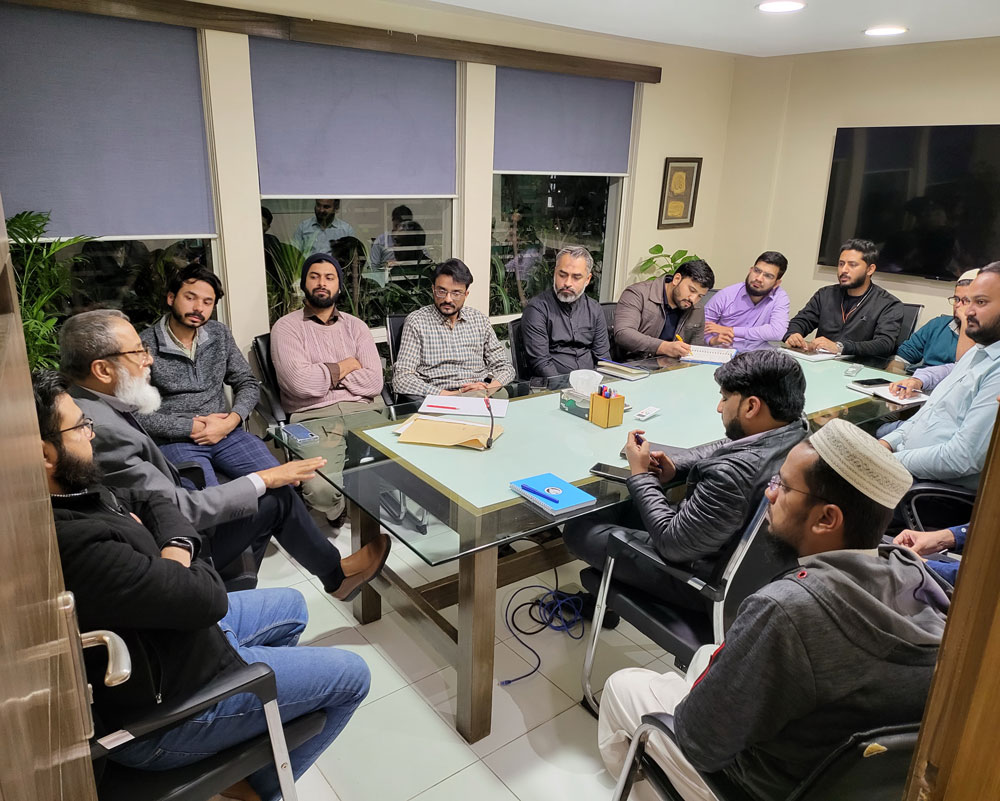
Team ElekEn is also working for upcoming engineers at their level best to make them ENGINEER through training and teaching at ElekEn’s office. We generally take two groups annually, comprising of Four students of Final year per group from NED University to train and teach them so that they may have a reasonable pre-graduation field experience which helps them to serve our country in a better way without wasting any time after graduation.
AT: Any message for young professionals?
AS: Now a days, Young professional engineers have target how to make money without struggle. They do not know that in Pakistan, Engineers are for survival and Survival for Engineers. Engineers must focus on knowledge and experience for first five years then they will be able to serve in a better way and eventually in a better position.
AT: What are your comments on the starting of this Newage Engineers Interview series? Do you think young professionals particularly students will be benefitted?
AS: It will be highly beneficial as everyone knows about architects but very few know about engineers and what they actually do. It’s an initiative which will bring positive outcomes in future. One more thing that can be done is that we can incorporate issues of the field as well in future as it will be helpful for young professionals and students to get to know about field reality and circumstances so that they may prepare accordingly. It will help them in choosing the right path and choose which branch of field engineering they want to opt for, e.g. Trading, operation and maintenance, design and execution, project management, manufacturing etc.
I would also suggest to add technical articles in Archi Times specially related to Building Services which will be helpful for new engineers as well as architects.
AT: Are you satisfied with prevailing engineering practices?
AS: Engineering practices in Pakistan is under deterioration as there is no authority for accountability. Invasion of Consultant’s having no professional degree / license is the main cause they got the projects at very low fee and make money through other sources using the project
AT: Keeping in view the present situation of our beloved country, in your opinion what role engineers can play for the progress of Pakistan?
AS: I strongly believe that the Engineering Fraternity is not utilizing its full potential, we as a Nation are for behind in Technological advancement. We are not innovating anything; primarily we are importing and to a very limited extent we are doing copy paste production.
Our Engineering Universities & Industries need a major overhaul, and it’s high time we start focusing on high quality local made products. The much needed R&D Departments are to be established and we better start relying on the products that are made in Pakistan.
It is also the need of time to stop the on-going ” Brain Drain”, by providing better opportunities to the young engineers, entrepreneurs and of course the industries.
AT: what should be the criteria for the selection of consultant?
AS: I suggest that like PEC Categories for the contractors and operators C-A, C-1, C-2 etc depending upon their expertise and the financial stability; a rating system for the Consultants must be introduced by the Pakistan engineering Council. It should be based on the Number of Professional Engineers, Registered engineers, Experience in the field, Number of completed projects etc. This will serve as the winnowing process and only those consultants can be shortlisted which are best suited for the particular project.


