


In-depth interview with ARCHI TIMES, Chairman of IAP-RIC Fawad Suhail Abbasi discusses the challenges the profession of architecture is facing today, “he has over two decades of experience in Architecture & Interior Design projects across the country as a Partner & Design Lead of his firm Suhail & Fawad Architects.
ARCHI TIMES (AT): Tell us about your early life, professional education, and background.
Fawad Abbasi (FA): I was born into a large joint family surrounded by inspirational grandparents, parents, uncles, and aunts. Being the eldest child, I was extremely fortunate to learn from each one of them, experience strong traditional & cultural values, and most importantly a focused upbringing.
My entire schooling and college were in Islamabad and I was always into extra-curricular activities, sports, arts, music and dramatics. This made me travel quite a bit and I was able to explore many cities of the country and made amazing friends for life. After college I moved to Karachi for my B. Arch at the Indus Valley School of Art & Architecture where I found great mentors and teachers who gave me a direction, exposure, sense of observation and confidence to pursue a profession that made me who I am today.

AT: What compelled you to pursue a career in architecture?
FA: Growing up around architects and artists, it was impossible to not look at design as the only option. My father’s work inspired me further and I remember going to project sites with him very early on in my life which probably got me interested in architecture even more. He was also the co-owner of the first private art gallery Rohtas in Islamabad situated within his firm, it was the hub of creative people hence I was at the office and gallery frequently meeting and conversing with icons from Pakistan and from around the world. This reaffirmed my choice of architecture as a career and I have never looked back since.
After over 20 years of practice, I am even more convinced that approach of architecture is all the more understandable considering the architects background and what he experiences as he grows up.
AT: What is the meaning of architecture for you?
FA: Architecture for me is a collective expression of art and design. It is the only field that has multiple disciplines working together which makes it extremely exciting and challenging at the same time. One is able to understand, learn and apply whatever history has taught them. The techniques may change regionally but the technological applications get better with time only if one is willing to explore the various possibilities the context offers.
With time I have realized that architecture needs to be simple, truly experiential, approachable and what better if you can celebrate local crafts & indigenous materials in your buildings to show where they belong to.


AT: What is your design philosophy and methodology?
FA: My architecture language from very early on has been inspired by nature. My effort is to always celebrate the natural landscape or create one wherever necessary. I work with simple, minimalist palettes and contextual materials that drive my design. The idea is to create an almost transparent canvas in which vistas and frames are ever-changing without compromising on privacy.
Our office affirms the architectural traditions of the local context especially making sure to follow/use materials where the project is being built. Each phase of the project is studied carefully, and effectively counter-planned by customized traditional details designed at the studio. These details will always have an interplay of natural light & color. I have adopted a design-led approach, something I have learned from my father, and like him firmly believes that once planning is well resolved the form only takes shape from there onwards.
AT: Which of your projects do you feel best reflects your Design Philosophy and why?
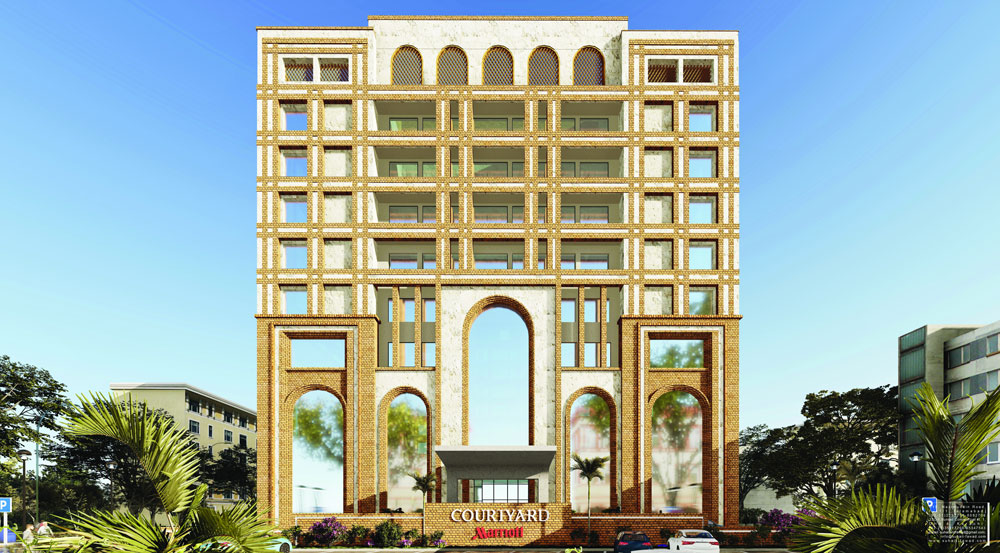
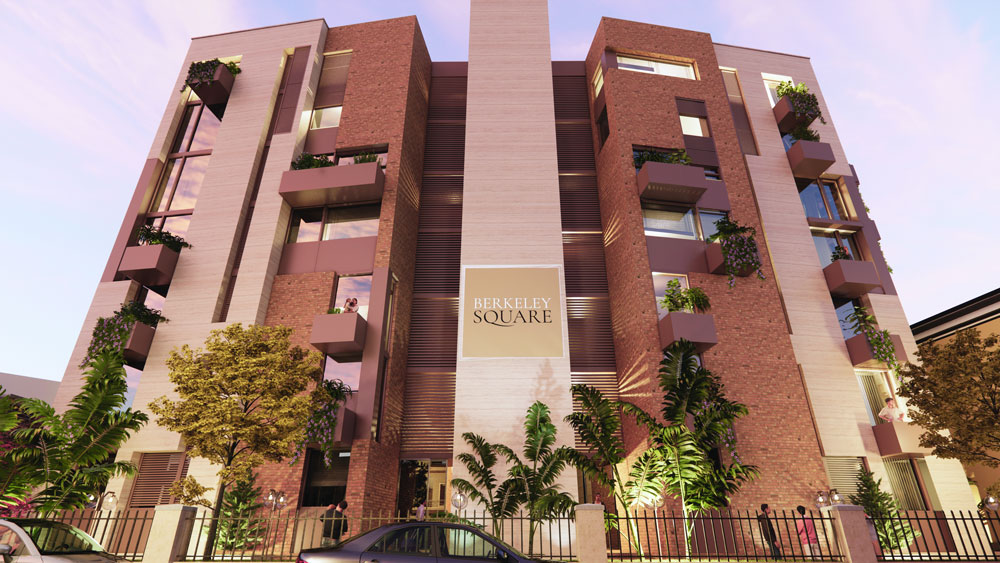
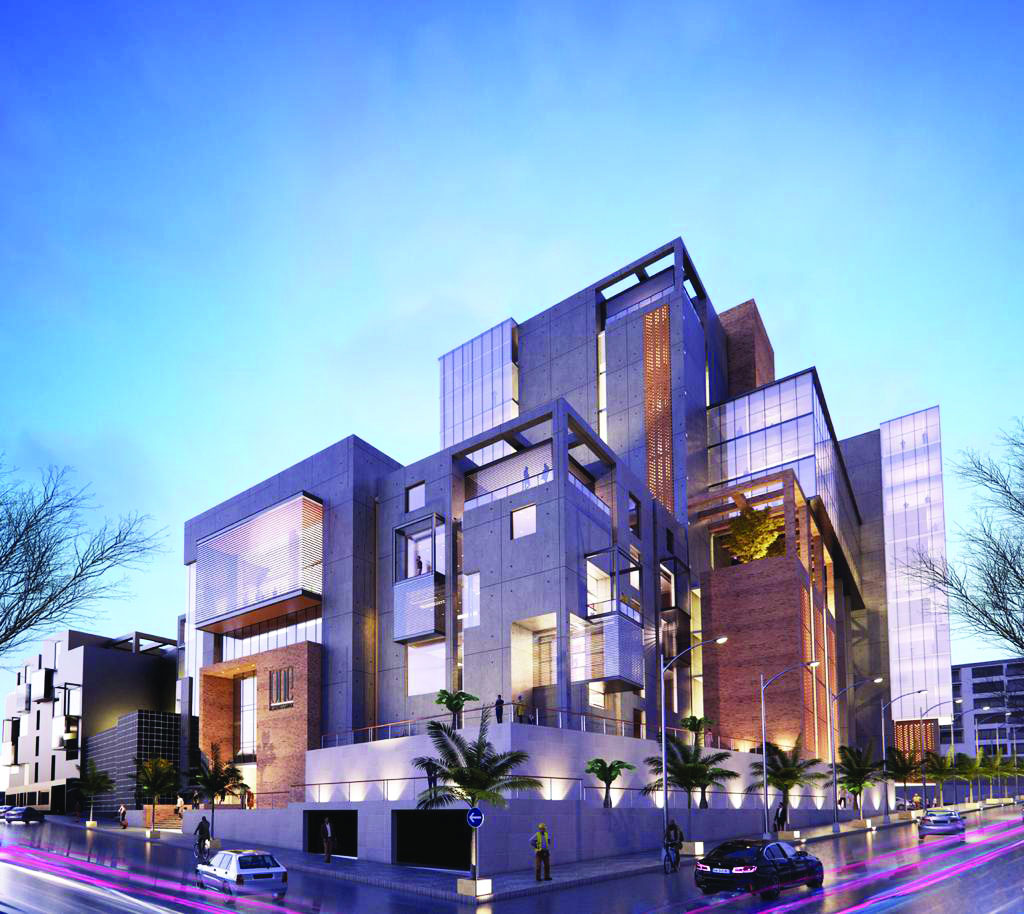
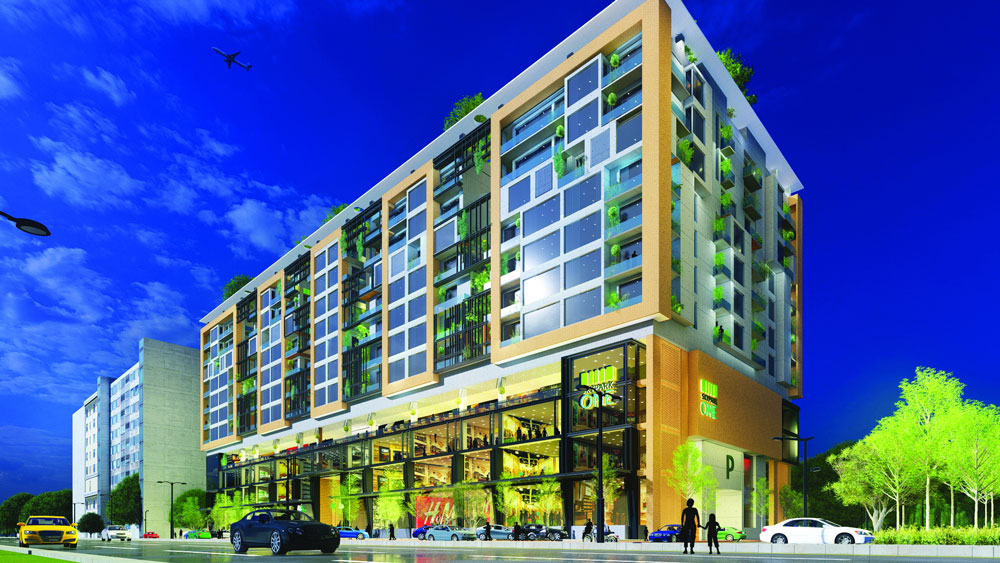
FA: I have been able to design and supervise multiple projects of various scales during my years of practice. One Expressway & Skypark One which are mid-rise mixed use buildings & Courtyard by Mariott Hotel are probably closest to what I envision my philosophy to be. I believe in creating my own gardens if we don’t have any natural greens around and this is what I have been able to create vertically in these buildings and these have been followed through by the principals in the other work coming out of our office.
Even the residential and interior projects that I have designed previously or the new that I am currently working on follow the same philosophy may it be a 10 Marla residence, a large farmhouse or different building types like a hotel, corporate office, residential apartments or even a mall.
AT: Do you have your own design philosophy or do you follow your father’s design philosophy?
FA: When I started to apprentice with my father who I have always idolized, his design aesthetics and attention to detail taught me a lot. With time we both agreed to explore other materials that complimented brick.
This made us look for other finishing materials of our region giving me the opportunity to find what I wanted to bring to the firm. I then learnt to put them together, drew those details myself after siting with the craftsmen and then executed them on site. It was a challenge at first but made me derive my own design philosophy and made me confident of what can be achieved.
My design philosophy employs a broad, comprehensive understanding of cultural identity, instruction of natural light & pigments, perception & psychology in the planning of each project. I always try and reflect this philosophy in whatsoever I create. Every new project helps me learn more, it’s an ongoing process and as a student of architecture I don’t think it will ever stop.
AT: What kind of projects do you enjoy more: Architecture or Interiors?
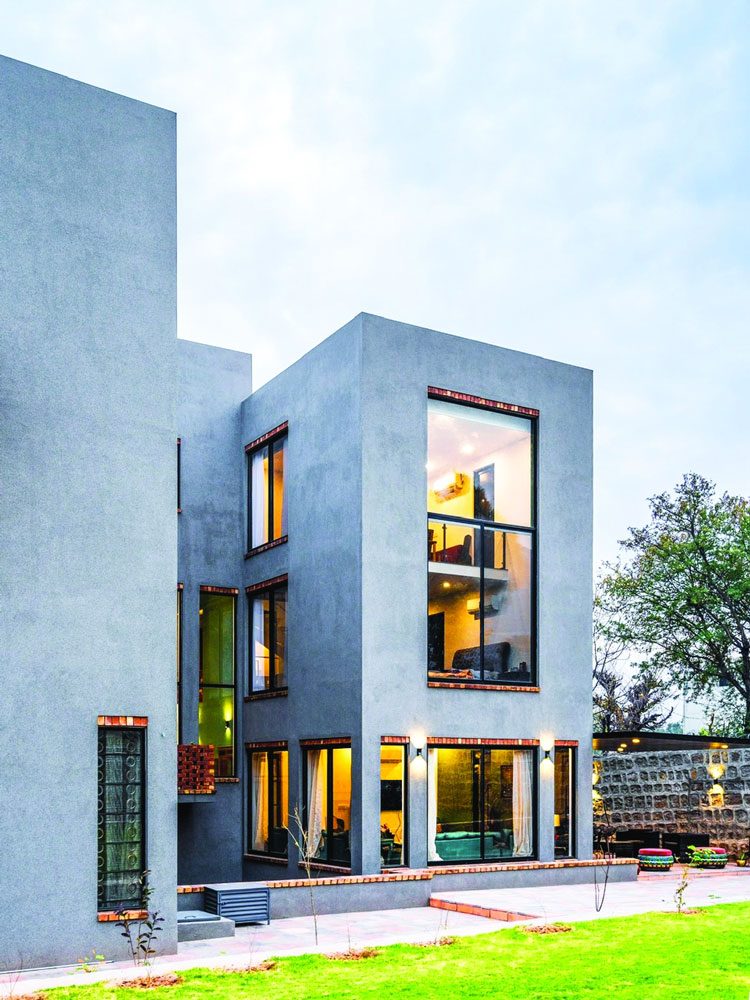
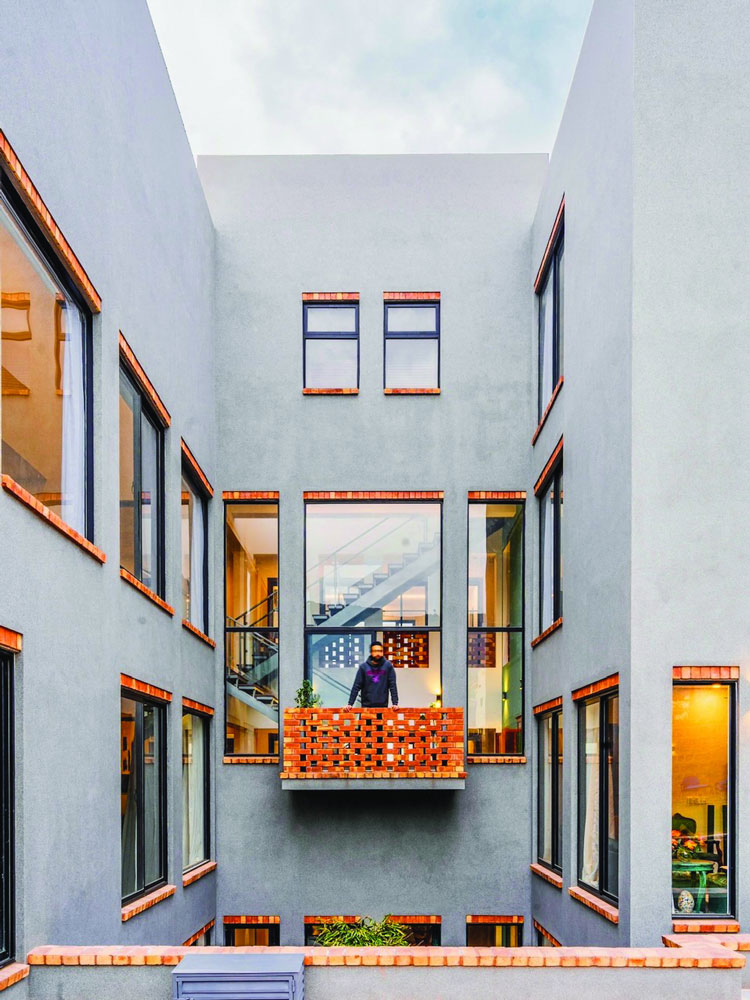
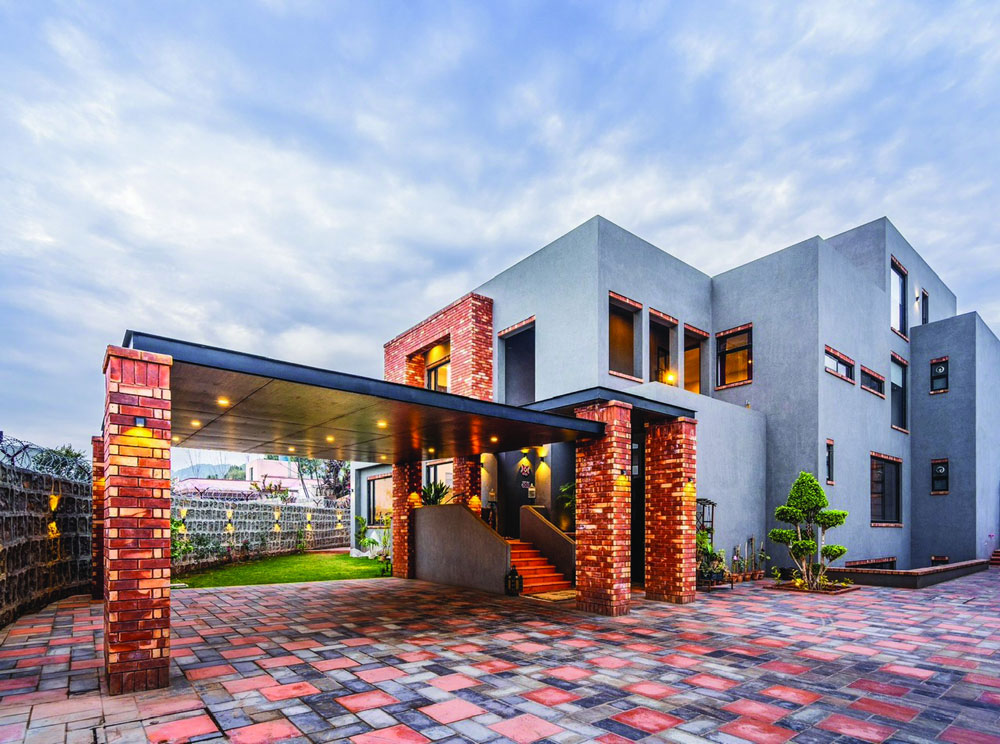
FA: My forte has always been architecture but I mostly design the interiors of our buildings simultaneously as they should always complement the exterior otherwise the project seems incomplete. I have been fortunate to work on many corporate offices, retail and hospitality interiors and never refuse any if it excites me.
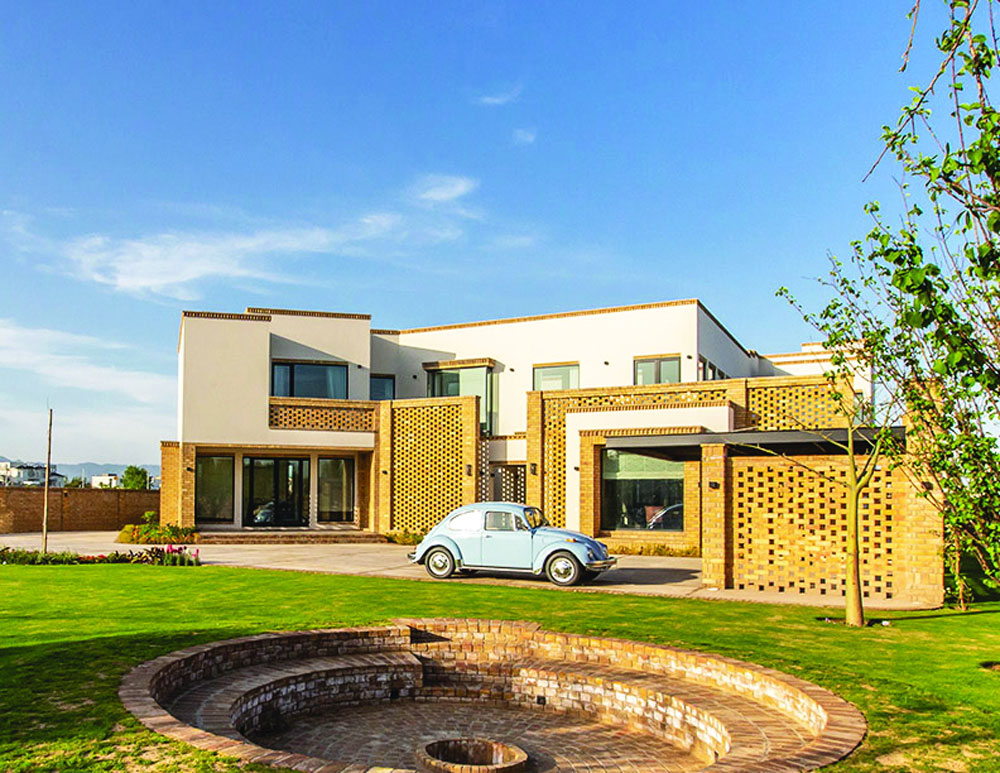
For me context plays a major role, my design embodies integration & regionalism with one reinforcing the other. Even the interior design affirms the architectural traditions of the local context of which bricks truly are my favorite.
I am involved in multidisciplinary projects which involve master planning, architecture and interior design as a whole so the firm gets to work on everything.


AT: What projects do you currently have on board?
FA: We are working on an international hotel, a hospital, a few office buildings, mixed-use retail, and residential complexes and multiple large & medium size residences with a few interior projects.
AT: What future goals do you have in mind?
FA: I have always believed in selecting my projects but giving it my best. I also realized early on in my career that everything cannot be charged and our firm has been involved with CSR projects for over a decade. We continue to work with organizations that need our help and it’s been most rewarding.
I hope to continue doing good design that leaves an impact on people, the ones who inhabit them, use these spaces and also the ones that pass by it. I question myself everyday and try to create experiences through architecture and design. I want my buildings to age well, become good neighbors and become timeless.

ON IAP AND PROFESSIONAL ISSUES:
AT: What are the reforms and initiatives you have planned after assuming the IAP-RIC Chairman office for the betterment of the Architecture profession?
FA: I have been part of IAP in various capacities since 2004 when I became an Associate of the Institute. I believe in teamwork which is what our senior mentors in IAP have taught us and have motivated many like me to take leadership roles and represent Pakistan globally.
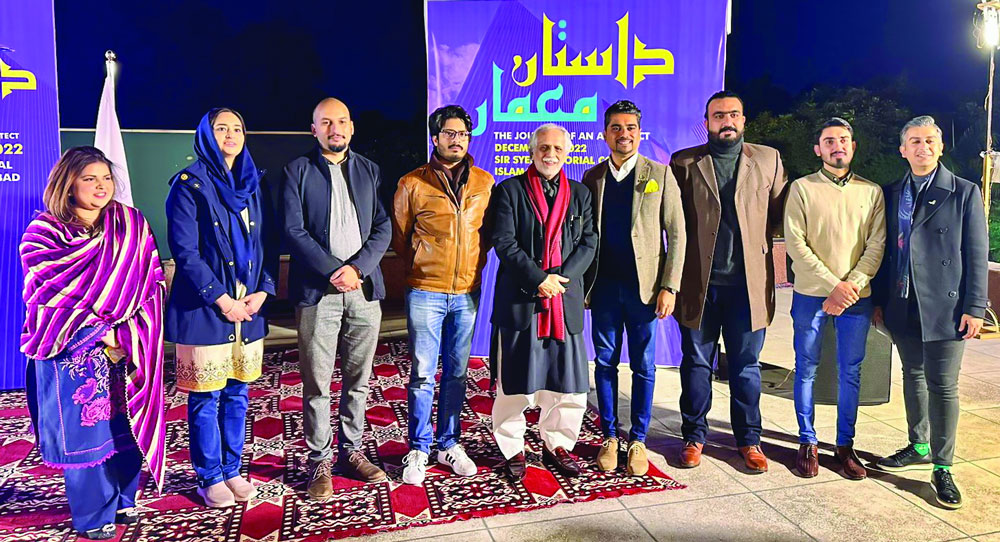
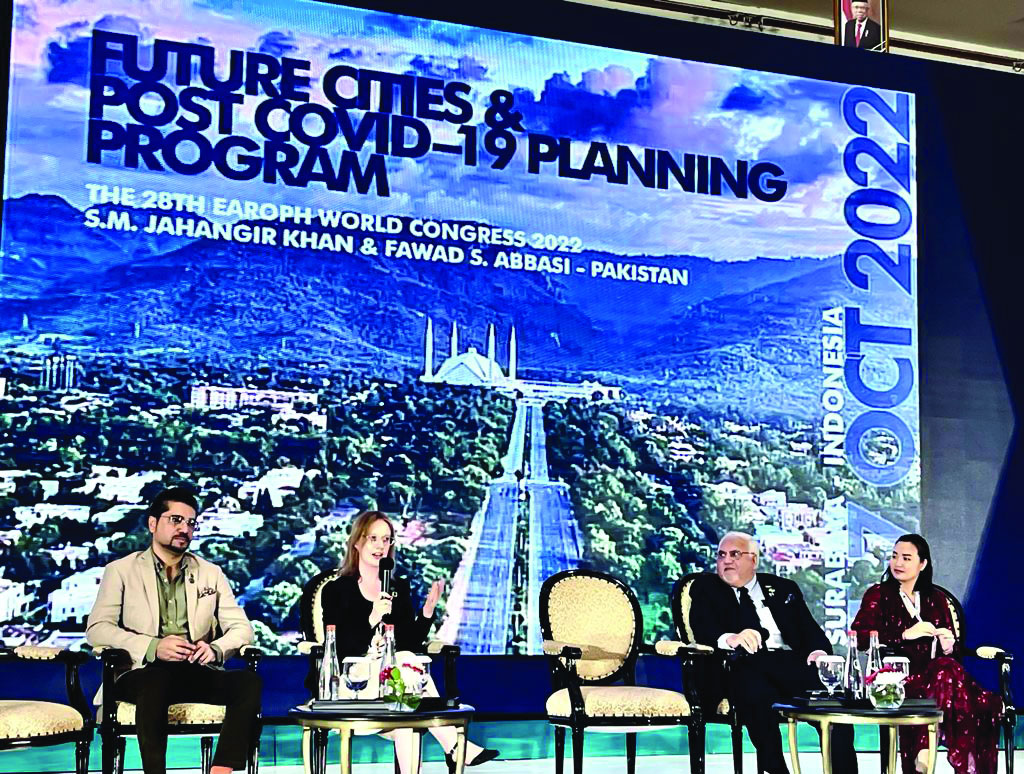
I served as the Vice President IAP, 2016-2019 before I was re-elected as the Chairman of IAP-RIC in August 2022 after serving two terms a few years ago. From the time I took office, I have worked with a vibrant team of architects to highlight and work towards a stronger professional body, invited a number of talented female & male architects to showcase their work, earmark and work at finding solutions where they are needed and bring other similar disciplines to the fold of IAP.
We have been able to organize events with both architects and students from eight universities of architecture from the region and will continue to reach out to the youth of our country because they are the future of IAP. We also realize the gap that was created between practice and academia and all of us as IAP are doing our best to bridge this gap through close coordination between BAE & PCATP, multiple collaborative dialogue sessions and events in all major cities of the country.



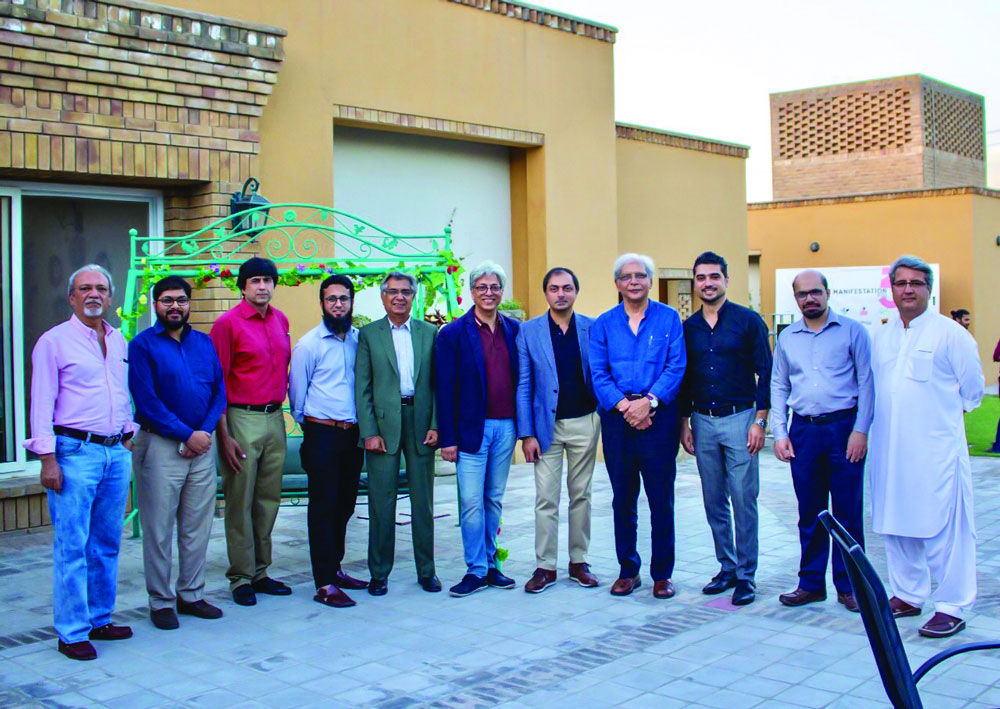

AT: What motivated you to get so intimately involved with the Institute of Architects Pakistan?
FA: IAP is our global & national recognition and we as professionals owe it to the profession to work for its betterment. It has definitely been the inspirational role models in IAP that I look up to and who showed me that work & IAP can be balanced and that it is extremely important to stay involved.
AT: Recently you organized IAPEX in Islamabad. Please tell us about its success and theme?
FA: This year after a gap of almost 4 years we were able to organize IAPEX 2023 Islamabad from January 20-22 with a lot of enthusiasm and through efforts of so many people.
Keeping in mind the many global changes that have occurred we thought best to choose a topic that needed urgent attention.
Other than an extensive Building Materials Exhibition, Architects & Students Portfolio Exhibition we arranged an architectural conference under the theme; “Rethink Redesign, Rebuild a Sustainable World”. Forum ’23 was a series of interactive sessions by some of the most inspiring speakers from across the country and abroad.
These presentations were able to highlight and open a discourse of the future challenges and our way forward to counter them.
The highlight of IAPEX was a 3-day Students Design Charrette, a workshop attended by over 40 students from 8 universities of the region. Other events included students’ cultural night and concert which was a huge success with musical performances and a national quiz won by students of SADA, NUST while UET, Abbottabad was the runner-up. The 3rd IAP National Council Meeting and felicitation ceremony for vendors, students and volunteers was also held on the third day.
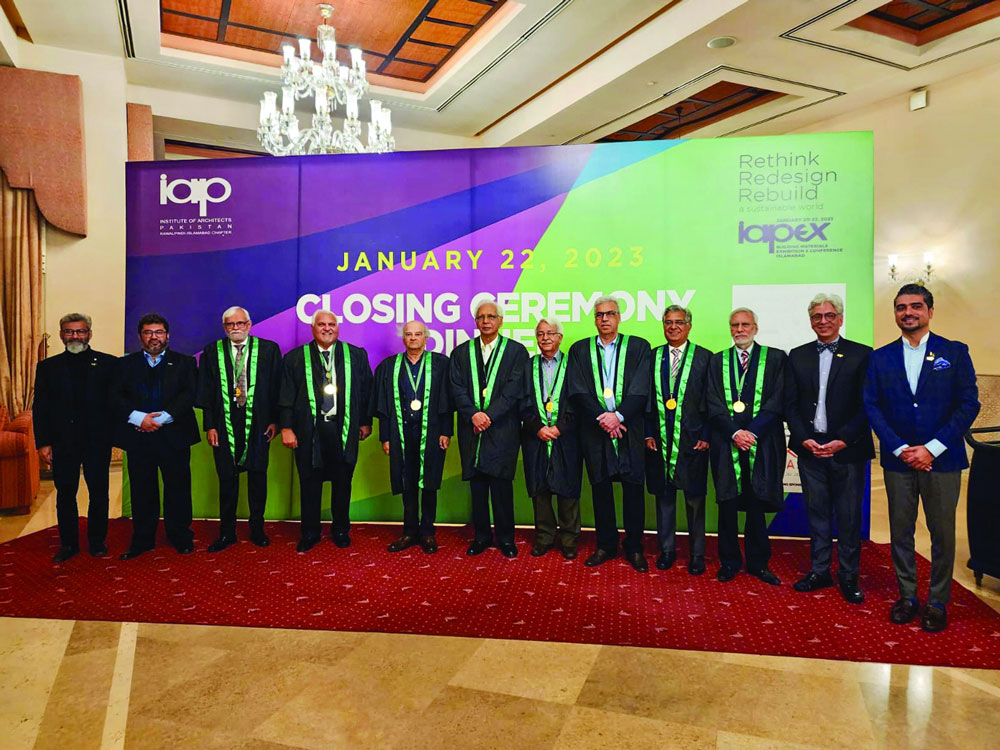
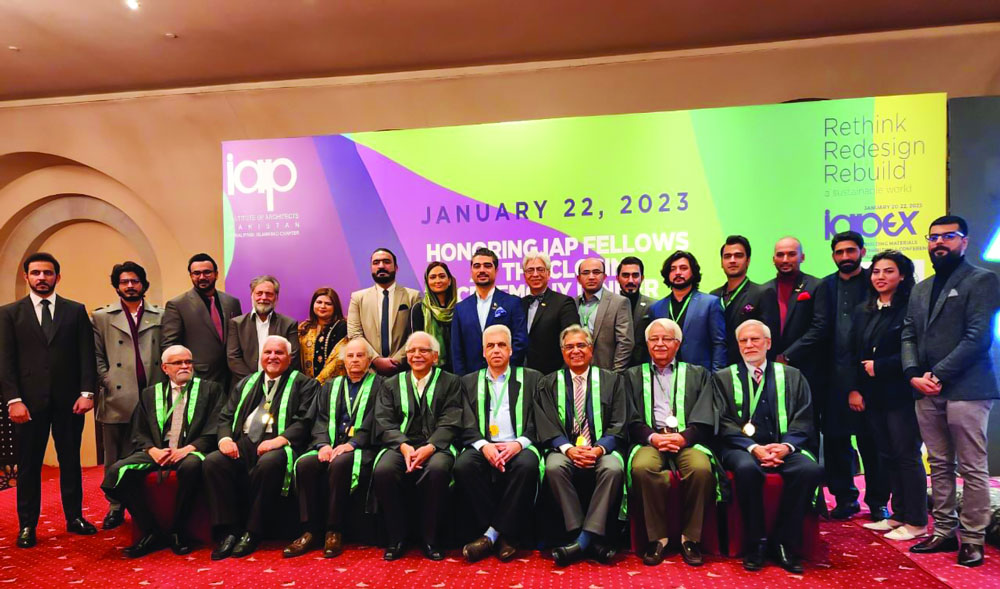
The opening ceremony was inaugurated by the Hon’ President of Pakistan Dr. Arif Alvi while the closing ceremony dinner brought over 150 architects to meet colleagues and friends. The occasion was extremely important as 9 IAP Fellows of the chapter were honored for their contributions and service to the profession. They were chief guests on the occasion dressed in their formal gowns and medals. Mementos were distributed to the Fellows, EC & OC Members and the winners of best stalls.
IAPEX is a time to celebrate, architecture, art and design and our team worked tirelessly with the support of our industry partners to put together a memorable event.
AT: You are simultaneously running the IAP-RIC Chairman’s office and your firm, please tell us how you are managing these two offices and time?
FA: I always believe that one needs to stay involved with professional bodies in whatever capacity alongside practice which is what I always saw my father doing. I therefore have always made sure to priorities and contribute as much as I can. I divide my time in a way that work & IAP are managed simultaneously however best possible.
AT: How do you see the role of IAP in safeguarding the interests of architects and the profession?
FA: IAP being the first and only professional body of architects in Pakistan has always worked towards inclusivity, building a stronger organization and introduced the best practices through representation of architects wherever possible. IAP members are part of policy & decision making with the government & are part of various Design Vetting Committees. This way practicing architects stay involved and are able to contribute towards a sustainable built environment within their cities and the country at large.
AT: Can you highlight the IAP approach and role to strengthen the relations with ARCASIA member countries?
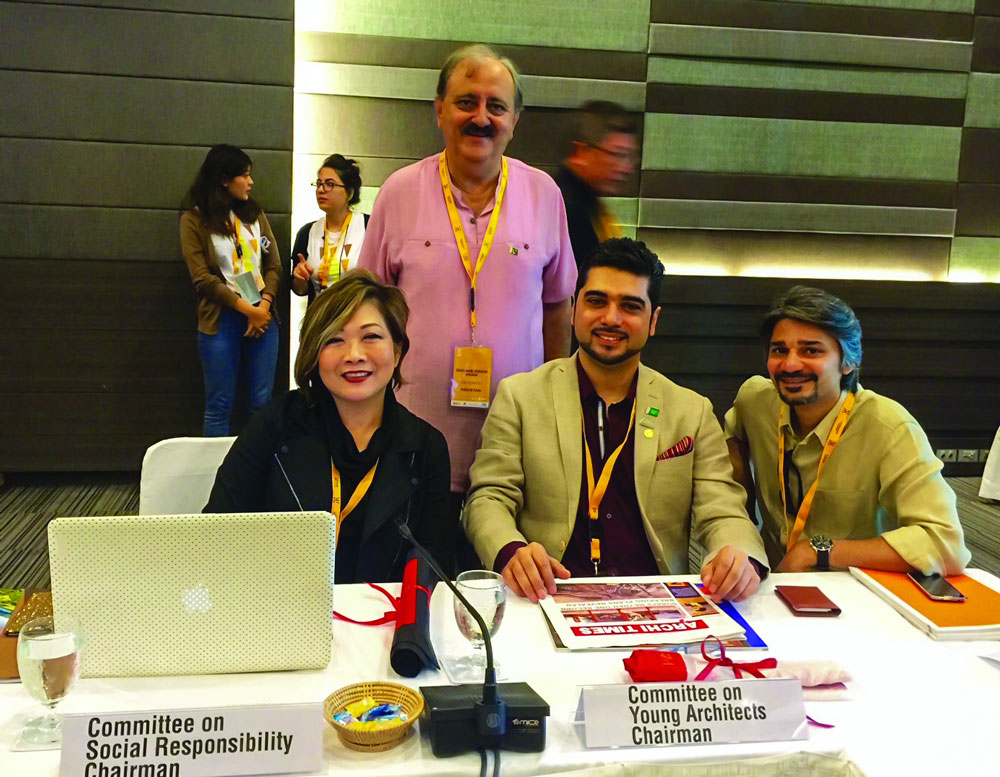
FA: IAP is a founding member of ARCASIA and has been majorly instrumental in uniting national architectural institutes of Asia and formalizing the way forward for the organization. Pakistani architects have headed ARCASIA thrice including chairing various committees in the past and currently the committee of fellowship and young architects is headed by two prominent architects of the country.
Each ARCASIA member country deals with their own issues and looking at the current global economic & environmental challenges, there is a need to study, highlight and share the factors affecting each country. These dialogues have given us a comprehensive overview especially the impact of architecture on sustainability and ARCASIA has been able to share knowledge & experiences on a common platform which is a huge success.
IAP has played an extremely important role in deliberating these ideas, brought together leaders from across the world to Pakistan to discuss, innovate and plan events that have highlighted and offered solutions, a clearer perspective and put the Institute on the map internationally.


