


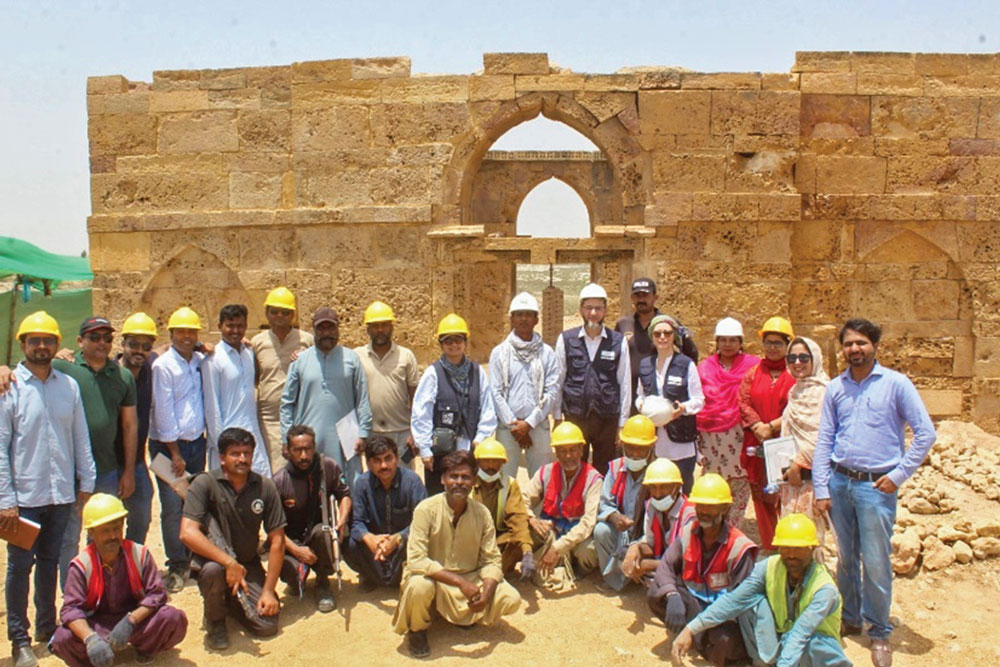
Text by Tania Ali Soomro
“A country without a past has the emptiness of a barren continent-and a city without old buildings is like a man without a memory.” This quote by Graeme Shankland underscores the vital role of heritage buildings and monuments in anchoring us to the deep, intricate layers of our ancestral roots. The site of Makli stands as a living tapestry woven from centuries of history, shaped by numerous dynasties whose architectural legacies still echo across its vast necropolis. Home to monumental tombs of royalty, revered Sufi saints, and distinguished scholars, Makli Necropolis is a profound reflection of Sindh’s spiritual and cultural richness. In 1981, it was rightly inscribed as a UNESCO World Heritage Site, recognized as an “outstanding testament” to the Sindhi civilization spanning from the 14th to the 18th centuries. In response to its current deterioration caused by heavy rains and flash floods, which significantly damaged the monuments at Makli, an “Emergency Conservation of Historic Monuments of Makli, Thatta World Heritage Property” project was launched by UNESCO in collaboration with the Netherlands Funds-in-Trust (NFIT) and the Culture Department of the Government of Sindh. The interdisciplinary and multicultural team included Experts: Dr. Rand Eppich (International expert), Tania Ali Soomro (local conservation expert), Serfraz Jato (Site Manager), Dr. Cristina Menegazzi and Jawad Aziz (UNESCO team), and DG Culture Department.
Under this project, key interventions such as documentation, emergency stabilization measures, and conservation work were carried out, focusing specifically on the Tomb of Shaikh Jiyo and the Unknown Tomb from the Samma period at Makli. One of the key outcomes of the project was a three-day capacity-building workshop held on-site at Makli from May 12 to 14, 2025. This workshop brought together numerous heritage practitioners and site managers from the Culture Department of Sindh, who participated with great enthusiasm.


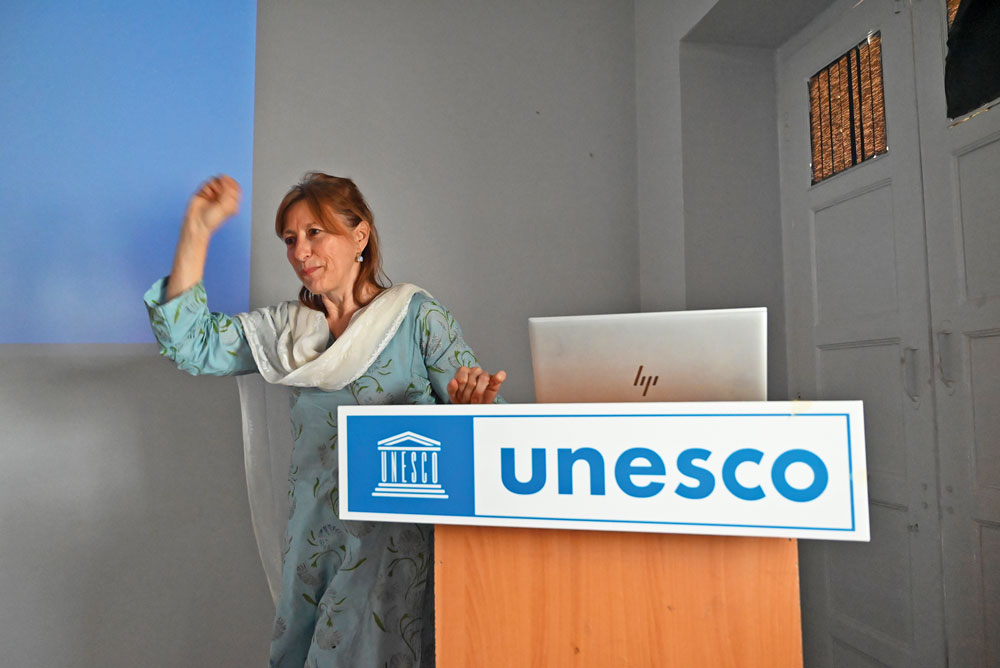
Day 1 of the workshop began with welcome remarks and an introductory session on the World Heritage Convention of 1972, delivered by Mr. Jawad Aziz, National Officer and lead of the Culture Programme for Pakistan at UNESCO. His talk provided insights into the core principles of the Convention, including authenticity, integrity, and credibility, which are essential in evaluating and managing World Heritage Sites. He also led a thought-provoking discussion on the potential typologies of heritage sites in Pakistan, ranging from historic city centers and gardens to cultural landscapes and vernacular settings, that could be considered for inclusion in the tentative list for future World Heritage nominations. The talk was followed by an introduction to the project by Ar. Tania Ali Soomro, the local conservation expert and master trainer for the workshop, alongside Mr. Sarfraz Jatoi, archaeologist and site manager. They presented an overview of the 13 stages involved in the conservation process of the Unknown Tomb of the Samma Dynasty. These stages included the development of a work plan, archival research, condition assessments, detailed documentation, material characterization, and more. Following this, an online presentation by Dr. Rand Eppich, the international conservation architect for the site, was shared. Dr. Eppich elaborated on the complexities, challenges, and methodologies involved in the documentation and conservation process. He emphasized the critical importance of selecting the correct stone material for the restoration of the Unknown tomb. In this case, the original material was identified as a quartz wacke stone type. To ensure authenticity and compatibility, over 4 different quarries were visited, with samples collected and tested in collaboration with the Geological Survey of Pakistan. This rigorous process ultimately led to the identification of the correct stone, underscoring the essential role of material characterization in heritage conservation. The final online session was delivered by Ar. Ayesha Agha Shah, a conservation architect based in Bahrain, who spoke on the topic of “Ensuring Authenticity in Restoration.” She emphasized how the authenticity of conservation work defines the true value and success of restoration efforts, and stressed the importance of adhering to this principle to preserve a monument in its original and genuine state. Her talk also highlighted key principles that support authenticity in restoration practices, including minimum intervention, respect for original materials, reversibility, and the importance of community outreach. These principles, she noted, are essential for maintaining the historical, cultural, and architectural integrity of heritage sites, particularly in contexts like Makli, where the layers of history must be preserved with care and responsibility.
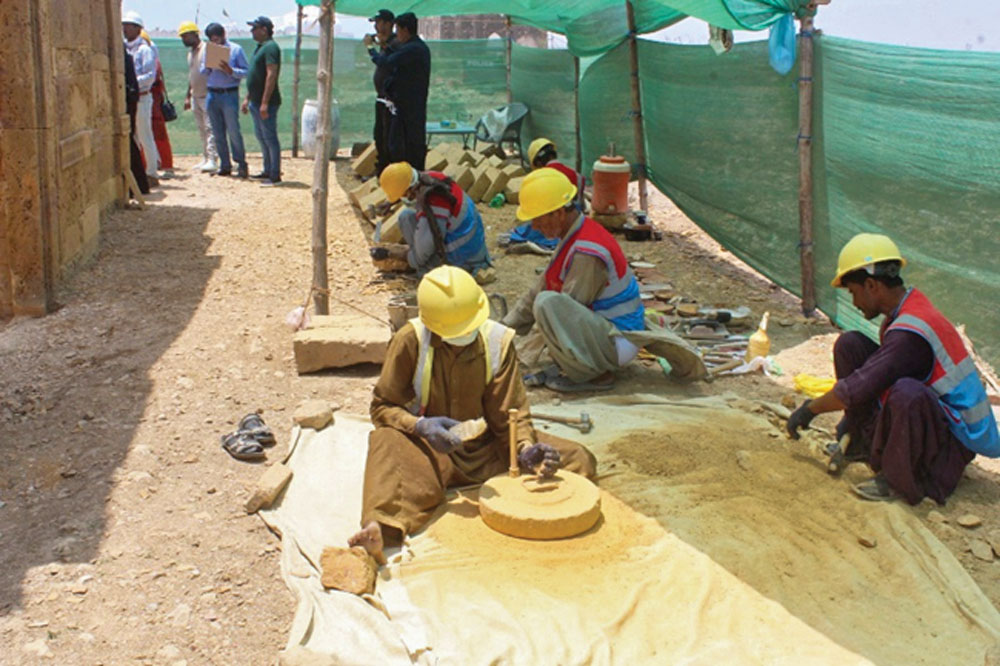


Day 2 began with a presentation and discussion on the challenges faced at Makli during the flash floods of 2022. Mr. Sarfraz Jatoi highlighted several threats to the site, including flooding, excessive rainfall, theft, and, most significantly, water and moisture, which he described as the “biggest enemy” of the Unknown Tomb. Following this, Ar. Tania Ali Soomro delivered a detailed talk on the archival consultation process, as well as the methods used for building analysis and condition assessment. She explained how these foundational steps informed the overall conservation strategy for the site. Following the presentations, participants undertook a field visit to the Unknow Tomb conservation site. During this hands-on session, the 8 types of stone treatments outlined in the intervention proposal were discussed on-site, allowing participants to engage directly with the practical aspects of the conservation work. Additional key topics covered during the field session included: architectural documentation techniques, condition assessment procedures, stone procurement and preparation, including cutting and chiseling, preparation of traditional materials, such as lime and gypsum (chiroli) and the stone lifting and installation techniques. This immersive field experience provided participants with valuable exposure to the real-world challenges and solutions involved in conserving Makli’s historic monuments.

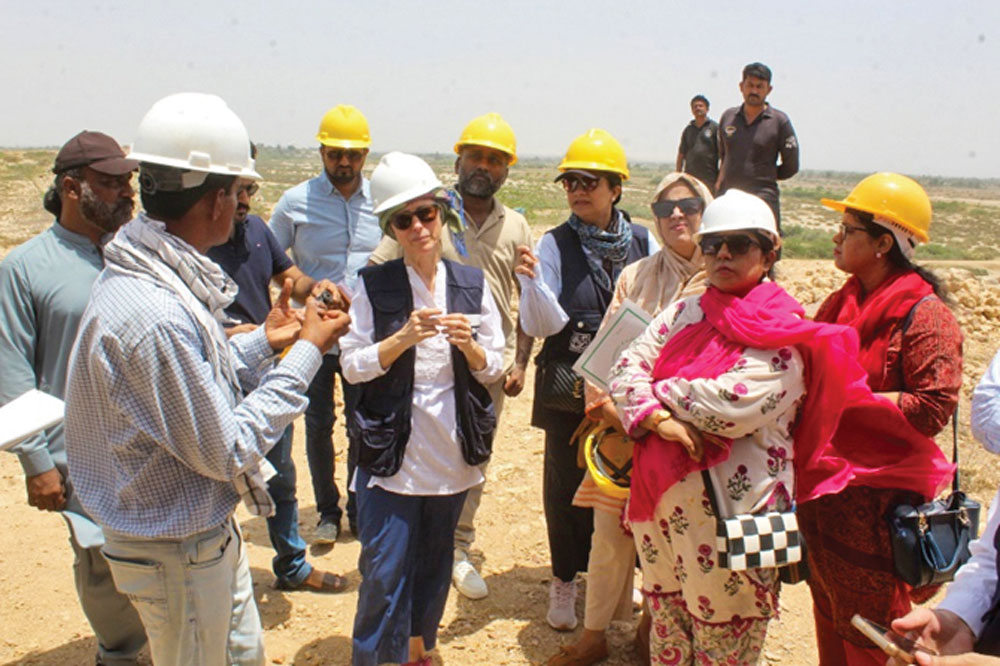
Day 3 and the final day of the workshop began with a talk by Ms Komal on ‘Restoration of Meeran Bai Monument Tiles by using Geopolymer’. The following was the talk by Dr. Cristina Menegazzi, IPL expert, UNESCO Pakistan, and the main trainer of the workshop, presented on conservation ethics with a focus on key international charters that shape conservation philosophy and practice. The session highlighted the Venice Charter (1964), the Nara Document on Authenticity (1994), and the Burra Charter (2013). These foundational texts emphasize critical principles such as authenticity, reversibility, and the approach of minimum intervention. The presenter underscored the importance of a contextually driven conservation approach, advocating that all interventions must respect the cultural, historical, and environmental setting of the monument. She emphasized that ethical conservation is not a one-size-fits-all practice, but rather a thoughtful process informed by the unique significance and conditions of each site.

The workshop concluded with an interactive discussion with all the participants, followed by a formal closing ceremony, which included the distribution of certificates to all participants in recognition of their active engagement and contributions. The certificates were presented by Mr. Abdul Fatah Shaikh, Director General, marking the successful completion of the three-day capacity-building workshop at the Makli World Heritage Site.
Tania Ali Soomro Conservation architect and an Academic at the Architecture Department NED University Karachi


