


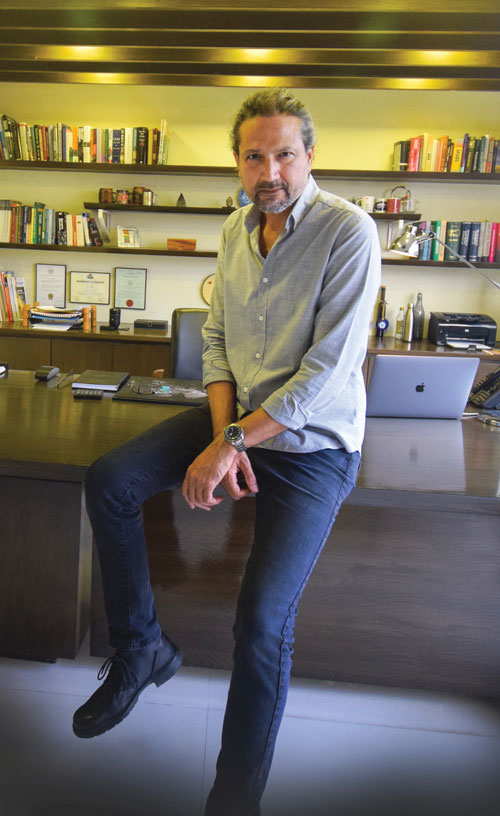
Naveed Zaheer is the principal architect at Engineering Consultants International (Pvt.) Ltd. Widely known as ECIL and formerly known as Engineering Consultant (EC); was founded by Eng. Zaheer Mirza (Late), pioneered the professional concept of Consultancy Services in Pakistan. ECIL is managed by second-generation professionals and is thriving under the leadership of Eng. Khalid Mirza and Ar. Naved Zaheer, along with capable Directors and Professionals who have/are contributing to its organizational growth. This exclusive interview with ARCHITECTURE + INTERIORS (A+I) talks about the architecture journey and other professional-related issues.
Tell us about your education and professional background?
Naved Zaheer (NZ): I completed my Bachelors of Architecture from (DCET) NED University, Pakistan in 1988. Later I pursued my Master’s Degree in Urban Design from the University of Illinois @Urbana- Champaign (1990). I have also done Courses in GIS/RS at Environmental Systems Research Institute, CA, USA (1994) I developed my interest in GIS when I was working on an Urban Design Project at the University of Illinois. I was doing an analysis based on “Fractal Geometry” finding order in the apparent chaos of a city’s growth. We did our maps for that project in Arc Info (now called ArcGIS); the experience intrigued me towards geospatial science. It was rather a progression from Architecture to Urban Planning and into GIS, the only thing that was changing was scale and complexity. Till now I have attended almost 35 international conferences on GIS, Architecture & Planning, Astronomy, Space & Mountaineering: Astronomy /Mountaineering being my passions!
Apart from professional practice, I have also been a visiting faculty member of Architecture and Urban Design, DCET, NED University, Karachi. It was an interesting experience but could not sustain it as it was a demanding undertaking. Though I enjoyed teaching, it demands no less than a full-time commitment. I am also one of the founding members of the Student body of ArcASIA, when I was selected to represent Pakistan in the first Architectural Student Jamboree in KL, Malaysia.
What compelled you to pursue a career in architecture? Any specific experience or person that inspired you to opt for architecture as a profession?
NZ: I did not know a thing about architecture or architects. It was my Instinct for exploration that attracted me to this profession. In the case of architecture & planning, exploration through and in; design, spaces, function, materials, technology, sentient and impending. My other hobbies also gyrate around exploration, such as mountaineering, astronomy, travel, reading, etc. You learn more from all this than what can be imparted in a design studio.

Tell us about your background in ECIL practice?
NZ: Figuratively, I was born in ECIL! It was founded by my late Father Engr Zaheer Mirza who was a prominent figure and a founder of Consulting Engineering Profession in Pakistan. In that respect, ECIL has been the pioneering company in consulting engineering in Pakistan. I joined, ECIL in 1990.
Before that, I had an internship at Architect Minoo Peroshah MISTRY, Karachi, Pakistan. Also had working experience with M/s Abris Limited, Urbana, Illinois, USA. When I joined ECIL, I was taken in as a Junior Architect. My father made sure that I go through the mill as I performed all duties as Jr Architect, helped wrote proposals, prepared presentations (on foam core boards), hand-drawn perspectives, build models, sepia/ammonia prints, cyclostyle reports, and went to see material quarries, showrooms and learn how to fold drawings!
We are slowly building the architecture and planning department at ECIL. It was a challenging job to create a niche in an already successful consulting company with lots of engineers. However, it was a good learning environment as working with the full spectrum of engineering teams and ancillary support services such as the survey department using Remote Sensing and GIS.
What percentage of work is dedicated to engineering, architecture design, and urban planning?
NZ: We are an end-to-end, full-service consulting company. The proportion of our revenue depends on workflows and policy focus in the countries where we operate in.

Working on projects all over the world, what challenges do different locations pose? And how do you tackle them?
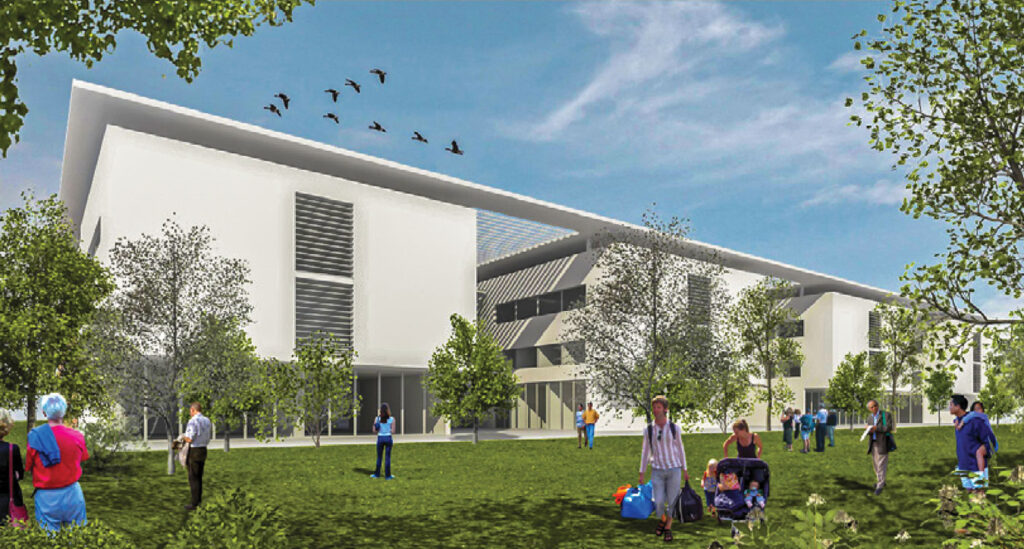
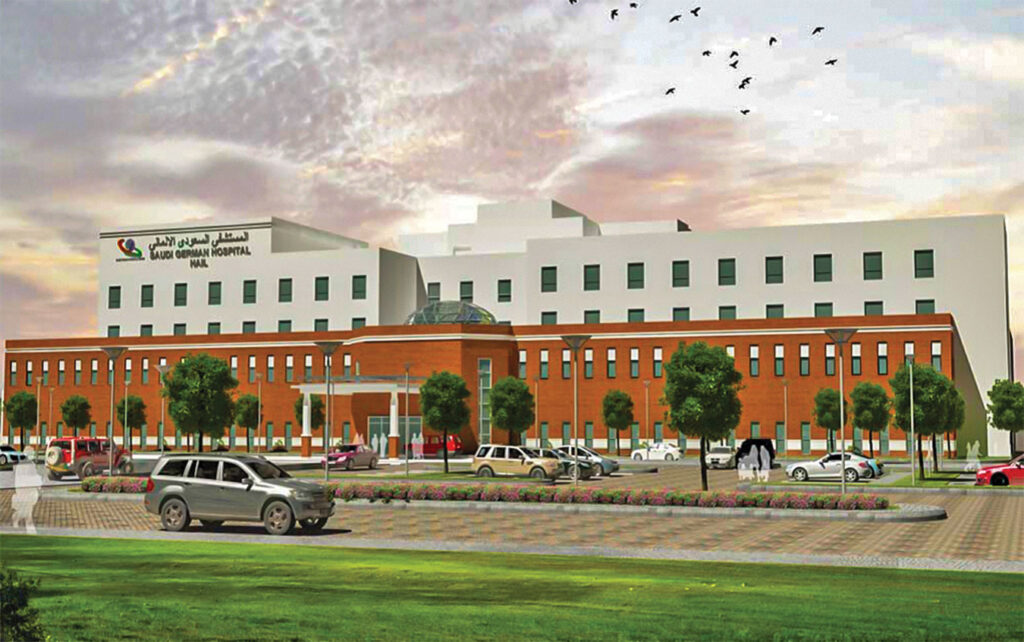
NZ: In the last 62 years, ECIL has worked in 18 different countries, on 3 continents of the world. I was fortunate to personally get involved in work in the USA, Canada, Sweden, Kingdom of Saudi Arabia, U.A.E, Oman, Kazakhstan, Kirgizstan & Afghanistan. The only way you can stretch your boundaries is by corporatization, inculcating focus, ethical professionalism, and honesty of purpose. Saudi German Hospital was quite a challenging project of that time as it involved multiple disciplines including state of art technology deployment and integration in design. It was a modular hospital building that was repeated at several different locations with varied facade treatments to fit in the context.
Your firm has prepared the Karachi master plan 2020; tell us about your experience working on it.
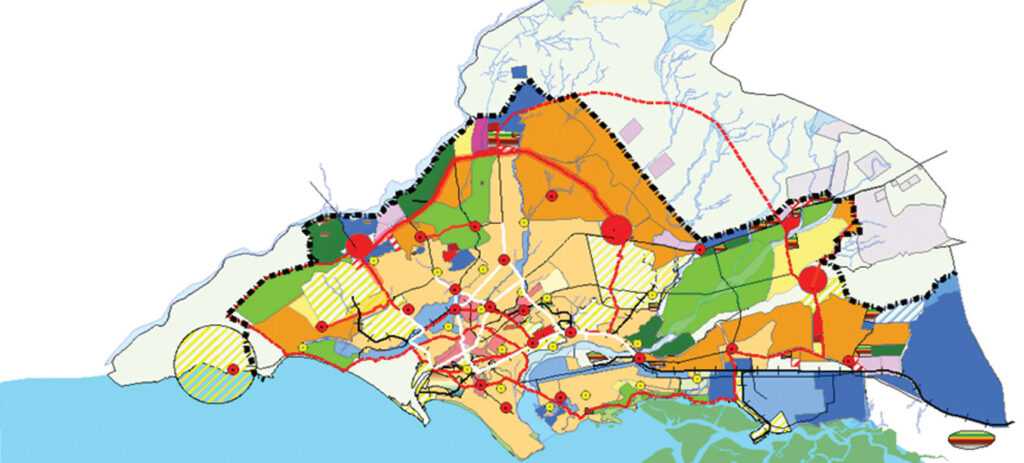
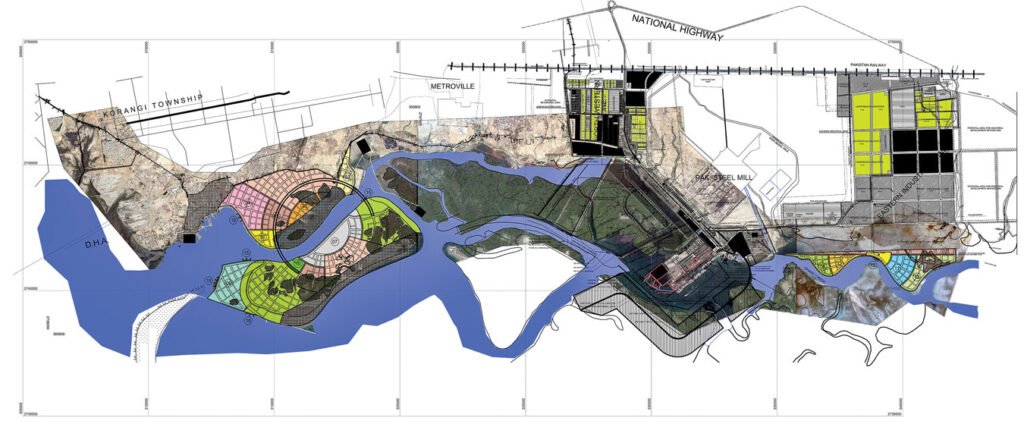
NZ: Leading a multidisciplinary national and international team for Karachi Strategic Development Plan (KSDP) 2020 was a great experience. To tackle multidimensional problems and develop strategies to overcome a city as complex as Karachi, which is now the 3rd largest city in the world. It was a challenge, harmonizing strategies through a maze of cross-cutting, sectorial implementation, with divergent interests.
KSDP presents a multidimensional and cross-sectoral implementation plan. It is pertinent to underline that one has to strive to remain at the cutting-edge of technology at the corporate level to undertake such a project. We used state-of-the-art technology available at that time for geospatial analysis.
Since we completed the assignment of KSDP-2020, while it has completed its tenure, it needs to be reviewed in threadbare. We proposed it to be a living document, providing a framework. That is why we chose it to be called a “Strategic Plan” and not a “Master Plan”. Now this Strategic Plan is to be revised based on new necessities and requirements of the Mega-City to confront challenges driven by the “Disruptive Technologies” encompassing explosion of knowledge, the exponential surge in computing power, application of Machine Learning, Autonomous Vehicles, Robotics, Drones, Sensors, IoT, the Internet, and hence the application of Artificial Intelligence in developing Smart Cities. This is expected to impact the daily lives of the citizens for which city managers and planners must adapt to the tune of future requirements by “leap-frogging” to conform to the fast-changing needs and challenges of the 4th Industrial Revolution, now unfurling in front of our eyes. The coming era will require city managers and decision-makers to realign their strategic plans to enable the city to move into 21st Century Infrastructure requirements and management.
We have been keeping pace with technological advancement in many, if not all, the technologies that are going to impact the future of living in cities like Karachi. Although delivering this vision in Karachi presents a huge challenge, however, we have gained experience and capacity to integrate solutions and a practical vision to update the City to 21st Century infrastructure and provide a solution to maintain and sustain it effectively. We have been delivering components of a similar future vision internationally to our clients. It is rather ironic that the experience that was gained in KSDP 2020 is been taken advantage of by international clients!

What is your point of view on the way Karachi city is urbanizing and expanding excessively as a metropolitan city?
NZ: The solution to Karachi’s problems rests with its citizens and not planners. I am of the view that people are smart and do differentiate between their “wants” and “needs”. These needs are to be evolved and managed not imposed on them by city planners.
Now the GIS technology can provide a framework to democratize city planning on an ongoing basis. “Master Plans” are the terms of the Past. That is why we had deliberately used the name “Karachi Strategic Development Plan 2020”, instead of calling it a Master Plan. It provides a flexible framework, that can be adjusted to the changing social, political, economic, and technological needs. Machine Learning can provide future modeling and scenario analysis to form a basis for Informed Decision Making and Common Operating Pictures for all Departments. A Futuristic megacity is smart, green, sustainable, organic, and enjoyable to live on a human scale (connected by, but not designed on a vehicular scale).
While working on the master plan 2020 did you predict the current urbanization problems Karachi city will be facing? What remedial measures should be taken to control it.
NZ: Democratizing the planning process, and using technology, will create ownership. We must be cognizant of the fact that history, legacy, and resulting ownership create great cities. A Parisian is a Parisian first then a Frenchman. A Londoner is Londoner first than an Englishman, the same is the case of any great city. Civic engagement – Our problem lies with the lack of ownership; the majority have wrapped themselves up in their comfort zones without being bothered about their surroundings. Karachi has lost its essence due to this prevailing scenario. There are other political tangents to it as well but this I think is the major cause of the current problems the city is facing. Therefore, the roots, traditions, and culture of Karachi should not only be preserved but also celebrated. The second order of business is to leap-frog the infrastructure to cover the lost time.
Entering into a new decade of 2020 where do you think architecture as a profession in Pakistan is progressing? Are we doing enough to make our place in the international market?
NZ: Architecture has come a long way from where we started. Young architects have good institutions, to get trained in. Technology and availability of new materials to experiment and creative expression. The masses are now cognizant of the value that good architecture brings to the table. However, we are not geared up to go into an international market, for various reasons. Principally, institutional impediments and lack of success stories, that has held us back also we need some training in work ethics.

Considering current issues such as climate change and sustainability, how do you see the traditional role of the architect changing?
NZ: Architect’s role will never change, it has and will always be the manifestation of human history in 4D. Now we have better tools to be cognizant of our surroundings and how to be in harmony with it. Architectural history unveils how life was made comfortable in a sustainable way in thick insulated walls, through the use of “Mashrabiya” for shades, by use of wind catchers in hot and arid regions, etc., and the human ingenuity to make all this into an artistic expression creating its own temporal vernacular.
Architecture has been a hallmark emblem of human evolution. We can see the progress of human creativity thru the living remnants of architecture in tracing the progress sustained by human history.
Only for the last couple of decades in human history that technology change surpassed the adoption rate of human capacity. I reckon the appreciation for sustainability is now well settled among the new generation. It is clear to us that we have only one planet. The cost of sustainably managing this planet is far more feasible than terraforming a new exoplanet in a circumstellar habitable zone elsewhere. We are still a Type-1 civilization!
Is there any dream project or brief you would still love to take on in Pakistan?
NZ: My dream project is not in Pakistan or this world! What I would like to design will be an outpost on another planet! That is why all the sets and models in Si-Fi movies really fascinate me and I look at them critically. By extension, I am very interested in Naval Architecture and sailboat design. It is an embodiment of the most efficient space utilization for a self-sustaining, autonomous living out in the sea. On a professional/practical side, any project that presents a challenge attracts my interest.
Can you tell us a bit about the projects you’re currently working on?
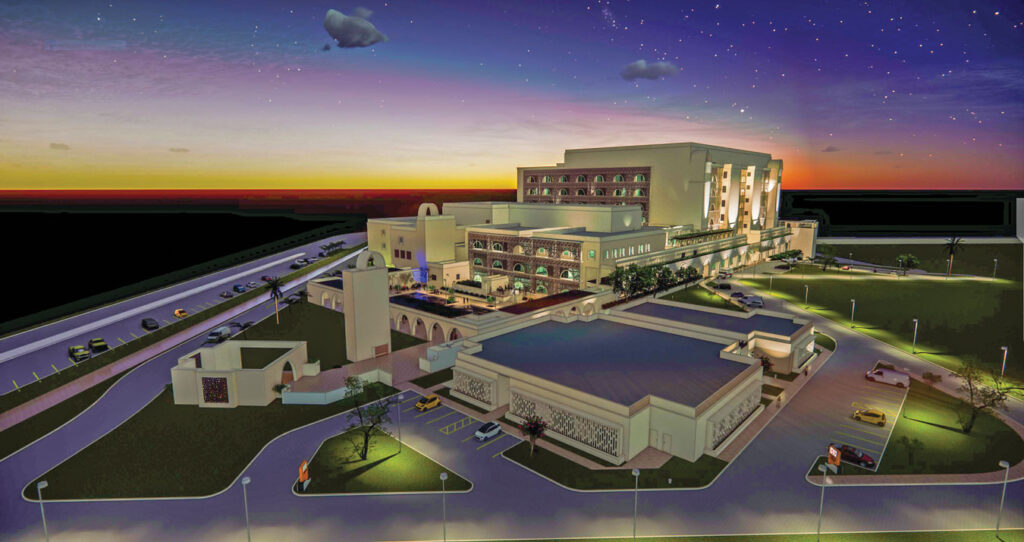
NZ: As mentioned earlier, we are an end-to-end multi-disciplinary organization so the range of our services extends from Asset Management to large infrastructure projects. However, specifically in Architecture, we are engaged in numerous, primary and higher education institutions. Although we have done several airports, hotels, housing & planning our specialty is health care. A notable project that we are doing at present is Shaukat Khanum Memorial Hospital and Research Center, Karachi.
Do you incorporate sustainability in your projects? How?
NZ: Learning from architectural history, contemporary review as to what is going on around the world, and looking out at the shape of things to come; are my basic guidelines to derive design strategies.
Do your views on the importance of green buildings and what threats are we facing or will face in the future if we don’t opt for green building strategies?
NZ: Buildings are the third biggest contributor to greenhouse gases. I think we need to define what we mean by green buildings. We cannot use imported materials and keep building with cement concrete and carelessly term them “green” without considering its embodied energy, just to give one example. There are various models of developing green strategies such as Water recycling, efficient faucets, building envelopes, shading methods, roof gardens, hydroponic, alternate means of energy generation such as solar, wind, geothermal – it’s a long list and we have a long way to go. The journey starts with small steps by all, architects, clients, and users and I believe and hope that we are on our way.
Do you find limitations in practicing architecture in Pakistan? What can be done to eliminate these barriers?
NZ: There are lots of opportunities in Pakistan, and the profession is growing. The biggest impediment, from my vantage point, is the barriers to institutionalizing the profession and business of Architecture. Something that can last beyond an individual. We don’t find such setups in our context not there is no inclination to achieve it.
Look at the companies that are 100s of years old. We can take an example of one of the biggest multi-disciplinary Architecture / Engineering companies, AECOM, it trades on New York Stock Exchange, with 87,000 employees and a 2020 revenue of US$ 13 Billion! This is the potential of corporatization. We just do not dream big, nor do we look at the bigger picture on a global scale. Export of services is the biggest chunk in any developed or developing country.
If we are serious about providing jobs to Young Urban Professionals, architects included, institutionalized consulting companies and services businesses can provide the largest potential employment in the international market. The technology and resources are available, but the institutional arrangements are stifling.
To this end, Pakistan loses at three levels. First, we subsidize the professional education in the public sector (at least it used to be that when I was studying), then we lose those professionals to foreign market seeking jobs, and lastly, we appoint foreign consulting companies because of their institutional strength and import the same student who we could have provided the opportunity in Pakistan. We have not created any brand nor are we poised towards it. If we keep providing “raw material”, we will remain at the bottom of the food chain.
Your views regarding the educational side of architecture. Highlight the shortcomings in our education system that should be worked on to formulate upcoming architects.
NZ: Practical education is important for students; as it trains them to head up in the practical field. Internships should be made compulsory before graduation and students should be encouraged and guided to seek opportunities not only in Pakistan but to forge relationships abroad such as student exchange programs. Students must go on education tours locally and internationally. Professionals must spend time with senior-level students. Professional ethics must be a mandatory course.
We are currently part of the fourth industrial revolution. Do you think we are upgrading as a society accordingly?
NZ: From 83 cities in 1950 on the planet, whose population was more than one million has changed to 468 cities in 2007, Karachi is one such city, rather 3rd in rank from a population standpoint, poses environmental challenges in post Carbon shared economies. This creates challenges as well as opportunities. We have the opportunity to leapfrog into the 4th Industrial Revolution infrastructure. We generally think that these are the concepts that are valid for a developed country – ready or not OR like or not, it is coming, and we must brace for impact. It will be a whole new paradigm shift.
What is your advice for the young architects?
NZ: Education does not end in school – spread your horizon to different fields, see the “dots” and learn to connect them. Find purpose in life and learn to take responsibility. Technology will lead the way in the future, so acquire and use it for a meaningful purpose. Travel, witness, and learn about new cultures and people. Network. Find Mentor. Express your thoughts, no matter how irrational it seems. Fix something, even something as trivial as fixing your room. Believe in yourself. Take things seriously and virtuously. If you commit to doing something – Do it right OR don’t do it at all.


