


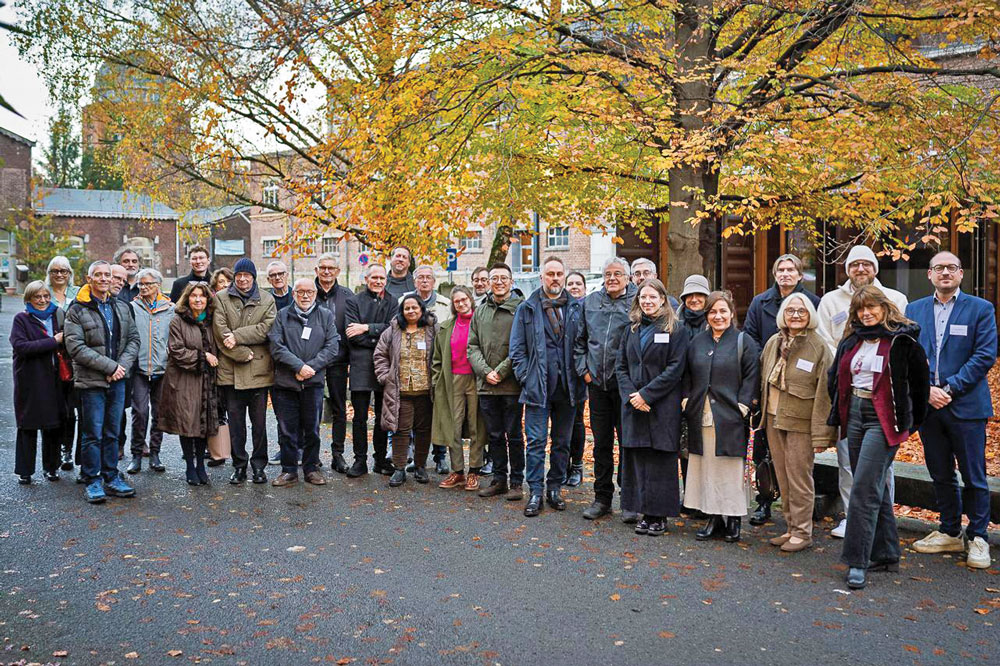
Reported & Photos by: Ayesha Agha Shah
Our 26th TheoPhilos Conference took place in Liège on 20-21 November 2025, hosted by the Faculty of Architecture and Planning, University of Liège, and excellently organised by Prof. Claudine Houbart. The conference featured around 20 papers, with 40 colleagues attending in person and many others joining online. Videos of the sessions will be made available, along with the conference programme and abstracts.
This year’s conference centred on three core questions: What are the principal achievements of ICOMOS in the field of theory and philosophy?; What problems have emerged in the formulation, dissemination, and interpretation of common principles and concepts?; and What are the main theoretical and philosophical challenges that heritage is facing today? Participants from 34 countries explored these questions through keynote lectures, paper presentations, and panel discussions, offering diverse perspectives on how cultural, social, and environmental shifts are reshaping conservation theory and practice.
The first question explored ICOMOS’s principal achievements, revisiting early charters and doctrinal texts. Presenters highlighted how foundational principles have guided heritage practice globally, while also identifying the need for renewal, clarity, and inclusivity in light of evolving challenges.
The second question focused on problems in the formulation, dissemination, and interpretation of common principles and concepts. Discussions emphasised the ethical dimensions of conservation, including climate vulnerability, postcolonial legacies, and tourism-driven pressures, showing how global disparities influence heritage practice.
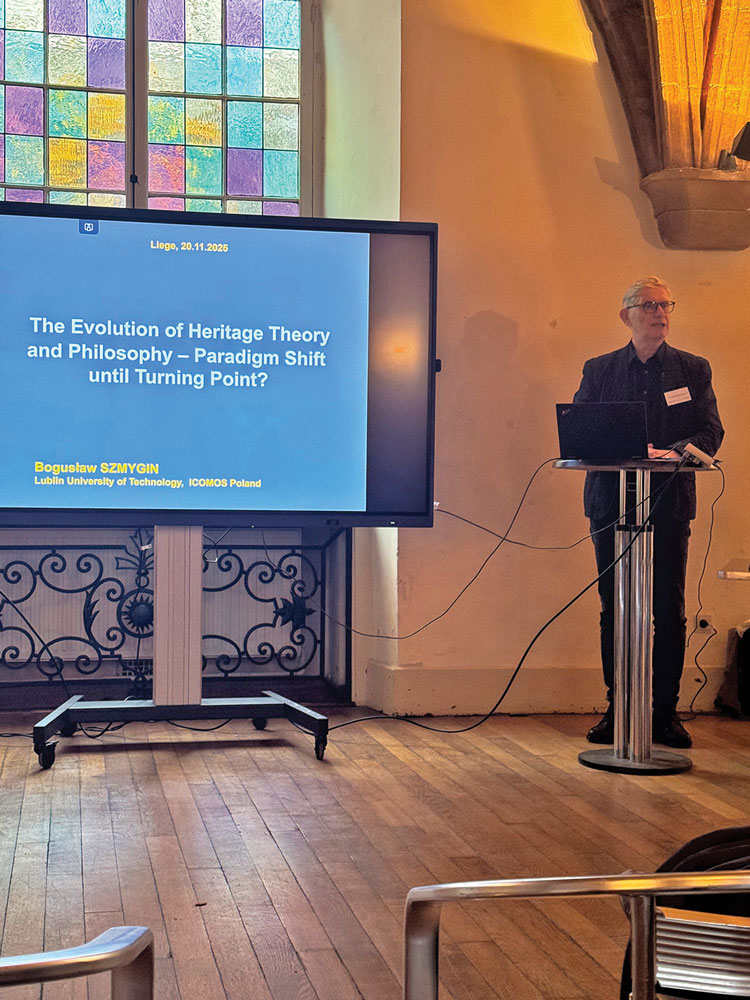
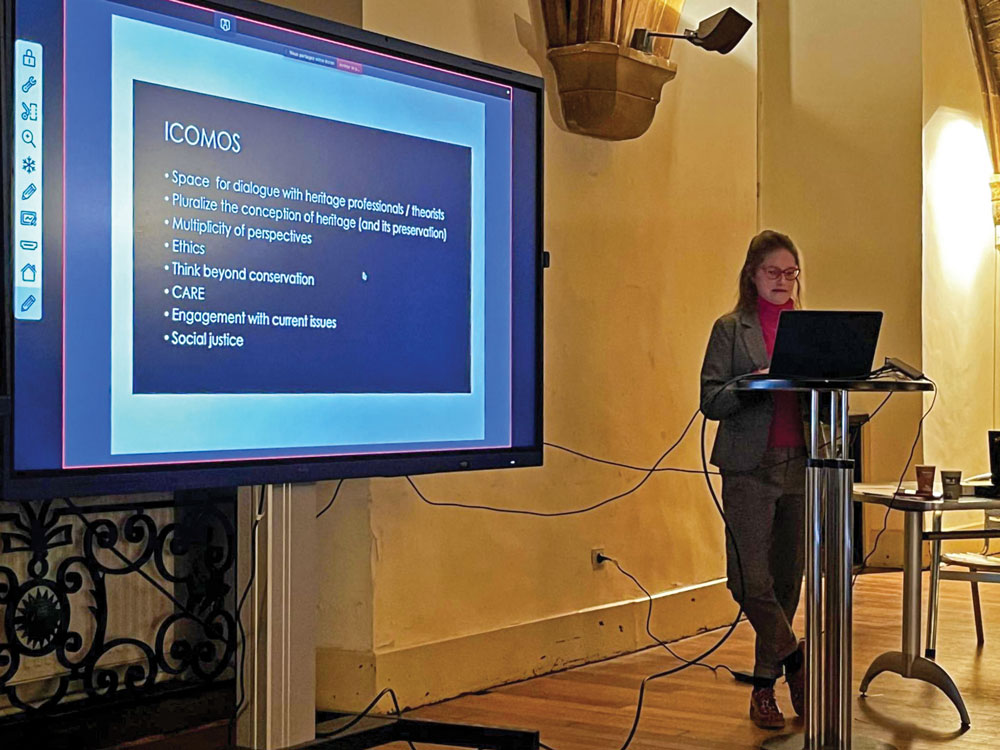
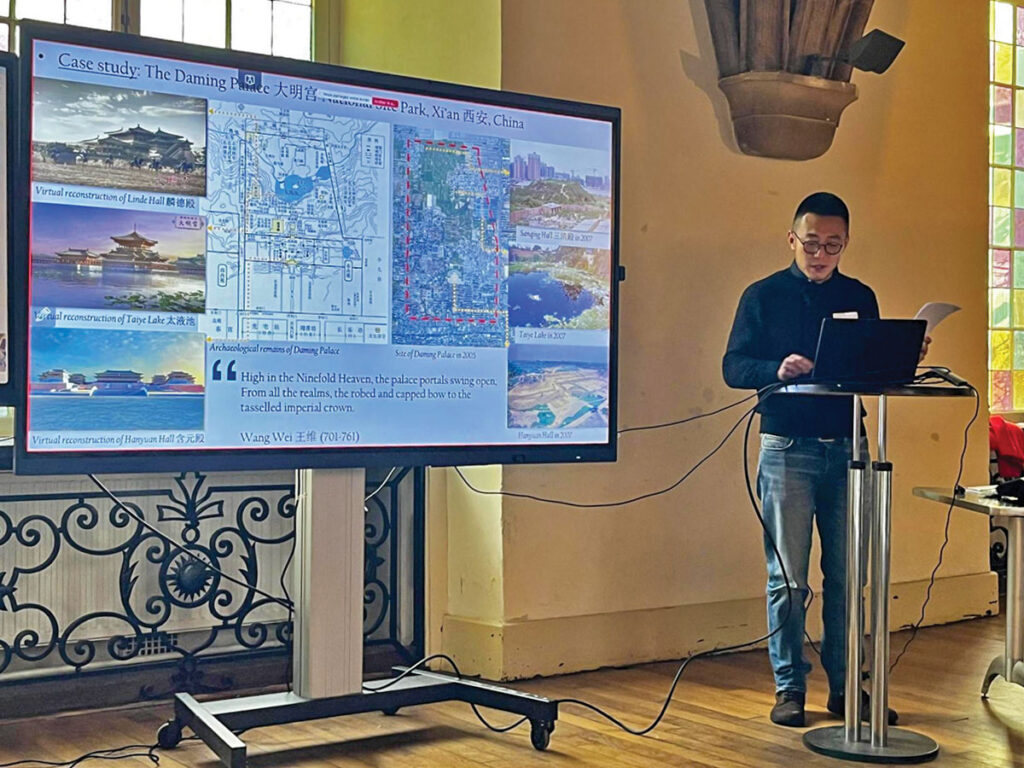

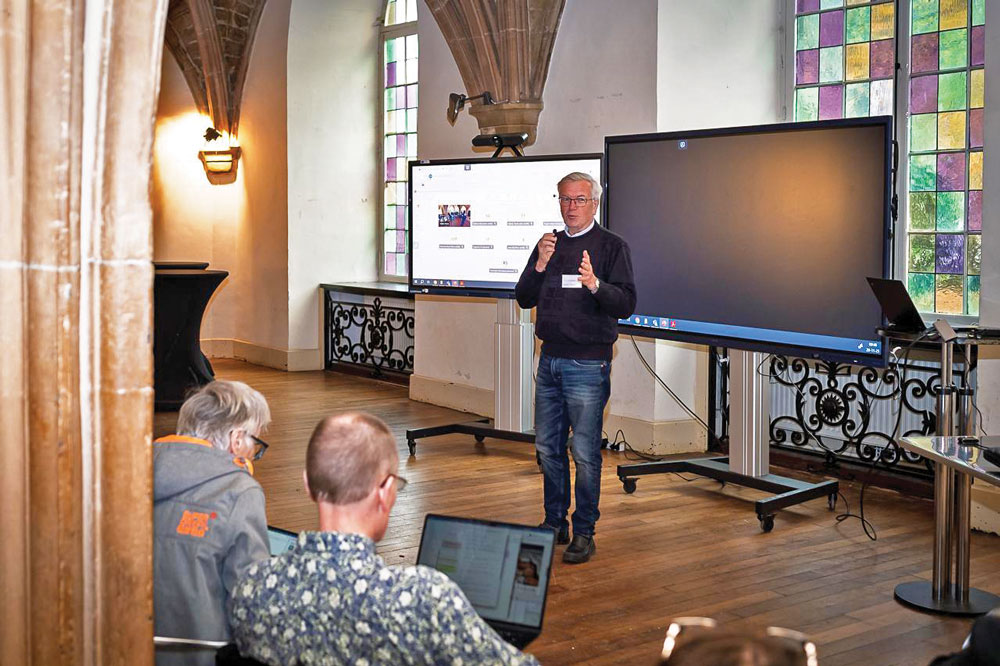
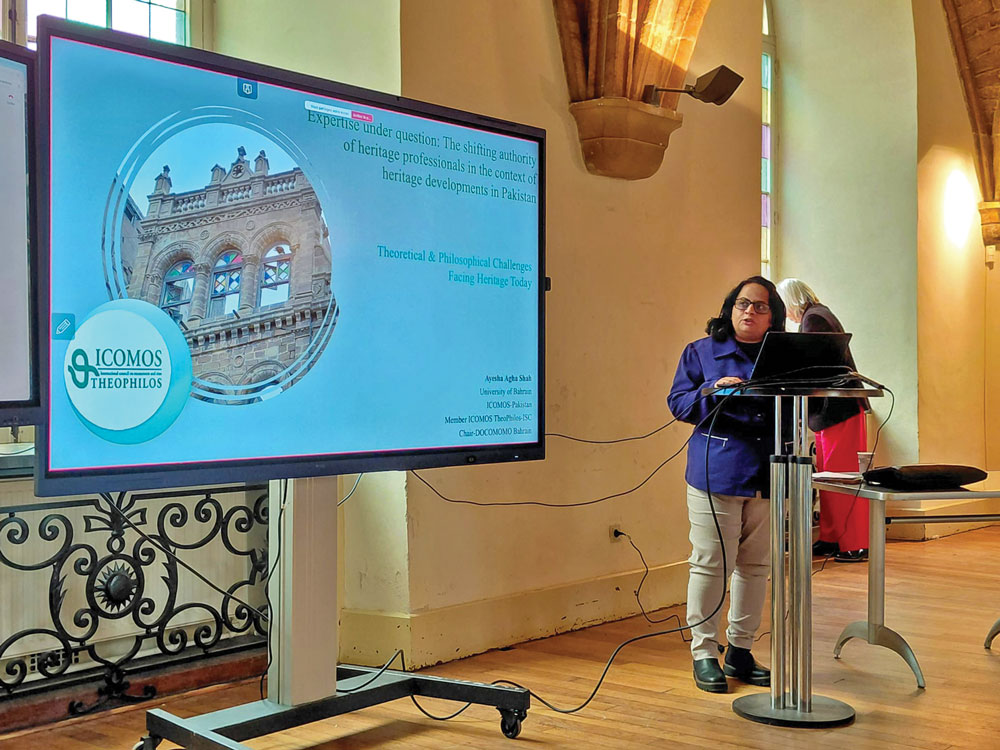


The third question addressed contemporary theoretical and philosophical challenges. Speakers explored complex forces shaping modern conservation, technological interventions, reconstruction debates, financial pressures, and shifting cultural identities. Contributions from Europe, China, and the Philippines illustrated the multiplicity of approaches adopted worldwide. My own paper, Expertise Under Question: The Shifting Authority of Heritage Professionals in the Context of Heritage Developments in Pakistan, contributed by analysing how market-driven development reshapes professional authority and decision-making in heritage conservation.
Alongside presentations, the conference featured a roundtable on the current state of conservation and the place of ICOMOS, with colleagues from four other heritage organisations: Julie Deschepper (Association of Critical Heritage Studies), Susan Macdonald (Getty Conservation Institute), Valérie Magar (ICCROM), and Alexandra Warr (Historic England).

A particularly significant component was the workshop on the ADCOM review of the Doctrinal Text Adoption Process (Articles 8-11 of the Rules of Procedure), aimed at ensuring that future adopted texts are of high quality, effective, and enduringly relevant. Committee members were joined virtually by Mariana Pinto Leitao Pereira and Brandi Hall-Crossgrove, who provided an excellent introduction to the proposals. Jean-Louis Luxen appreciated the work done by ADCOM and contributed insights on the historical background, purpose, and significance of such documents. The workshop addressed clarity, linguistic inclusivity, and global representation, as well as proposed changes to streamline categories and the adoption process, marking an important step in strengthening TheoPhilos’s engagement with ICOMOS central structures.
As part of the programme, an optional additional day on Wednesday included a visit to the University of Leuven archive, which holds the papers of Raymond Lemaire, including materials related to the drafting and attempted revision of the Venice Charter, followed by a tour of the Grand Beguinage, a project Lemaire was refurbishing at the time of the Venice Charter and the creation of ICOMOS. On Saturday morning, participants enjoyed a walking tour of the historic centre of Liège, visiting major monuments and highlighting the city’s rich heritage.
The conference was an inspiring and intellectually enriching event, showcasing the global relevance of TheoPhilos and the importance of theoretical reflection in heritage practice. Congratulations to Prof. Claudine Houbart and her team for excellent organisation, and sincere thanks to the Faculty of Architecture, University of Liège for their support throughout the event.


