


Ar. Maryum Haya Murtaza
Many of us understand city making as a heterogeneous process involving land divisions, infrastructure development and the resulting hard and soft landscapes. Likewise, Lahore has precedents of an immense history and major transformations. I, however, have this appetite that at any point in time, city needs some consistent elements to bind and regulate the sense of order and belonging. In the context of Lahore, the potentials of the Lahore Canal need attention, I often dream.
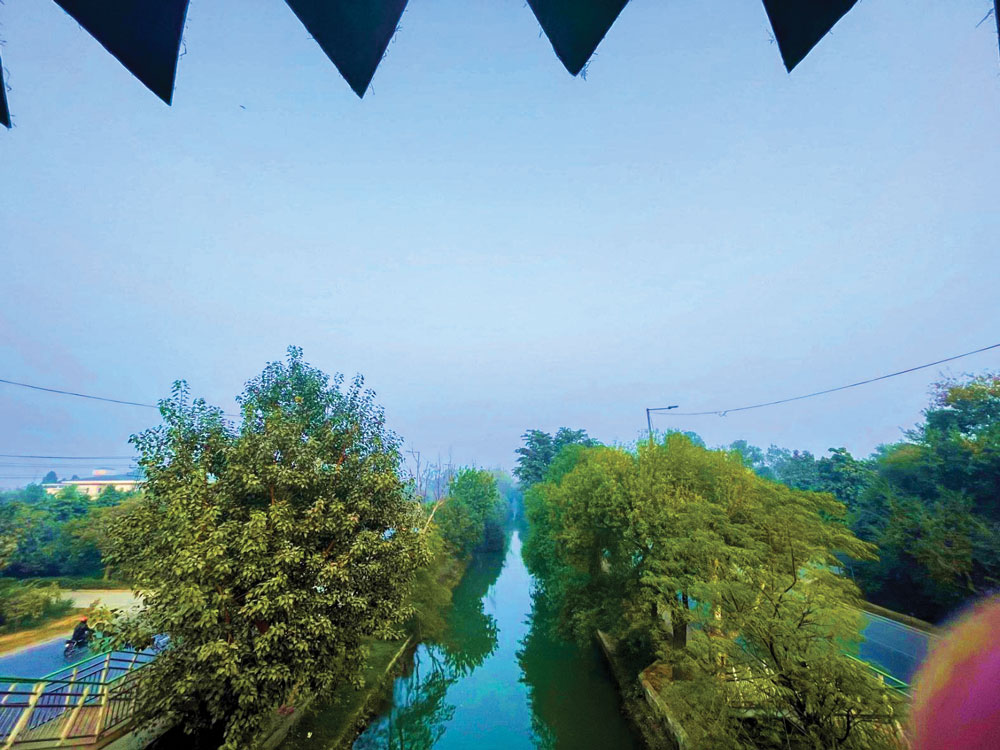
For Lahoris of my age, who have seen the Lahore Canal changing as we moved from our teenage to twenties and from schools to colleges and universities, for some enigmatic reasons, it embraces history and ecology, and even consciousness of belonging, impression of serenity, and manifestation of optimism. It was always a pleasure to take Canal route for the scenic quality it used to hold. Old trees with their twigs shadowing the road, strong roots visibly flowing through water, the blowing cool breeze, colors of spring, crispness of leaves, chirping of different species of birds were always a delight. That’s how I remember the Lahore Canal.
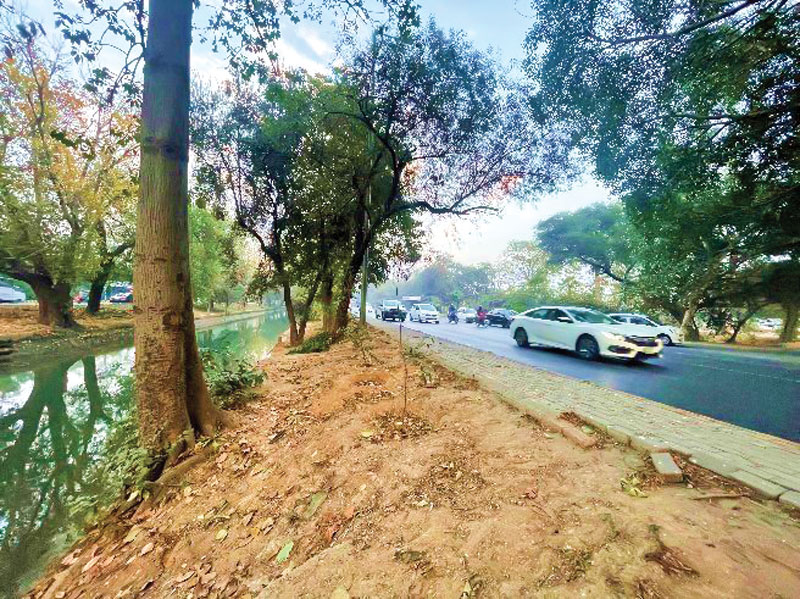
The urge to know more about it led me to its origin that dates to Mughal Era when the very first canal to be built was “Shahi Nalla” by Emperor Jahangir (1569-1627). It was built for irrigation purposes for the Shalimar Gardens. Throughout the time, it has energized the city with its aesthetics and ecological importance. It still irrigates Lahore flowing through east to the southwest of the city and its suburbs. In addition, it is a center of linear green belts and popular recreational destination spots and is surrounded by roads on either side.
A cursory overview of Lahore’s history informs that the urban structure formation of the city also dates to Mughal Era (1526-1857) particularly 16th and 17th century when the wall around the historic city was constructed and many gardens were made. In 1900, the city experienced new settlement in southeast. It was the cantonment area established during the British Era (1858-1947). By 1925, the area between the two segregated settlements was also urbanized. The city tripled its size along with introduction of new infrastructure. Urbanization further speeded up during 1970s and 1980s and population exploded to 2 million. The urban formation from 1994 to 2010 shows development of several small settlements resulting in massive and complex urbanization all around the city. Consequently, increase in automobiles and traffic growth resulted in frequent traffic congestions. To deal with the situation, major roads of the city were upgraded. It included construction of 4 lanes Wahgha Road, dualization of Lahore Ferozepur Road, widening from Jallo More to River Ravi, widening of Sui-e-Asil to Raiwind Road and many more.
The widening of the roads had consequences as well. The Lahore Canal Road was upgraded to a 6-way signal free traffic corridor and to the dismay of all like me who have sentimental musings with the Canal, it compromised its beauty and potential value for Lahore. High speed roads made it impervious for pedestrians, flinging away all its aesthetics and nature. Today, traffic dominates what could be the most environmentally effective components of the city having historic and cultural significance.
It is the need of the time to reimagine the Lahore Canal as an ‘Open Public Space’ with the historic traits of arts, culture, and creativity, it holds. It deserves a strategic rehabilitation, I often dream.
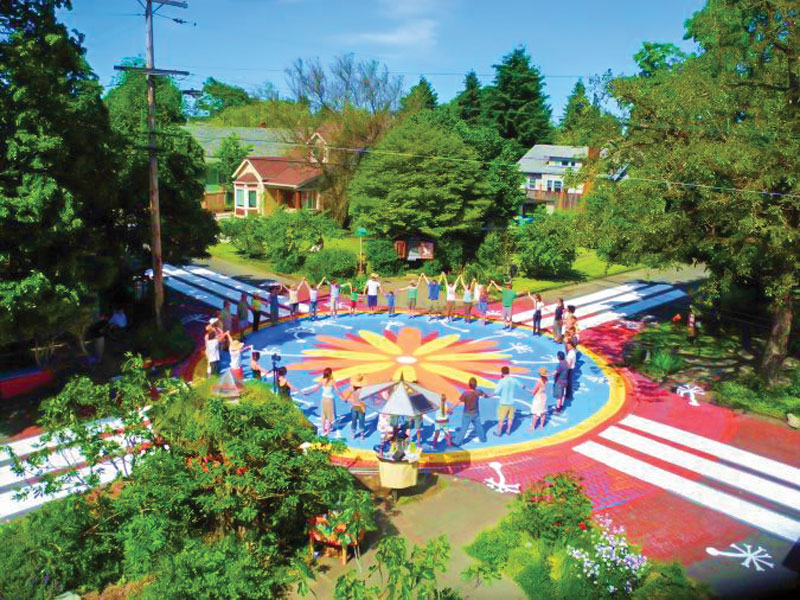
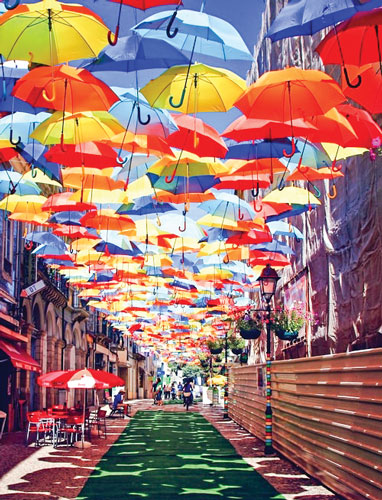
From a policy perspective, a public space is a complex system that can be refined with short term improvements over a period. Some examples for short time accomplishments can be seating, public art, pedestrian havens and striping of crosswalks. We can surely find cases elsewhere; Umbrella Sky Project (Portugal), Think Micro (Izmir, Turkey), Jewel of Brunswick (Melbourne, Australia) and Intersection Repair (Portland, Oregon) are some examples promoting positive and visible changes in public spaces; however, by nature, good public spaces that respond to the local needs, the opinions and the ongoing changes of the community require attention and sensitivity to the context. There should be a method to engage the community, which is the user, in the process of creating a place. To imagine such a future, work needs to be done on its accessibility and strong linkages to the city. It should provide maximum proximity to its well-connected adjoining areas promoting walkability and cycling. For this purpose, if required, traffic should be decentralized to new traffic corridors to ease the pedestrian access.

Keeping in view its ancient origins, I imagine a future where the Lahore Canal and its green belts is declared a park. It is made safe, sit-able, and attractive. To get to such a future, there is a need to initiate small-scale projects to engage public, such as bicycle related initiatives, water related, etc. Public/ street furniture holds equal importance in such rejuvenation. Integrated seating, playing and water elements, flower bedding, lighting, and trash cans should be incorporated to facilitate public. Such interactive, clean, and well-designed public spaces encourage its visitors to engage pensively. Total pedestrianization of the Lahore Canal on special occasions can also be considered.
As a result, a deserving identity and legibility of the Lahore Canal will emerge. It will be a whole that will be greater than the sum of its parts. It will be transformed into a well-connected, multi-use public space with enormous activities to engage the community. This rejuvenation will give it a timeless impulse, I often dream.


