


Write up: EAROPH Pakistan Secretariat | Photo Credits: DAP -DUET
A critical dialogue on sustainable water management and urban resilience took center stage at Dawood University of Engineering and Technology (DUET) as EAROPH Pakistan, in collaboration with DUET’s Department of Architecture and Planning, hosted a seminal event: “Water Management in Developing Countries.” This focused gathering convened leading architects, urban planners, academics, and students from across the nation, underscoring the built environment professions’ pivotal role in addressing one of Pakistan’s most pressing challenges.
The event commenced with a welcoming address by Prof. Dr. Yasira Naeem Pasha, Dean of the Faculty of Civil Engineering and Architecture & Planning, who underscored the imperative for a multi-faceted dialogue to forge enduring connections between key stakeholders on such vital issues. Her remarks set the tone for an interdisciplinary approach, recognizing that water challenges transcend traditional disciplinary boundaries.
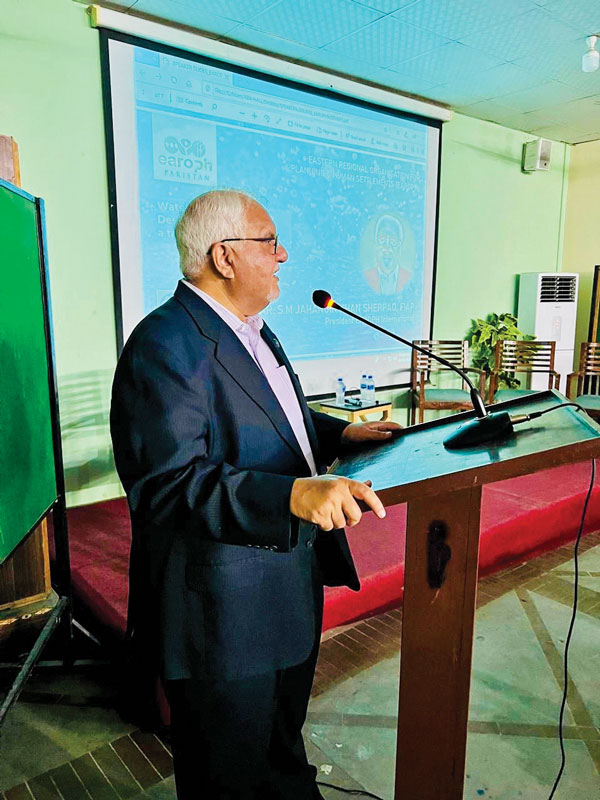

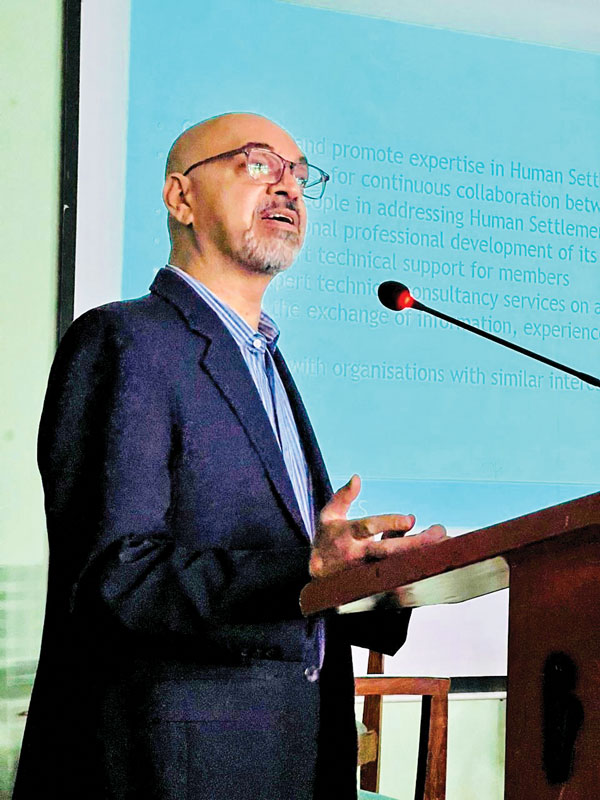
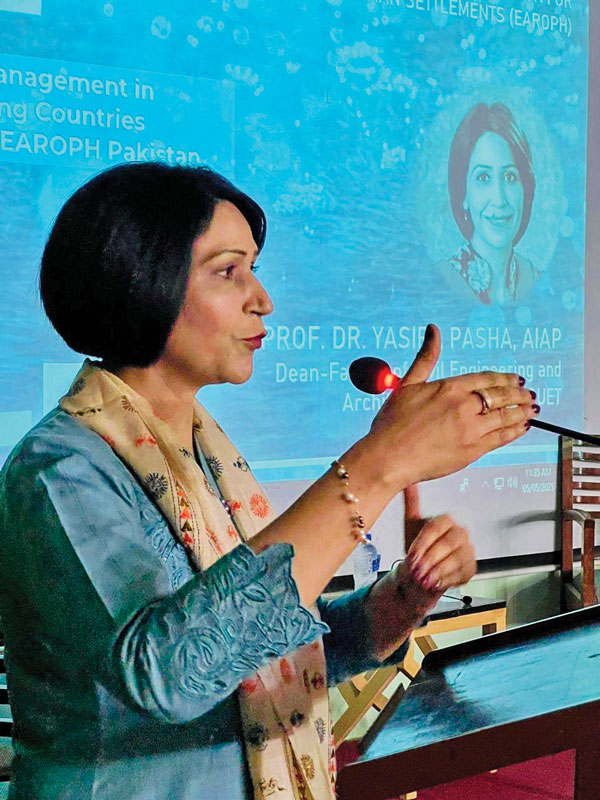

Ar. Ramiz Baig, President of EAROPH Pakistan, engaged the audience by emphasizing that while water scarcity has long been a critical concern, current geopolitical dynamics have propelled it to the forefront of national discourse. He urged attendees to leverage the EAROPH platform for collaborative endeavors and mutual interest. Ar. Fawad Suhail Abbasi, President of the Institute of Architects Pakistan (IAP), lauded EAROPH Pakistan’s remarkable progress in a short span and encouraged continued collaboration with educational institutions, reiterating IAP’s steadfast support, especially with the international leadership of Ar. Jahangir Khan Sherpao.
Ar. Jahangir Khan Sherpao, President of EAROPH International, provided an insightful overview of EAROPH’s global initiatives and the historical context of the organization. His address highlighted the universal significance of the seminar’s topic, connecting local challenges to international best practices.
The core of the event lay in the compelling keynote presentations by renowned water and environmental activist Tofiq Pasha Mooraj and distinguished urban planner and academic Farhan Anwar. Both speakers offered profound insights into the current water crisis, the complexities of urban planning challenges, and the urgent need for integrated management strategies.
Tofiq Pasha Mooraj delivered a stark message, urging the future generation to proactively address Karachi’s severe water crisis, which has plagued the city for over 17 years. He detailed the critical gap between supply and demand, exacerbated by dilapidated infrastructure, widespread water theft by a “tanker mafia,” and rampant contamination, rendering water unsafe for consumption. Mooraj unequivocally pointed to institutional apathy and corruption as key drivers of this protracted crisis.
Following him, Farhan Anwar dissected Karachi’s urban water management landscape, primarily attributing systemic failures to inefficiencies within the Karachi Water & Sewerage Corporation (KWSC). He revealed that the city’s water supply meets a mere 55% of its needs, resulting in a staggering shortfall of over 550 million gallons per day. Anwar further illuminated the decline in access to clean water, pervasive rationing, and severe financial inefficiencies, including poor billing, irrational tariffs, and alarmingly low revenue collection. He estimated non-revenue water losses at a significant 35%. The governance framework, he argued, is hobbled by bureaucratic overlaps and political interference, precluding effective decision-making. The absence of a formal water policy for Karachi, he concluded, is a major impediment. Anwar’s proposed way forward emphasized the critical need for political will, structural reforms, substantial infrastructure investment, and a pro-poor approach to ensure genuinely sustainable water management.
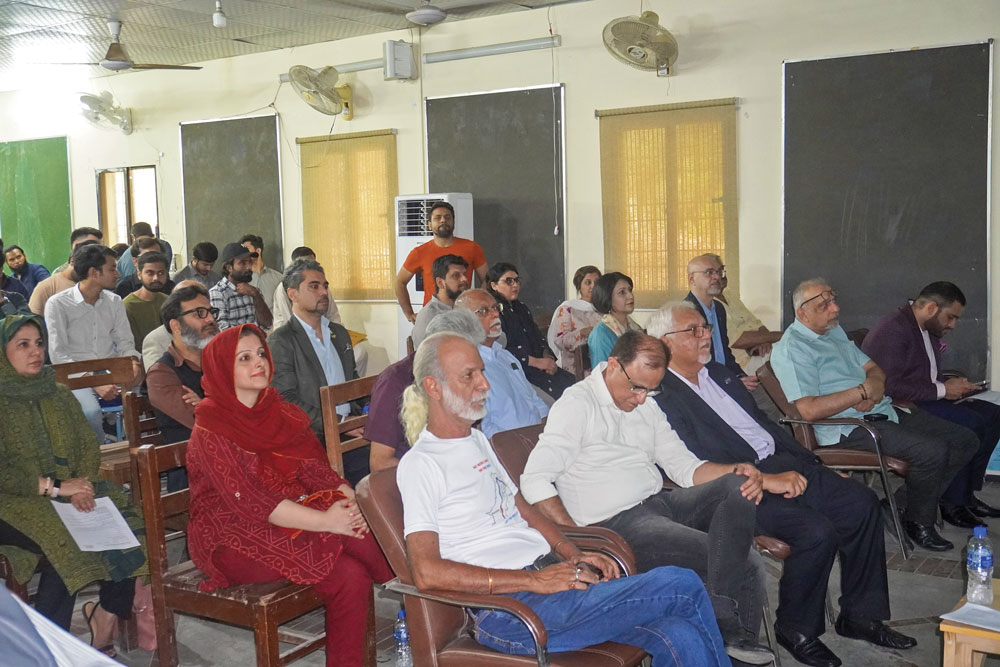
The event was graced by the presence of a distinguished assembly of architectural and planning professionals, including Ar. Jahangir Khan Sherpao, President EAROPH; Ar. Ramiz Baig, President EAROPH Pakistan; Ar. Fawad Suhail Abbasi, President IAP; Ar. Shazia Abro, Vice Chairperson of the Pakistan Council of Architects and Town Planners (PCATP); and a notable delegation of architects from Islamabad, Lahore, Peshawar, and other cities. Also in attendance were Ar. Reena Majid Memon, Chairperson of DUET’s Department of Architecture and Planning, and Dr. Muhammad Faisal Khan, Director ORIC-DUET, alongside dedicated faculty and students.
The event and the subsequent interactive panel discussion were expertly moderated by Ar. Faryal Sikander. The robust engagement from the audience underscored the gravity with which they perceived the challenges presented. Discussions consistently highlighted the indispensable role of inter-disciplinary approaches and genuine community engagement as foundational tools in confronting Pakistan’s escalating water issues. This productive collaboration between EAROPH and DUET’s Department of Architecture and Planning stands as a testament to a shared commitment to addressing critical environmental challenges through a powerful synergy of academic rigor and professional practice.


