


Text by Sarah Ather Khan Hafsah Rais
A focus group session with local fishermen was held at the Department of Architecture and Planning, NED University, which revealed a unique integration of art, traditional knowledge, and environmental advocacy. This session was part of the “Weaving Together: Local Art for Social Cohesion & Climate Resilience,” a project by Sarah Ather Khan, Assistant Professor NED, funded by the British Council Climate Futures South Asia Initiative Grant 2025, that aims to integrate art, environmental efforts, and climate resilience. Inspired by the community’s fishing net weaving tradition, the project intends to weave the local community, promote climate awareness, and preserve Indigenous knowledge. Sixteen participants from five fishing settlements attended, including two from Rehri Goth, one from Baba Island, six from Bhit Island, four from Salehabad, and three from Kakapir Village.
As global temperatures rise, industrialization and the deterioration of coastal ecosystems have left Pakistani fishermen stranded and vulnerable. They face a relentless struggle for survival and livelihood, confronting multifold challenges that include polluted waters and decreasing fish stocks. Their experiences are often overlooked in formal policy and climate discussions. The event highlighted climate change, traditional knowledge, and storytelling within Karachi’s coastal communities, enabling seasoned fishermen to exchange knowledge, share experiences, and discuss their environmental observations. The aim was to unite these fishermen, encouraging them to express their stories and ancestral wisdom through artistic methods.
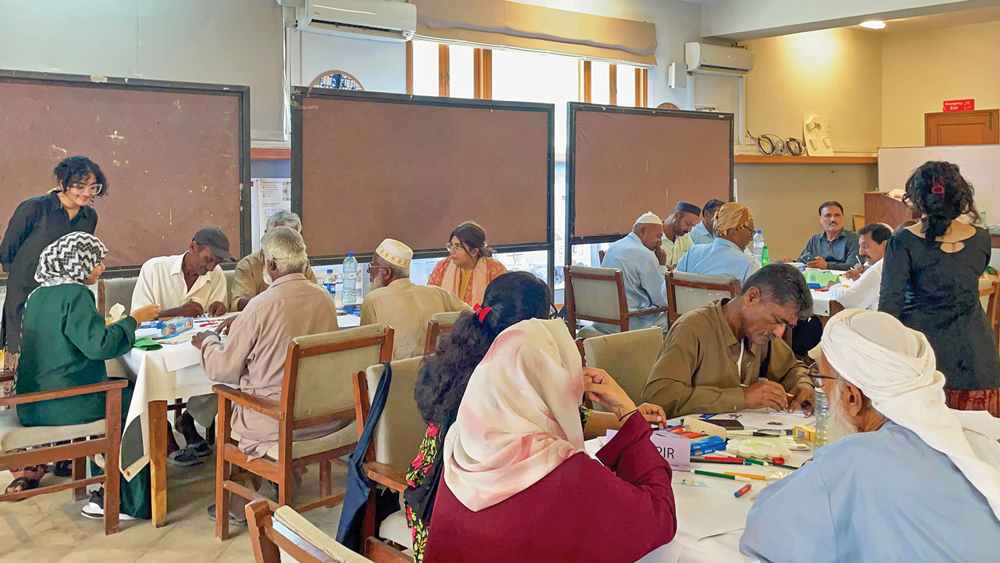
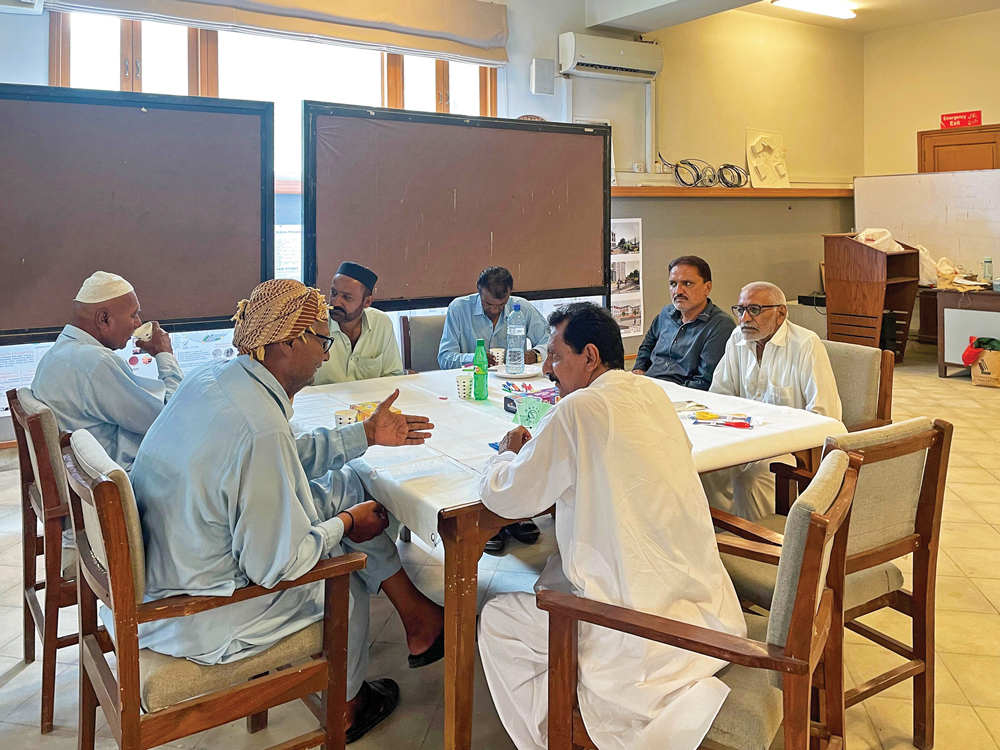
The workshop featured three sessions, namely first experiences, first fish catch, and mixed media artistic expression. During these activities, seasoned fishermen shared their lifelong journeys, compelling stories, and ancestral knowledge through art. From recounting their first times at the sea, to catching their first fish using local tools, the unique variety of their lived experiences presented a profound yet bone-chilling imagery, captured visually in the form of simple, beautiful, raw art. During the first two sessions, fishermen were seen reminiscing about simpler times, times when the waters were free of industrial effluents. They recalled diving near the creeks and catching fish using nothing but a piece of clothing. “That was the time when you would see those red bugs emerge after rain. We don’t see them anymore because our environment has been destroyed”, said Younus Khaskheli (Chairman NGO Mahigeer Samaji Sanghat) from Rehri Goth. Fishermen and experienced boat captains from Baba and Bhit Islands recalled sighting sharks, dolphins, and sea turtles frequently. One drawing from Salehabad depicted a thriving creek teeming with glowing fish at night, a visual representation of the skillful fisherman’s eye.



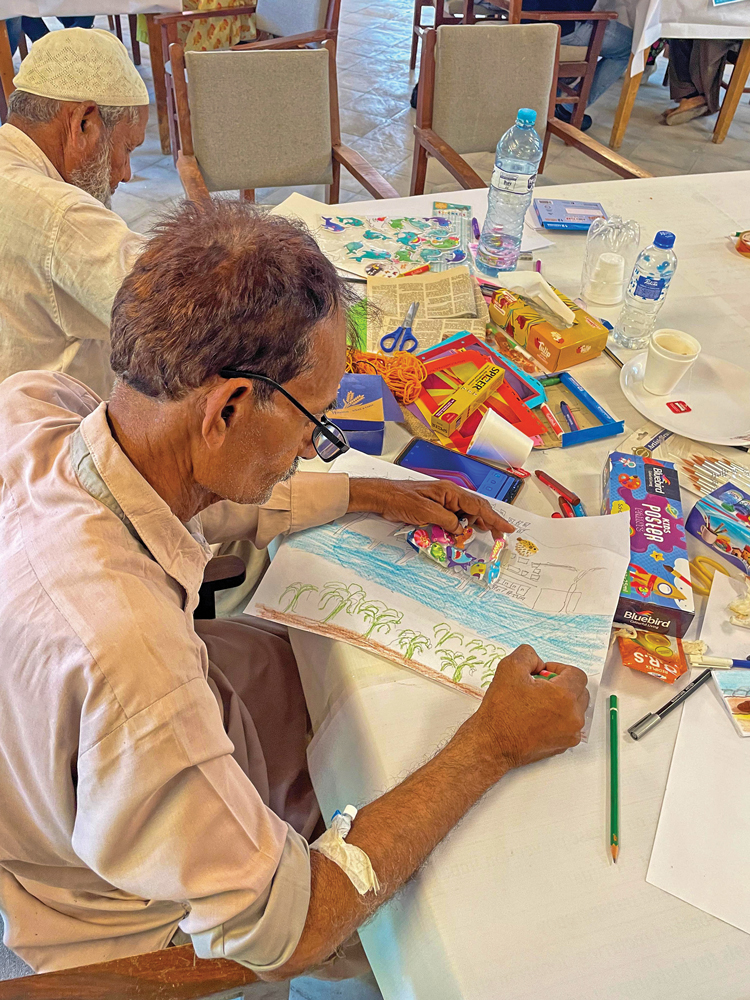
The most powerful expressions came during the final Mixed Media session, where participants used collage, fabric, paint, and even poetry to portray their craft and its connection to the sea. There were collaged depictions of gleaming blue waters full of fish, cityscapes, maps portraying land, sea, and green patches, mud houses, unique boats, and fishnets. One particularly interesting collage showed a fish net made with intertwined rope, emerging from a paper boat and reaching for the waters, a firsthand depiction of the fishermen’s intricate craft and its relation to their day-to-day lives. Some of the illustrations were also juxtaposed with the psychological and ecological weight of climate disruption today, and rendered portions of the polluted seas and land, often using the color black. These were not just works of art, but urgent calls for recognition and response.
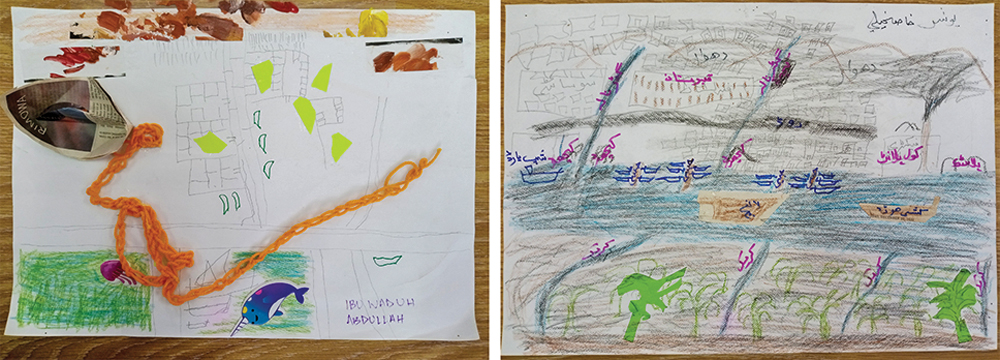
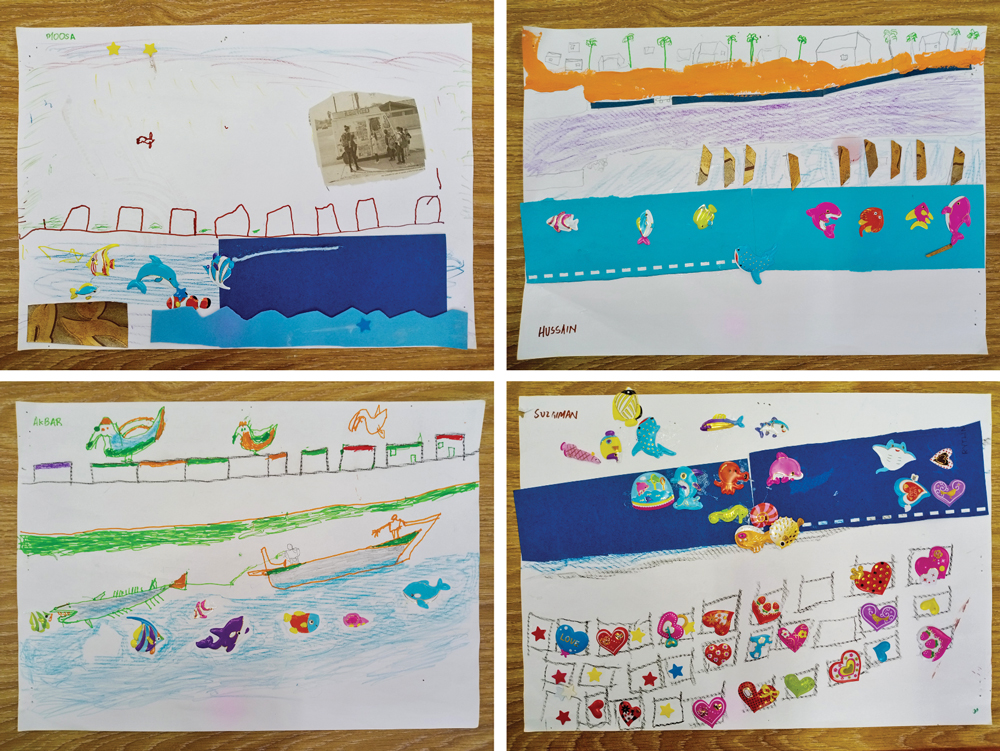

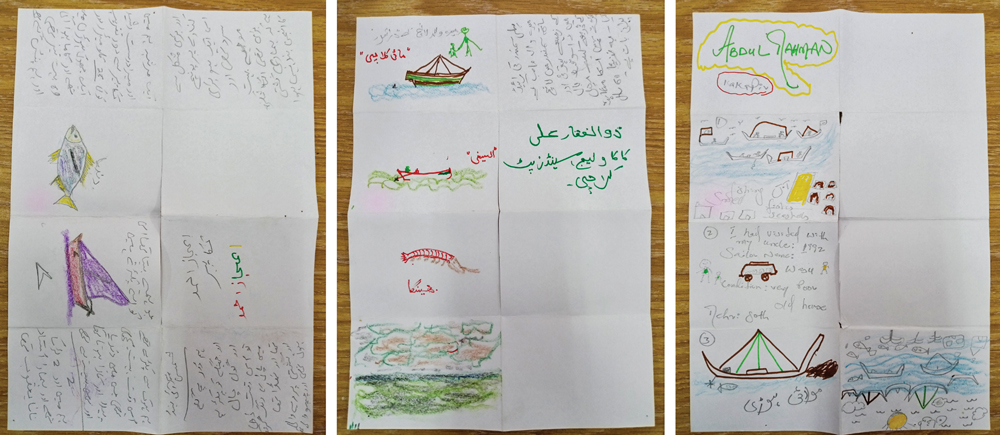
The workshop emphasized community-led storytelling in climate change and disaster resilience policies.. In the closing session, the fishermen addressed the audience, sharing their thoughts and suggestions on climate advocacy and highlighted the importance of ecological conservation. “I regard this (the WWF Wetland Center) as a fort, a qila of conservation. If it had not been established in 1999, then there would’ve been more huts here instead. However, the presence of 1 lakh to 1.5lakh people here, at one moment is threatening as people tend to do picnics and throw all the waste. Polythene bags, thermocol, different types of articles, even if they do a bonfire, the burnt coal is all left behind”, said Abdulrahman, a representative of WWF from Kakapir Village. In another pressing statement, Fisherman Sulaiman from Salehabad demanded an urgent call for the improvement of the living conditions for the residents of Salehabad. “The sewerage water jams and ruins the water. The water is so dirty that we can’t even go in there to catch fish. KPT should do something. Where are our rights?” he said while explaining his artwork depicting all the fish that used to be there in the blue seas of Karachi earlier.
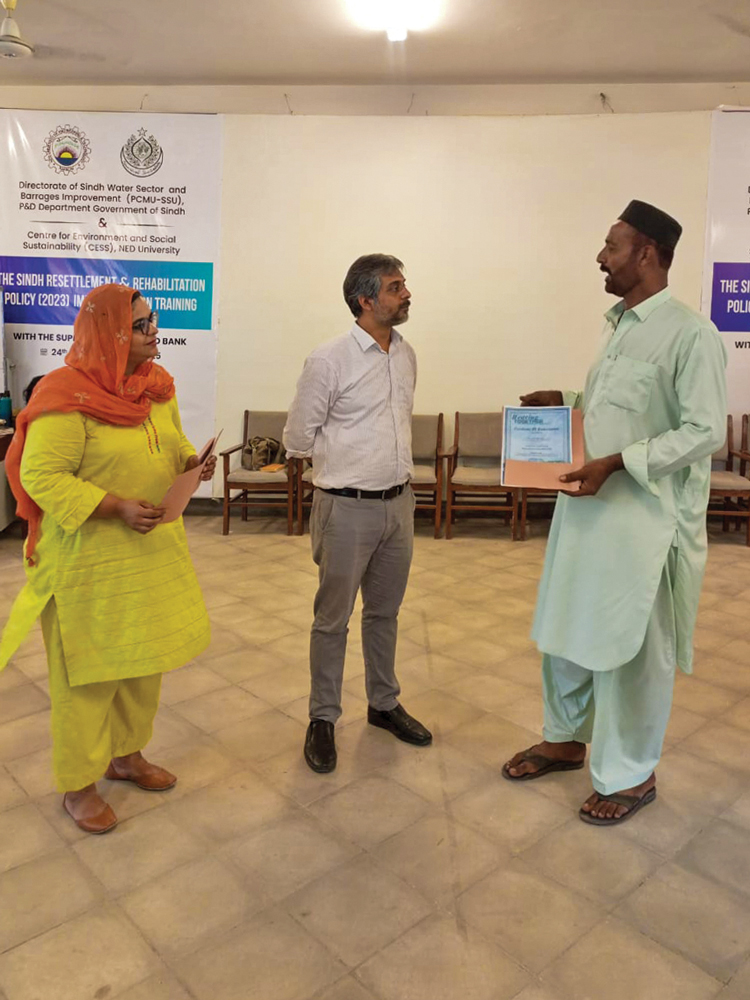
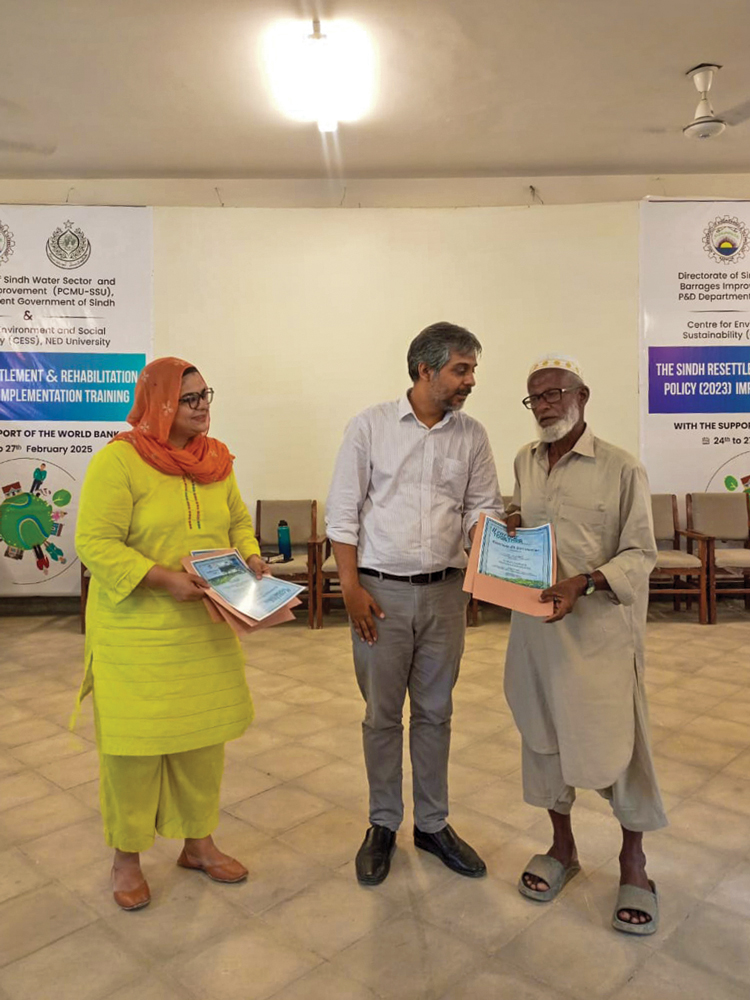
The workshop ended with an award distribution ceremony for the participants who took their time to join this workshop. The fishermen were appreciative of the initiative and expressed their newfound confidence and unity, recognizing themselves as part of a collective movement strengthened by shared experiences and cultural identity.
As climate change continues to challenge Pakistan, initiatives like these are not only essential but a necessity as they offer not just narratives but solutions to real-world problems, rooted in lived experiences, resilience and indigenous knowledge. This workshop stands as a powerful reminder of what becomes possible when communities are not merely consulted but actively engaged. By creating space for fishermen to tell their own stories, in their own voices and through their own art, the event transcended typical outreach and became an act of collective meaning-making. These participatory and collaborative gatherings are essential in surfacing invisible knowledge, strengthening cultural continuity, and equipping vulnerable communities with a platform to articulate their needs and solutions. In the face of escalating climate risks, we need more such models that center Indigenous knowledge, build trust through co-creation, and drive policy from the ground up. This is how resilience is not only imagined, but practiced.
Sarah Ather Khan is an Assistant Professor
Department of Architecture and Planning, NED University of Engineering and Technology


