


Text & Photos by Mukhtar Husain
There are places in this world that lodge themselves in our imagination long before we ever set foot in them. For some, it may be a shrine, a sacred temple, or a distant, exotic landscape glimpsed in a film or a book. For me, it was a house. Not just any house, but Fallingwater – Frank Lloyd Wright’s lyrical, utterly improbable masterpiece, suspended over a stream in the woods of Pennsylvania.
Often hailed as the greatest achievement in American residential architecture, Fallingwater is more than a house; it is a declaration of possibility, of harmony between nature and design, and of the boundless vision of one of architecture’s most radical minds.
Designed in 1935 for Edgar J. Kaufmann, a Pittsburgh department store magnate, the house defied all conventions of the time and many laws of engineering. But it also fulfilled Wright’s lifelong philosophy of organic architecture: a structure that grows out of the land, belongs to it, breathes with it.
I had read about Fallingwater decades ago, poured over photographs, and watched documentaries. But no image or film could prepare me for the physical encounter. And although the house has been endlessly dissected, praised, and criticised, I still felt compelled to see it for myself. It had become a personal quest – a pilgrimage.

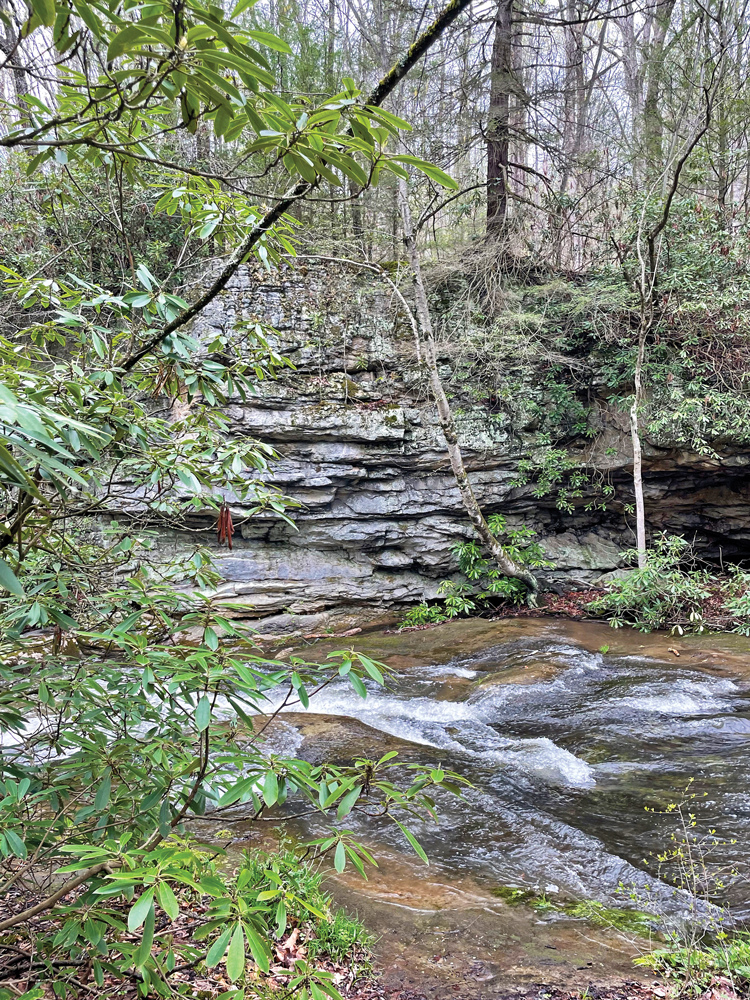

A Dream Suspended in Stone and Water
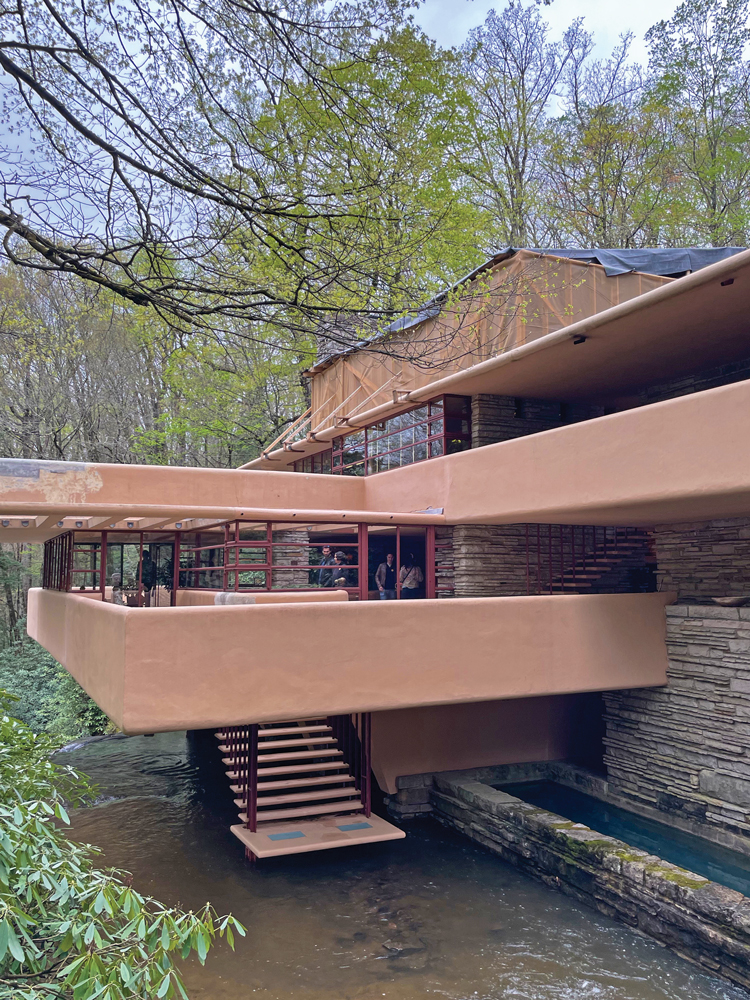
Wright was 67 years old when he took on the commission. Many thought his best years were behind him. But Fallingwater was proof that his genius had only matured. The house, perched above a tumbling waterfall in Bear Run, near Pittsburgh, is a composition of cantilevered concrete slabs, anchored in natural stone, seemingly floating in mid-air. When I finally stood before it in April 2025, nearly ninety years after it was built, I realised why it continues to stun visitors to this day.
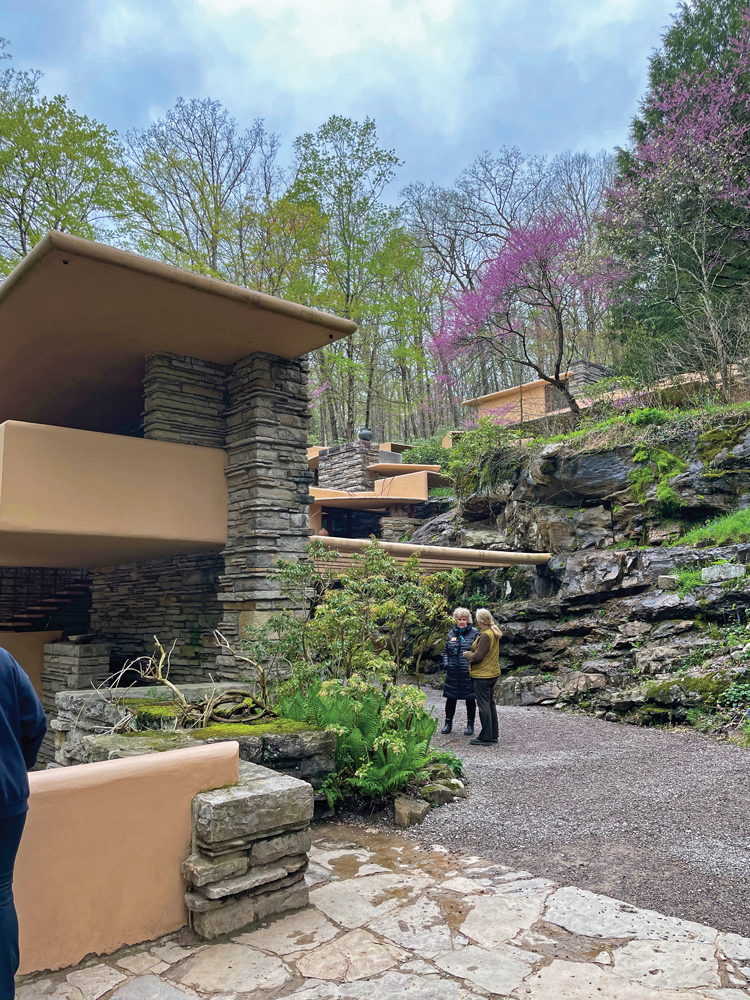
Everything about it is improbable. The narrow staircases hewn from rustic stone, the daring projections jutting out into the landscape, the seamless blend of indoors and outdoors – all speak of a designer obsessed not with convenience, but with a kind of poetic provocation. Even the name, Fallingwater, was coined by Wright himself. It is not just a label, but a metaphor.
Yet it is not without its idiosyncrasies. As an architect myself, I couldn’t help but question some of the decisions: the spatial constraints, the tricky levels, the maintenance challenges of a house built over a stream. Living in it would be…complicated. But living with the memory of never having seen it would have been far worse.

The Long Journey
The promise I made to myself to visit Fallingwater was first whispered in a classroom at the Middle East Technical University (METU) in Ankara, Turkiye, back in 1967. I was a student then, discovering the language of architecture, absorbing the names of its greats, and Wright loomed large among them.
Over the years, I came close. In 1985, during a visit to Chicago, I sought out Oak Park, where several of Wright’s early homes still stand, sharp and modern, a century after they were built. Later, I visited his iconic Guggenheim Museum in New York, the Saarinens’ masterworks across the U.S., and even the architectural gem of Columbus, Indiana. But somehow, Fallingwater always eluded me.
In 2020-21, we lived with our son Adil and his family in the D.C. area during the long Covid months. Travel was restricted. Museums and galleries were shuttered. The dream was deferred again. So when Adil promised, earlier this year, that he would take us to Fallingwater on our spring visit, I dared to hope. And on a cool, clear morning in late April, he drove his mother Rumana and me for over three hours, through the undulating hills of Pennsylvania, to the woods that cradle one of the most audacious homes ever built.
A House that Dares
What strikes you first is not the size of the house, which is modest by today’s luxury standards, but its daring. The main house comprises 9,300 sq ft, including nearly 4,400 sq ft of terraces that almost seem to leap from the rock into the forest. The guest house followed a year later, completing the composition in 1939.
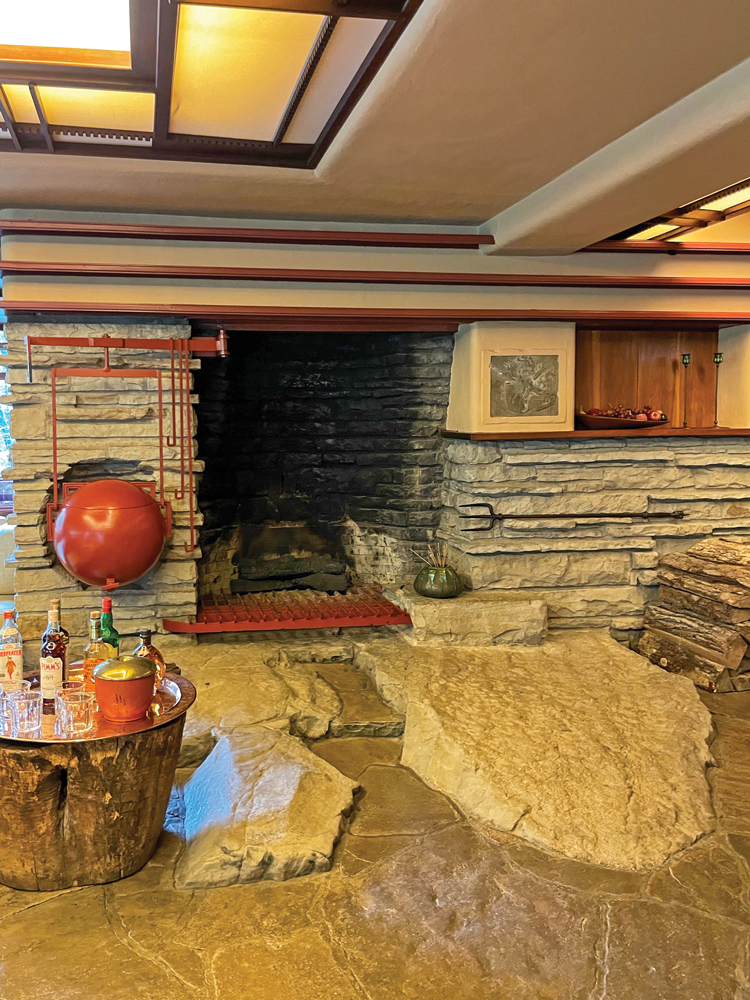
Wright was intimately involved in every detail: the furniture, the lighting, the fixtures, even the placement of rugs. He left nothing to chance. And although the original estimate was a manageable $35,000, the final cost ballooned to $148,000 – a fortune then. His fee was an additional $11,300, but can you really put a price on a legend?
What makes Fallingwater so compelling is how it rewrites the very idea of domestic architecture. It doesn’t sit in the landscape. It becomes it. The stream doesn’t merely ornament the view – it runs through the house. Narrow stairways take you down to a platform that touches the flowing water. The interiors, framed by long horizontal bands of windows, invite the forest in. Stone floors feel like extensions of the rocky ground below.
This wasn’t just architecture. It was alchemy.
Afterthoughts
Would I want to live there? Possibly not. The house is a triumph, yes, but also a puzzle. Wright’s genius came with its quirks: low ceilings in places, hidden corners, stairs that defy logic. Comfort was clearly not his highest priority. But his soaring vision was.
Wright didn’t just design a house; he envisioned a way of being where architecture and environment are fused into one continuous, breathing organism. And, thanks to the Kaufmann family’s generosity, Fallingwater has been preserved by the Western Pennsylvania Conservancy since 1963. Today, it’s a UNESCO World Heritage Site – a place of pilgrimage not only for architects, but for all who seek beauty in built form.
It took nearly six decades to keep that promise I made to myself in a Turkish classroom. But as I stood beneath the cantilevers, listened to the rush of water beneath the stone, and traced with my eyes the lines of Wright’s impossible vision, I felt a deep sense of fulfilment. I had arrived not just at a house in the woods, but at the realisation of a lifelong dream.
Fallingwater was no longer just a legend. It was real. And I had finally come home.


