


By: Solmaz Regi
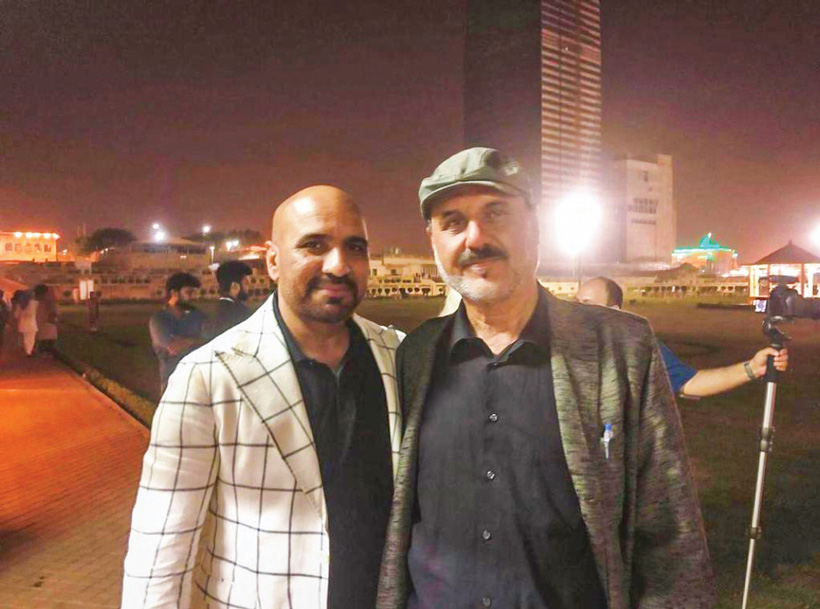
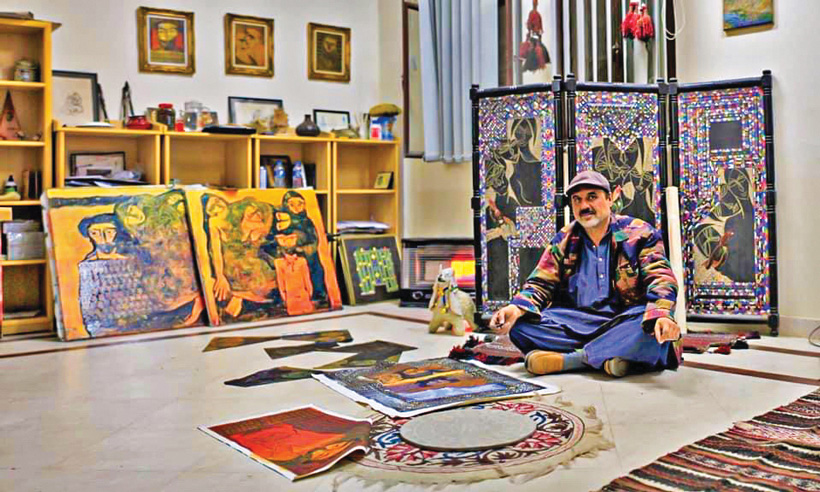
Born in Nushki Balochistan, Prof. Dr. Akram Dost Baloch retired in 2018 as Chairperson of the Fine Arts Department from the University of Balochistan. He was among the pioneers of Fine Arts faculty at the University, after graduating from the National College of Arts, Lahore. He practically introduced Arts in proper sense for the entire province of Balochistan. He is now involved in his gallery-related work and different mentorship programs for students every now and then.
Dr. Akram Dost Baloch wrote his Ph.D. dissertation on the traditional patterns of Balochi embroidery and handicrafts and has contributed precious items to the collection of Balochistan at the Mohatta Palace Museum.
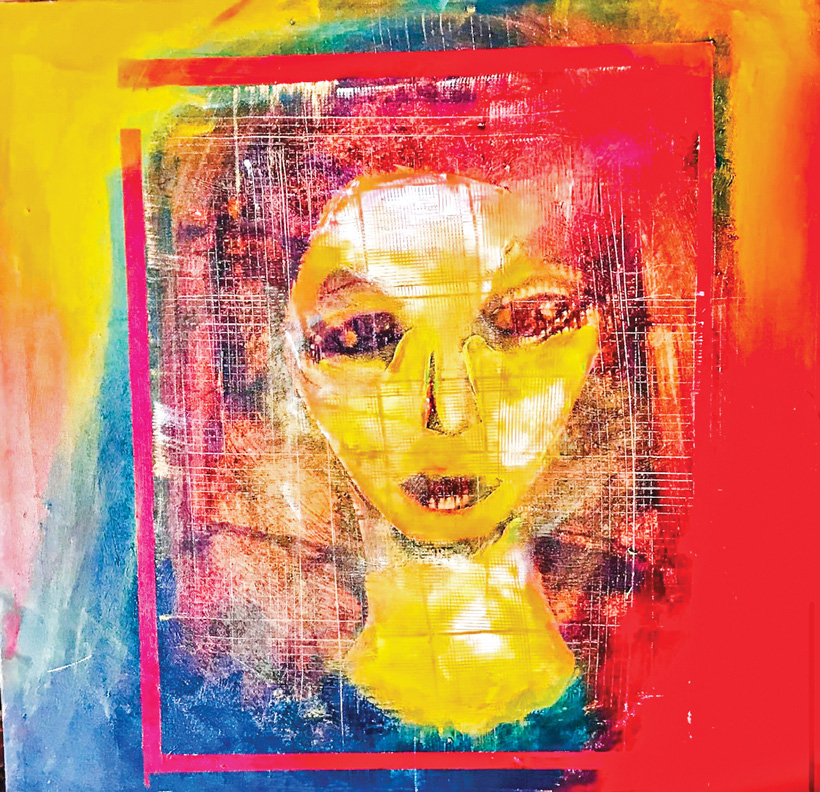
With numerous solo and group exhibitions, he has explored many forms including Figurative, Identity, Social issues, and Landscapes that surround him, focusing on socio-political problems.
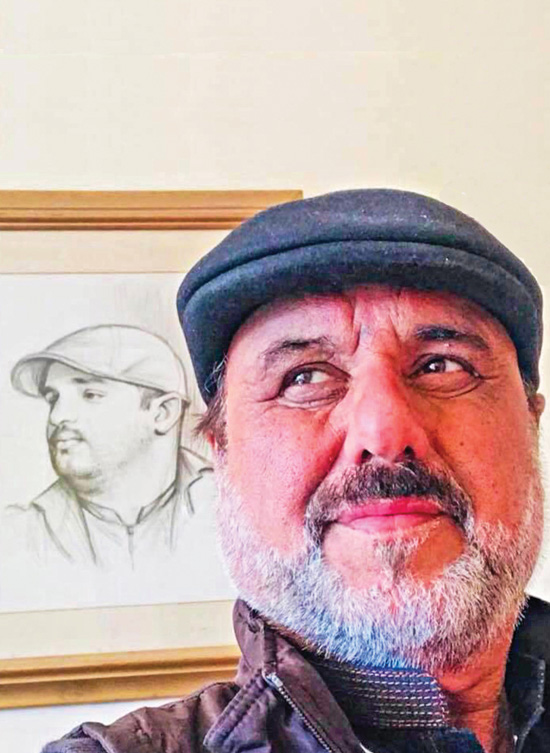
He is also the recipient of various awards such as
Pakistan’s Pride of Performance award 2004
Lifetime Achievement award Karachi Biennale 2019
Best Artist award UAE 2019
Award of Excellence Balochistan Pakistan 2016
Red Crescent Award – Pakistan 2000
Best Artist Cultural Department Balochistan 1992
National Award Pakistan National Council of Arts Islamabad 1992
Bolan Gold Medal Award – Pakistan 1983
WHO IS AKRAM DOSTH BEFORE BEING “THE ARTIST”?
This question is very interesting for me, a person in any profession and all his evolution of learning, If we talk about his condition before that learning when he is only surviving in the society there is no extra merit, he is just living and all standards of existence are almost same. When you finally take up some field and a direction then your skills are developed constructively. So before the artist, I was a common kid like a common person surviving in society.
HOW DO YOU DEFINE ART AND HOW DID THIS EVOLVE FOR YOU AS A PERSON?
I think defining art has no fixed formula, a person in any profession, especially in creative fields who is working towards a direction, if he has an understanding of basic human philosophy and connects to human topics such as civilization, philosophy, and psychological aspects that connects him to the true picture of life and then the expression of all this, translating this expression into music, literature, dance, performing arts, visual arts and many more. If we explain all of these the topic goes a long way.
To me how we express our emotions according to our thinking, work vocabulary, and ideology for achieving a socio-corrective method and working towards human progress for our society in our unique way is our Art.
All these principles can be your life principles too, living with people and dealing with them accordingly. We evolve with our work through the medium, like in fine arts we have painting, sculpture, printmaking, and drawing as a few examples that I challenged myself with. I learned and enjoyed all these. I believe this process evolves us if we choose challenges for ourselves, to either resolve something or explore and give its characteristics a special touch and recognition with our work style. I think all this has evolved me a lot.


WHAT DOES YOUR ART REPRESENT?
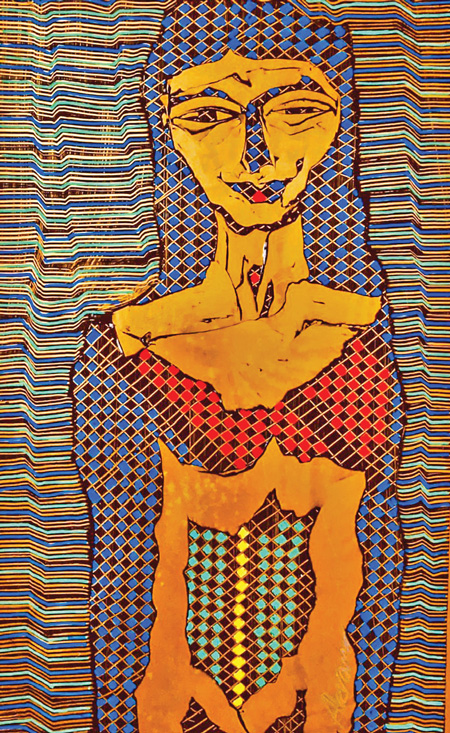
If we look at international art movements, they are all influenced either academically or by personal experience. I think in the beginning my work was very realistic, with my involvement in Balochistan, including Balochi motives in different forms of rug, embroidery, architecture, and even our cultural nomadic style images and impacts this all influenced me and my work.
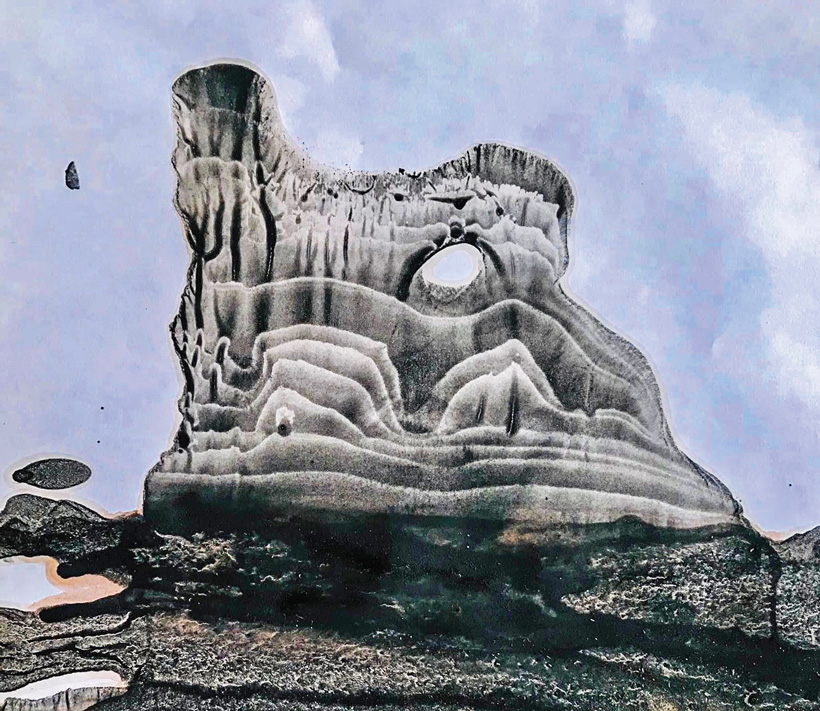
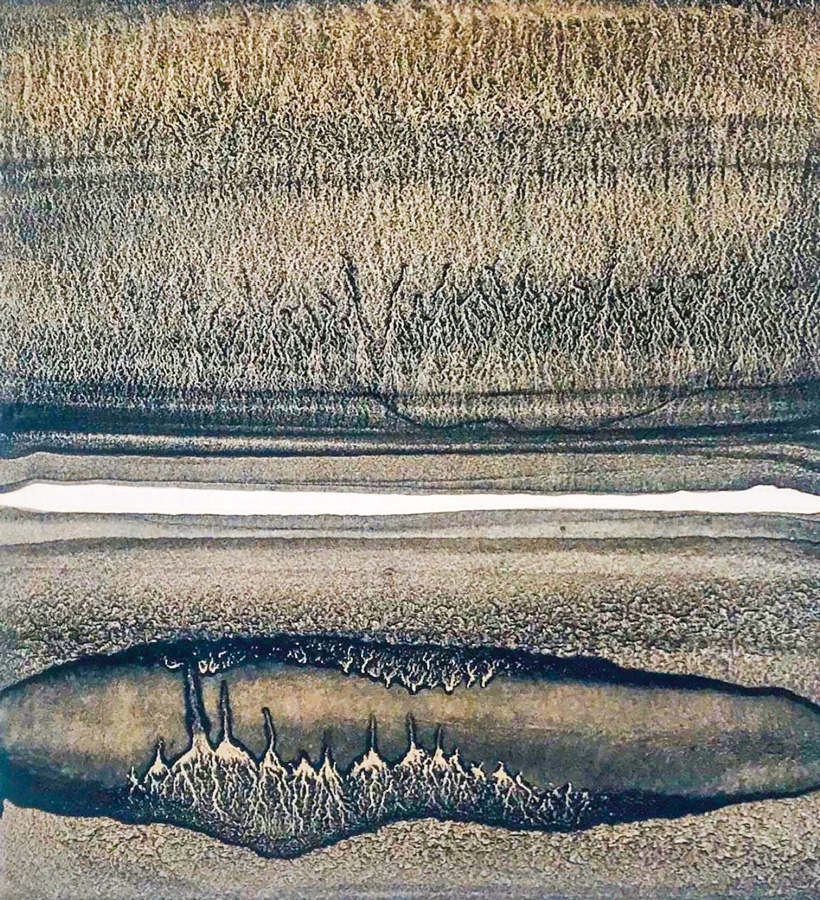
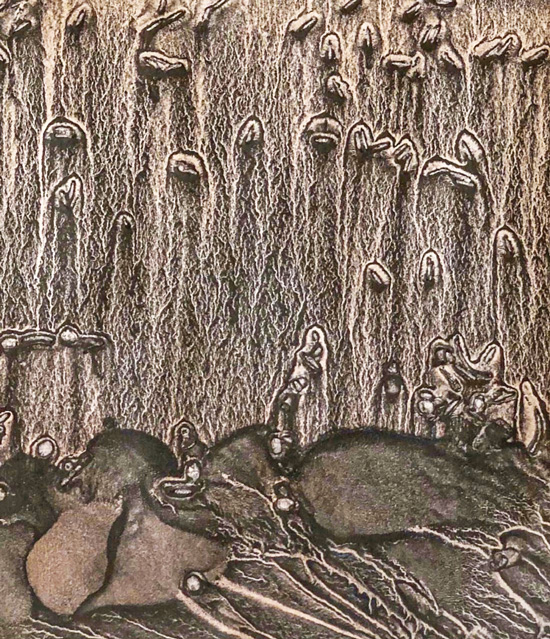
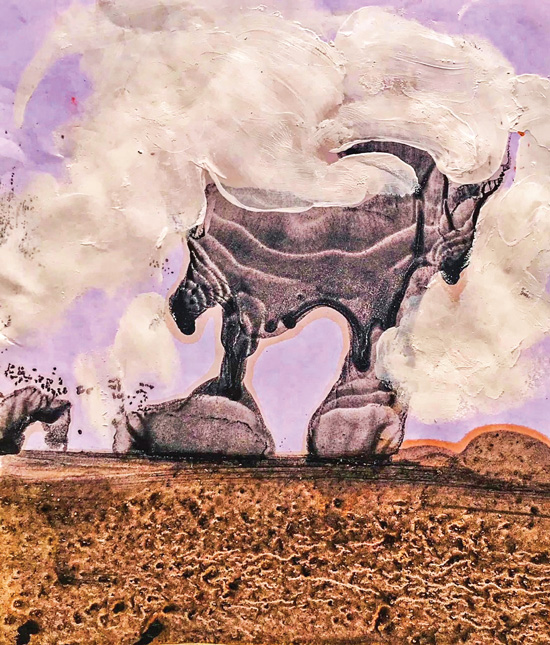
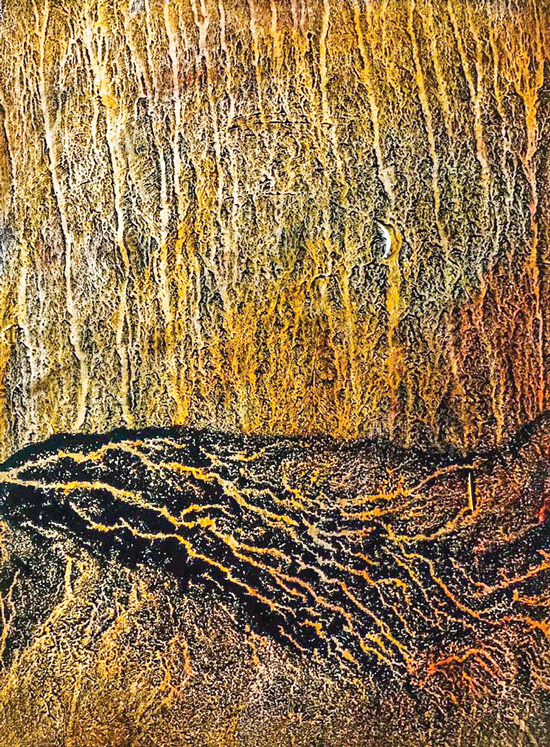
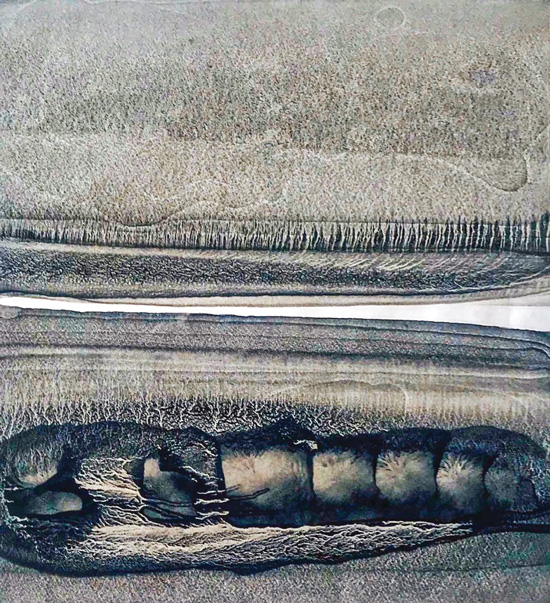
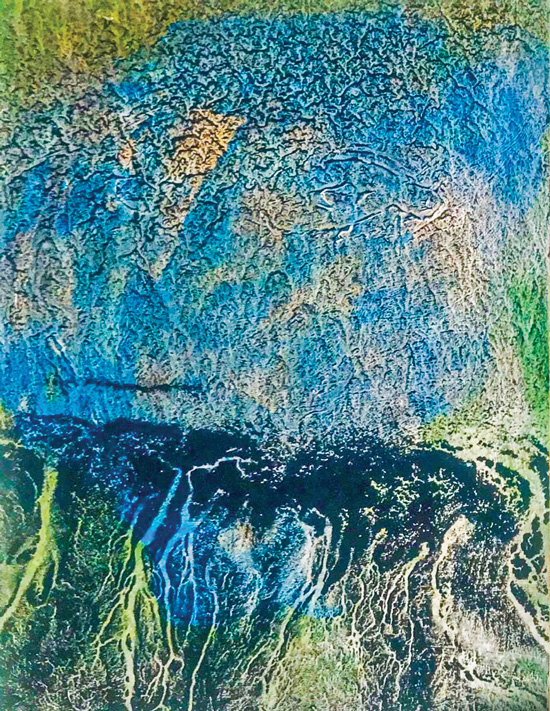
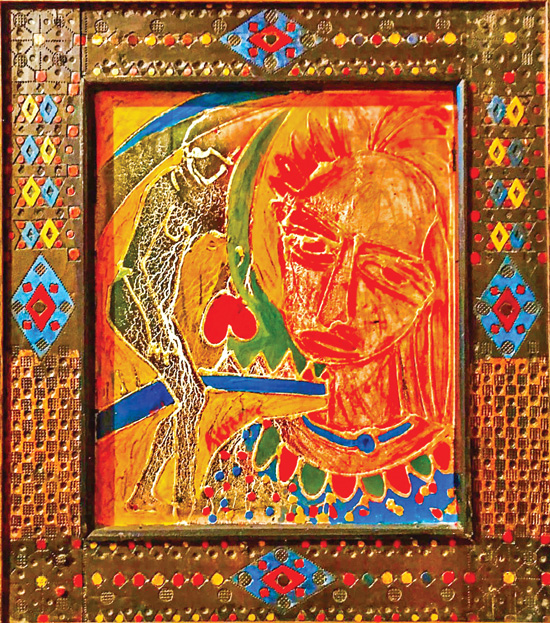
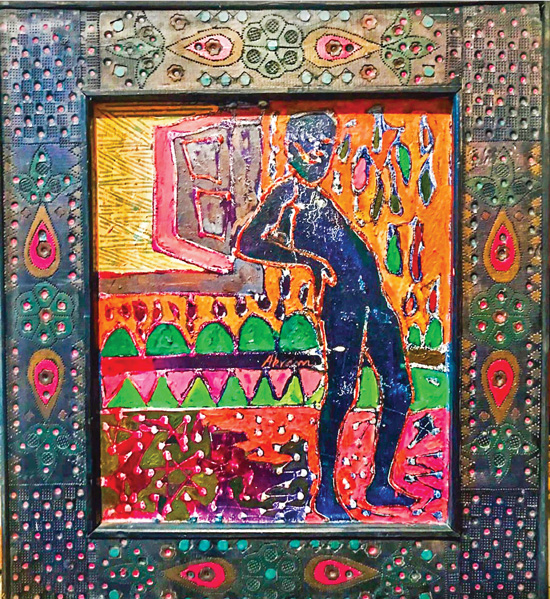
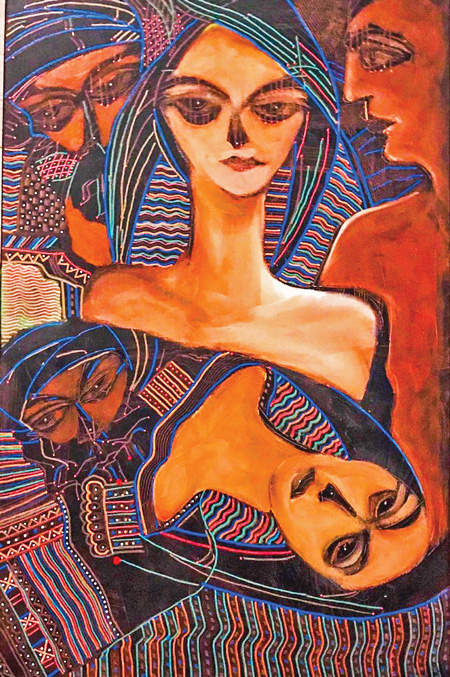
Where I live, I’m surrounded by socio-economic troubles, all this affects the writers and poets, so I think as a visual artist I have explored many mediums relating to this and my content directly addressed social reality. All my work is almost figurative including nature and textures related to it. This might look more modern to contemporary people. All the work I’ve done includes these feelings and expressions, which I have from people around me. My work is symbolic in form of figurative, compositions and objects related to them.
This is also my objective to highlight and showcase the life realities and troubles around me.
HOW DID YOU START YOUR CAREER? DEFINE YOUR ART TECHNIQUES?
This question has an in-depth connection to my life, the scenario and conditions that I started my life were not very easy but I’d say not very hard either. In Balochistan, there are no general educational institutions and especially arts or other contemporary subjects are next to nil. As I was born in Nushki and my schooling was done there as well. In my school days, some ladies worked as weavers jamalon looms. They worked with natural dies and fabric. They used the 7 seven basic Balochi colors that are almost used everywhere in rugs, cloth weaving, and carpets. They worked with huge containers, the dance of water and fire with colors the sound effects of the village old looking homes the steam and sand affected all my senses. Every day on my way back from school I just used to grab some roti and go sit there to see the show. I used to act helpful so they will somehow induce me in the process, eventually, it was beneficial for them and they gave me small tasks or wood and fire. These colors and elements I think were absorbed in my personality.
In my free time, I used burnt wood and clay to make art on walls and sculptures from the mud around. Even in school whenever I saw a free blackboard and chalk I took it as an opportunity and started drawing. These were the tools of my life learning.
When I was promoted to high school in Nushki they had art classes but no art teachers. I used to sketch in that class. My other teachers appreciated my work.
The embroidery girls impacted me in many ways, in those days the girls with fine work were merited as “ShereZal” the lion girl, this also helped them get better suitors.
Eventually, I went to Quetta after high school, someone told me about the Small Industries setup that has carpet designers and teachers. I approached them and showed them my designs. They also needed help. So along with my studies, I started working as a designer with the looms. I worked on Balochi design carpets but the majority wanted the same patronized Persian or Afghan designs. I convinced them to make the Balochi designs as they will be more acceptable in the outside world and that we should be promoting our own culture where ever we can. Although I had no idea what I was saying.
At that time Peer Tareen and Khalid Mengal who were NCA students told me to pursue NCA Lahore. So, Me, Jamal Shah and Kaleem Khan went to NCA together. Initially, the teachers appreciated us as we had a different background which boosted our confidence. Now, this was Zulfiqar Ali Bhuttos Execution time and then the Zia Regime this was a very dark era for our work. This also gave us exposure to social depression, beating, brutality, execution, and all the rough going in society. But at the same time, the creative people spoke up although reluctant but poets and writers used language. We expressed this on canvas, before this time my work was realistic but then I changed to socio-political work and the troubles of a common man and all his discriminations. This is not only my fundamental value but was conscious progress towards this path.


WHO IS YOUR FAVORITE ARTIST? WHO INSPIRES YOU?
I think all artists who create and go through the creative process the ones who worked for political, social, economic, and historic attributes such as World War II, the French Revolution the expressionist especially the Germans. The angles they look at are amazing and realistic such as Edvard Munch, Jean Dubuffet of Europe, Gustav Klimt of Australia, Egon Schiele, Kokoschka, and such contemporaries that worked in different mediums and styles. All this is very inspiring to me. I’d say my favorites are many local and international artists. Egon Schiele is very realistic in voicing the screams and sounds of society. Klimt is one and yet the German Kathe Kollwitz is one of them. Their depiction and my understanding of human suffering through them are phenomenal.
YOUR FAVORITE MEDIUMS?
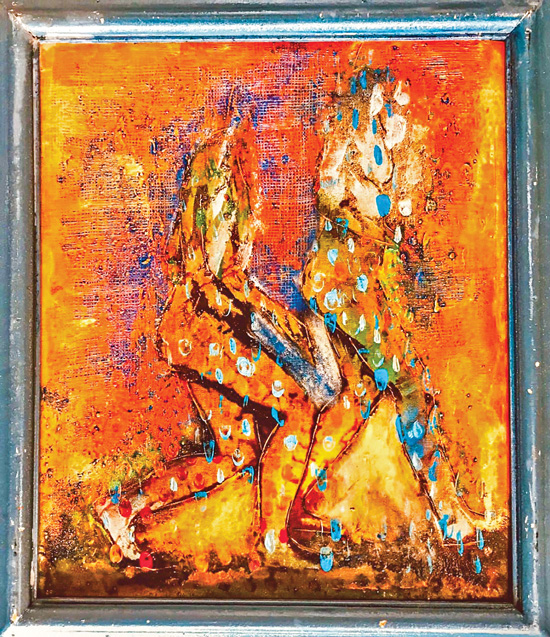
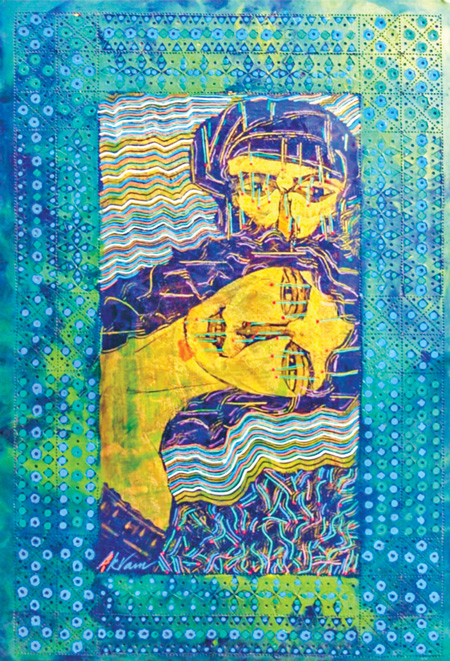
I have worked as a painter, sculptor, printmaker, and drawings. The direction of my work remains purposely focused in all my work. If we talk about drawing I emphasize texture, its characteristics, and values. My work focuses on textures but in drawing this can be limited in painting you have a certain freedom of mixed media and surface. So we can explore more. Sculpturing also clay facilitates texture and movement but my favorite is plaster of Paris although its preservation and details are another chapters altogether. Iron casting is rarely used. In Painting I use oil and acrylic freely with many textures and it gives a certain satisfaction.
I’m also working on a variety of work like wood, and fabric rugs, including large murals of sizes 4 x25 feet too of drawings and canvases.
WHAT IS YOUR FAVORITE TIME FOR WORK AND CREATIVITY?
I don’t think after so many years of work and experience it is possible to make a timetable. This doesn’t mean we work all day. As a devoted artist, it has no certain time of day or night it has its own “Zaman and Makan”. The craze should be there, as a full-time artist when he is awake he feels his work he sees art and his creativity. Even if he is sleeping his dreams will relate to colors and the thoughts the Baseerath he has is involved. It’s all about mental phenomena. If you can depict that perfect idea anytime and translate it properly that’s an achievement.
HOW IS ART IMPORTANT FOR SOCIETY?
Society and Art are related in solid terms. I think art is present everywhere in society and its dealings. In your living style, talking and conversation you have an aesthetic value, in your politics in your socializing, there is heritage, language, and culture. It’s not new it’s prehistoric, from the time of cave paintings. We see the same has traveled down to us.
If I talk about the Baloch civilization the Mehrgarh Civilization 9000-11000 years old civilization contemporary art can compete with art done today. Our clothing, our songs the way we look, the way we live, the body language everything influenced. This is heritage, everything is an art form. Even the political conditions of today create poetry, and stories the way we tell them today, it all has faces of art.
HOW DO YOU DEFINE SUCCESS AS AN ARTIST?
I think your question is very interesting as it’s a basic thing, any artist who has a serious career in any category, creativity is more important than recognition. I’m sure recognition is important too, achievements are always good for every work.
But as a committed creative who is associated strongly with the troubles around him, the pain, the grief, and screams of the society. Here is when your process starts, the acceptance of your work and its impact on it your people is really important. This is a challenge altogether.
For me creativity has no merit there is no success or failure. It’s all about depiction, your presence, and then comes the question of your identity. Now you will struggle for your identity it can be as an individual or a collective goal.
Connecting the dots of your work, and its relevance to the people and making it objective is important.
More than one’s self-recognition we should be involved in making the unknown recognized. For example, the women in our society suffer silently, they are crafters, they have home chores, and kids to look after, and they are expected to be great cooks as good as the InterContinental chiefs (Baloch laughs) and they perform many multitasking roles at the same time. This is unreal and goes unrecognized even if she does it all successfully.
So if we can highlight and voice any such matters, be it local problems, national issues, or international matters. I think that is a great achievement.
HOW DO YOU MANAGE WORK-LIFE BALANCE AS AN ARTIST?
I don’t believe in schedules like the elite class or the bureaucrats who have a specific time to do everything even for exercise and walking or the religious people who have strict time for all prayer or other social gatherings. My creativity is momentary. The moment is important for me. It can be any time of the day or as many times a day. Quetta City is not a very social city so we have plenty of time and it is freehand for work and other social-related time. But yes I do take out time for my work daily yet I don’t work on alarm or fixed timings.
ANY MESSAGE YOU WOULD LIKE TO GIVE TO OUR READERS?
I don’t see myself as a person to give a message but if you want me to say something, as my work has always depicted, I think a common man or individual can make a great level of change.
If it’s on a group or collective level it will be great. But if you get any chance of positive doing in your life, just take up the chance and do the positive that you can.
Eventually, good change will happen. Even to my students and readers we can create visual dialogue seriously and move towards positive change. Every individual counts.
_____________________________________________
Solmaz Regi is the Creative Head at Ruralz Inc. It is an Interior Design firm in Karachi; she is also the Co-Founder of the platform Identity Pakistan – A Social Patriotic Initiative. She believes in Metaphysical thinking and going beyond borders. An occasional poet and a humanitarian.


