


Perspectives on Pandemic: Bringing Forth Issues, Experiences & Insights
By: Fariha Tahseen & Dr. Masooma Shakir
The pandemic has brought massive change in life style and social interaction globally. Healthcare, economic stability and infrastructure management have been challenged particularly with this crisis. Adapting to digital modes of learning and communication has been immediately put to full throttle use in various contexts of education, spatial practice and medical consultancy. The story of the pandemic predominantly associated with urban globalization, had its imprints on nearly all strata of life, and has urged the professionals to ponder on issues to control spread of disease, analyze and combat impacts on environmental and socio economic domains along devising action plans and policies for recovery and prevention. To make our cities more adaptive, safer, habitable, sustainable and equitable, the 5th International Conference on Urban and Regional Planning aimed to explore and outline the repercussions of the pandemic on cities and to shed light on lessons that we learned for post COVID cities.
The hybrid mode of part physical and part online interaction has become a vital medium in academics and practice. The 5th International Conference on Urban and Regional Planning on the theme ‘Perspectives on Pandemic: Impact on Urban Pedagogies, Research and Practice’ held on 3-4 December 2021 at City Campus, was hosted by faculty members of Department of Architecture and Planning and Development Studies program of NED University, Karachi in hybrid mode. Medical practitioners, spatial managers, educationists at various positions spoke as participants and major stakeholders to share their diversified research directions and frameworks. The CURP event is continuation of series of seminars being organized since 2004 to provide a platform to architects, planners, academicians and researchers to share scholarly research on emerging issues of the time. Since the world is resuming back to normal practices yet adapting, this conference was planned to be in hybrid mode with inaugural and concluding sessions to be physically held in place, however to engage vast audience, technical sessions were planned to be online.

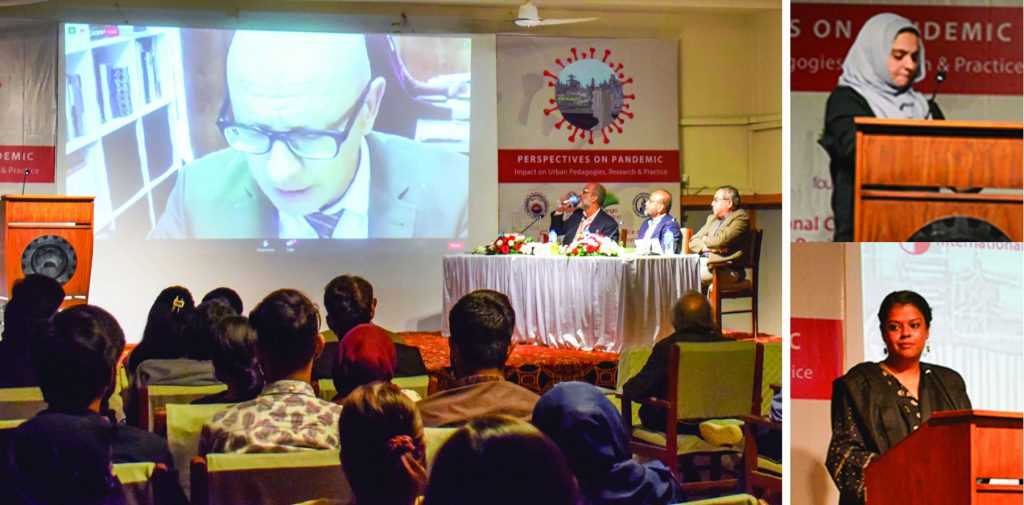
The various sub themes encapsulating pandemic relation, condition and situations included in the call for paper were; historical analysis of epidemics, tangible and intangible pandemic preparedness, epidemic and empowerment of underprivileged, pandemic and changing urban environment, new building typologies, pandemic and its relation / impacts on ecology, economics, globalization processes in the Global South, effects on education and teaching methods, urban governance, capacity and institutional development in contingent time, pandemic and the marginalized and under-privileged communities. In all we received 21 abstracts, 10 of these were shortlisted for inviting full papers.
The Conference posed many questions such as how the new urban land use policy should be formulated in reaction to preferred use of land post pandemic? How can layers of infrastructure be provided to combat developing pandemic situations? How can the vulnerability of the under privileged be addressed or combatted? Can this situation be molded into an opportunity for all, esp. underprivileged strata of society? If this pandemic situation is the new normal, what type of changes in urban planning and policies can be made to cater to the future of cities? Specifically the whole idea of education and pedagogy has shifted to new avenues of digital and remote learning, with the impacts on urban pedagogies, research and practices understood and accepted as being dynamic and constantly evolving. The theme of the Conference drew attention to deliberate on the implications of pandemic on urban pedagogies, research and practice, generally across the globe, and particularly in Pakistan.

The inaugural session commenced with address by Prof. Dr. Anila Naeem, Chairperson DAP NED University who mentioned during her speech that the learning and experiences from previous year in the midst of global pandemic inspired the theme for this year’s conference. Grasping the challenges to adapt with digital mode of learning and dissemination, this year’s conference aimed to deliberate on shifts, changes, scopes and limitations in the domain of urban studies. Dr. Sheikh Tanveer Ahmed (Chief Executive HANDS) addressed the audience as Chief Guest of the event.
Mr. Haris Gazdar, Director & Senior Researcher at Collective for Social Science Research (CSSR) as keynote speaker highlighted multiple challenges of knowledge and data available to us and the usefulness and limitations of the tools and means at hand to make sense of them in the pandemic crises. His presentation titled ‘Responses under uncertainty’, included the issues of reliable data availability that limits decision making, in relation to NICs and COVID health issues. Data generated by polio teams working in cities and that by Karachi Electric (KE) for electric consumption came forth as one found to be more detailed and reliable in terms of dependable statistics and household information to cater to in crises. He further stated; ‘Our understanding was blindsided by the absence of accurate data and reliable models for interpreting information, not only with respect to the impact of the infection on morbidity and mortality, but across all areas of policy response’.
Dr. Rand Eppich, Director Heritage Development from University College London, highlighted the dire need of extensive community involvement in Urban planning, the pandemic has not only ceased in person face to face interactions but also pointed to the formation of pedagogical relationships which are trifold as planner versus stakeholders, professional vis a vis client and between professionals or peer to peer. Dr. Rand elaborated on practical examples from ancient world heritage sites of Durres, Gjirokastra and Uganda National Museum that supplemented his research argument.
Second day of the conference was intellectually enlightening with much deliberation on the impacts of the pandemic over the past couple of years in teaching styles, methods, research practices and their restrictions and professional practice. The three technical sessions focused on themes of first, adaptability in research and practice, second, challenges for wellbeing faced by Low income communities, their planning, policy and residential spaces, and the third, online education formats, challenges and emerging potentials.
The papers presented in technical session one focused on adapting to the conditions of the pandemic, maintaining SOPs while practicing and conducting researches. Dr. Mansoor, Dr. Suneela and Dr. Saeed presented their adapted methodology of research as affected by the pandemic and brought findings through epistemological analysis and a literature review which was based on research methodologies that can be adopted by social science researchers dealing with uncertainties like the pandemic.
Jonathan Calam’s paper “Architects as Essential Health Care Workers” highlighted a key perspective of looking at architects as spatial moulders for healthcare provision primarily with aesthetics playing a lesser significant role. He revealed an interesting finding of establishing a major relation between Vit D deficiency and COVID infections through exploring “how architects and planners missed a chance to deliver substantial public health benefits because they generally do not assess the value of their work in terms of improved health outcomes”.
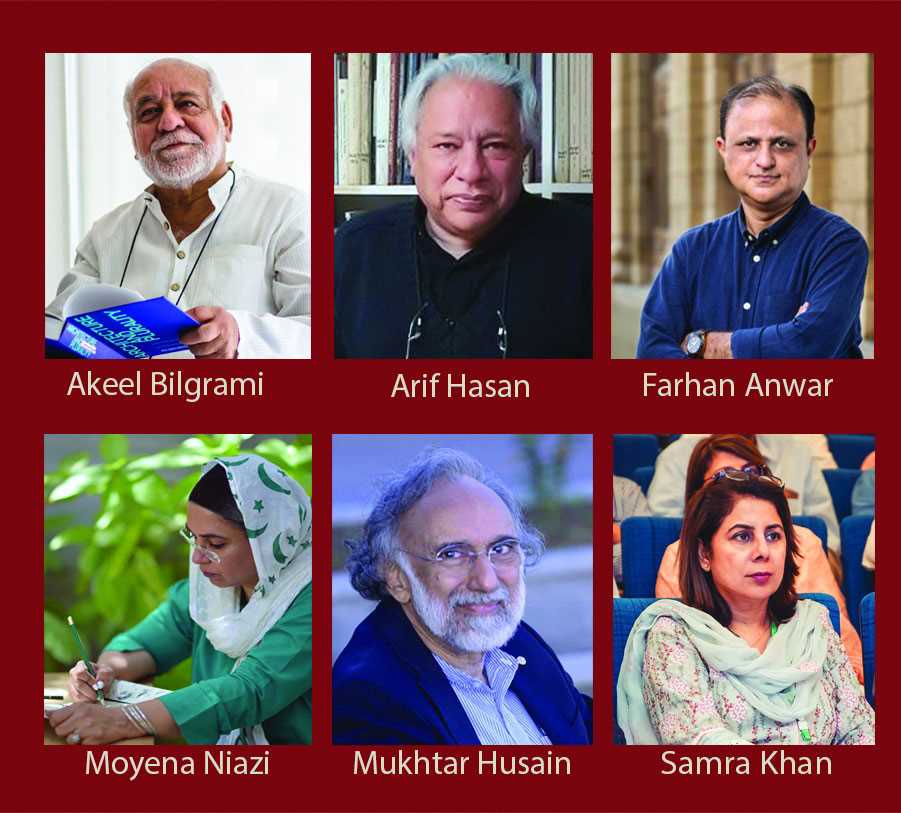
Chinonyrem Ugowana spoke of achieving sustainable development goals through adaptive reuse of underutilized highrise office buildings to provide for the huge demand for affordable housing. The session was moderated by Dr. Rabela Junejo, led by panel discussion by Ar. Akeel Bilgrami and Ar. Mukhtar Husain. The two panelists interestingly highlighted their own experiences of pleasant adaptations where spending quality time with family became refreshing, amidst the challenges in work. Urban stresses have been growing in the work worlds and family relations bear the brunt of this without realization in the normal.
The second technical session had particular focus on research on low income communities in pandemic. Pertinent questions were raised about safety nets, poverty nets, that create inclusion or exclusion through data collection, generated, required for targeting health services, inclusive health nets within urban environments. Vulnerabilities increase in the absence of safety nets, physical and economic losses. There is need for disaggregation of density, plots, demographics, location, thermal heat, materials of construction, poverty issues and growing vulnerabilities in lockdowns. The first paper, by Dr. Alireza from University of Cape Town, South Africa, focused on three low income residential areas as cases from three different geographical locations, Nepal, Jordan and South Africa. Despite their geographical differences, the three areas faced similar vulnerability issues of poverty due to dynamics of location, materials and access to infrastructure and support.
If cities have to be equitable, safe and resilient, this can only be achieved by placing empathy and integration at the core of practice and pedagogy, debated the insightful paper of Ar. Aamna Shahid, from COMSATS University Islamabad. She emphasized on acknowledging the agency of planning and design and addressed professionals in developing countries.
Adam Abdullah, Soha Macktoom and Aqdas Fatima, from IBA Urban Lab Karachi, brought forth interesting findings based on questions of how density and materials of construction in informal settlements create restrictions of heat particularly in the lockdown situation. They debated how containment measures interact with density, housing materials, infrastructures, and socio-economic attributes, to produce different indoor thermal experiences.
Disconnect from schools, mobility in absence of transportation, downsizing of industry labor have been additive vulnerabilities and challenges for the urban poor in lockdown, increasing their poverty levels, making more urbanites go below the poverty line, remarked Arif Hasan, Urban Planner and Architect, as panelist of the session. He also added that there was enormous need for measures contributing to reducing peoples poverty conditions. This can be somewhat achieved through real estate rental and selling price control incorporating non-utilization fee for land and property; increasing minimum densities for all housing areas for a more equal distribution and there is a major need for stronger institutional arrangements, regulations and policies to be revisited and reinforced, outlined the senior researcher and professional. The importance of regulations and policies in creating an efficiently functioning built environment for various sections of population was significantly highlighted by Planner Farhan Anwer. Retrofitting in terms of reallocation of land uses and adaptive reuse in crises require creative thought and are an emerging requirement. Moyena Niazi reinforced this all along with adding that perhaps the condition of low income areas and living was such that it did offer greater strength and immunity to the poor, bringing forth a question often locally spoken about, debating its credibility.
Third technical session focused on studio pedagogical practice for architecture design. Three papers from Karachi, Islamabad and Bangladesh brought to limelight a comparison between studio adaptations during and post lockdowns. Planner, architect and educationist, Muhammad Fazal Noor from Sir Syed University presented the paper titled, ‘Pre-requisites, opportunities and pitfalls of online studios’. The paper gave a good overview of requirements of PCATP and HEC parameters of online teaching, experiences recorded by faculty from various universities through interviews and the issues faced by them.
Uzma Kabir and Sannah Ejaz from COMSATS Islamabad spoke of their theoretical framework for an Urban Design Studio, compulsions and limitations of online methodology and presented the success, with some limitations of their adapted methodology for pedagogy and studio design. The studio teaching adapted online method from BRAC University, Bangladesh was presented by Dr. Muhammad Faruk and Shayeeka Binte Alam. These evaluations on teaching methodology and student outputs gave directions for regulators, instructors and learners to improving and contributing to curriculum development through nurturing efficient modes in Architectural Education.
The three technical sessions were held online. The conference last year, that is 2020, was conducted in an online format completely, amidst an atmosphere of unpredictability, yet it successfully emerged achieving most of the objectives albeit with actively troubleshooting, adapting to the digital systems of communication, addressing various elements as and when they came along. Thus, among a tier of issues, the advantages of the systems emerged such that while this is mostly not appreciated as the only mode of operation, but willingly, the hybrid modes are trending in pedagogy as well as scholarly exchange in conferences, where online and digital modes work to support physical interactions.
A documentary on future cities by Norman Foster presented an interesting perspective of the developing role and expectations from public spaces in the new normal. Sustainability, accommodating green diversity, growing significance of multiple scales of public spaces, post COVID with greater acceptance of remote learning and working, all create opportunity for urban design, driving pedestrian friendly design with varied mixes of natural and built environments.
The concluding session was held in physical mode (with live streaming) inviting varied frontline workers or professionals from different disciplines to share their experiences and insights of the pandemic, along with generating some directions for better management in future.
The panel comprised of Ar. Arif Changezi (PCATP Chairman), Dr. Farhana Shahid (Associate Professor, SZABIST), Dr. Abdul Bari Khan (CEO Indus Hospital) and Mr. Abdul Kabir Kazi (Managing Director, Sindh Education Foundation). Ar. Arif Changezi, representing practicing architects, appreciated the opportunity for architects and design professionals to create meaningful and green public spaces for Pakistani cities, promoting economic opportunities as well as providing healthy urban environments in the new normal. He mentioned the initial reluctance at sites of construction staff towards vaccination until it was made mandatory for operational sites. He expressed how online meetings were a mere substitute in practice but not as effective in communication as physical meetings with clients, contractors, and workers from field. Dr. Farhana Shahid, representing educationists in medicine, spoke of effective strategies devised by SZABIST institute during wake of pandemic to combat education loss in students. She reinstated the timeliness of virtual formats avoiding loss of valuable time for learning.
Dr. Abdul Bari Khan, a practicing professional and manager of hospital, shared his insight on the growing needs for healthcare for the multiplying demographics of Karachi city. He pointed to the need for a reevaluation of the ratios of population and hospitals (with bedsize) as an essential part of planning for a crisis. Limitations in requirement needs to be addressed through preplanning accommodating flexible architecture design to allow expansion of existing healthcare infrastructure, discussed Dr. Bari and Ar. Changezi. In case of further limitations, it was agreed that underutilized spaces in the city need to be identified for makeshift services. The red alarm sounded for hospitals and the city when signs were put out to show that hospitals did not have space available for patients. There was much potential in adaptive reuse of building stock lying abandoned or vacant for various reasons for medical services in emergency pandemic like situations and these ought to be identified. Dr. Bari shared his experience of working and dealing with Covid patients with hospital services and facilities available. Again the presence of strong institutional arrangements were agreed to be major missed requirements for Karachi city, reinforced the moderator for the concluding session, Dr. Masooma Shakir.
Mr. Kabir Kazi represented the public primary education sector in rural areas and related the reluctance shown by teachers to connect to digital modes, the limitations of access to internet facilities and the context of student households that made virtual educational interaction impossible. Mr, Kazi however felt he had found some solutions to educational issues faced after attending this conference on pandemic and various pedagogical experiences. The primary education suffered enormously with the lockdown enforcement for more than a year as classes did not take place. He spoke of the dire need for available infrastructure in rural areas along with teacher training to deal with the situation.
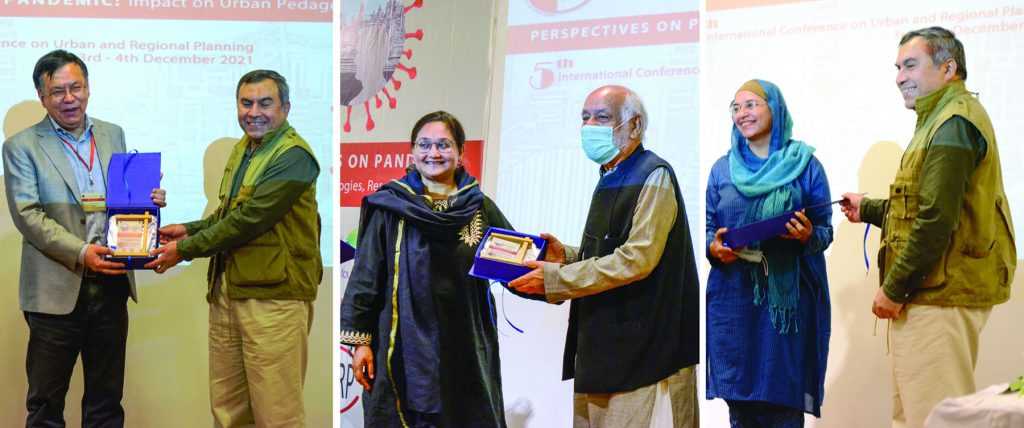
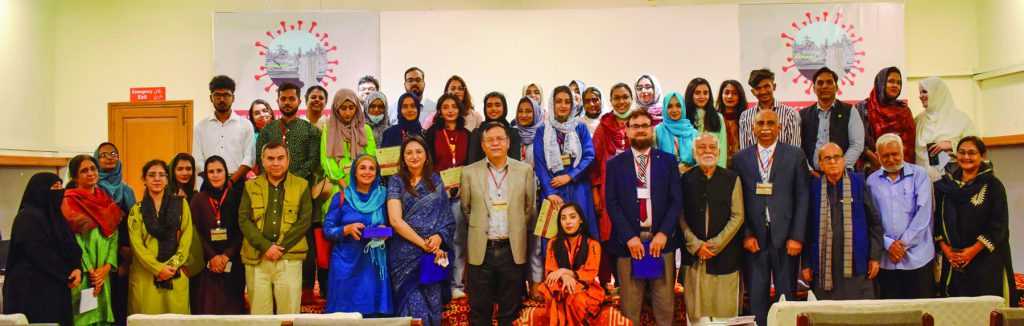
The session was successfully concluded, followed by certificate distribution among volunteer students, mementos presentation to worthy panelists and vote of thanks to all contributors by co-convener Ar. Rabia Asim. The guests were invited for an interactive session with refreshments served in the courtyard under canopy of Neem tree standing as a landmark. An exhibit of students’ work allowed the audience to walk around the heritage property leisurely before or after the event.


