


By: Mahnoor Fatima | Photographs Courtesy: Architect
Dr. Gulzar Haider is the Founding Dean of Razia School of Architecture, BNU. He has two undergraduate degrees in Civil Engineering and Architecture, and a Ph.D. from the University of Illinois Urbana-Champaign. In this exclusive interview with ARCHI TIMES he talks about his architecture journey and other related issues of the profession.
ARCHI TIMES (AT): Please tell us about your early life and architecture journey.
Dr. Gulzar Haider (GH): “I did my civil engineering from Engineering University (University of Engineering and Technology). I was a favorite of Dr. Mubashir Hussain, who was a very good teacher. When I finished my degree, he sat me in a cart behind his bicycle and took me all the way to NCA. There, in the principal’s office, he told the man I would be wasted if I agreed to take on a job as an engineer in Islamabad. Those were the days when a team of Greek architects had flown to Pakistan to work on the new capital. I decided to join them as an engineer. Dr. Mubashir asked him to persuade me to apply for a Fulbright so I could do my Master’s in the US. So, I applied for a Fulbright.
I worked under architect John Terry as a trainee back then. He was a RIBA fellow and had moved to Lahore after partition with his engineer partner. He liked Lahore and worked on a number of houses here. I worked with him to renovate the Punjab Club on Mall Road. He decided to pack up and leave to go back to the UK after a few years. We stayed in touch; he wrote to me when I was going for my Fulbright. John Terry even wrote a book on geometric patterns.”




AT: You’ve taught abroad and in Pakistan, what would you say are the differences between the two education systems?
GH: There is no comparison. Canada as a nation, they are very demanding, they have built themselves from ground zero. They have gone through the experience of connecting one end of the Atlantic Ocean to the other end of the Pacific Ocean and then to the North Pole Sea by a railway that takes a couple of days to go all the way from Halifax to Vancouver. Canada has a few excellent architecture schools. They have an identity and they own it. Pakistanis as a people, sadly, have yet to grasp a very important concept. We need to work on our qualities ourselves, on our skills, and we need to create a mindset that gears one towards growth as opposed to destructive confrontation.
AT: There have been many institutions that have popped up all over Pakistan – about 35 in the last few years. Would you say they have been doing a good job? Do we need these?
GH: Frankly speaking, we do not need so many institutions. I’ve been told there are many institutions that are operating without a license. They are not accredited by the governing bodies. There are schools that claim to guarantee their students a degree from BNU but lack the quality of education. That is something I appreciate about BNU – everyone who got together to make BNU a reality was educated by excellent institutions, and they sought to create an excellent institution themselves. Saleema Hashmi, Navid Shehzad, and Sartaj Aziz – are all brilliant people.
AT: How would you compare the educational standards for architecture schools here? Is there a way they can all learn from each other?
GH: I do not like comparing schools to each other. There is no point, frankly, because it makes no difference. You can analyze and compare all you want, but everyone still goes on as before. Parents often ask me whether they should send their child to NCA or BNU – I always tell them I cannot possibly give them an answer to that! Reputation takes time to build. You cannot force it.
AT: What motivated you to leave everything you had in Canada and move back to Pakistan for BNU?
GH: That is an interesting story. When I was teaching, a friend of mine Yasmeen Cheema, who was at the time doing her Master’s in conservation and restoration from Turkey, reached out to me about an article. She herself was working on the restoration of Bibi Javindi’s tomb in Uch Sharif. The article was about reinventing Pakistan and had been published in the Smithsonian magazine. Of course, being in an American magazine it had a pax-Americana vibe to it, where sometimes history can be a little distorted. There are dissertations on this. I read about Navid Shehzad’s idea for BNU, a liberal arts university that would give the students in Pakistan opportunities that were otherwise not available to them. Navid Shehzad was a filmmaker, author, and educator. The concept of reinventing Pakistan hit me so positively, that I decided to come and see what it was about.




AT: Why do you think Pakistan fails to create a more contextual architecture? How do we find our own architectural way?
GH: Sartaj Aziz, who was the founding vice chancellor of BNU, told us about how when he was a young boy, the Quaid-e-Azam visited his school. He asked the students there, who were all Muslims, whether they thought they were any good at mathematics. The students said they were not, and that mathematics was a subject the Hindus excelled at. Quaid-e-Azam asked them why that was the case, and told all the Muslim students to apply for admission into Hailey College of Commerce. Sartaj Aziz was one of those. He served as the finance minister of Pakistan!
It is the same story. We fail to understand that we need to get up and do it ourselves. Own our identity! What did Japan do after Hiroshima? Nobody drives an American car. On the contrary, an American man will proudly come home and give his wife a Lexus. It is not okay to keep going to IMF. We refuse to understand what Pakistan is and where it is headed – for two decades, Karachi remained in the hands of criminals! Now, look at Bangladesh, they win Aga Khan awards for their architecture. They invest in their architects. What are we doing?
AT: Do you think that is also the secret to really preserving our architectural heritage? What is your opinion on local architectural standards today?
GH: Absolutely! Why are we not working on building ourselves? On “reinventing” ourselves? I’ll give you an illustrative example. If we hadn’t been the way we were back in 1947, maybe we would have been spared all the looting and massacre. Today, politics is all about trying to put each other down as opposed to standing for anything productive. There is no true sportsmanship. Politicians prefer badmouthing each other to actually getting down and working to solve our problems. If you start thinking about heritage, you’ll think it is weird that a land thousands of years old was partitioned all of a sudden. How can heritage be partitioned? Architecture has turned into merely buying a plot, building a house, selling it for twice the price, then buying more plots. There is no sensitivity.
AT: What, then, do you think is the role of an architect in our society? What do our students need to learn?
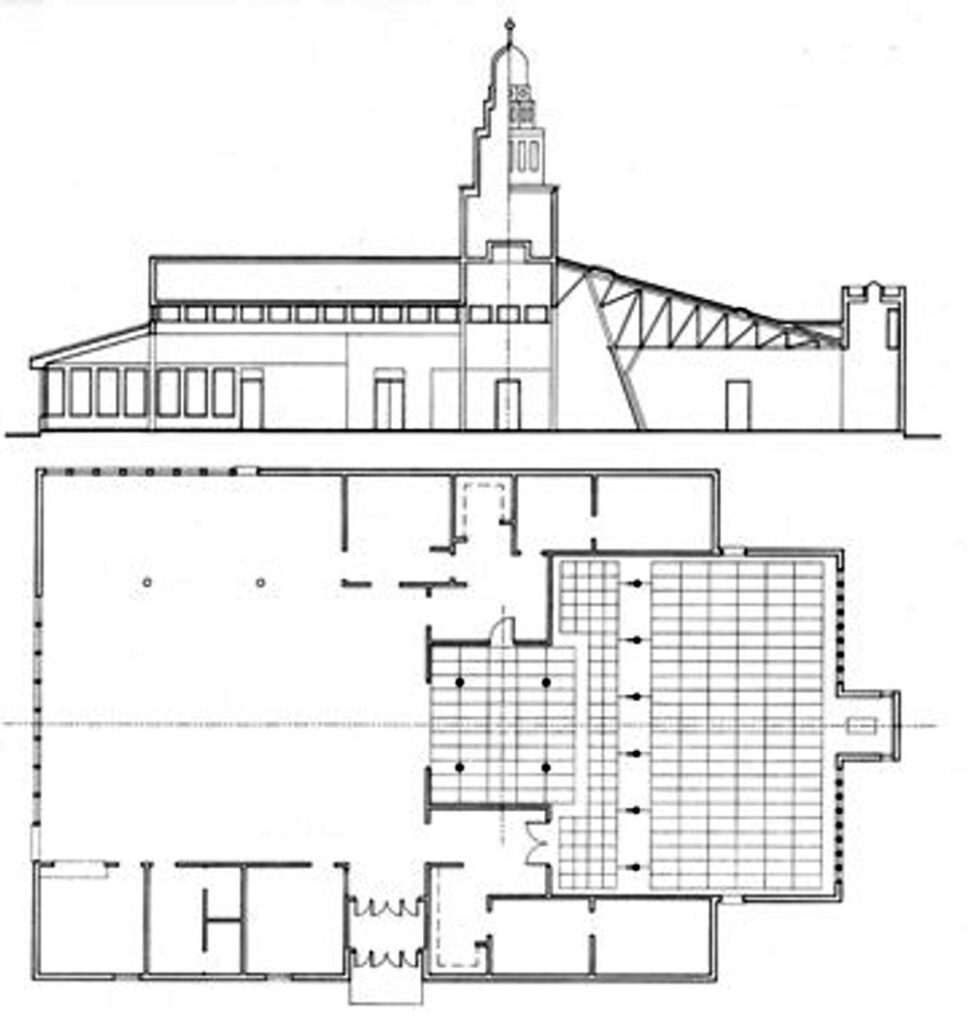
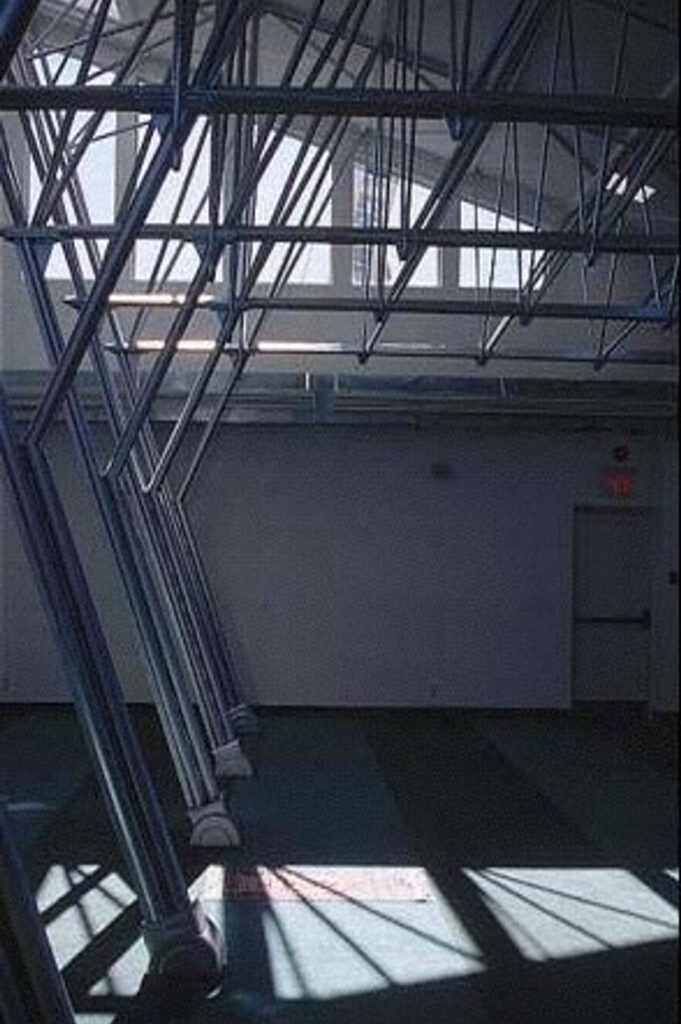
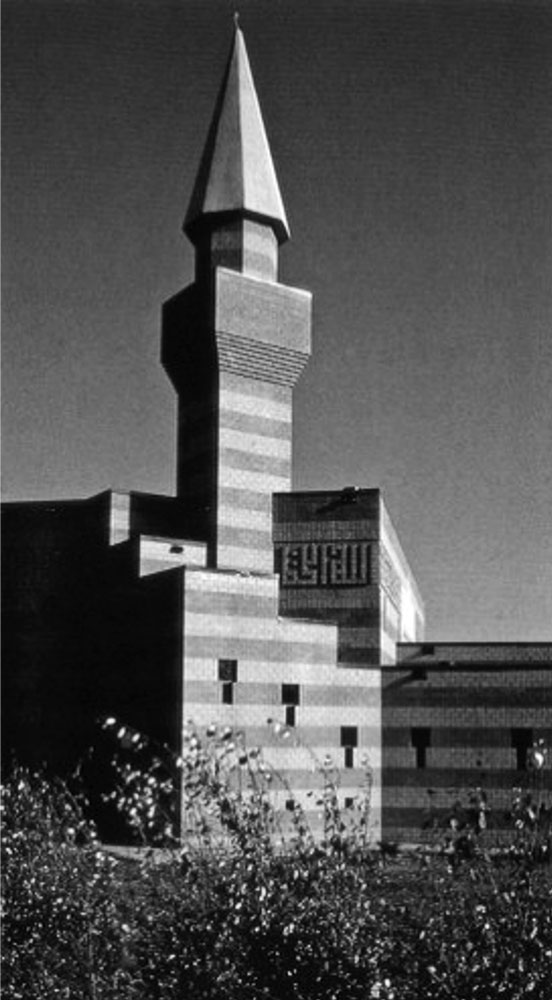
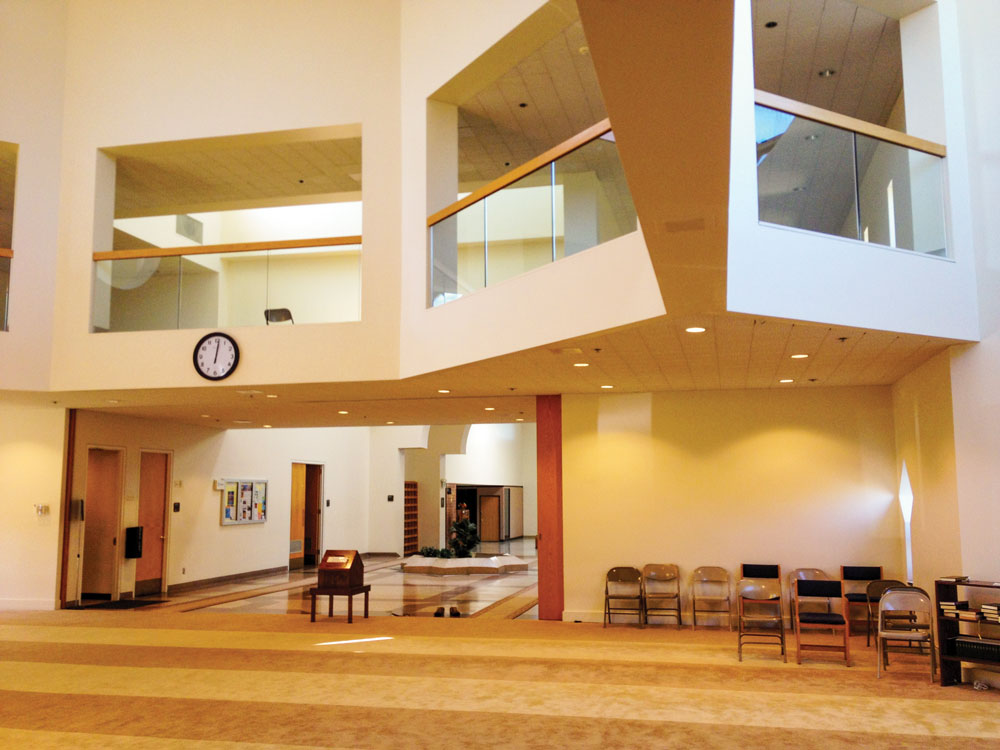
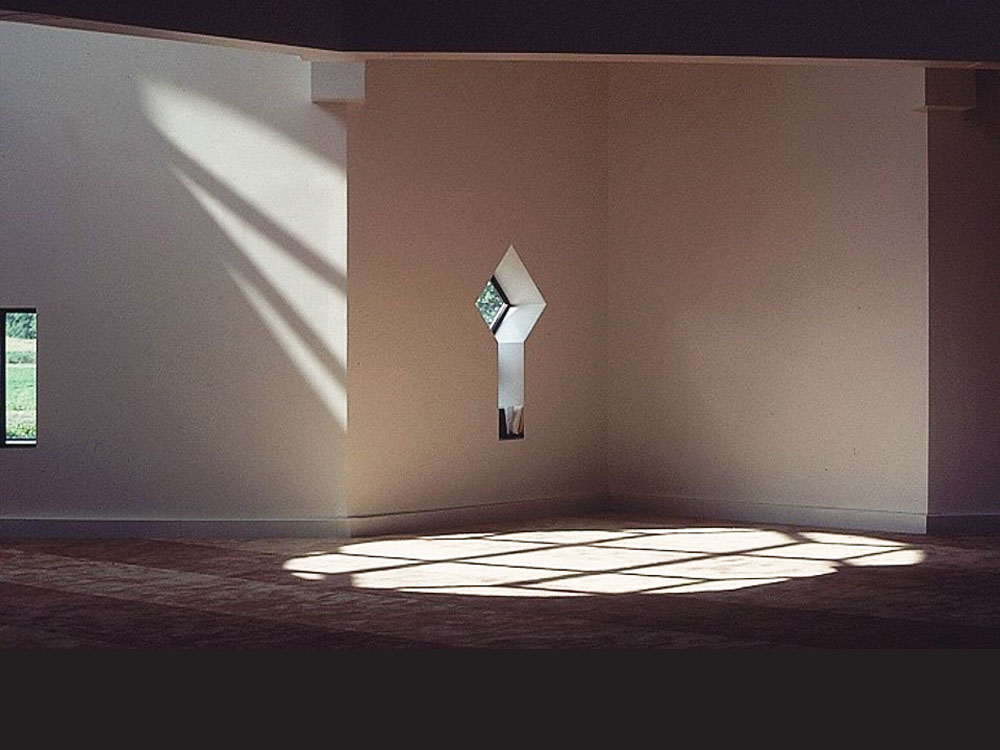
GH: The most important quality that students need to employ in their lives is being sensitive to the needs of the people. When I used to design mosques, I would pay attention to the needs and requirements of the people who would be potentially using the spaces. For a particular mosque I designed for the Islamic Society of North America, of which I was also a founding member, I took great care to design the mosque creatively, because tackling gender segregation is a tricky task. I created fenestrations from the floor above to overlook into the courtyard below. The women were given the upper section, and they could check for their men folk through the openings. For another mosque I designed in Vancouver, the concept behind the women’s section was from the shuttlecock burqa that my mother used to wear – when prayers end, women can crowd around the fenestrations on this wall to see whether their husbands have also come out.
Architects need to work on creating silent experiences. Shop outlets have displays shouting at you to see them – architecture should do no such thing. As an experience, it is completely immersive. One of the most important elements architects need to work on is light. To find the best way to incorporate light into interiors without relying only on artificial lighting.
AT: What types of projects have you done? Are there any particular favorites?
GH: There are the mosques I have told you about. I worked on Laila Rahman’s house, who is an associate professor in NCA. One project that was very interesting to me was Mehdi Hassan’s house. I admire him greatly as an academic and a courageous journalist – he never spared anyone his honest opinion, but underneath that honesty was a gentle heart. You cannot be cruel when you are being honest because honesty has its own strength. His house was on 4 marlas, and was not expensive. His son wanted to angle the house so that his father and his son could share a grandfather-grandson link both visually and physically. So, I placed a window whereby his son could look into his father’s study. Sadly, Mehdi Hassan died shortly after the house was built. Not because of the house, of course. I also designed a mosque for Arkansas State University. The chandelier inside was made of wires. It was a very good play on geometry.
AT: Speaking of geometry, would you like to talk about your experience training under architect John Terry?
GH: Before I went for my Fulbright in 1961, I trained under architect John Terry. He was a fellow of the Royal Institute of British Architects. I worked on a number of houses with him, but a bigger project was the renovation of the Punjab Club on Mall Road. I worked on the structural part of the renovation. An interesting fact is that John Terry authored a book on geometric patterns himself.




AT: You speak about geometry quite a bit. Do you think that interest and specialization translate into your work here?
GH: Yes! This table here has been created so that the metal pipes will never move. They have been placed geometrically. If the top is taken off, they will all fall down. There is a ball placed on the top of every pipe which helps attach itself to the top. I always ask first year students what they think of the table and whether they think it is a good idea. They’re interested. They are willing to learn. That is the mindset we need to build, the one that Navid Shehzad wrote to reinvent.
After my second Bachelor’s in Architecture from the University of Illinois Urbana Champaign, I enrolled in a PhD. I wrote my PhD paper on rectangular Kufic calligraphy. During my doctorate, I went to a museum in Chicago for work and discovered an interesting similarity in Chinese pottery. Underneath many pottery pieces, there is a stamp in Chinese that is very similar to the rectangular Kufic pattern of Iranian calligraphy. Throughout my research, I uncovered many such things. There are mosque domes that are covered with this sort of rectangular calligraphy. When I started working for BNU, we had very small rooms in a building on Mall Road. Sartaj Aziz sahib was impressed at how well I had done up my office – I just knew how to use geometrical patterns to my advantage.
AT: You’ve had a vast amount of experience. What would you like students today to know?
GH: You have to focus on creating the right skill set to keep growing. My two favorite academics are Dr. Mubashir and Mehdi Hassan – the former pushed me to think big and helped me apply for my Fulbright, while the latter I admire for never giving in saying anything just for the sake of pleasing someone. We have to develop a new kind of citizen. I have to go through the retirement process soon, but I still teach first year today!
Apart from that, as I’ve mentioned before, cultivating sensitivity. To not only people but also to the surroundings and nature. You can’t just build an Empire State Building in Lahore – students should go and see what the land of Lahore is like. Nayyar Ali is an expert at knowing what kind of architecture to build. Another thing that is important is knowing how to organize light to reflect the space – like when I look at Raphael’s “School of Athens”, there is certain lighting that brings out the size of the space, and forces you to gaze beyond into infinity.
AT: On an ending note, what is the meaning of architecture to you?
GH: Architecture has no tongue. It has a language, but it does not speak. Architecture communicates very silently to the people, helps them immerse in it. Some people talk about what architecture looks like. In the case of the Taj Mahal, there are some who will look at it and ask why a building with lots of expensive stone gets so much attention! There is a verse by Sahir Ludhiyanvi,
Ik shahansha ne daulat ka sahara le kr,
Ham ghareebon ki muhabbat ka uda dya mazaq
But that’s just it. Someone who writes a textbook, they can talk about what a window means to them in fancy words. But architecture is an experiential process. Architecture is, and I’ve said this before, silently eloquent. I’ve been lucky to experience Taj Mahal’s eloquence myself a few times. The motivation behind the Taj Mahal is so beautiful – it is meant to replicate the divine. Anyone visiting it can feel that it is meant to do so. That is what architecture is. Architecture is a lot about knowing history and moving forward with that knowledge. When you are armed with knowledge, it is like Plato’s Allegory of the Cave. You discover a whole new world apart from what you thought was enough to get by on.


