


ARCHI TIMES Interview | Photographs by Engineer
Engineer Amer Saleem is a distinguished Mechanical Engineer, business leader, and Facilities Management expert with over 37 years of professional experience. Throughout his career, he has served in leading multinational organizations, including General Electric, ExxonMobil, 3M, Johnson Controls, and CBRE. His expertise spans operations management, corporate leadership, sustainability, and energy conservation. Currently, he works as an independent consultant, advisor, trainer, and Visiting Faculty at IBA Karachi. He has also introduced a locally accredited Facilities Management certification pathway at NED University and trained over 1,000 students and professionals, playing a significant role in advancing Facilities Management education and professional development in Pakistan.
PLEASE INTRODUCE YOURSELF AND TELL US ABOUT YOUR EDUCATIONAL AND PROFESSIONAL JOURNEY AS A MECHANICAL ENGINEER. WHAT LED YOU TO SPECIALISE IN YOUR PARTICULAR FIELD?
AMER SALEEM (AS): I am a Mechanical Engineer by training, graduating from the University College of Engineering, Taxila in 1986, and later completing an MBA in Operations Management from LUMS in 1989. My career spans more than 37 years, mostly in multinational companies such as General Electric, ExxonMobil, 3M, Johnson Controls, and CBRE. I have served as CEO and Chairman of the Board for over 12 years.
Today I work as an independent consultant, advisor, trainer, and coach. I am a Visiting Faculty at the Institute of Business Administration (IBA), Karachi, where I teach Facilities Management, with an introduction to Corporate Governance, and a separate course on Introduction to Sustainability, ESG, and Energy Conservation, both within the Diploma in Strategic Real Estate Management program. I have also recently launched a certification pathway for FM professionals at NED University, which is Pakistan’s first and only locally accredited FM credential. Over the past three years, I have personally trained more than 1,000 students through specialised online FM programs, drawn not only from Pakistan but from several other countries as well.
I also manage a LinkedIn page called “Facility Management Pakistan” consisting of 3700-plus members, and a WhatsApp group of the same name consisting of 500 members.
OVER THE COURSE OF YOUR CAREER, WHAT MAJOR PROJECTS, FACILITIES, OR EXPERIENCES HAVE SHAPED YOUR UNDERSTANDING OF MECHANICAL ENGINEERING AND BUILDING OPERATIONS?
AS: Several experiences stand out. At General Electric, I was involved in major Locomotive sales projects worth approximately $350 million, which taught me how technical specification and long-term contractual obligation intersect. At Johnson Controls, I managed the Shell Account across five countries, Pakistan, Oman, Thailand, the Philippines, and Indonesia, with an annual Facilities Management portfolio of $43 million, and a Project management portfolio exceeding $60 million. That experience showed me how operational standards, once properly embedded, can be replicated and scaled across very different regulatory and cultural environments.
This period also brought personal recognition, including being named Top 10% Employee in Asia by Johnson Controls in 2013, and Top Market Unit Regional Operations Manager Globally the same year, following five consecutive years of “Excellent” performance ratings.
At CBRE, I led the transition of Johnson Controls’ local entity to CBRE, grew the company’s revenue nearly threefold and its headcount from 14 to over 320 employees within five years, and directed 18 major customer account transitions. Each of those transitions was, in effect, a live case study in how a building’s mechanical and operational systems either support or undermine a smooth handover. That volume and variety of exposure, across sectors, countries, and client cultures, has shaped almost everything I now teach and advise on.
YOU DESCRIBE ARCHITECTURE, DESIGN, ENGINEERING, PROJECT MANAGEMENT, AND CONSTRUCTION AS THE “UPSTREAM AND MIDSTREAM,” WHILE YOUR PROFESSION REPRESENTS THE “DOWNSTREAM.” COULD YOU EXPLAIN THIS PERSPECTIVE AND WHY IT IS IMPORTANT?
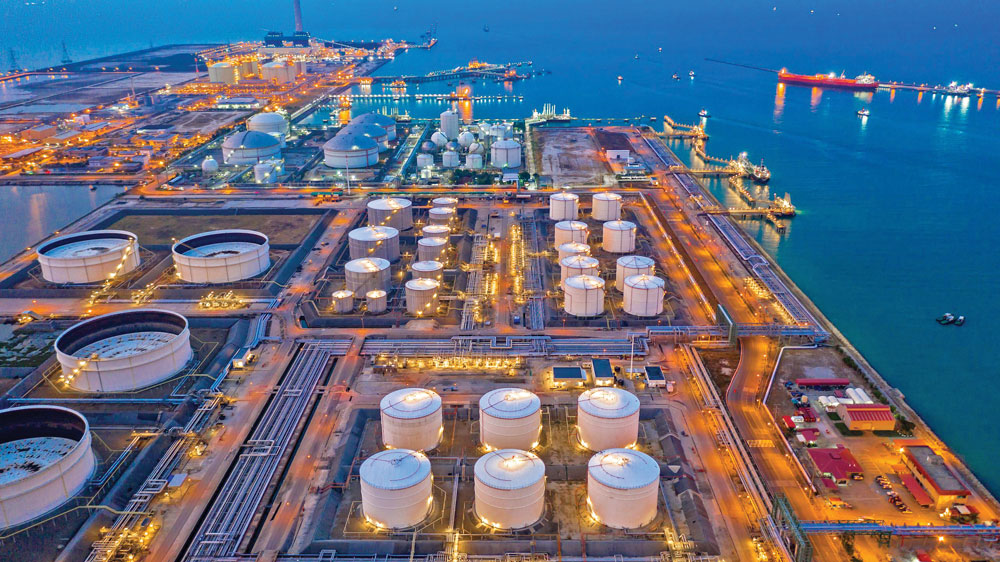
AS: Upstream and Midstream activities, design, engineering, and construction, create a building. Downstream, which is Facilities Management and operations, is where that building actually lives out its useful life. A property team conceives a structure over a few years. The operations team then lives inside every decision the property team made, for decades. When I describe FM as Downstream, I am pointing to the fact that we inherit the consequences, good or bad, of Upstream choices, but we rarely have a seat at the table when those choices are made. That asymmetry, between who decides and who lives with the decision, is the single most important structural issue in our industry today.
YOU HAVE POINTED OUT THAT ARCHITECTS, CONSULTANTS, CONTRACTORS, AND PROJECT TEAMS MAY REMAIN INVOLVED FOR 5-10 YEARS, WHILE OPERATIONS PROFESSIONALS CAN INHERIT A FACILITY FOR 50 YEARS OR MORE. WHAT DOES THIS LONG-TERM RESPONSIBILITY MEAN FOR A MECHANICAL ENGINEER?
AS: It means that a mechanical engineer in operations is, in effect, the custodian of decisions made by people who are long gone from the project by the time real problems surface. A poorly specified chiller or an inaccessible plant room does not reveal itself on Handover Day. It reveals itself say 5 years later, when the operations team has to explain to the owners why Replacement Costs (Capex) are higher than expected, or why Downtime is more frequent than it should be. This long horizon demands a different mindset from operations engineers. We must think in terms of Lifecycle Cost (LCC) performance, not just point-in-time functionality, and we must be willing to raise issues that the original project team may no longer be around to hear about.
WHEN A NEWLY COMPLETED BUILDING IS HANDED OVER TO THE OPERATIONS TEAM, WHAT ARE THE FIRST THINGS YOU LOOK FOR? WHAT CAN IMMEDIATELY TELL YOU WHETHER A PROJECT HAS BEEN DESIGNED AND CONSTRUCTED WELL?
AS: I look first at the plant rooms and mechanical spaces. Are they sized for maintenance access? Or were they treated as leftover space once everything else was allocated? I look at documentation like as-built drawings, materials list, operation and maintenance manuals, asset registers, vendor registers, warranty and DLP registers, spare parts, planned preventive maintenance schedules, and commissioning reports, because their completeness or absence tells you a great deal about how seriously the project team took the Handover Process. I also look at asset tagging, equipment labelling, and whether critical systems have any redundancy built in. A well-designed and well-constructed project tends to show itself in these unglamorous details long before it shows itself in performance data.

HOW IMPORTANT IS THE EARLY INVOLVEMENT OF MECHANICAL ENGINEERS IN ARCHITECTURAL AND BUILDING DESIGN? AT WHAT STAGE SHOULD THE OPERATIONS TEAM IDEALLY BECOME INVOLVED?
AS: It is critical! And in my experience, it happens far too late. Ideally, an operations perspective should be represented from the concept design stage, when major decisions about plant room location, service risers, equipment access routes, spares inventory location, maintenance rooms, and staff rooms are still on the table. In practice, operations teams are usually introduced only during handover, by which point the building’s fundamental operability has already been fixed. Every difficult, costly compromise I have seen in facility operations traces back to a design decision made without anyone in the room who would have to live with its consequences for the next 50 years.
WHAT ARE THE MOST COMMON MISTAKES YOU HAVE SEEN IN THE SELECTION AND SPECIFICATION OF HVAC, CHILLERS, PUMPS, GENERATORS, BOILERS, ELEVATORS, AND OTHER MECHANICAL EQUIPMENT?
AS: The most common mistake is optimising for capital cost rather than Total Cost of Ownership (TCO). Equipment is frequently selected on the basis of the lowest quoted price or the shortest delivery time, without adequate regard to local after-sales service availability, spare parts availability, or more crucially, the equipment’s energy efficiency over its operating life. I have also seen equipment specified without proper load calculations for local climate and usage patterns, leading to oversized or undersized systems that never operate at their intended efficiency.
HOW CAN AN APPARENTLY GOOD EQUIPMENT SPECIFICATION CREATE PROBLEMS FOR THE OPERATIONS TEAM OVER THE LONG TERM?
AS: A specification can look excellent on paper, correct capacity, reputable brand, but it can still create long-term problems if it does not account for local conditions. Internationally published useful-life estimates (example: BOMA, FIDIC, etc.) for equipment generally assume consistently performed preventive maintenance, a standard that Pakistani operating conditions do not always meet. Based on my own experience, I recommend scaling those international End-of-Life (EOL) estimates down by roughly 10% to 15% when applying them locally. A specification that ignores this reality will consistently overpromise on equipment lifespan and underprepare the operations budget for earlier-than-expected replacement.

FROM YOUR EXPERIENCE, HOW MUCH DOES THE QUALITY OF INSTALLATION AND COMMISSIONING AFFECT THE EFFICIENCY, RELIABILITY, AND LIFESPAN OF MECHANICAL SYSTEMS?
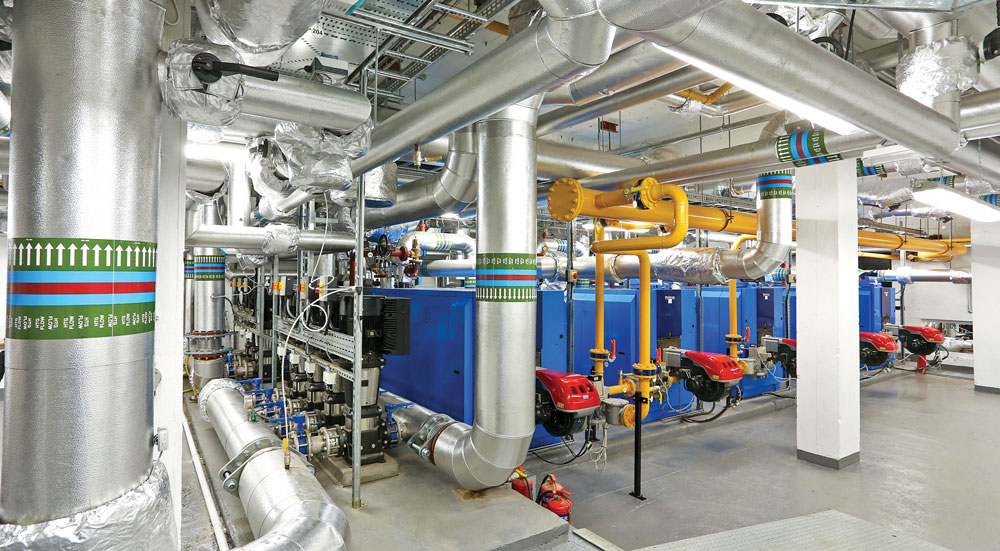
AS: Enormously, and it is consistently underrated! I have seen excellent equipment underperform for its entire operating life because of poor installation practices or a commissioning process that was rushed to meet a Handover deadline, rather than carried out to verify actual system performance. Commissioning should never be taken as a formality. It is the only point in time in a project’s entire life where design intent can be validated against as-built reality before the building goes into daily operation.
WHAT HAPPENS WHEN ARCHITECTS AND ENGINEERS FOCUS PRIMARILY ON THE INITIAL CONSTRUCTION COST RATHER THAN THE LIFE-CYCLE COST OF A BUILDING AND ITS MECHANICAL SYSTEMS?
AS: The consequences shift Downstream and compound over time. Lower-quality equipment fails earlier, energy inefficiency accumulates into significant recurring cost, and maintenance becomes reactive rather than planned. The building’s owner ultimately pays far more over its operating life than they would have by investing appropriately at the design stage, but by then the original decision-makers are no longer accountable for the outcome.
WHAT MAKES A BUILDING EASY OR DIFFICULT TO OPERATE AND MAINTAIN? ARE MAINTENANCE ACCESS, PLANT-ROOM PLANNING, EQUIPMENT REPLACEMENT ROUTES, AND SPARE-PARTS AVAILABILITY ADEQUATELY CONSIDERED IN OUR PROJECTS?
AS: In my experience, these considerations are inadequately addressed in the large majority of projects in Pakistan. Plant rooms are frequently undersized, equipment replacement routes are an afterthought, and spare-parts availability is rarely factored into brand or model selection at all. A building becomes easy to operate when these physical and logistical realities are designed in from the start, not retrofitted around after construction is complete.
HOW IMPORTANT ARE PROPER DOCUMENTATION, AS-BUILT DRAWINGS, OPERATION MANUALS, TESTING AND COMMISSIONING REPORTS, AND STAFF TRAINING DURING PROJECT HANDOVER?
AS: These are foundational, not optional. Without accurate as-built documentation and complete O&M manuals, an operations team is effectively managing a building blindly, relying on institutional memory rather than verified information. Staff training at Handover is equally important, even the best-designed system will underperform if the people operating it were never properly trained on its intended function.
IN YOUR EXPERIENCE, WHAT ARE THE CONSEQUENCES OF POOR COORDINATION BETWEEN ARCHITECTURAL, STRUCTURAL, ELECTRICAL, MECHANICAL, AND CONSTRUCTION TEAMS?
AS: Poor coordination produces clashes that surface at the worst possible time, during construction or, worse, after Handover. I have seen ductwork conflicting with structural beams, electrical rooms without adequate ventilation, and mechanical risers that were never properly coordinated with architectural finishes. These are not just cost overruns. They often become permanent operational limitations that the facility carries for its entire life.

WITH RISING ENERGY COSTS AND INCREASING ENVIRONMENTAL CONCERNS, WHAT ROLE CAN MECHANICAL ENGINEERS PLAY IN MAKING BUILDINGS MORE ENERGY-EFFICIENT AND SUSTAINABLE?
AS: Mechanical engineers are central to this conversation, because HVAC and mechanical systems typically represent the largest share of a building’s energy consumption. Equipment selection is only one aspect. Engineers have a role in embedding Sustainability into operational practice. Factors like optimised preventive maintenance, correct system sequencing, energy monitoring, and continuous commissioning are integral towards Sustainability & Energy Efficiency. Throughout my consulting work, I have advised clients on exactly this kind of proactive embedding sustainability practices. FM teams must treat this as an operational discipline rather than a one-time design feature.
WHAT CHANGES WOULD YOU LIKE TO SEE IN PAKISTAN’S ARCHITECTURE, ENGINEERING, CONSTRUCTION, AND BUILDING-OPERATIONS PRACTICES OVER THE NEXT 20-30 YEARS?
AS: I would like to see Facilities Management to be formally recognised as a profession in Pakistan, with structured education and certification pathways, rather than a discipline learned solely through years of on-the-job experience. Pakistan currently has no formally recognised FM certification framework, despite an FM workforce that I estimate (based on my own market research) at almost 300,000-plus at the managerial and technical cadre alone, and considerably more among blue-collar operations staff. I would also like to see operations professionals brought into the design process far earlier than is currently standard practice, and Lifecycle Cost (LCC) thinking adopted as the default rather than the exception across our Real Estate, Architecture, Engineering Design, Project Management, and Construction sectors.
I would like to urge organisations to invest in structured certification for the people already doing this work today, regardless of what their designations happen to be, whether Admin Manager, Utility Manager, MEP Manager, or Maintenance Manager. Experience on its own remains valuable, but experience without exposure to modern built-environment management practices is no longer sufficient for the complexity that today’s facilities demand. Sending an experienced professional through a structured program such as the one now available at NED University is, in my view, one of the most cost-effective investments a company can make in the resilience of its own operations.
WHAT IS YOUR ADVICE TO THE YOUNGER GENERATION AND STUDENTS?
AS: Learn to see a building, or any physical asset, across its entire life, not just the moment of its completion. The professionals who will shape the next generation of Pakistan’s built environment are the ones willing to think in decades rather than project timelines. I would also encourage younger engineers to actively seek out structured knowledge and credentials rather than relying solely on on-the-job learning. In my experience, those under 35 already show far more openness to modern practices than earlier generations did, and that hunger for knowledge is exactly what our industry needs. Build your technical foundation, but pair it early with an understanding of operations, business, and the long-term realities of the assets you help create.


