


ARCHI TIMES (AT): Before starting to talk, we would like to know your professional background and education.
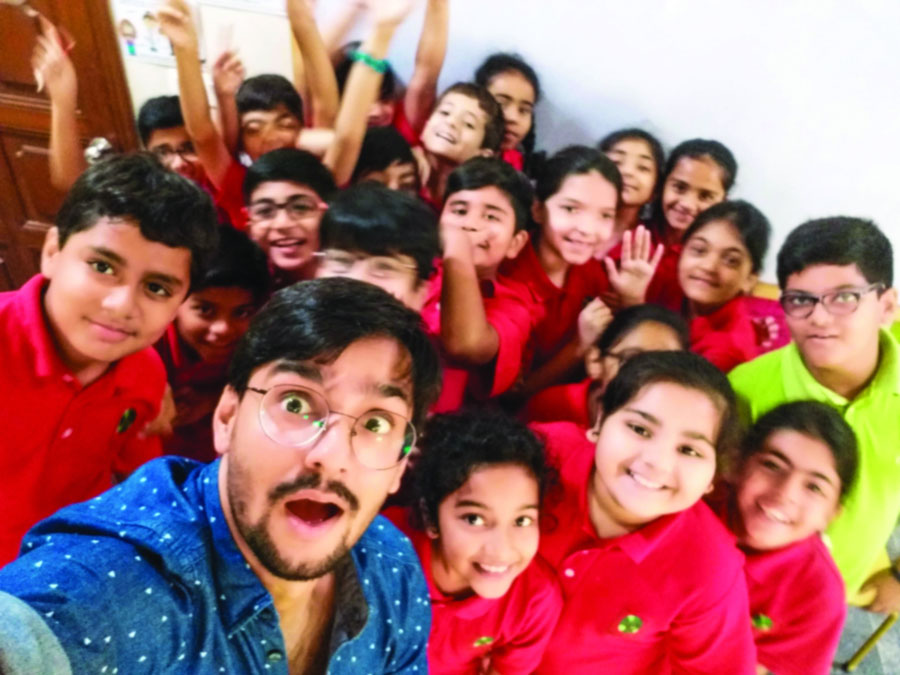
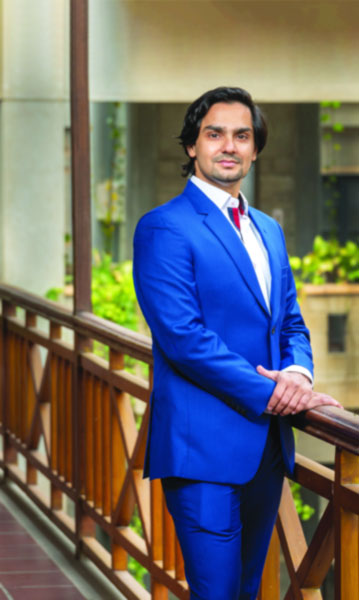
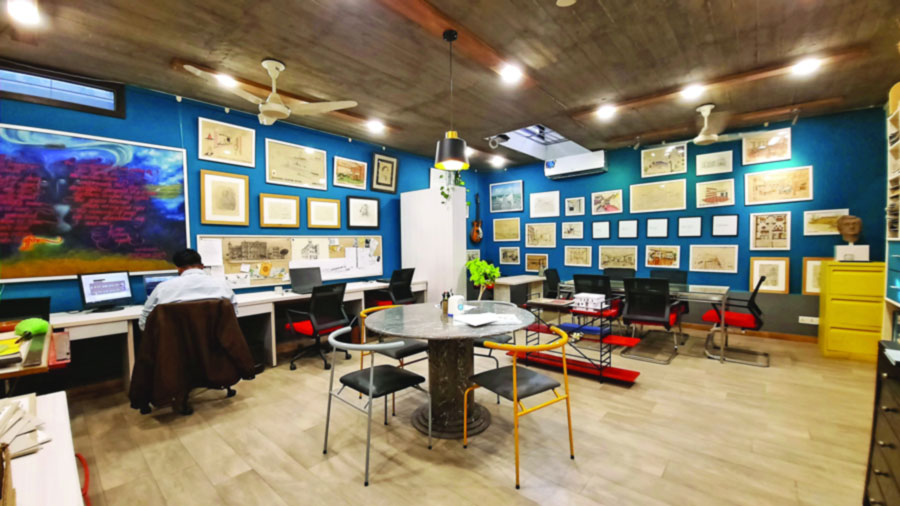
Zohaib Zuby (ZZ): Well, I am a multi-disciplinary professional. As soon as I completed my architecture degree in 2007, I felt two things very strongly. The first was frustration at why the country was going in a downward spiral, and second was feeling like there is so much more I want to learn! I knew I wanted to work in education and started to teach at a local college within a year. I also become a social activist and started a youth movement. Later on I won a scholarship and went for my Masters in Muslim Cultures at the AKU-ISMC in London. This was the best time of my life. I studied Arabic, History, Anthropology, Development Economics, and so much more. But I truly found my home in Philosophy. And upon my return I continued two of my work-lives together. On the one hand I have been practicing architecture. I have worked in residential, corporate, healthcare and industrial sectors, using my father’s office as my base. I have also quite passionately been working on Affordable Housing projects and have completed multiple low-cost house projects over the last decade. Currently, I am also rebranding my father’s practice as an Atelier under his name, ‘Zuby Design Collective’. However, simultaneously I have also been a full-time academic at Indus Valley since close to a decade. I have designed and taught courses in History and Theory of Architecture for the Department of Architecture. I have also authored and taught ‘Islamic Reformism in South Asia’ and ‘Philosophical Inquiry’ for the Liberal Arts Program. I have also taught at other institutions and feel quite proud to have pioneered Philosophy for Children (P4C) in Pakistan as well. More recently, I am founder at Be-khudi – which is a mental well-ness and meditation platform.
AT: What compelled you to pursue these two careers in Architecture and Academia?
ZZ: Actually, I could not help it! When I graduated and having closely observed the industry since a very long time, I could see that most architecture practices relied on offering their services to the wealthy. When I was younger I felt quite cross about that and had a long Marxist phase. Despite developing a more nuanced perspective over time, I still feel it is very sad that qualified, highly creative and professional architects cannot develop a business model or a practice to be in service to the country at large. They make an impact for the masses, and the environment at large – but in my personal view, it is not enough and I wish it was more. Hence, I could never have had a “normal” architecture practice. I had to do something to feel like my knowledge and skill could create some impact directly in people’s lives. When I became a teacher, I fell in love. I feel truly alive and ecstatic in a classroom discussing philosophical problems; exactly the same as when I am in the middle of a difficult planning exercise on my drafting board. Perhaps, the one thing that binds all this together for me is design. I do feel that a strong education in architecture gave me a good design capacity and I use that skill in my classroom, in my research projects, and in fact, in the way I live my life. I also feel like I don’t really have a “career” as such. I do what I love to do – whether it is architecture and construction or reading, writing, drawing, filming, or teaching. I think the underlying spirit of all my work engagements is to be in service to humanity; and to constantly challenge myself. In fact, I don’t know what I’ll do next!
AT: Was there a specific experience or a person that inspired you to explore architecture professionally?
ZZ: My biggest inspiration was obviously my father. I was interning at his office since seventh grade. I learnt how to draft before I finished my O levels. I was totally enamored by his drawings, and paintings, which he made for his clients. I was also always interested to see how spaces that are conceived on paper would spring up in real life. As an observer since such a young age, there is no doubt that I developed an inclination to the subject. The work seemed fun, and it was even more fun seeing my father explain things to people on site, make immediate sketches on the walls, and how he used a totally unknown lingo on construction sites! However, as a student I had the most wonderful experience with two teachers. Sheba Akhtar taught me History and in her courses I started to see Architecture as a poetic reality since ancient times. It revealed a totally new world to me and I felt so in love with architecture and the story of human beings through the lens of the built-form. The second teacher was the late Arshad Abdullah. I remember his humble personality and deep knowledge. He taught us Materials and Construction. I remember I could never stop asking him questions during class, which he patiently kept answering. I felt like he was a scientific genius and knew so much. Hence, this technical side of architecture was really alluring for me as well. Of course, I recall most of my teachers with great fondness, all of whom inspired my positive association with architecture. The late Saleem Thariani can never be forgotten, Husnain Lotia taught me a rational and clear thought process; and Sehr Bokhari showed me the value of challenging myself.
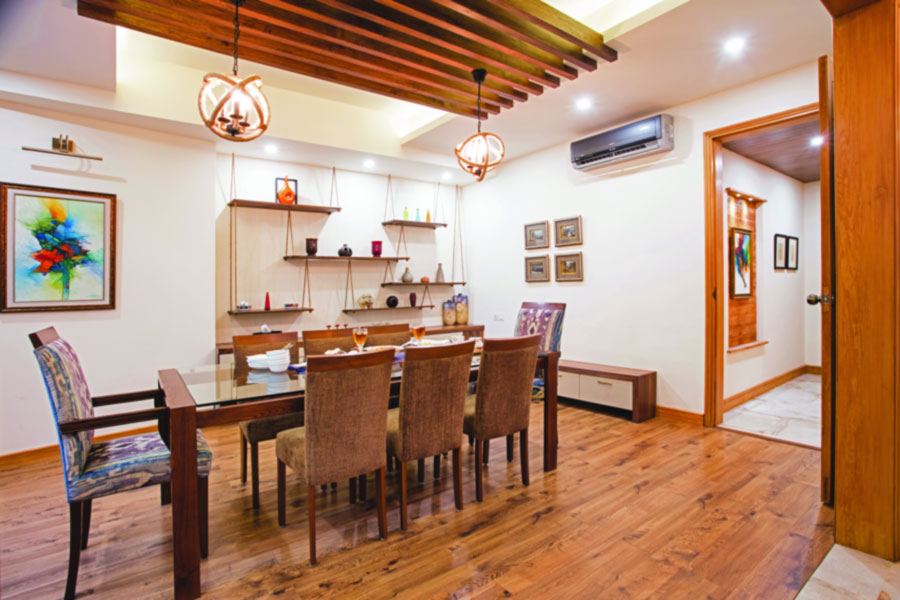
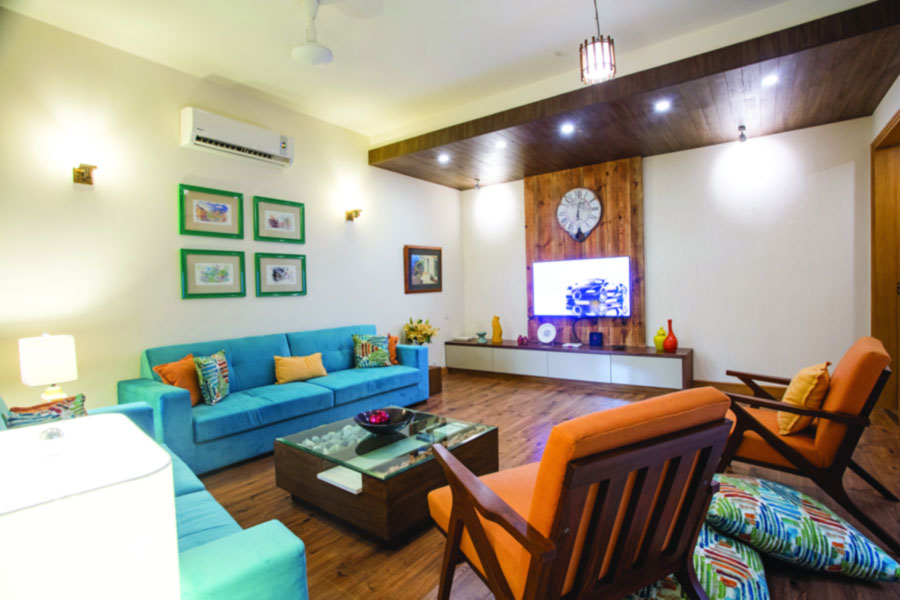
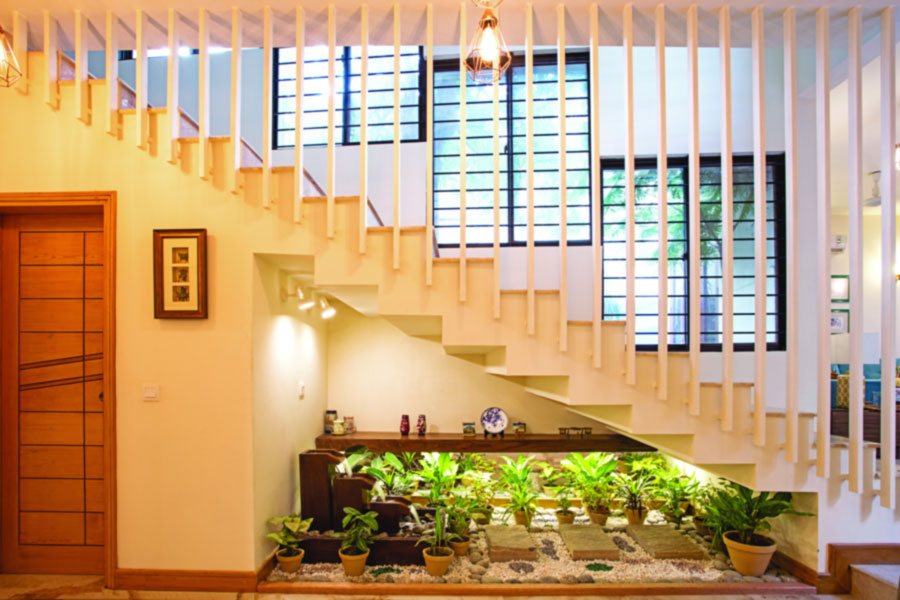
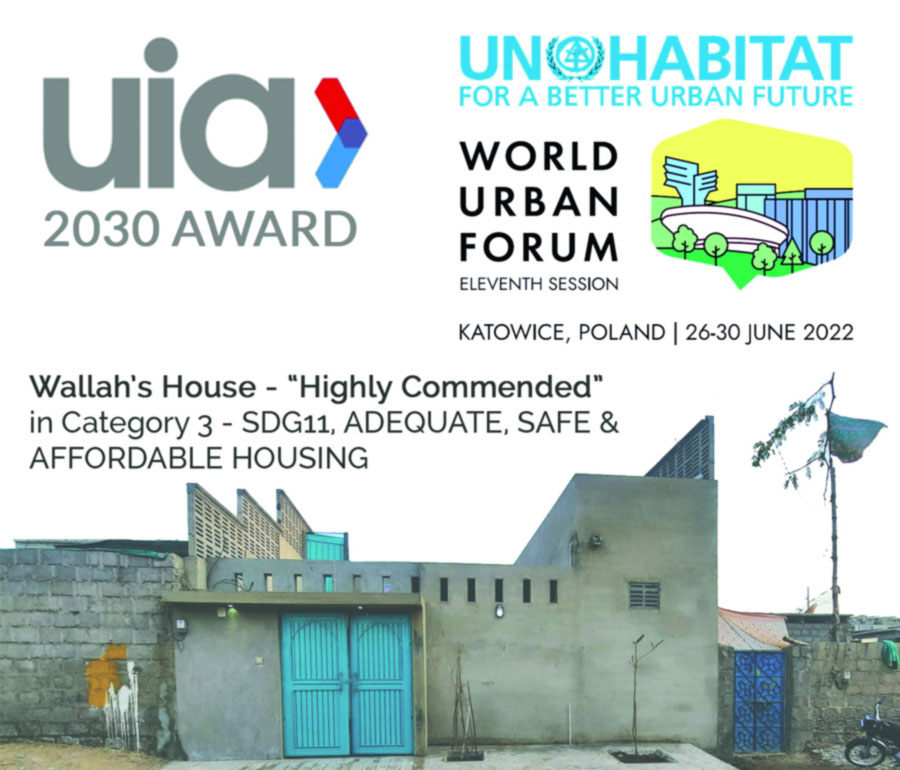
AT: It is a great honor for you that your project Wallah House receives the “Highly Commended” UIA 2030 Award at the UN-HABITAT World Urban Forum in Katowice this year. Please tell us about this project.
ZZ: Thank you for your appreciation. I felt really happy upon receiving this award of special mention. I think, this is the first Pakistani entry to find recognition at this prestigious forum in this category. Wallah’s house is a low-cost house I made for a family of 7 in Mehran Town, from Zakat, in 2020-21. This was my second project in which I managed the construction very closely. The first was Fozia’s House, which I made in Allahwala Town in 2016-17 for a family of 6. These housing projects have been my Research Through Design projects. And I have been conducting these in order to learn a few important things, for the average poor Urban city-dweller:
* How can we find sustainable sources of financing, which are empowering for the home-owners?
* How can we create a dignified housing unit which is timely efficient and cost effective, in terms of building construction?
* How can this unit respond to inadequacies in context and provide communal activity opportunities, offer infrastructure solutions and create an architectural expression which adheres to an identity pertaining to our broader idea of ‘place’?
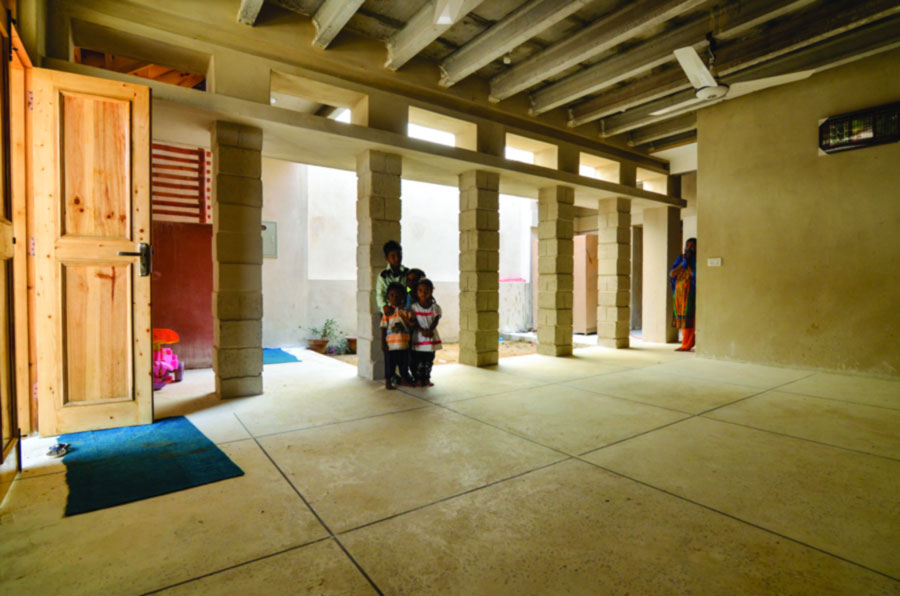
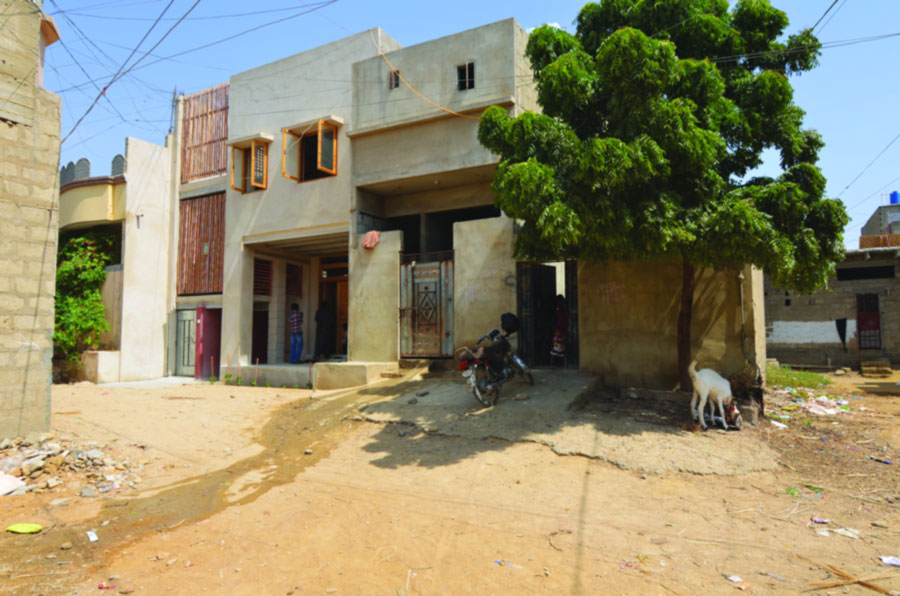
I have learnt a lot from these projects, and especially Fozia’s House because I realized many of my mistakes. In Wallah’s House I worked to resolve these. The plot was of 1080 SF, where only one storey was built, but provision was made for making one or two stories in the future; thus making provision for incremental housing. The project was completed in roughly 8 to 9 months and the cost was Rs 2030 PSF (USD 12.6 PSF). However, the project was actually designed for and planned to be completed within 4 months with an estimated cost of Rs 2000 PSF (USD 12.4 PSF). Although there wasn’t a substantial cost overrun, the time duration of the project was affected greatly because of a tussle with the local police who kept interrupting the construction work. Over all, Wallah’s family is very happy with the house. I feel lucky to have found the chance to work with them and for them. They lived in a broken hut. I feel the cost and effort put into the making of this home, is going to create a very long term positive impact on the well-being of her whole family. In my mind, investing in Affordable Housing means investing in all of the Sustainable Development Goals. This is extremely important for us.
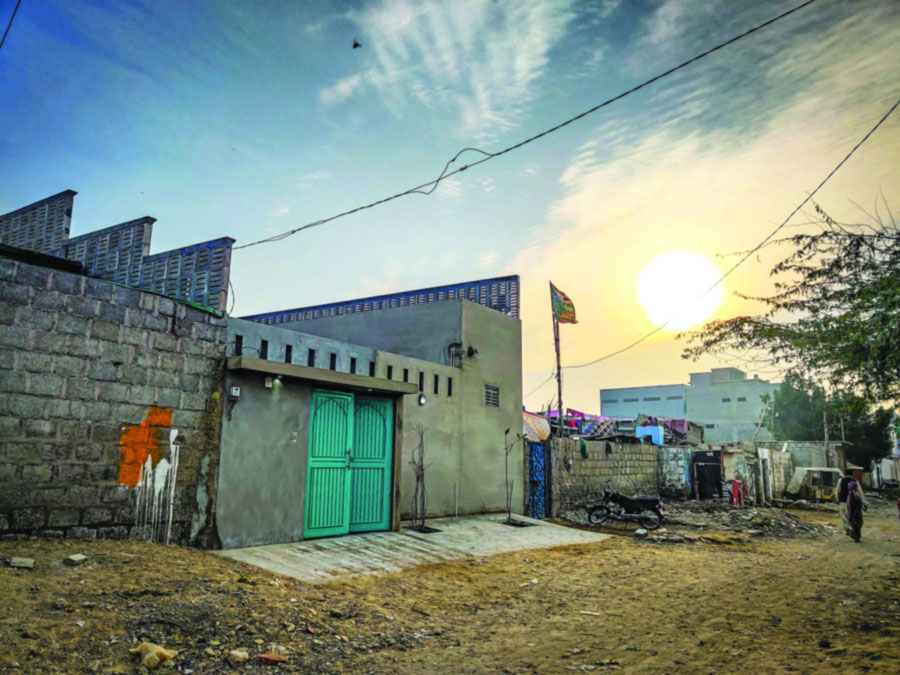
AT: So how do you explain what Affordable Housing is and how can we solve this?
ZZ: Affordable Housing a huge global menace! In Pakistan the housing gap is estimated at 10 million today, with a demand growing at a rate of 0.7 million units annually. In the urban context, the housing shortage is about 4 million. But the most alarming situation is that households at the bottom 68% of the income distribution bracket can only afford about 1% of the available housing stock. In Karachi, for example, it is estimated that about 47% of the city-dwellers live in squatter settlements, or basically low-quality housing units, which are not maintained. This situation has led to the growth of some of Asia’s largest slums in our country. And despite the government’s effort at tackling this mammoth beast, there is negligible change on ground. I cannot profess that I can give a solution for this! But I can offer some simple lessons I have learnt:
* There are three components which offer Affordable Housing. Land availability, Financing, and Design. The government, private sector, and technical professionals (architects and engineers) – Each must work together and play their part to offer these three components. In my view none of these three are consciously working on this. The government needs to develop land, private and public entities must make financing accessible and design professionals must create intelligent design solutions, bring forth new technology and even create open-sourced design kits for various urban contexts.
* Zakat has great potential in a Muslim majority context like ours as a sustainable source for financing. We must invite Zakat donations, but work with home owners who can also participate in the financing. This becomes empowering and they don’t feel like they are getting charity, so they can’t have a say in the design process. In Wallah’s case this was easily done, as she had paid for, and had ownership of the land and so the sourced financing was for the construction only. This, in turn, also makes it easier to source Zakat.
* Work with conventional Reinforced Cement Concrete technology, done in-situ and as per custom requirements. In my experience, there is no other technology which has as yet out-done this. Since this is the conventional norm in Karachi, it is most cost effective, while offering labour ease and skill expertise. It also offers the most structural integrity, while customized construction on any plot/context is easily possible. Additionally, it offers a sense of dignity for home-owners in informal quarters since this is also the norm in formal settlements. We must chose for the poor, what we chose for ourselves. No compromise here.
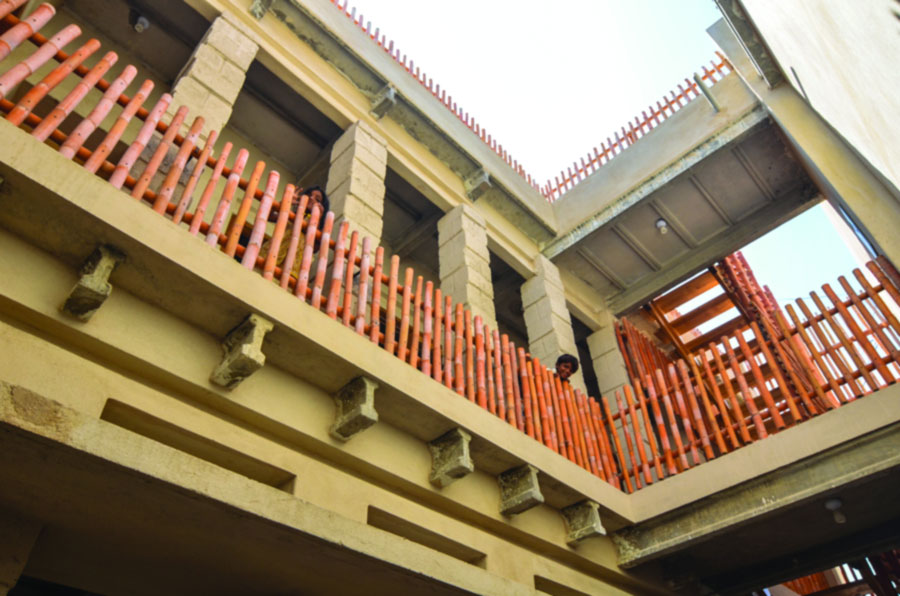
* Employ vernacular elements (for example, screens), traditional organizational methods (for example, courtyards and verandahs). This architectural language offers the best culturally appropriate user-experience and also enables passive cooling strategies. We cannot bring alien design solutions. Being sensitive to our climatic and cultural context is extremely important.
* Let the users/home-owners have the major voice in the architectural vision and design – enabling a thoroughly participatory process. This is to sustain an empowering experience for the home-owners. Wallah, her husband, and also Wallah’s father (a local respected “elder” in the community) had a very positive and empowering role in the entire layout of spaces. This ensured that the dialogue brought about the nuances of how they live, and how they imagine to use their property in the future as well.
* The housing units must blend into the context. The design must minimize the bitterness which comes with making disparity apparent. This became a sensitive issue, in Wallah’s project. Despite the fact that the contract with the contractor included paint on the external walls, the collective decision was to leave it in cement plaster. The relationship with the neighbor had become quite toxic, and there was an air of resentment at the change in conditions for Wallah’s family. Humility is key.
AT: These are all very interesting points. However, how do you think we can improve the lives of people who can’t even afford land and property?
ZZ: This is a difficult question to tackle. I think the first effort has to be made by the government. In the current Neoliberal paradigm, the government has left any responsibility of developing land, investing in infrastructure in a conscious manner to make possible for the urban poor to access land for building their homes and communities. They only feel they should make favourable policies and let the market do the actual work. Although this is great because they can make policy conditions which favour the accessibility of land or easy financing; however, this is not enough. In my mind, the best solution can be going into existing slums, regularizing them, giving them infrastructure, and also helping the poor improve their current dwellings, through intelligent design solutions or kits, and easy financing. Wallah’s House is in Mehran Town. Fozia’s House is in Allahwala Town. In both these localities I do not see any substantial improvement of the context. Over time, the homeowners who are doing better for themselves, just grow their homes vertically. So although they are creating more housing, in a sense, the overall built-up quality is not improving. In my view, density could increase while simultaneously positively impacting the urban quality. However, the government will need to take responsibility, create intelligent by-laws, give infrastructure, make it financially easier to maintain existing homes, give them facilities to grow the houses vertically. In this sense, although the urban poor won’t necessarily need to buy land, however, they will have a greater access to good housing. But like I said, the government can initiate this, and I feel so sure that the private sector, and the design professionals will come forward to offer help. There are so many start-ups working now on sustainability, green materials, intelligent technology, and alternative energy. I think everyone will step in to help the poor.
AT: What is your Design Philosophy and methodology for low cost houses?
ZZ: My overarching design philosophy is the same as what we have been teaching at Indus Valley since the last six to seven years. Sami Chohan, my good friend was Head of Department at the time, and the entire faculty went through a comprehensive process of developing a vision for the department. The design must be Research-driven, User-centric, Contextually-sensitive, and a result of Sustainable practices. For my low-cost housing projects I feel I have taken these principles forward. There are people living in slums and also semi-formal settlements and they have zero access to basic amenities. These people work hard to make ends meet. But they want to improve their conditions. And the best way to do that is to work with them. Make the design process participatory and empowering. The housing units should be co-financed and co-designed. Sharing the burden is the key. It motivates those who would like to help and those who need the improvement in their environment. Also, as I already said, we must choose for the poor what we would choose for ourselves. I find this to be a categorical imperative. It is the only way our city will stop looking like a rich man’s locality with Bungalow typology and then a fault line with a Slum on the other side. Shouldn’t it be our collective dream to eradicate this fault line and the difference in the built form of the city?
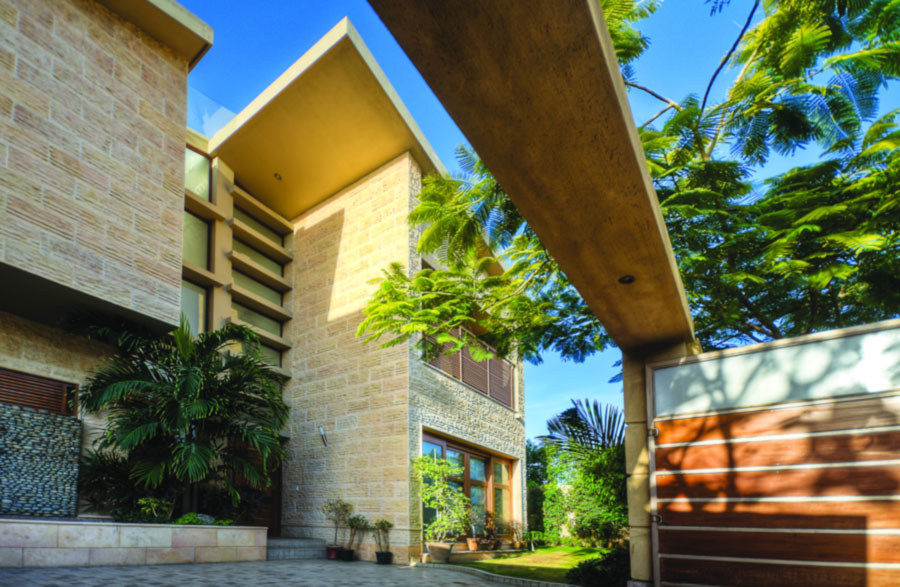
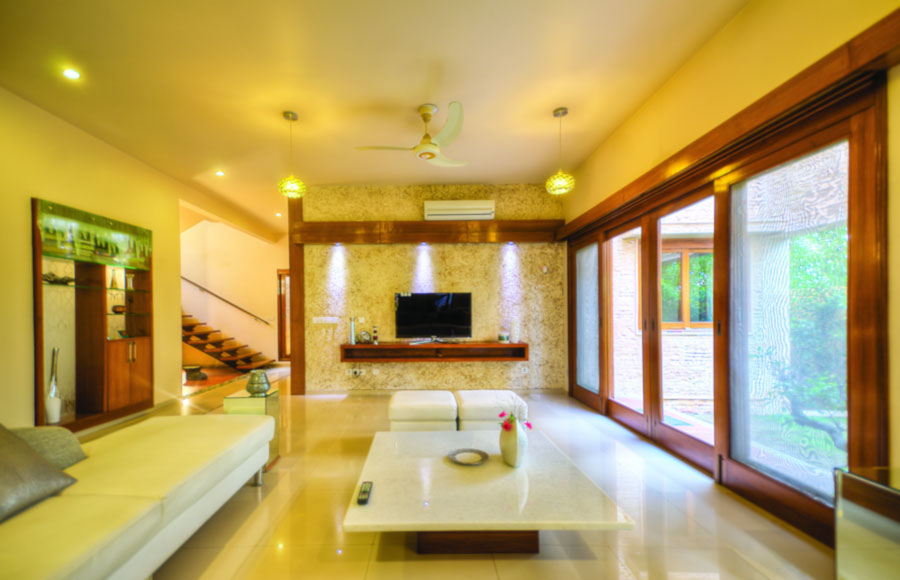
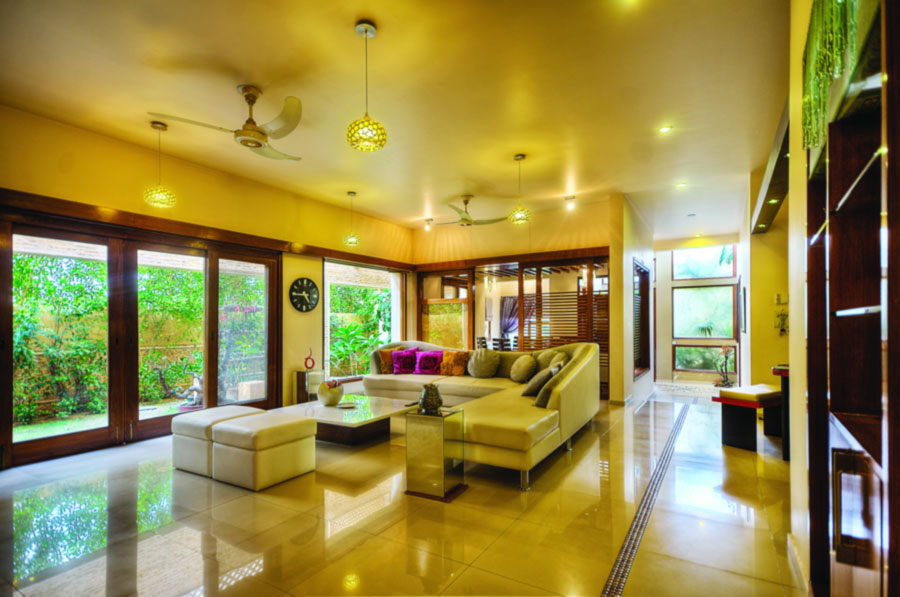
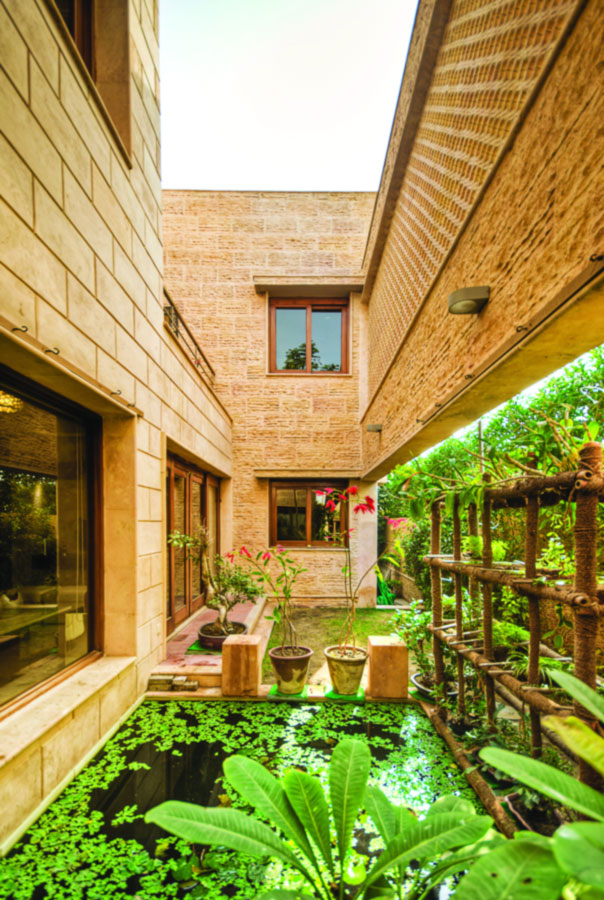
AT: Which of your projects do you feel reflects your Design Philosophy in general?
ZZ: This is so hard to answer. I have done so much work, but I don’t think I can squarely say any of my work is a complete depiction of all these ideals. However, I do not operate without them either. There is always a process of negotiation, sometimes with the program brief, sometimes with the client, sometimes with the context, and sometimes with myself. So in a sense I can say all of my projects express my design philosophy, or you can say aspirations, but in varying degrees. I feel Wallah’s House reflects my ideals very well. I was also lucky enough to design my own house. I worked very hard on this project and feel it is also one of the best depictions of my aspirations. I look back into my memories as a child, visiting the homes of my mother’s relatives back in Punjab. I remembered their homes, open courtyards, wrapped with verandahs, big trees offering shade selectively on a barren hardscaped area. I remember small rooms, very private with small windows. These images were my inspiration as I developed my design response. Then I had my memories of going to see Geoffery Bawa’s work in Sri Lanka back when I was in second year. We also saw Angelandran’s work – very small houses, as well as large developments on estates and farms. I really enjoyed the symmetry of treatment at both scales. This helped me think through a vocabulary and dream of light quality and textures. In my opinion, the most suitable theoretical framework is to develop a Critical Regionalist approach. In Pakistan we can learn a lot from the Masters around the world who have been working in their own contexts following the principles of this theory. I am now working on a large housing project and feel quite committed to follow through with these discussed ideas.
AT: What is your design process like? Can you describe the creative process for your projects?
ZZ: Like I already shared, the first step is mostly diving into research. A lot of the times this is contextual research. In my more recent projects I have started preparing reports and presentations for the clients, just to have them get on board with everything I am considering, and everything I want to consider when I commence design. It is during this period that I also have interviews with users. In my low-cost housing projects I try my best to have most, if not all stakeholders share their ideas and aspirations. For other projects, I have even developed a kind of questionnaire which clients fill out. This process is usually quite fun for me. After I feel satisfied, I usually build a Pinterest board and develop a kind of “Aspiration Board”. This is a very slippery place. I have heard how some practices quite cheekily work with these new social media platforms and almost plagiarize! I do not believe anything I hear. But I have developed a careful process to use these platforms to the advantage of the design process. This aspiration board is populated by users / clients, as well as my own design team. This way I can share my own design philosophy and language. I can share my passion. And the clients can share their vision. Then we sit down and negotiate. I help them see what is possible to do and what is not possible. I tell them openly if I feel something is not suitable. I invite the same candor from them. My firm belief is that the design process has to be empowering for the users and clients. As architects, we have to help them achieve their vision. However, what is of equal if not more significance – is to educate them about good design principles, sustainable practices, the dangers of plagiarism, the importance of studying intelligent solutions and case studies around the world. We can add value to their dreams. And at most instances, we can work together to make a great project. In my experience this design process is very good.
AT: What type of projects do you enjoy more: Architecture or Interiors?
ZZ: To be frank I enjoy Architecture much more than Interior. Honestly, Interior Design is hard! Somehow I don’t enjoy the immense attention to detail required for Interior Design work. I obviously do this work, but I always prefer Architectural challenges. I have seen my father’s work and his work ethic very closely since multiple decades. I have seen the hard work needed, not just to resolve technical challenges on the drawing board, but also at construction sites. As Architects we often don’t understand that the work of the Interior Designer is quite intense. I have seen reputable Architects call my father and say, please take my client! They are talking about something we can’t do. In my view the Interior Design professional often has to deal with a seriously problematic situation, and sometimes these problems are a result of an Architect or Contractor’s mistakes. I also feel that so many Interior Design jobs don’t get the mileage they deserve. It is possible that an Architect produces something and it is available for people to see and admire. But for Interior Design, I could share a picture of my work and no one will know that I spent more hours, dripped more sweat and went through more anxiety in this project. The best projects in Interior design are public projects like restaurants or cafes. They offer a lot of freedom and people come for fun and remember the good time they had there. Surprisingly, I have not as yet gotten any hospitality type project. If I would get one of those, I might enjoy it more than Architecture!
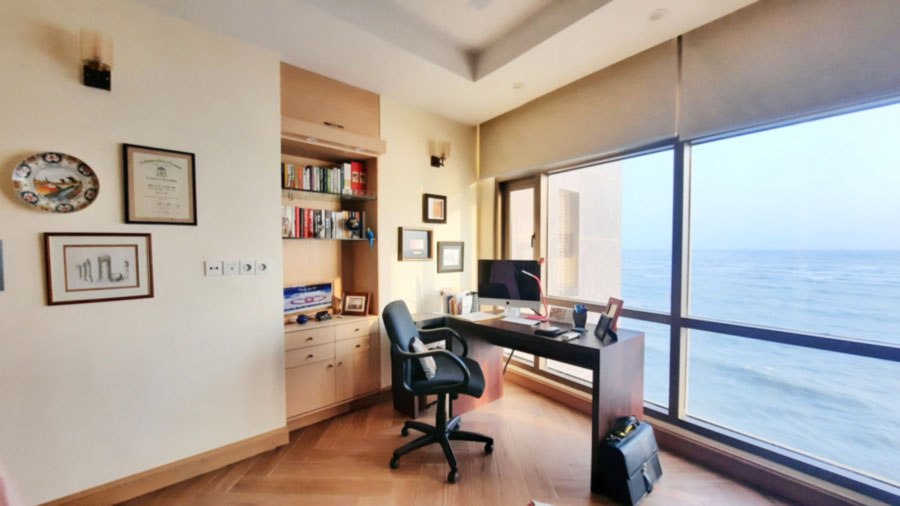
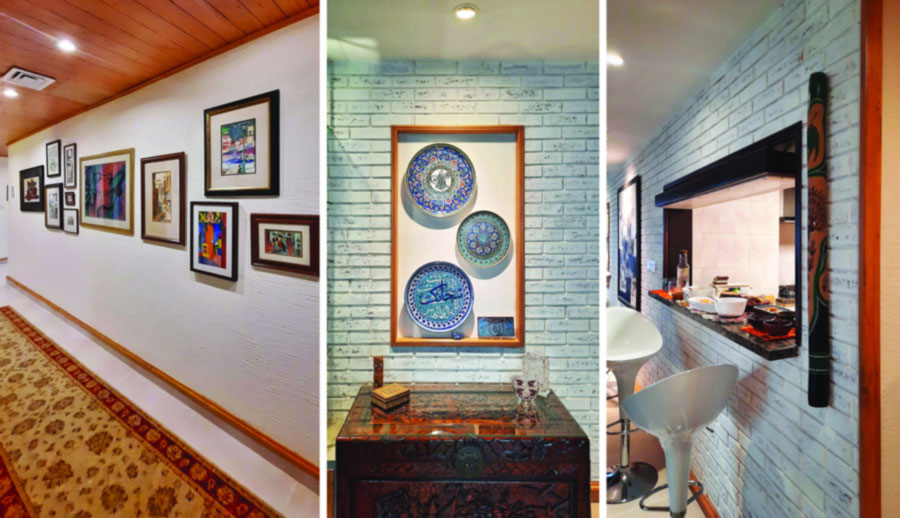
AT: Is there a particular project that you are most proud of?
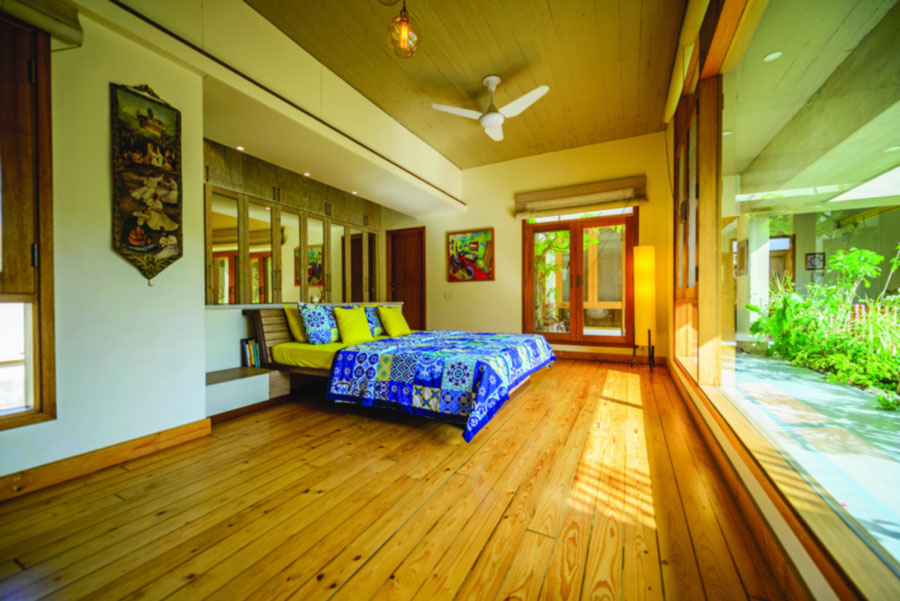
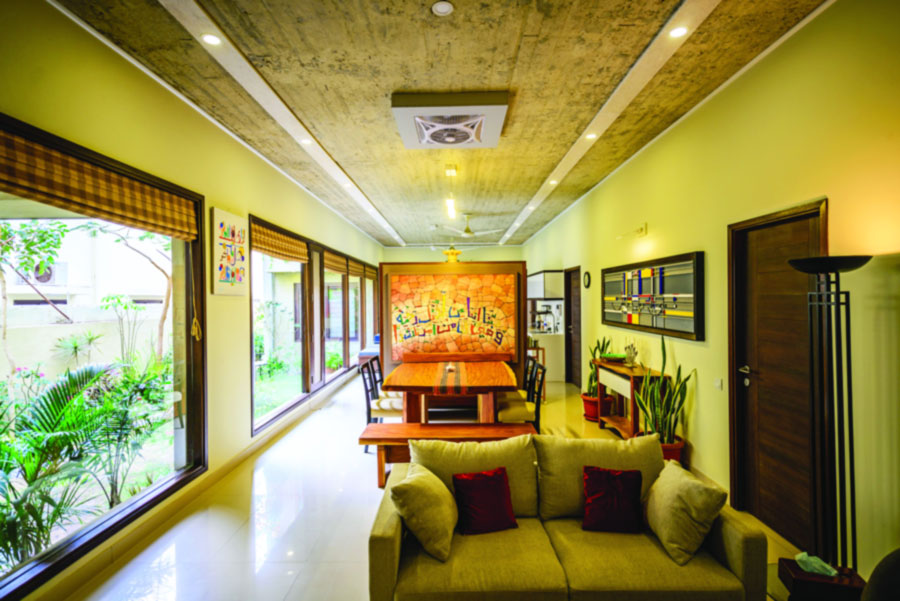
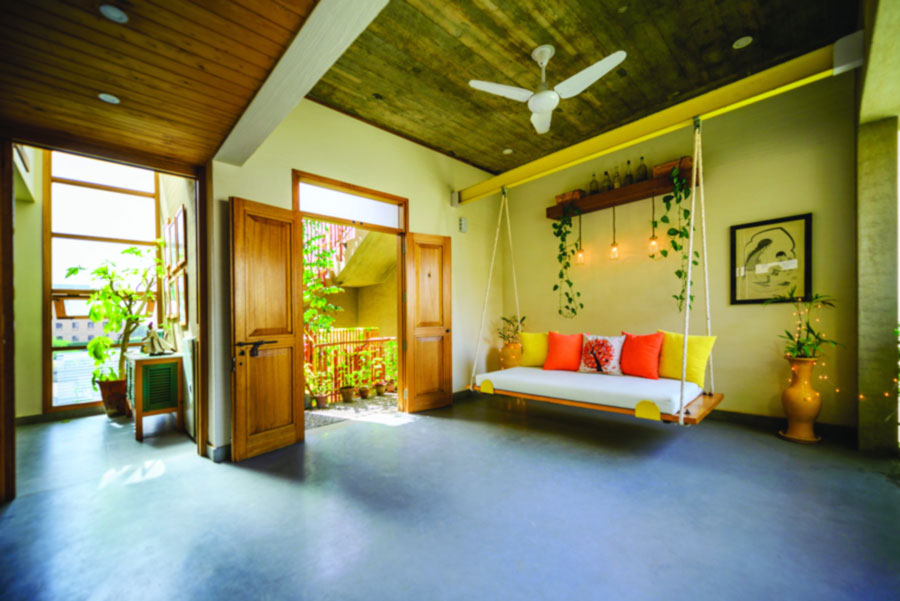
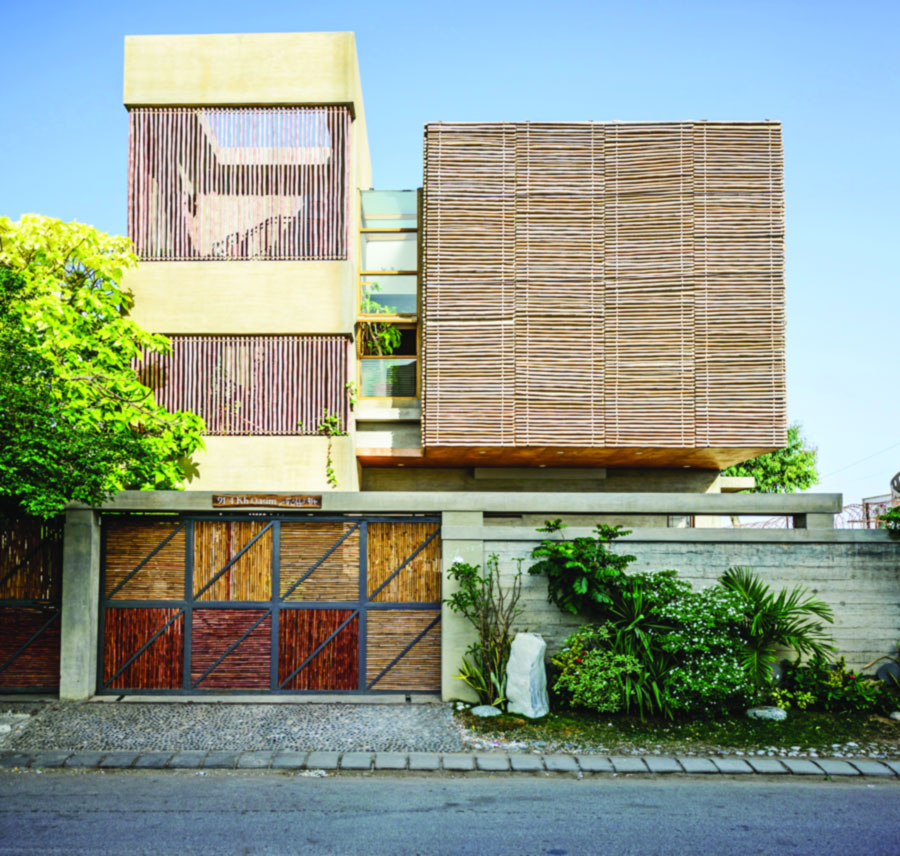
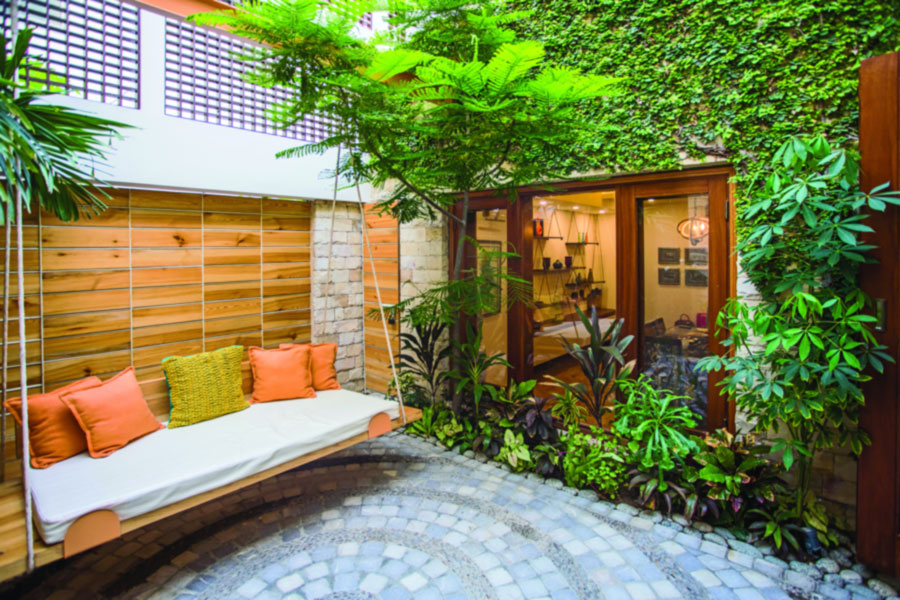
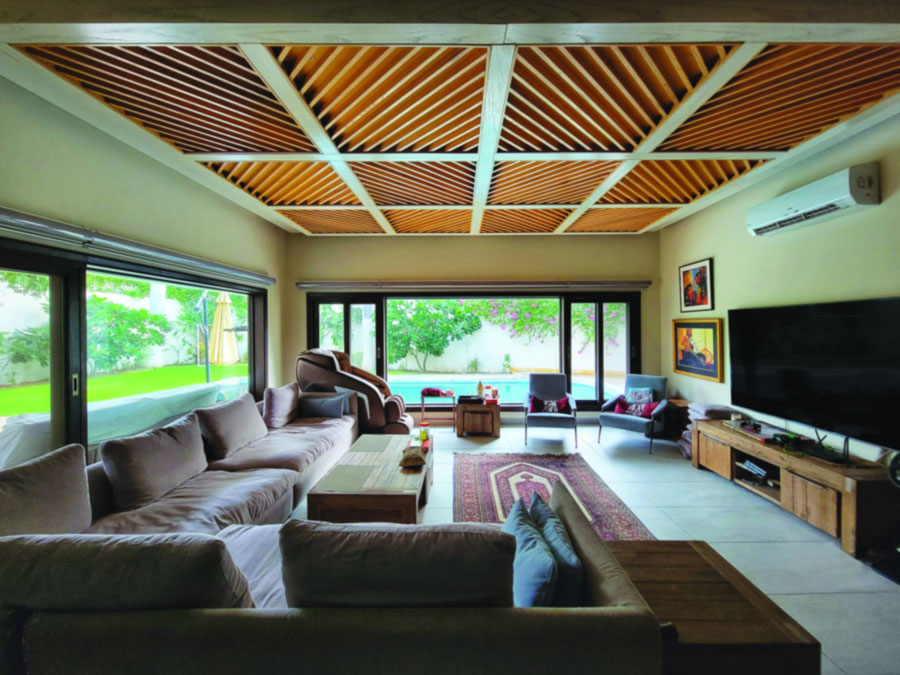
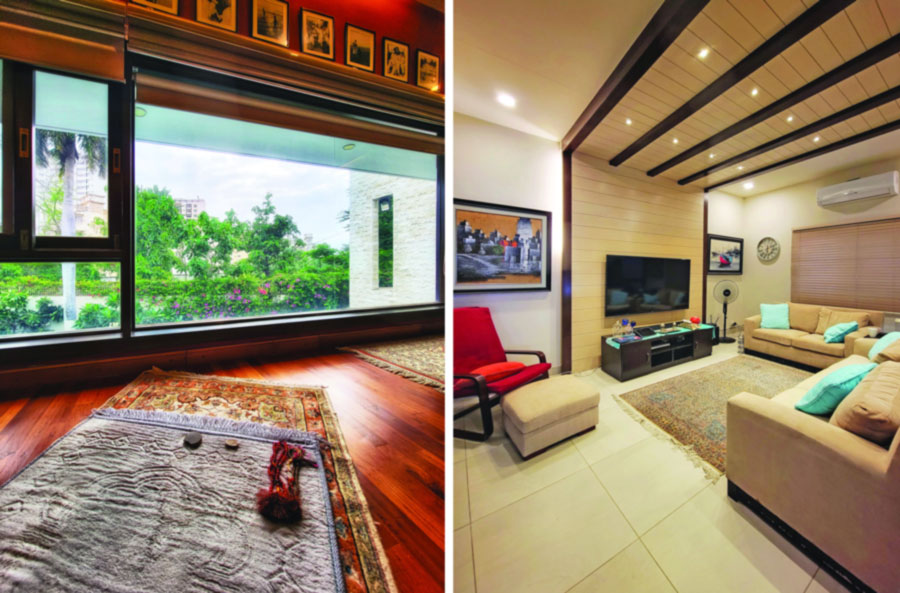
ZZ: Well, I think it has to be my own house. I made about 50 iterations I think. I worked very hard. I took multiple critiques and got very far from where I started. I really have to mention my very good friend Bilal Kapadia here. He had designed his own house as well, and today Mashallah it is internationally published. He had worked very hard on his house, and would come to me for feedback and we would discuss so man ideas. He experimented considerably in his house and today it is a huge success. I learnt a lot from him. One of the things he advised was to allow the form to take shape in response to the sun and wind. He also created courts and several semi-open spaces as thresholds. He was also looking to bring in the light and green where ever possible. I think all these aspirations are very valuable. In my own house I left my circulation in a semi-open verandah and I pulled the green up from the ground all the way to the roof. I created an opening at the first floor level to invite the rain. In the last seven years I have seen my courtyard transform so much that it unbelievable. It’s like living in a forest. I also curated the flow of light very carefully and made sure the materials allowed us to generate an environment as earthy as possible. One other aspiration I had was to express temporality and spontaneity. I used bamboo abundantly. And wanted to have the house look almost ordinary from outside. I tried my best to express humility through design. Aren’t these precious values? Our homes should have magical spaces for all our activities inside, but they must feel humble and almost temporary. A house should be a canvas for a family to make it a homely experience every day.
AT: You are also teaching at IVS, what are your views about the standard of Architectural Education in Pakistan?
ZZ: I have been teaching at IVS since January of 2013 as part time and joined them full time in Fall of 2015. So it is safe to say I have spent a substantial amount of time there. In fact I have seen IVS transition through multiple leaderships, not just in my own department, but also the administration. And I have also had the honour of being the first President of the Faculty Council. Unfortunately I have not had any detailed or sustained interaction with other architecture schools. So I can comment on the Architectural Education at IVS, but I don’t feel qualified to comment on standards in other schools. I personally feel we have one of the best departments in the country. Our students are really hardworking and very good at research. In fact, what we are doing is theoretically quite intense for bachelor’s level. We have a tough benchmark in design and haven’t scored lots of distinctions in the last five years; but I think that is actually a good thing. Nonetheless, in the last two years I have been teaching Thesis Studio and I feel so proud to have such a dynamic bunch of students. So many projects are coming from the students’ desire to offer a positive impact on the social and cultural fabric of the city. I feel the design skills and creative power vary from batch to batch, but generally speaking the design output is very powerful and innovative. We know this because our students often win national levels awards. In the last six years we have had a few noteworthy international wins as well. Ozair bin Mansoor won a sketching competition by Archdaily. Ushna Raees Khan went to Arco Santi for a Studio. Each year our students go abroad for Masters and tell us that they feel way ahead of others, not just in knowledge and skill but also in attitude to work. As you can see I am offering quite a biased account! But these are my experiences. I do not mean to say there are no areas of improvement. But if I take a bird’s eye view, I know we are generally doing a very good job.
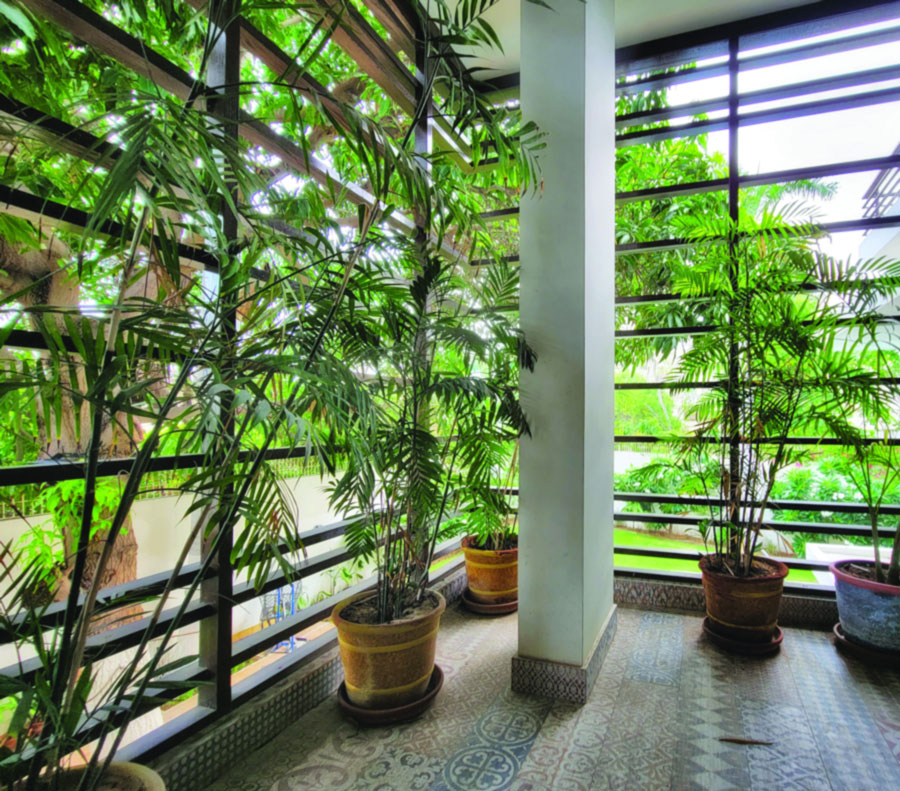
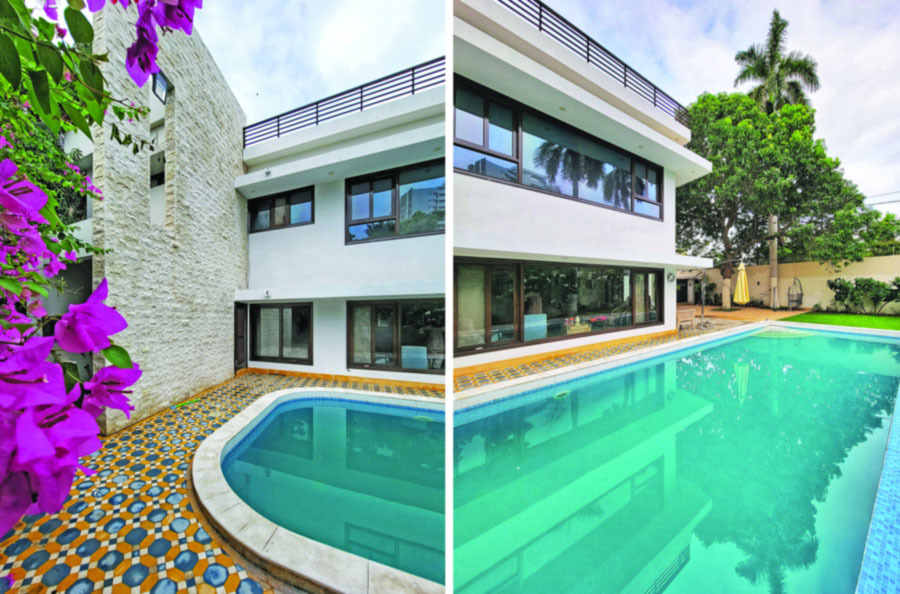
AT: Do you think there is a need for Architectural education reforms? If yes, what kind of reforms are needed?
ZZ: Yes. However, my gut feeling is that the people to describe the kinds of reforms we need are those of our colleagues, friends and students who have gone abroad for graduate studies and work experience. They can help us re-think what we have been doing, and what we should do for the future for Pakistan. So instead of talking about what kind of reforms I may have in mind, I want to shed light on a point of sensitivity. When I came back from my Masters, I felt like I had acquired such great knowledge – in terms of quantity and quality. I was extremely motivated to bring reforms and bring the new knowledge forward. And I did that very consciously. Our older history and theory curriculum was so Eurocentric and orientalizing that it was embarrassing. I re-wrote all these courses. I brought a global perspective; and developed an array of intellectual tools for all my courses, which reflected newer ideas. And I know I did a very good job – my evaluations inform me. However, what I didn’t know for the first couple of years was that I was also so impressed with my education aboard that I was also proud, and not as critical and objective as I should have been. It took me a while to identify these aspects inside. I guess this is a huge post-colonial reality. We are constantly in between two devils. The first is the desire to acquire new, cutting-edge knowledge from abroad, and paste it over our own ideas and values. The second is holding on to a mesh of ideas we have here and apprehend everything foreign. And I feel I am in between these two extremes; and in fact I suggest that all of us should strike this balance. We must invite positive knowledge from all over the world, but filter out what conflicts with our base values. We must reform our education, but do it intelligently; and do it together.
AT: What future goals do you have in mind?
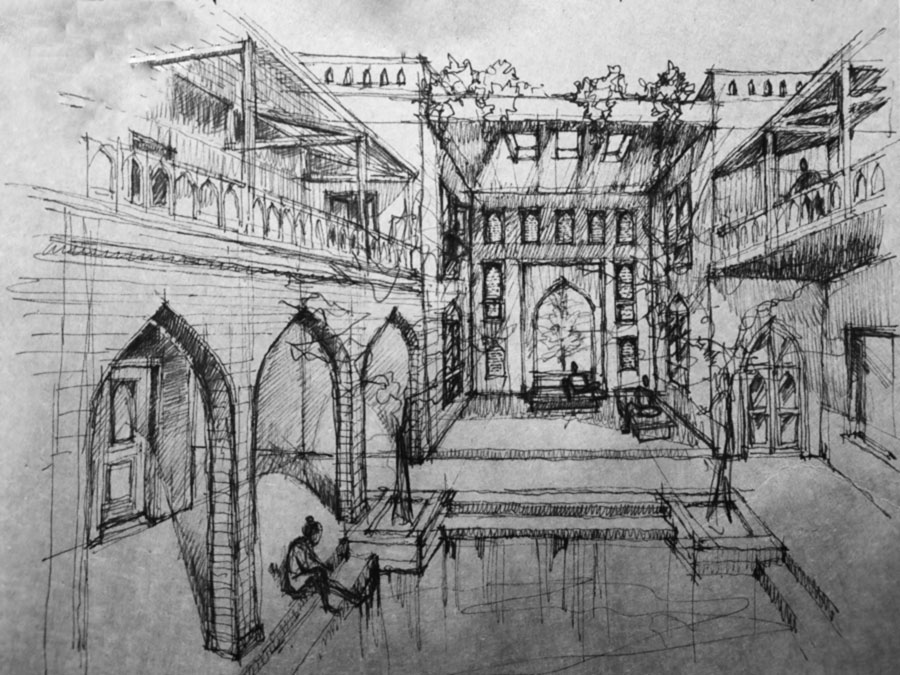
ZZ: You know there is a saying that if you want to make God laugh, tell Him your future goals! I have so many dreams but none of them are solid goals. I had made a goal to go for PhD for about four years. I even got into a very nice place, but couldn’t end up going. So now, when I pray, I ask God to put my heart where He wills me to go. And in truth, this way of living has helped me more than anything. I want to work in research and writing. I want to grow my work in philosophy, in terms of teaching and writing. I really believe that I am more Philosopher than Architect in my heart. I do feel that Be-khudi as a platform will grow into housing all of these endeavours of mine – where I can share my passion for philosophy, and work more publically. But let’s see how that grows, and which avenues open up for me. Other aspirations include growing my design practice and working in areas which are not generally the domain of “normal” architecture practices. I would love to be able to do hundreds if not thousands of low-cost housing projects. I feel very much for the urban poor, and as an Architect I know this is the only place I can contribute in a very tangible way. I would also love to work in Sacred Space design. I had read somewhere the late Pakistani Master, Zamir Rizki had dedicated his Fridays to the design of mosques which he would do for free. That image has always been in my mind. How lovely, isn’t it? To dedicate a whole day for pro-bono design practice, for sacred space design? I have recently the completed the design of a project at a Khanqah in Faisalabad, Diwan-e-Sirajia. This was pro-bono, and for a Chishtiya Sufi silsila that does so much good work for society. It was such a pleasure to do this. I really want to work for all religious traditions, for communal spaces and hopefully express the Sacred through all the work I do.
AT: You have spoken multiple times about values and philosophy. What advice would you give to your students and younger architects as they are starting their careers?
ZZ: Wow! Well, there are many ideas which can be discussed, but I can share some of the most important ones that I have acquired over time.
* Build consensus. I have been studying Iqbal’s poetic and philosophical work in the last three years. And I have realized something of the highest value, which was simple and yet unknown. We all have to work collectively to build consensus on matters beyond the private. When I do anything which is beyond the autonomy of my own skin, and has a relation with other humans, it is my first responsibility to build one mind, among everyone. Can’t we all do that? We can all agree to this value – that we will not take any decision unless it is the result of a collective agreement? We will bend our own will for the collective will. We will listen to others, and believe them to know more than we do. We will listen so closely, even to what others cannot express. And then we will play our part to join hands. I cannot express how important this is.
* Discipline yourself. Wake up early. Meditate. Do the work-out. Give every work the due share it requires. Build balance in your life between all your responsibilities. And do this every day. Don’t waste your time without reason. Do whatever you can to keep yourself from being distracted. I am especially thinking of the over-use of the smartphone. Build rules at home to follow through with sustaining good habits. Don’t give up. Because you will fail, and you will fail often. But pick yourself up and sharpen your will like a samurai sword. My love for discipline has come from my love of philosophy. But the example in front of my eyes has been my father. He has lived his life like clockwork. There is a time for everything, and everything is done in proper measure. Although, it can be annoying to see someone to be disciplined all the time, the value is undeniable. We all must do everything possible to make our will the sharpest tool inside us and use it to sustain a disciplined existence. This pathway of self-development is our immediate and perpetual responsibility.
* Keep honest. Keep humble. I have seen the downward spiral that people can go into if they compromise on being truthful. Our attitude is everything. It literally creates the world we live in. If we remain honest and humble like God’s final task for us, we will keep ourselves aligned to Him. And it’s not easy! But if we can speak truthfully to ourselves and to others, even if it will hurt – it’s the right thing to do. If we can keep our ego in check and practice whatever is needed to control its voice – it’s the only thing to do. I remember there was a time when I thought to myself, “I am good at architecture”. Then three years went by and I thought, “I am not a good [enough] architect. My previous thought was inaccurate.” It is a delicate balance to strike – to keep your confidence firm and self-belief high, while continuously doubting your capability at the same time. Muslims paste their forehead on the ground in prayer. So many of us do this as habit and don’t realize the physicality of it. We are literally expressing the defeat of our ego. These things have to be done consciously – keeping honest and keeping humble on a daily basis.
* Commit to Service. I think this is the most important way to orient ourselves. When we wake up and go about our affairs we are obviously responding to our needs and our responsibilities. But in everything we do, even what is apparently a private thing, we are also effecting the world at large. And in this perspective, we must always be oriented to serve existence, serve the world, or serve nature. But basically, what I am trying to say is … serve your country. “Pakistan” is the best thing to orient yourself towards, with a desire to serve. Any personal goal or ambition must never be detached from a concern for the larger reality beyond our own interests. This is nobility and if we cannot sustain this – then we will have wasted our lives.
* Read. Read. Read. I have years of experience of interviewing candidates applying to IVS for admission. Every youngster who has a reading habit is leaps and bounds ahead of those who don’t. If I could identify just one failing of the formal schooling system it would be that the love for reading is not there for the masses. My whole life I have seen my father read every day. And when I started to read in my Masters, it changed my life like I cannot even explain. So although I have spoken about self-development already, I want to make a special point about reading. Read for 7 minutes every day. Grow that to 14 and then 21. And if you can sustain your attention then maybe spend the whole night reading. And keep hungry. It is best way to live.


