


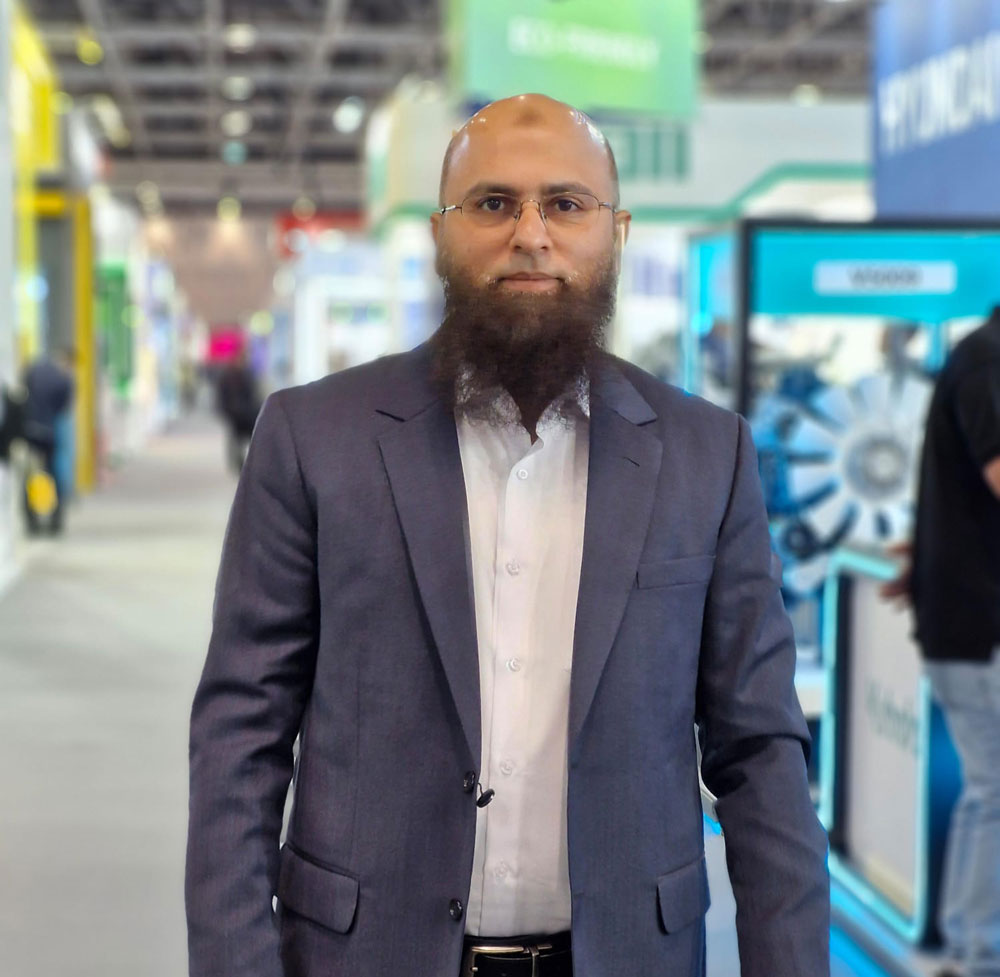
ARCHI TIMES Interview | Photographs by Engineer
Engineer Imran Zafar is a distinguished engineering professional whose work reflects precision, practicality, and a deep understanding of the built environment. With extensive experience in executing complex building and infrastructure projects, he has consistently bridged the gap between architectural vision and engineering reality. Known for his strong coordination with architects, consultants, and site teams, Engineer Imran Zafar brings technical clarity, construction efficiency, and adherence to high professional standards. His approach emphasizes sustainable solutions, structural integrity, and timely project delivery, making him a valued contributor to multidisciplinary design and construction processes. Through his dedication and expertise, he continues to play a vital role in shaping reliable, functional, and enduring developments. In this exclusive interview with ARCHI TIMES, he shares insights from his professional journey and his commitment to shaping a sustainable energy future.
CAN YOU TAKE US BACK TO YOUR EARLY YEARS AND HOW YOUR UPBRINGING INFLUENCED YOUR PATH TOWARD BECOMING AN ENGINEER?
IMRAN ZAFAR (IZ): While working at Siemens AG on deputation from Siemens Pakistan, I had discussions with fellow Pakistani engineers working in different international organizations. Many of them shared that they had left their homes at a very young age-sometimes right after primary education-to pursue higher studies.
Alhamdulillah, my journey was quite different. I was born and raised in Karachi, and from my primary education to my university education at NED University, and even my first job at Siemens Pakistan, everything was located within a radius of approximately 25 kilometers.
The world was very different back then. At a young age, we had limited exposure, and conventional professions such as Doctor, Engineer, and Pilot were idealized. I pursued engineering with a clear goal of securing admission to NED University, the best public-sector engineering institution. Financially, private universities were not an option for me, so getting into NED was not just a goal-it was a necessity.
WHAT INSPIRED YOU TO PURSUE A CAREER IN ENGINEERING, PARTICULARLY ELECTRICAL ENGINEERING?
IZ: At that time, higher education options through public universities were limited, and the most economical choices were Engineering or Medicine. I chose Engineering, and on the advice of one of my seniors, I opted for Electrical Engineering instead of Computer Engineering.
I did not have a deep understanding of the scope of Electrical Engineering at that stage, but I had a strong intuition that computer-related work would be more desk-bound. I preferred a field that offered practical exposure, fieldwork, and real-world problem-solving, which ultimately made Electrical Engineering the right choice for me.
WHAT INSPIRED YOU TO START WORKING AT ENERCON, AND WITH WHAT OBJECTIVES?
IZ: I spent nearly eight years at Siemens Pakistan, where I was identified as one of the future leaders. Unfortunately, circumstances took an unexpected turn, and I was compelled to explore opportunities outside Siemens.
I was offered the chance to establish and start operations for a Singapore-based company in Pakistan. Transitioning from a multinational environment to a single-person operation was a difficult decision. However, the biggest motivation was the opportunity to grow, build, and expand independently.
As the saying goes, “It is better to be the head of a small company than the tail of a big one.” ENERCON’s product line was different and technically challenging, which motivated me further as it allowed me to learn new technologies and expand my skill set.
AS A REGIONAL DIRECTOR, WHAT ARE YOUR KEY ROLES AND RESPONSIBILITIES AT ENERCON?
IZ: I joined ENERCON as an Operations Manager, initially responsible for managing customers in Pakistan. As we built a strong team and developed deep technical expertise, our management in Singapore entrusted us with responsibilities beyond Pakistan.
Today, my role includes sustaining the existing business, expanding into new markets, identifying new business opportunities, and strengthening ENERCON’s presence in regions including KSA, the Middle East, and Africa.

BEFORE JOINING ENERCON, WHERE WERE YOU WORKING?
IZ: Before joining ENERCON, I was working at Siemens Pakistan, where I gained extensive experience in a multinational engineering environment and was involved in complex industrial and power-sector projects.
TELL US ABOUT YOUR FIRST ENGINEERING DESIGN PROJECT.
IZ: My early engineering design projects were focused on practical, real-world industrial applications. These projects helped me understand the importance of system reliability, safety, and lifecycle performance-principles that continue to guide my work today.
PAKISTAN’S ENERGY CRISIS HAS WORSENED. IN YOUR OPINION, WHAT CAN BE DONE TO OVERCOME IT?
IZ: In the past, Pakistan faced electricity shortages and severe load-shedding. To address this, the government introduced IPP plants based on furnace oil. Over time, two major issues emerged: furnace oil prices increased significantly due to dollar-based imports, and industrial growth did not keep pace to absorb the generated power.
Today, Pakistan has excess electricity generation capacity, yet many regions still lack grid access. The solution lies in increasing industrial consumption, expanding grid access, and utilizing microgrids to transfer surplus solar-generated power to nearby underserved areas.

HOW CAN NET-ZERO SOLUTIONS AND RENEWABLE ENERGY SYSTEMS BE IMPLEMENTED FOR A SUSTAINABLE FUTURE?
IZ: Pakistan is blessed with abundant renewable energy resources, including hydro, solar, and wind. Renewable energy generation should primarily be developed at a large, utility scale to increase its overall contribution to the national grid.
While rooftop solar adoption has grown rapidly, it has created an imbalance. Consumers with solar systems reduce grid consumption but still rely on full grid capacity at night. This has increased per-unit grid costs, disproportionately affecting consumers who depend entirely on the grid.
For nationwide sustainability, grid utilization must be maximized, and tariffs reduced through balanced policy measures. Additionally, Battery Energy Storage Systems (BESS) should be mandatory for solar consumers, with clear limits on grid export and import to ensure stability.
WHAT MEASURES WOULD YOU SUGGEST TO REDUCE ELECTRICAL LOADS IN BUILDINGS?
IZ: Pakistan’s per capita electricity consumption is significantly lower than global benchmarks, yet domestic consumption exceeds 40%, which is not ideal. Air conditioning is the single largest load in buildings.
Productive consumption-such as industrial facilities, offices, and commercial centers-should increase. At the same time, energy conservation must be enforced through smart sensors, automation, artificial intelligence, and energy management systems.

WHAT IS YOUR OPINION ON THE USE OF SOLAR ENERGY IN BUILDINGS IN PAKISTAN?
IZ: I am not against solar energy deployment in buildings. However, national net-zero goals are more important than achieving net-zero at an individual building level. Solar integration must be aligned with grid stability and national energy planning, as discussed earlier.
DESCRIBE A PROJECT THAT YOU FOUND PARTICULARLY INTERESTING.
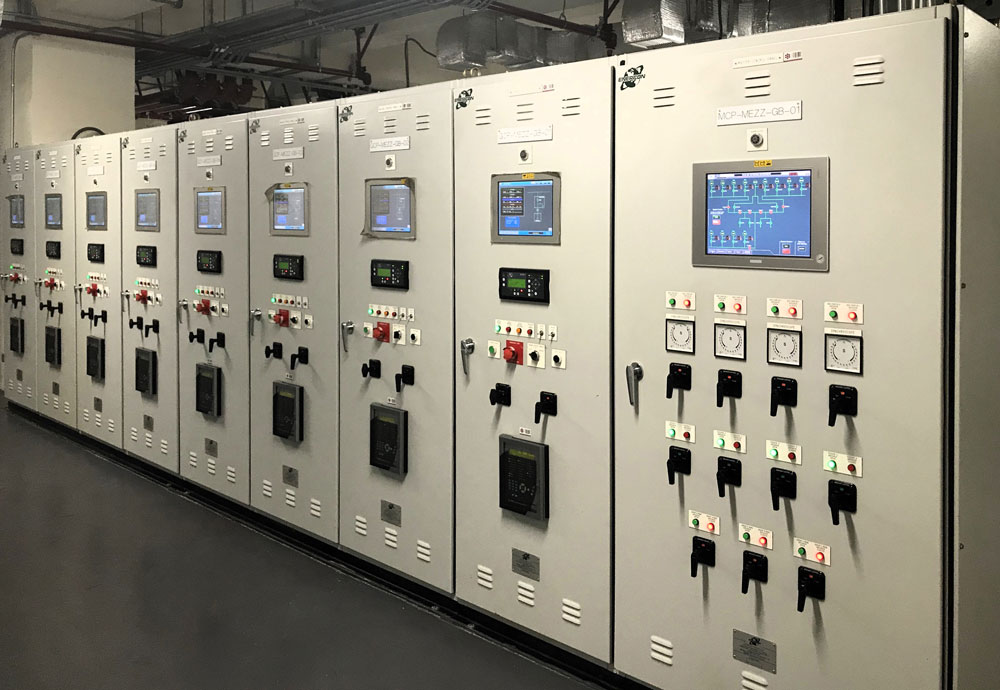
IZ: I am most passionate about projects focused on energy management, cost optimization, and energy conservation through automation and artificial intelligence. These include systems where multiple energy sources and major loads-such as AHUs, motors, and pumps-are intelligently controlled to achieve reliability and cost efficiency.
WHAT CHALLENGES IS PAKISTAN FACING TODAY?
IZ: The absence of consistent, long-term policy direction is Pakistan’s biggest challenge. While the country has no shortage of expertise or ideas, policy instability and a lack of informed decision-making hinder progress. Without the right people in key positions, meaningful solutions remain difficult to implement.
HOW CAN THE ROLE OF ENGINEERS BE ENHANCED IN PAKISTAN’S DEVELOPMENT?
IZ: Industrial growth and strong, consistent policies are essential. Once these are in place, demand for engineers will naturally increase. Industries will invest in academic institutions, and local opportunities will grow. Currently, limited opportunities force many talented engineers to seek careers abroad.
ARE THERE SUFFICIENT PROFESSIONAL DEVELOPMENT OPPORTUNITIES FOR ENGINEERS?
IZ: Professional development opportunities are limited and often disconnected from industry needs. Stronger collaboration between industry, academia, and government policy can bring positive change.
HOW DO YOU SPEND YOUR FREE TIME, AND WHAT ARE YOUR HOBBIES?
IZ: Time is the most precious resource we have-it is the only currency distributed equally. I try to spend my time wisely by being with my family and continuously acquiring new skills.
WHAT ADVICE WOULD YOU GIVE TO YOUNG PROFESSIONALS AND STUDENTS?
IZ: Identify your role in society and be content with your position while striving for continuous improvement. Do not be impatient or complacent. Take pride in your achievements and ensure that each day is better than the last.
Your circle of friends plays a crucial role in your personal and professional growth. Surround yourself with people who provide positive energy and inspiration-choose your friends wisely.


